
 By admin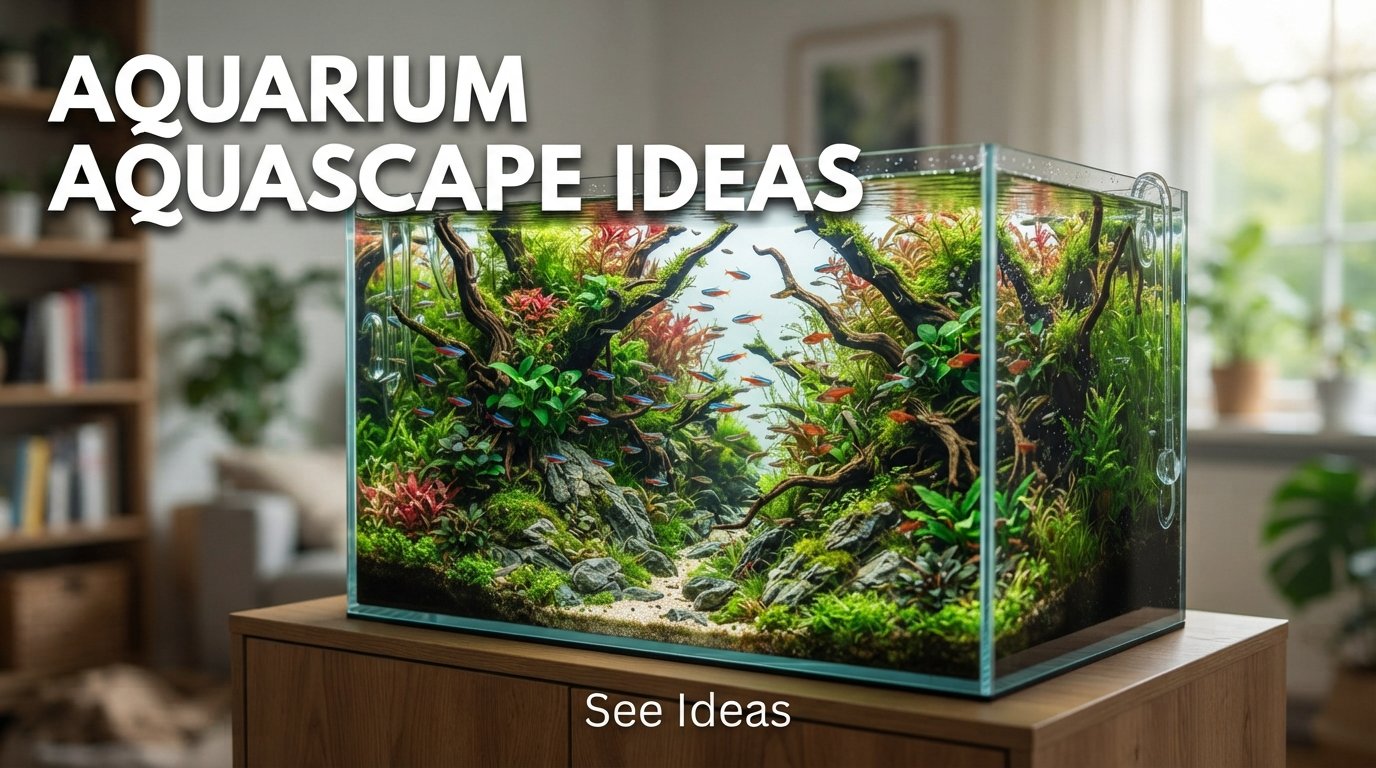
An aquarium aquascape can transform an ordinary fish tank into a beautiful underwater landscape. By combining rocks, driftwood, aquatic plants, sand, and open space, you can create a natural-looking environment that is both attractive and functional.
Whether you prefer a simple beginner setup, a lush jungle aquarium, or a dramatic rockscape, the best design starts with a clear idea and plants that match your available equipment.
1. Simple Nature Aquascape
A simple nature aquascape is ideal for beginners.
Use:
- One main piece of driftwood
- Several natural rocks
- A few aquatic plant varieties
- Fine gravel or aquasoil
- Open foreground space
Keep the design slightly asymmetrical to create a more natural appearance.
2. Minimalist Aquascape
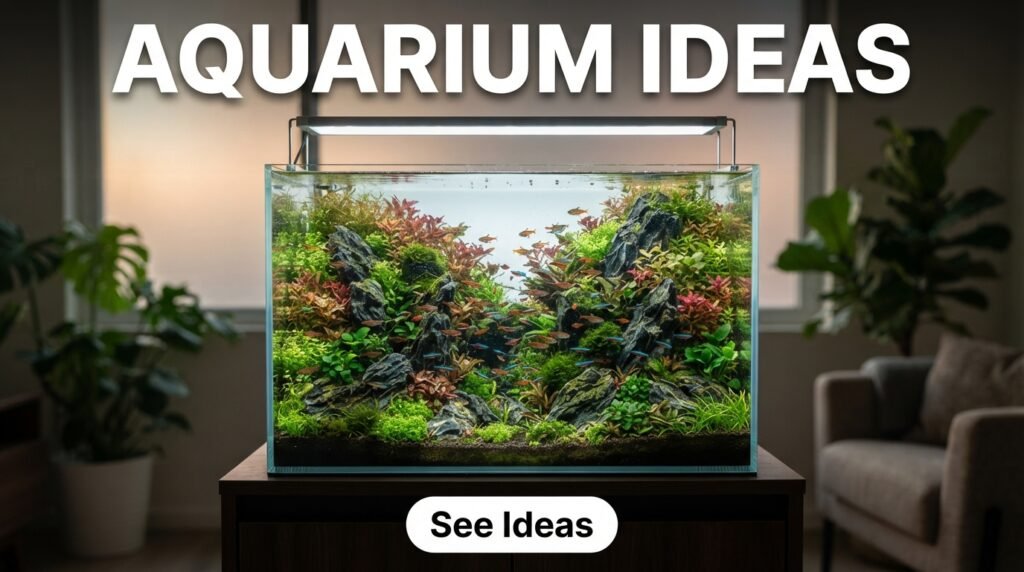
Minimalism focuses on a few carefully selected elements.
Try:
- One large rock
- Two or three smaller stones
- Short foreground plants
- A clean substrate
- Plenty of negative space
The empty areas are part of the design and help the main focal point stand out.
3. Iwagumi Aquascape
Iwagumi is a Japanese-inspired style centered around carefully arranged stones.
A typical design includes one dominant stone supported by smaller rocks.
Add a low carpet of aquatic plants around the stones to create a peaceful mountain landscape.
4. Jungle Aquascape
A jungle aquarium uses dense vegetation and irregular growth.
Combine:
- Tall background plants
- Broad-leaf plants
- Moss
- Floating plants
- Driftwood
- Rocks
Allow plants to grow at different heights for a wild, layered appearance.
5. Driftwood Forest Aquascape
Branching driftwood can create the appearance of an underwater forest.
Place several branches so they rise toward the surface, then add moss and small plants to the wood.
Use taller plants behind the structure to increase the sense of depth.
6. Mountain Aquascape
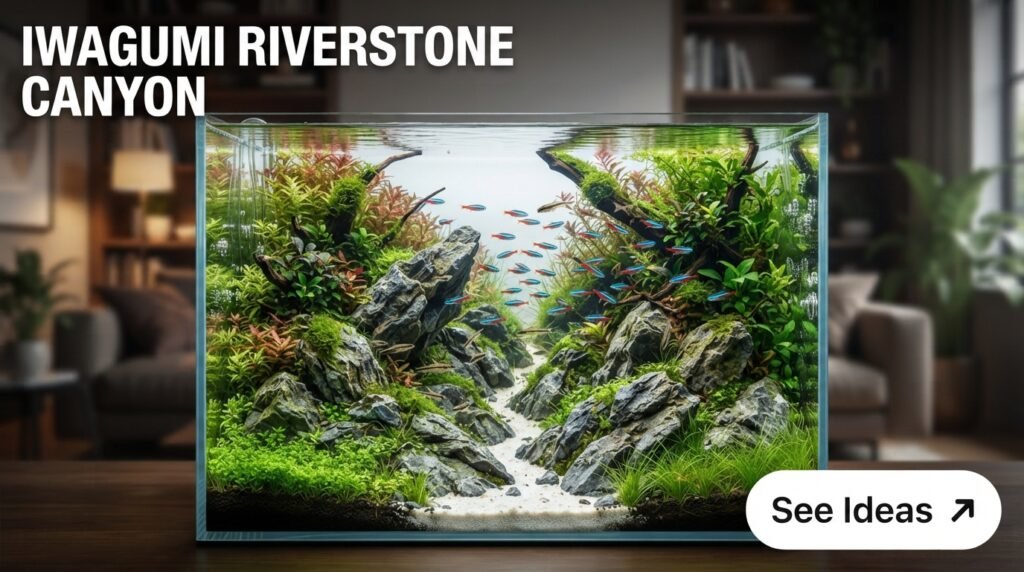
Create an underwater mountain landscape with textured rocks.
Use one large rock as the primary focal point and smaller stones to form a slope.
Carpeting plants around the base can create the appearance of vegetation growing across the mountain.
7. Riverbed Aquascape
A river-inspired aquascape uses smooth stones, sand, and driftwood.
Try:
- Fine sand
- Rounded river stones
- Small pebbles
- Branching wood
- Stream-friendly plants
Arrange the hardscape in a direction that suggests water flow.
8. Island Aquascape
Create an island by placing the main hardscape slightly off-center.
Surround it with open sand or substrate and add plants around its base.
The empty space around the island creates strong contrast.
9. Valley Aquascape
Build two elevated rock formations on opposite sides of the tank and create an open pathway between them.
A narrowing sand path toward the background can create a convincing perspective effect.
10. Planted Aquascape
A classic planted aquarium focuses primarily on healthy aquatic vegetation.
Use three levels:
Foreground: carpeting or short plants
Midground: medium plants
Background: taller plants
Grouping plants by species usually creates a cleaner appearance than scattering individual plants everywhere.
11. Low-Tech Aquascape
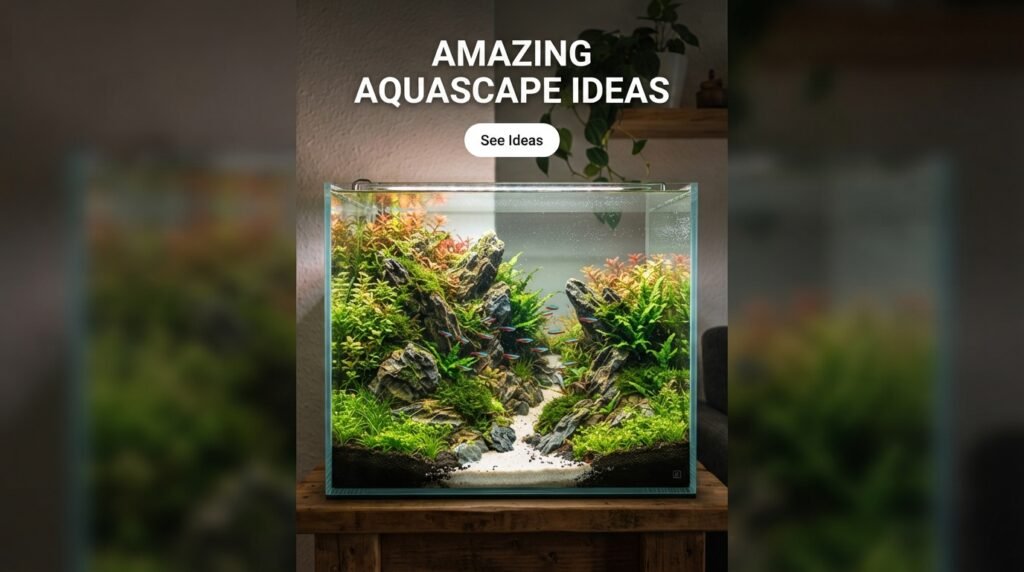
A low-tech aquarium can be beautiful without injected CO2.
Popular plants include:
- Anubias
- Java Fern
- Bucephalandra
- Cryptocoryne
- Java Moss
- Vallisneria
Choose plants that match the available lighting and maintenance level.
12. High-Tech Aquascape
A high-tech planted aquarium typically uses stronger lighting, pressurized CO2, nutrient-rich substrate, and regular fertilization.
This setup can support demanding plants and dense carpeting, but it requires more careful monitoring.
13. Nano Aquascape
Small aquariums can have surprisingly detailed layouts.
Use miniature versions of:
- Rocks
- Driftwood
- Moss
- Small plants
- Fine substrate
Keep everything proportional to the aquarium so the tank does not look crowded.
14. Shrimp Aquascape
Shrimp aquariums can combine dense plants with small hardscape.
Use:
- Moss
- Small rocks
- Driftwood
- Bucephalandra
- Fine substrate
Provide plenty of surfaces for natural biofilm growth and enough hiding areas for the shrimp.
15. Blackwater Aquascape
A blackwater-inspired aquarium can recreate the appearance of shaded tropical streams.
Use:
- Driftwood
- Dark substrate
- Appropriate leaf litter
- Low or subdued lighting
- Suitable aquatic plants
Tannins can give the water a natural tea-colored appearance.
16. Stone and Sand Aquascape
For a clean modern layout, combine natural stones with an open sand foreground.
Create a narrow pathway through the stones and gradually reduce the size of the rocks toward the background.
This creates depth while keeping the design simple.
17. Bonsai-Style Aquascape
A branching piece of aquarium-safe wood can be shaped to resemble a miniature tree.
Attach moss to the branches to imitate leaves.
Surround the base with rocks and carpeting plants to create a miniature landscape.
18. Cave Aquascape
Build a natural cave using rocks and driftwood.
Caves can provide shelter for compatible fish and add another layer of depth.
Make sure all heavy structures are stable and that fish cannot become trapped.
Aquascape Style Comparison
| Style | Main Feature | Difficulty |
|---|---|---|
| Simple Nature | Plants and natural hardscape | Easy |
| Minimalist | Open space and one focal point | Easy |
| Jungle | Dense vegetation | Easy–Moderate |
| Iwagumi | Rock formations | Moderate |
| Riverbed | Sand and smooth stones | Moderate |
| Driftwood Forest | Branching wood | Moderate |
| Low-Tech | Hardy plants | Easy |
| High-Tech | CO2 and demanding plants | Advanced |
| Nano | Small-scale design | Moderate |
| Blackwater | Wood and leaf litter | Moderate |
How to Plan an Aquascape
Before adding water, place the hardscape inside the empty aquarium.
Start with the largest piece.
Then:
- Select a focal point.
- Add supporting rocks or wood.
- Create different elevations.
- Add substrate.
- Plant the aquarium.
- Fill the tank carefully.
- Adjust plants and hardscape if necessary.
Taking a photo before filling the aquarium can help you evaluate the composition.
Use the Rule of Thirds
Instead of placing the main decoration directly in the center, position it approximately one-third from either side.
This creates a more dynamic composition and naturally draws attention toward the focal point.
Create Negative Space
Empty space is an important part of aquascaping.
Leave some areas free of plants and decorations to:
- Make the aquarium appear larger
- Highlight the focal point
- Give fish swimming space
- Create visual balance
A beautiful aquascape does not need every inch filled.
Choosing Aquarium Plants
Select plants according to:
- Light intensity
- CO2 availability
- Substrate
- Aquarium temperature
- Water parameters
- Expected growth size
Avoid choosing plants simply because they look attractive in photographs. A plant that is unsuitable for your aquarium can quickly become difficult to maintain.
Aquascape Lighting
Lighting should be matched to the plants you want to grow.
Too much light without adequate plant growth and nutrient balance can contribute to algae problems.
A consistent lighting schedule can help maintain predictable plant growth.
Common Aquascaping Mistakes
Too Many Plant Species
Using too many different plants can make the layout look chaotic.
Perfect Symmetry
Symmetrical arrangements often look less natural.
Oversized Decorations
Large rocks and wood can overwhelm smaller aquariums.
No Focal Point
Without a primary feature, the viewer may not know where to look.
Filling Every Space
Negative space is essential to a balanced composition.
Ignoring Fish Requirements
The aquascape should provide suitable swimming space, shelter, and water conditions for its inhabitants.
How to Make an Aquascape Look Professional
Focus on composition rather than decoration quantity.
Use:
- One dominant focal point
- Supporting hardscape
- Groups of plants
- Different plant heights
- Open foreground
- Consistent colors
- Hidden equipment
- Clean glass
Regular trimming is also important because uncontrolled plant growth can eventually destroy the original composition.
Conclusion
These aquarium aquascape ideas can help you create everything from a simple beginner fish tank to a sophisticated planted aquarium. Nature-style layouts, Iwagumi rockscapes, jungle tanks, riverbeds, driftwood forests, blackwater designs, and minimalist aquascapes each offer a different way to build an underwater landscape.
Start with a design that matches your aquarium size and experience. Choose compatible fish and plants, build a stable hardscape, and maintain the tank consistently. With time, the plants will grow into the structure and turn your initial layout into a living underwater scene.
Frequently Asked Questions
What is the easiest aquascape for beginners?
A simple low-tech nature aquascape using hardy plants such as Anubias, Java Fern, Cryptocoryne, and moss is a good starting point.
What is the most popular aquascape style?
Nature-style, jungle, Iwagumi, and minimalist aquascapes are among the most recognizable styles.
Does aquascaping require CO2?
No. Many beautiful aquascapes can be created without injected CO2. CO2 becomes more useful for demanding plants and high-light setups.
What is the best substrate for aquascaping?
Aquasoil is popular for planted aquariums, but sand, gravel, and other substrates can work depending on the plants and design.
How do I make a small aquarium look bigger?
Use smaller hardscape toward the back, create a narrowing pathway, keep the foreground open, and use plants of different sizes to create perspective.
How long does an aquascape take to mature?
The timeline varies by plant species and aquarium conditions. Fast-growing plants may fill in quickly, while slow-growing plants and mosses can take considerably longer.