
 By weeebooo70@gmail.com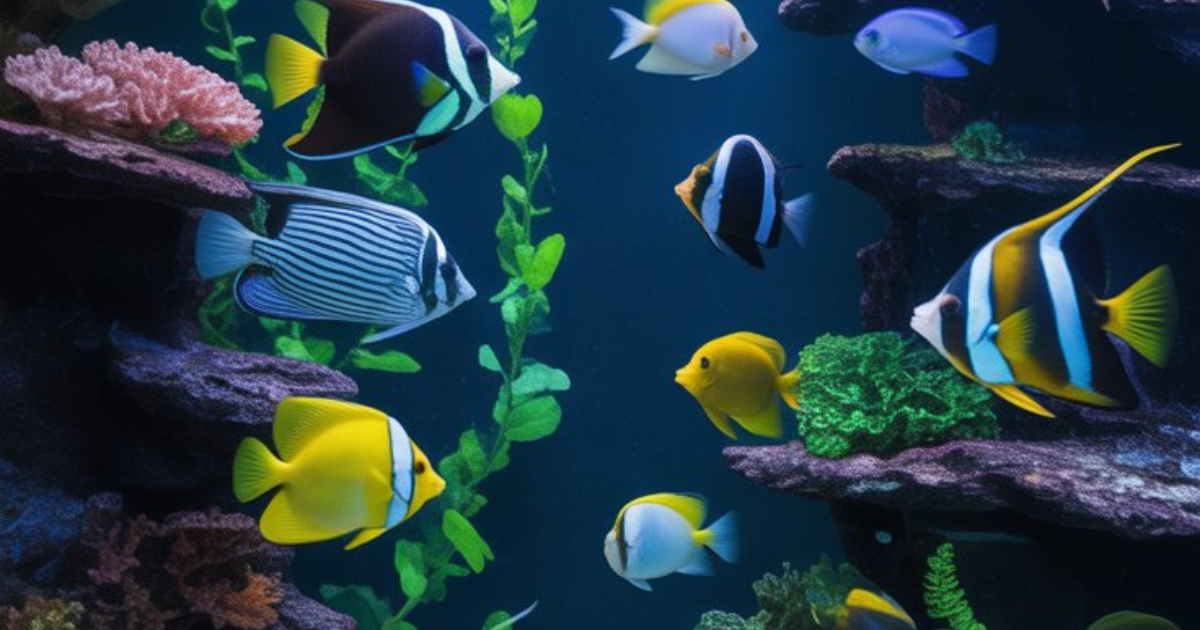
Aquariums are more than just tanks filled with water and fish—they are living works of art. An aquarium display transforms an ordinary fish tank into a mesmerizing centerpiece that showcases aquatic life in its most captivating form. Whether in homes, offices, restaurants, or public aquariums, displays can inspire, educate, and bring serenity to any space. Creating the perfect aquarium display requires knowledge of design, aquascaping, equipment, and fish compatibility.
In this article, we’ll explore the importance of aquarium displays, different types, design techniques, equipment needed, and step-by-step guidance for building one that is both functional and visually stunning.
What is an Aquarium Display?
An aquarium display is the aesthetic presentation of an aquarium that combines aquatic animals, plants, decorations, and equipment to create a visually appealing, functional, and healthy environment. Unlike simple fish tanks, display aquariums are carefully designed with artistic principles such as color balance, symmetry, focal points, and natural themes.
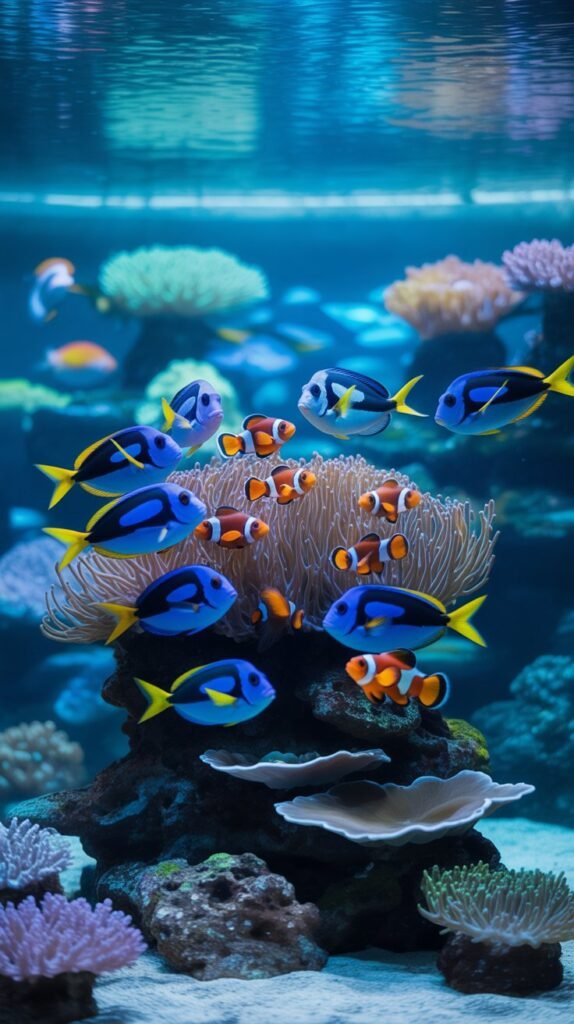
Display tanks are often created for:
- Home décor – A beautiful centerpiece for living rooms, bedrooms, or offices.
- Public exhibits – Large aquariums in museums, hotels, or aquascaping competitions.
- Education – To teach about aquatic ecosystems and fishkeeping.
- Relaxation – As a therapeutic tool to reduce stress.
Types of Aquarium Displays
When creating an aquarium display, you have several design styles and categories to choose from:
1. Freshwater Aquarium Display
- Uses tropical fish, plants, and hardscape materials.
- Ideal for beginners due to easier maintenance.
- Styles include community tanks, planted aquariums, and biotope aquariums.
2. Saltwater Aquarium Display
- Known for colorful marine fish and corals.
- Requires more advanced knowledge and equipment.
- Can be a reef aquarium, fish-only, or fish-only with live rock (FOWLR).
3. Planted Aquarium Display
- Focuses on live aquatic plants as the main feature.
- Inspired by nature aquascaping styles such as Dutch, Iwagumi, and Jungle.
- Provides natural filtration and oxygenation.
4. Aquascaped Display Tanks
- Created as underwater art pieces.
- Use hardscape elements like rocks, driftwood, and sand.
- Often seen in aquascaping competitions worldwide.
5. Biotope Aquarium Display
- Recreates a natural ecosystem (e.g., Amazon River, African Lake).
- Uses fish, plants, and décor that mimic specific habitats.
- Great for education and authenticity.
6. Public & Commercial Displays
- Gigantic aquariums in malls, hotels, and restaurants.
- Often house sharks, rays, and exotic marine species.
- Require professional installation and constant maintenance.
Importance of a Good Aquarium Display
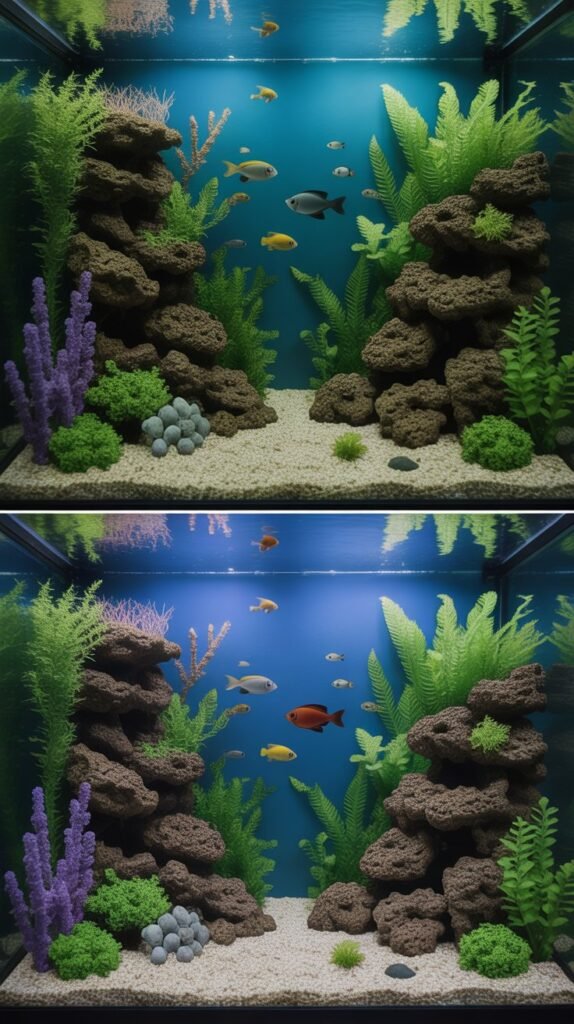
A well-designed aquarium display is not just about looks—it plays a vital role in the well-being of fish and user experience.
- Aesthetic Appeal – Enhances home or office décor.
- Stress Relief – Watching fish swim lowers anxiety and blood pressure.
- Educational Value – Helps children and adults learn about aquatic ecosystems.
- Healthier Environment – Proper aquascaping and filtration improve fish health.
- Prestige & Showcasing – High-quality displays are admired in competitions and public exhibitions.
Elements of an Aquarium Display
To build a successful aquarium display, consider these elements:
1. Tank Size and Shape
- Large tanks allow for more fish and creativity.
- Popular display tanks are rectangular, but bow-front and cube tanks offer unique perspectives.
2. Aquascaping
- The art of arranging rocks, plants, and driftwood.
- Styles include Nature Aquarium, Iwagumi, and Dutch Style.
3. Lighting
- Enhances fish colors and plant growth.
- LED lighting offers customization for different moods.
4. Filtration
- Essential for clean and healthy water.
- Options include sponge filters, canister filters, and sump systems.
5. Substrate
- Sand, gravel, or specialized soil for planted aquariums.
- Substrate choice affects plant growth and tank appearance.
6. Background
- Painted, frosted, or 3D backgrounds enhance depth.
- Black and blue are the most popular choices.
7. Fish & Livestock
- Selection based on compatibility, size, and color balance.
- Freshwater examples: Guppies, Tetras, Angelfish.
- Saltwater examples: Clownfish, Tangs, Gobies.
8. Decorations
- Driftwood, rocks, caves, and ornaments.
- Should be chosen carefully to maintain natural aesthetics.
Steps to Build a Stunning Aquarium Display
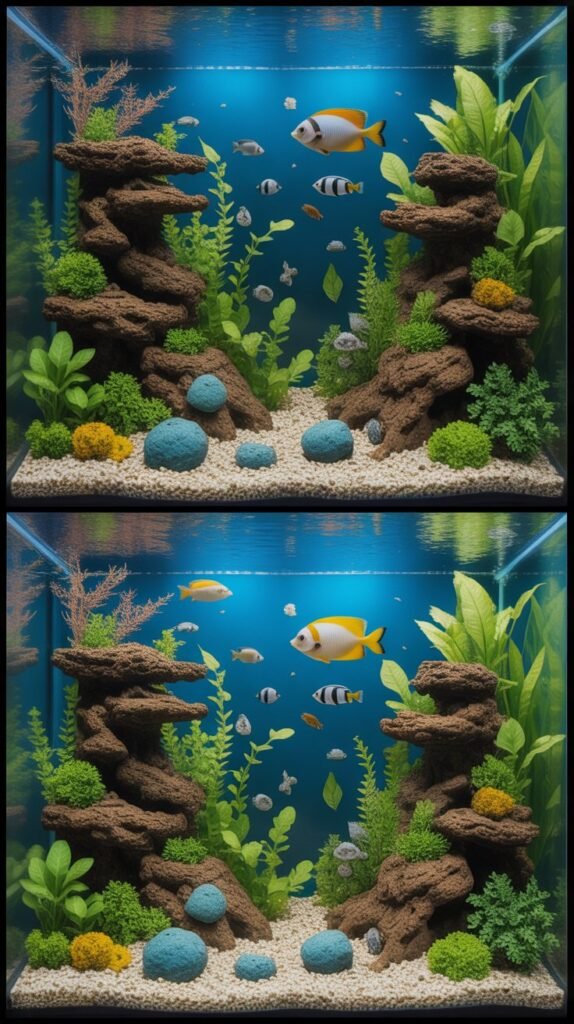
- Plan the Design
- Decide between freshwater, saltwater, or planted.
- Sketch a rough layout.
- Choose Tank and Equipment
- Select an appropriate tank size.
- Install filter, heater, and lighting system.
- Select Substrate and Hardscape
- Arrange rocks and driftwood according to focal points.
- Use aquascaping tools for precision.
- Add Plants and Décor
- Place taller plants at the back, shorter ones at the front.
- Create hiding spots for fish.
- Cycle the Tank
- Run the tank for 3–4 weeks before adding fish.
- Use beneficial bacteria to establish a nitrogen cycle.
- Introduce Fish Gradually
- Add a few fish at a time to avoid stress.
- Ensure compatibility.
- Maintain the Display
- Weekly water changes (20–30%).
- Clean glass with a magnetic cleaner.
- Trim plants regularly.
Advanced Aquarium Display Techniques
- The Rule of Thirds – Position focal points off-center for natural aesthetics.
- Depth Illusion – Use smaller plants and rocks at the back to create perspective.
- Color Harmony – Mix fish and plants with complementary colors.
- The Golden Ratio in Aquascaping – Arrange elements for visual balance.
- Minimalist Approach – Highlight one main feature for a dramatic effect.
Aquarium Display Maintenance
A beautiful display requires regular care:
- Daily – Feed fish, check equipment.
- Weekly – Clean glass, water changes, test water parameters.
- Monthly – Clean filters, prune plants, check lighting.
- Seasonally – Deep cleaning, replace old equipment, restock fish if needed.
Benefits of an Aquarium Display
- Enhances mental well-being.
- Improves interior aesthetics.
- Serves as an educational hobby.
- Provides natural therapy and relaxation.
- Showcases creativity and passion for aquascaping.
Common Mistakes in Aquarium Displays
- Overcrowding with too many fish.
- Using incompatible species.
- Ignoring the nitrogen cycle.
- Overdecorating with artificial items.
- Poor lighting and filtration choices.
Conclusion
An aquarium display is more than just a tank—it is a living piece of art that combines design, science, and passion. With the right planning, equipment, and creativity, anyone can create a stunning display that captivates viewers while providing a healthy environment for fish. Whether it’s a small desktop tank or a massive public aquarium, a display reflects the aquarist’s vision and dedication.
By understanding styles, aquascaping techniques, and maintenance, you can turn your aquarium into a breathtaking showcase of aquatic life.
FAQs About Aquarium Display
Q1. What is the best type of aquarium display for beginners?
Freshwater community aquariums with hardy fish like guppies and tetras are ideal for beginners.
Q2. How do I make my aquarium display look professional?
Focus on aquascaping techniques such as the rule of thirds, proper lighting, and balanced fish selection.
Q3. Can I use artificial plants in an aquarium display?
Yes, but live plants provide better water quality and look more natural.
Q4. How often should I clean a display aquarium?
Perform weekly water changes (20–30%) and clean the glass as needed.
Q5. What is the most popular aquarium display style?
Planted aquascapes and reef tanks are the most admired in competitions and public displays.
Q6. Do aquarium displays require special lighting?
Yes, LED lights are recommended for vibrant fish colors and healthy plant or coral growth.
Q7. How can I create depth in an aquarium display?
Use smaller elements at the back, layer substrates, and arrange hardscape strategically.