
 By weeebooo70@gmail.com
Aquarium keeping has evolved far beyond the basic setup of a glass tank, filter, and lighting. Hobbyists today seek advanced methods to maintain the delicate balance of aquatic ecosystems. One such method that has gained popularity among both freshwater and marine aquarists is the aquarium refugium.
A refugium is more than just an accessory; it is a powerful biological tool that provides stability, enhances filtration, and creates a safe haven for beneficial organisms. In this comprehensive guide, we’ll explore what an aquarium refugium is, why it’s important, the different types available, how to set one up, and how it benefits your fish, corals, and plants.
What is an Aquarium Refugium?
An aquarium refugium is a separate chamber or section connected to the main display tank, designed to provide a safe and controlled environment for beneficial organisms, nutrient export, and biological filtration. The word “refugium” comes from “refuge,” meaning a safe place, and that’s exactly what it serves as—a refuge for organisms that may not thrive in the main display tank.
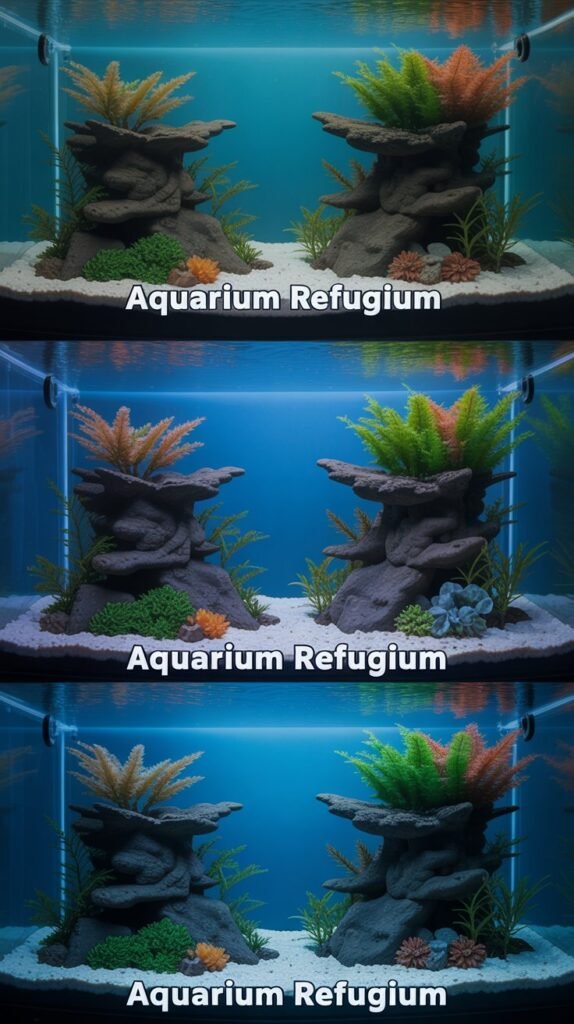
Depending on the design, a refugium can:
- House macroalgae to absorb excess nutrients.
- Provide a breeding ground for copepods and amphipods.
- Act as a safe nursery for fry or weak fish.
- Support a deeper biological filtration system.
Why Use an Aquarium Refugium?
The benefits of a refugium extend beyond simple aesthetics. Here are the top reasons hobbyists incorporate refugiums into their aquarium setups:
1. Nutrient Export
Excess nutrients such as nitrates and phosphates are common problems in aquariums. Macroalgae grown in a refugium absorb these nutrients, preventing algae outbreaks in the main display.
2. Natural Food Source
Refugiums can house small organisms like copepods, amphipods, and bristle worms. These creatures serve as a continuous live food source for fish and corals, especially in reef tanks.
3. Biological Filtration
A refugium enhances the nitrogen cycle by providing additional surface area for beneficial bacteria. This strengthens your overall filtration system.
4. Safe Haven for Fry and Weak Fish
If you have breeding fish, the refugium can serve as a nursery where fry can grow without being eaten by adult fish.
5. Improved Water Quality
With extra space for filtration and nutrient absorption, a refugium helps keep the water crystal clear and stable.
6. Reduced Algae in the Main Tank
By encouraging macroalgae growth in the refugium, nuisance algae in the display tank are outcompeted for nutrients.
Types of Aquarium Refugiums
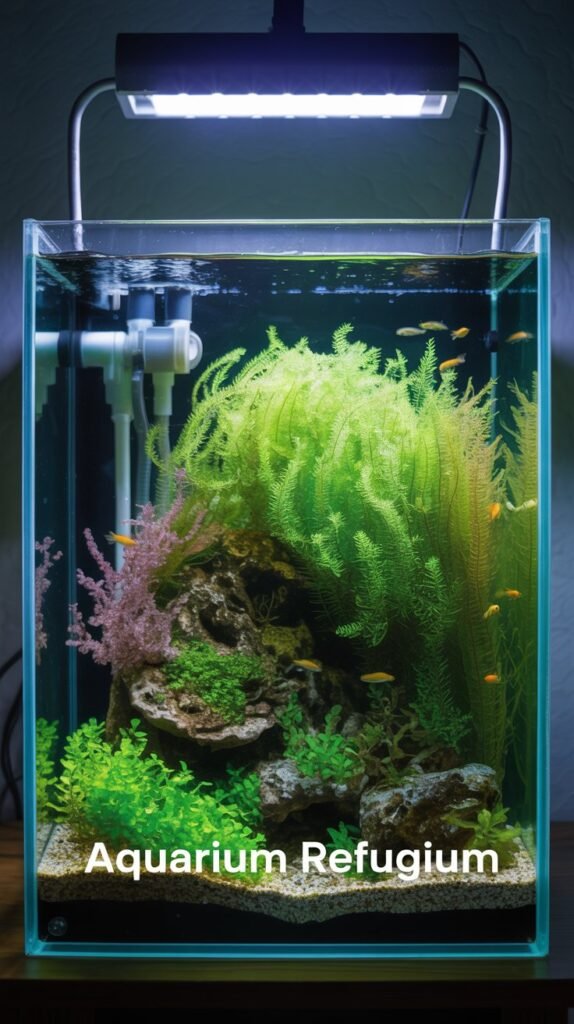
Refugiums come in several designs, each serving specific needs. Let’s break down the most common types:
1. In-Sump Refugium
- Built into or added onto the sump system.
- Ideal for large aquariums.
- Provides ample space for macroalgae and pods.
2. Hang-On-Back (HOB) Refugium
- Attaches to the back of the aquarium.
- Perfect for small to medium tanks without a sump.
- Easy to install and maintain.
3. In-Tank Refugium
- A small chamber placed directly inside the display tank.
- Great for beginners or those with limited space.
- Offers fewer benefits compared to sump or HOB designs.
4. Remote Refugium
- A separate tank connected via plumbing.
- Allows full customization and flexibility.
- Often used in advanced reef setups.
Key Components of an Aquarium Refugium
To set up a successful refugium, you’ll need specific components:
- Lighting – Macroalgae and plants require proper lighting. LED grow lights are ideal.
- Substrate – Sand, crushed coral, or bare-bottom setups depending on preference.
- Macroalgae – Common choices include Chaetomorpha, Caulerpa, and Gracilaria.
- Live Rock or Bio-Media – Provides surface area for beneficial bacteria and pods.
- Flow Control – A gentle water flow is necessary to circulate nutrients without disturbing inhabitants.
- Microfauna – Introducing pods and worms enhances biodiversity.
Step-by-Step Guide: Setting Up an Aquarium Refugium
Step 1: Choose the Right Type
Decide whether an in-sump, HOB, in-tank, or remote refugium suits your aquarium.
Step 2: Install Proper Lighting
Macroalgae need 8–12 hours of light daily. Use a grow light with the right spectrum.
Step 3: Add Substrate and Live Rock
Provide a stable base for algae and bacteria to thrive.
Step 4: Introduce Macroalgae
Chaetomorpha is highly recommended because it grows quickly, doesn’t release toxins, and is easy to harvest.
Step 5: Seed with Pods
Copepods and amphipods can be purchased from aquarium stores or online suppliers.
Step 6: Adjust Water Flow
Ensure moderate circulation to deliver nutrients without flushing out organisms.
Step 7: Regular Maintenance
- Trim macroalgae regularly.
- Clean the refugium walls.
- Monitor nutrient levels.
Best Macroalgae for Refugiums
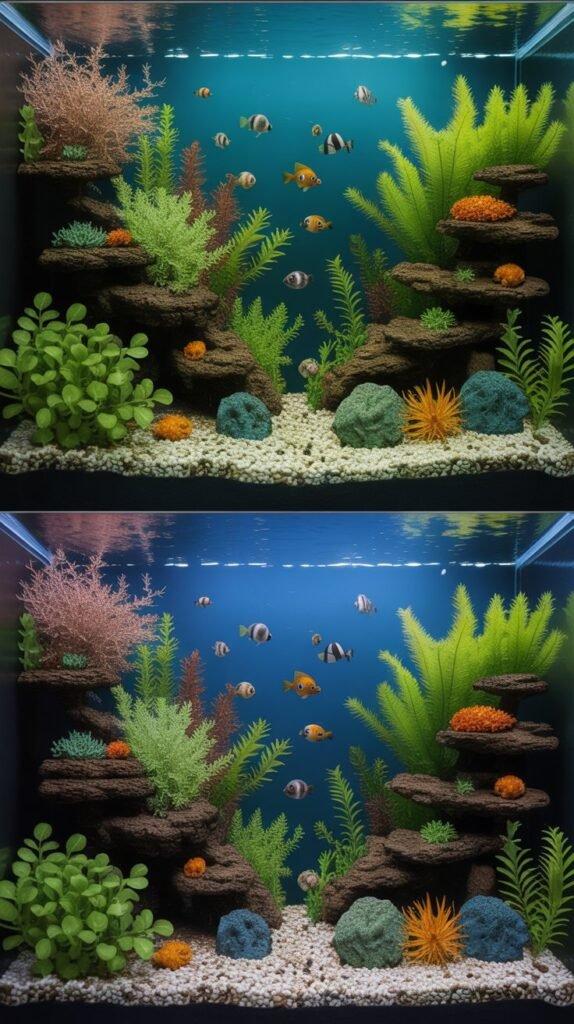
Choosing the right macroalgae is crucial for success.
- Chaetomorpha (Chaeto): The most popular choice, fast-growing, non-invasive.
- Caulerpa: Grows rapidly but must be managed to prevent spreading.
- Gracilaria: Great for nutrient export and can be used as fish food.
- Halimeda: Attractive but slow-growing, better for display refugiums.
Freshwater vs. Saltwater Refugiums
Freshwater Refugium
- Focuses on plants like Java moss, Hornwort, and Anubias.
- Useful for breeding and fry protection.
- Helps stabilize pH and oxygen levels.
Saltwater Refugium
- Primarily used in reef tanks.
- Supports macroalgae, copepods, and live sand.
- Essential for nutrient control in marine environments.
Common Mistakes to Avoid
- Too Much Flow – Blasting water can wash away pods and algae.
- Poor Lighting – Weak light stunts algae growth.
- Neglecting Maintenance – Overgrown algae can decay and release nutrients back.
- Wrong Algae Choice – Invasive species like some Caulerpa can cause issues.
- Skipping Seeding – Without pods, the refugium won’t provide live food benefits.
Long-Term Maintenance Tips
- Harvest macroalgae weekly to maintain balance.
- Monitor nitrate and phosphate levels regularly.
- Replace old substrate and clean detritus buildup.
- Ensure proper water circulation at all times.
- Keep refugium lighting on a reverse cycle of the display tank to stabilize pH.
Benefits of Using an Aquarium Refugium
To summarize, here’s what a refugium does for your tank:
- Enhances biological filtration.
- Reduces nuisance algae outbreaks.
- Provides a stable live food source.
- Improves water clarity and oxygenation.
- Protects fry and delicate species.
- Increases overall tank stability.
Conclusion
An aquarium refugium is more than just an optional upgrade—it’s a powerful natural filtration and support system for any tank. Whether you’re running a freshwater planted aquarium or a saltwater reef system, a refugium provides nutrient export, food production, and stability that benefit your aquatic life in countless ways.
With the right setup and regular care, your refugium can transform your aquarium into a thriving, balanced, and self-sustaining ecosystem.
FAQs About Aquarium Refugium
Q1. What is the main purpose of an aquarium refugium?
A refugium acts as a safe zone for beneficial organisms, nutrient export, and biological filtration.
Q2. Can I use a refugium in a freshwater aquarium?
Yes, freshwater refugiums can house plants and fry, offering similar benefits as in saltwater systems.
Q3. How much light does a refugium need?
Macroalgae typically need 8–12 hours of medium to strong light per day.
Q4. What is the best algae for refugiums?
Chaetomorpha is the most recommended due to its fast growth, ease of use, and nutrient absorption capacity.
Q5. Do refugiums replace protein skimmers?
Not entirely. While refugiums reduce nutrients, protein skimmers remove organic waste before it breaks down. Both work well together.
Q6. How often should I harvest algae from a refugium?
Every 1–2 weeks, depending on growth. Regular trimming prevents die-off and nutrient spikes.
Q7. Can a refugium run without a sump?
Yes, hang-on-back and in-tank refugiums are available for tanks without a sump system.
Q8. Is a refugium necessary for beginners?
Not mandatory, but highly recommended for long-term stability, especially in marine and reef tanks.