
 By admin
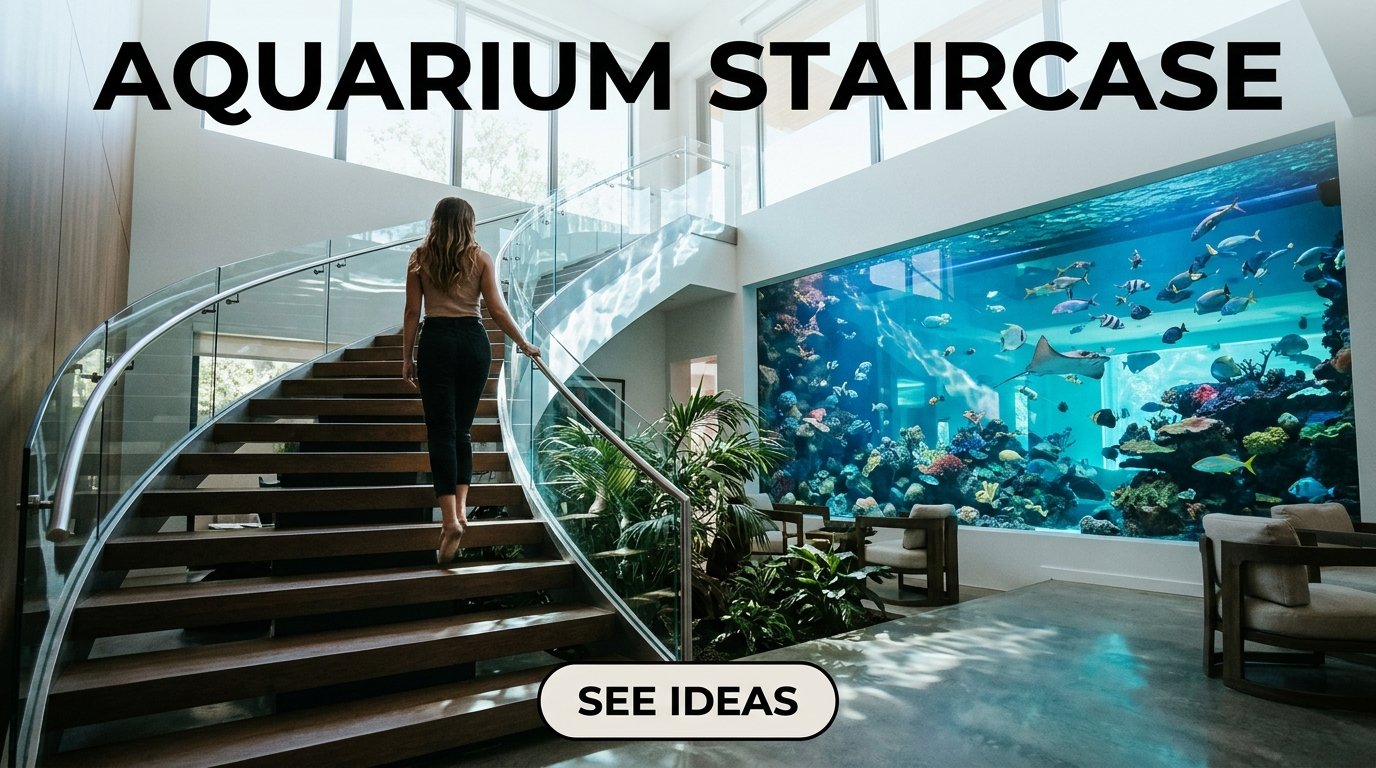
An aquarium staircase is a unique architectural feature that combines the beauty of an aquarium with the elegance of modern staircase design. Instead of using an ordinary staircase, this concept introduces a beautiful underwater display through glass panels, built-in fish tanks, or decorative aquarium structures positioned alongside or beneath the stairs. The result is a visually impressive feature that can transform an ordinary home interior into something extraordinary.
Aquarium staircase designs are becoming an interesting choice for homeowners who love modern interiors, creative architecture, and aquatic environments. Depending on the available space, an aquarium can be installed beneath a staircase, integrated into a staircase wall, or designed as a transparent feature alongside the steps.
Whether you have a compact home, a spacious living room, or a luxury house with an open staircase, there are several ways to incorporate an aquarium into your staircase design. However, the most important consideration is balancing appearance with structural safety, proper aquarium support, and the long-term needs of fish.
In this guide, you will discover beautiful aquarium staircase ideas, different design styles, suitable fish and plants, installation considerations, and practical maintenance tips.
1. Under Staircase Aquarium Design
An under staircase aquarium is one of the most practical ways to combine a fish tank with staircase architecture. The unused space beneath the stairs can become a beautiful underwater display instead of remaining an empty or cluttered area.
A large rectangular aquarium can be installed inside a custom-built cabinet or a purpose-designed enclosure. Add aquatic plants, natural stones, driftwood, and colorful fish to create an attractive focal point.
This design works especially well in homes with open staircases because the aquarium can be viewed from the living room or entrance area.
Before installation, measure the available space carefully and ensure the tank has sufficient height, width, and maintenance access.
2. Modern Glass Aquarium Staircase
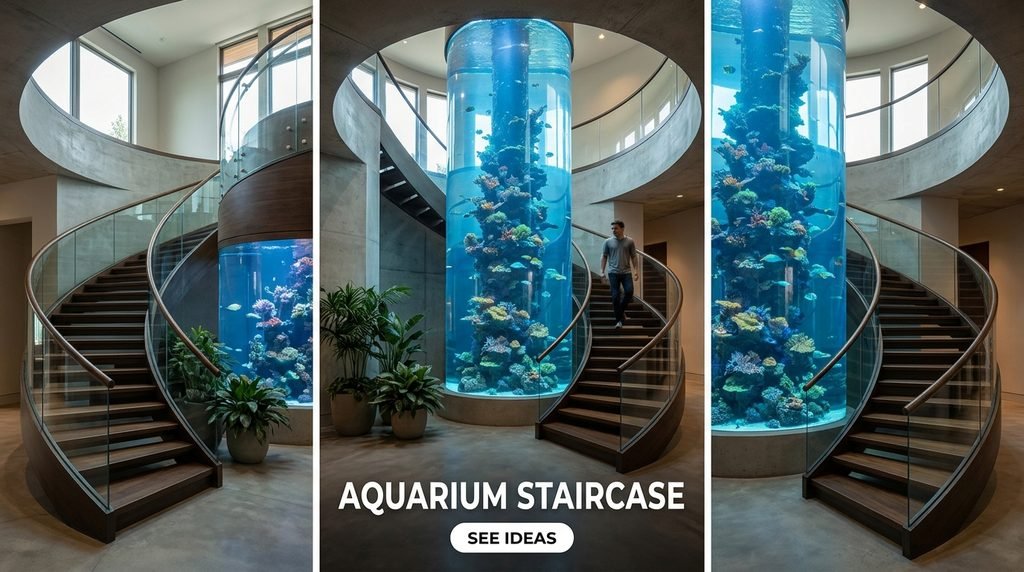
A modern glass aquarium staircase creates a clean and contemporary appearance. This design uses transparent glass surfaces and minimalist architectural details to connect the aquarium with the staircase.
One approach is to install a separate aquarium beside the staircase, using a custom frame that matches the stair materials. Another option is to use aquarium glass as a decorative feature in an adjacent wall.
The glass should be specifically manufactured for aquarium use, with suitable thickness and construction for the water pressure involved.
Do not assume ordinary staircase glass or railing panels can safely hold aquarium water. Aquarium construction and architectural glazing have different engineering requirements.
3. Luxury Aquarium Staircase
A luxury aquarium staircase can become the main attraction of a modern home. It combines premium materials, attractive lighting, and carefully planned aquatic landscaping.
You can create this look with a large built-in aquarium beneath the staircase, elegant stone finishes, concealed equipment cabinets, and carefully arranged aquatic plants.
Popular design elements include:
- Large transparent aquarium panels
- Natural stone backgrounds
- Custom wooden cabinetry
- Integrated LED aquarium lighting
- Minimalist staircase railings
- Decorative aquatic plants
- Hidden filtration equipment
The key is to keep the design balanced. A well-designed aquarium should complement the staircase rather than make the surrounding space look overcrowded.
4. Aquarium Built into a Staircase Wall
An aquarium built into a staircase wall is a creative option for homeowners who want a clean, integrated appearance.
Instead of placing a traditional fish tank on the floor, the aquarium is installed within a specially designed wall opening beside the stairs.
A rectangular aquarium can create a beautiful viewing window from the staircase landing or hallway.
This design requires careful planning because the wall must provide adequate structural support and space for the aquarium, filtration, plumbing, and maintenance access.
Never cut into a load-bearing wall or modify structural elements without consulting a qualified architect or structural engineer.
5. Aquarium Under Floating Stairs
Floating staircases have a modern appearance because their steps seem to extend from the wall without traditional visible support.
An aquarium beneath or beside floating stairs can create an impressive contrast between architectural simplicity and natural aquatic movement.
A low-profile aquarium beneath the staircase can provide a wide viewing area while maintaining the open appearance of the stairs.
Use a properly engineered aquarium stand and keep enough clearance for cleaning and equipment servicing.
This design is particularly attractive in contemporary homes with open-plan living areas.
6. Staircase Aquarium with Natural Aquascaping
Natural aquascaping can make an aquarium staircase look like a miniature underwater landscape.
Instead of relying on artificial decorations, use aquatic plants, natural stones, and driftwood to create a realistic environment.
You can arrange taller plants toward the back, shorter plants near the front, and rocks around the central focal point.
Popular aquarium plants include:
- Java fern
- Anubias
- Java moss
- Vallisneria
- Amazon sword
- Cryptocoryne
- Water wisteria
Choose plants according to your aquarium lighting, water parameters, and maintenance preferences.
A natural aquascape can create a peaceful visual contrast with modern materials such as concrete, glass, metal, and wood.
7. Aquarium Staircase with LED Lighting
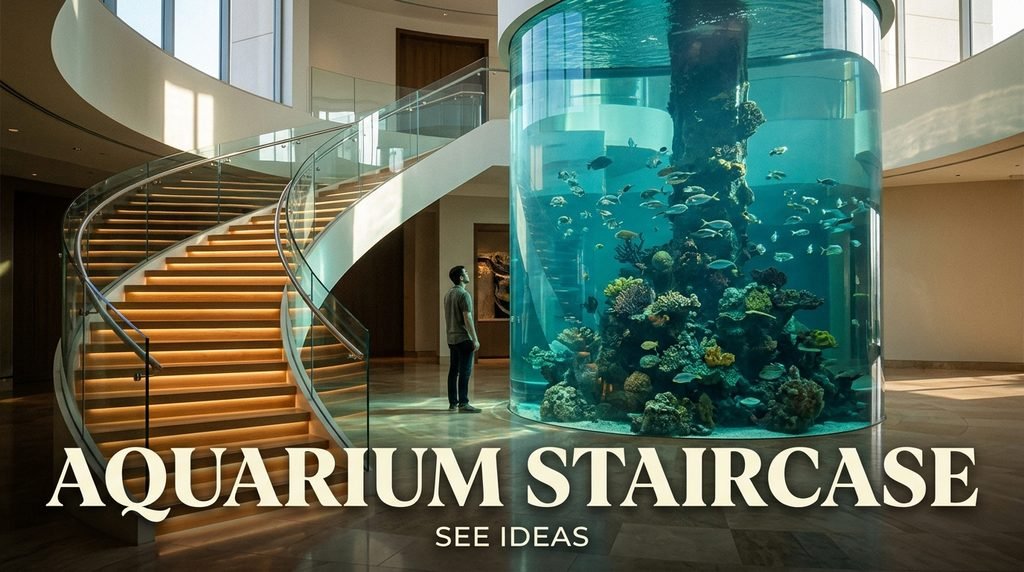
Lighting can make an aquarium staircase look particularly attractive in the evening.
LED aquarium lights can highlight aquatic plants, decorative stones, driftwood, and fish. You can also install subtle architectural lighting around the staircase to connect the aquarium with the surrounding interior.
Consider using separate lighting systems for the aquarium and staircase. Aquarium lighting should be selected according to plant requirements, while architectural lighting can focus on steps, walls, and decorative details.
Use a timer to maintain a consistent aquarium lighting schedule. Avoid excessive illumination because it can encourage algae growth.
All electrical equipment should be installed safely, with suitable protection against water and moisture.
8. Aquarium Staircase with Wooden Finishes
Wooden finishes can make an aquarium staircase feel warm and welcoming.
A custom wooden cabinet beneath the stairs can conceal filtration equipment, plumbing, and storage accessories while leaving the aquarium visible.
Choose moisture-resistant materials and finishes suitable for the surrounding environment. Protect wooden surfaces from water spills and humidity.
The aquarium itself should sit on a properly engineered support structure. Decorative wooden panels should not be expected to carry the aquarium’s weight unless specifically designed for that purpose.
This style works well in homes with wooden steps, natural flooring, and warm interior colors.
9. Minimalist Aquarium Staircase
A minimalist aquarium staircase focuses on simplicity and clean architectural lines.
Use a rectangular aquarium with a limited number of aquatic plants, subtle decorations, and a simple background.
A black, white, gray, or natural stone finish can complement the surrounding staircase.
Avoid filling the aquarium with too many ornaments. Leaving open swimming areas and using a small selection of plants often creates a more elegant appearance.
This design is suitable for modern homes where simplicity and functionality are important.
10. Aquarium Under a Spiral Staircase
Spiral staircases create interesting spaces underneath their curved structure. These areas can sometimes accommodate a custom aquarium.
A curved or rounded aquarium may complement the shape of the staircase, while a rectangular tank can provide a more practical alternative if sufficient space is available.
The design should account for the staircase’s support structure, available headroom, and access for aquarium maintenance.
Avoid placing a large tank where it blocks movement around the staircase or makes the area difficult to clean.
11. Large Aquarium Beside a Grand Staircase
If your home has a wide staircase or an open double-height entrance, a large aquarium beside the stairs can create an impressive visual feature.
A floor-to-ceiling aquarium display may be possible as a separate engineered structure, with viewing panels positioned to complement the staircase.
This design requires professional planning because large aquariums contain substantial amounts of water and create significant loads.
The filtration system, plumbing, electrical equipment, and maintenance access should be planned before construction begins.
12. Aquarium Staircase with a Stone Background
A stone background can give a staircase aquarium a natural and dramatic appearance.
Use aquarium-safe rock arrangements to create underwater depth and texture. You can combine stones with driftwood and plants to build a natural aquascape.
For a coordinated interior design, use similar stone finishes around the staircase or on nearby walls.
Make sure rocks are stable and suitable for aquarium water. Avoid placing heavy stones in positions where they could fall or damage the aquarium glass.
13. Small Aquarium Under a Compact Staircase
Not every home has enough space for a large staircase aquarium. A small aquarium can still create an attractive feature beneath a compact staircase.
Choose a tank that fits comfortably within the available area and allows easy access to the filter and other equipment.
A planted aquarium without fish can be a particularly practical choice for a small decorative space.
If you want to keep fish, select an appropriate tank size based on the species’ adult size, swimming needs, and water-quality requirements. Do not choose a tiny aquarium simply because it fits into a narrow opening.
14. Aquarium Staircase with a Built-In Cabinet
A built-in cabinet is useful for creating a neat and organized staircase aquarium.
The cabinet can conceal aquarium equipment, fish food, testing supplies, and maintenance tools.
You can design the front with clean doors or removable panels that match the staircase and surrounding furniture.
The cabinet must provide adequate ventilation, moisture protection, and easy access to equipment. It should also allow the aquarium to be removed or serviced when necessary.
Avoid enclosing filters, pumps, and electrical equipment in a space with insufficient airflow.
15. Double-Sided Aquarium Near the Staircase
A double-sided aquarium allows people to view the same underwater display from two different areas.
For example, a tank placed beside the staircase could be visible from both the living room and hallway.
This design can create a beautiful connection between separate interior spaces.
A double-sided aquarium requires careful planning of the tank’s support, filtration, lighting, and maintenance access. Make sure both viewing sides remain easy to clean and inspect.
16. Aquarium Staircase with a Tropical Theme
A tropical-themed staircase aquarium can bring vibrant colors and lush greenery into your home.
Use suitable tropical aquarium plants, natural stones, and carefully selected freshwater fish to create an attractive underwater environment.
Popular fish options for appropriate freshwater aquariums include:
- Guppies
- Neon tetras
- Platies
- Corydoras catfish
- Harlequin rasboras
- Selected peaceful dwarf cichlids
Not all these species have identical water requirements or social needs. Research compatibility and provide suitable group sizes, swimming space, and water conditions before combining them.
17. Aquarium Staircase with a Black Background
A black aquarium background can create a dramatic and sophisticated appearance.
It makes many fish colors and green aquatic plants stand out while helping hide equipment and visual distractions.
You can combine a black background with dark stone, natural driftwood, and carefully positioned LED lighting.
This style works particularly well with modern staircases featuring black metal railings, dark wood, or neutral wall colors.
18. Aquarium Staircase with a Waterfall Feature
A waterfall feature can add movement and the sound of flowing water to an aquarium display.
You can install a suitable aquarium filter with a waterfall-style outlet or create a separate decorative water feature beside the aquarium.
Make sure the water movement is appropriate for the fish and does not create excessive splashing or noise.
The equipment must be easy to access, and any water circulation system should be designed to prevent leaks and unwanted water damage around the stairs.
Best Fish for a Staircase Aquarium
The best fish for an aquarium staircase depend on the tank’s size, water conditions, filtration, and temperature.
| Fish | Appearance | Important Consideration |
|---|---|---|
| Guppies | Colorful tails and patterns | Keep suitable male-to-female ratios if mixed |
| Neon tetras | Bright blue and red markings | Prefer groups and stable conditions |
| Platies | Various attractive colors | Need appropriate swimming space |
| Corydoras catfish | Peaceful bottom-dwelling fish | Keep suitable groups on appropriate substrate |
| Harlequin rasboras | Attractive patterned bodies | Prefer groups |
| Betta fish | Long, colorful fins | Usually best kept according to individual compatibility needs |
| Angelfish | Elegant body shape | Require a suitably tall and spacious aquarium |
Avoid overstocking the aquarium. Choose fish according to their adult size and social requirements rather than their appearance alone.
Best Plants for an Aquarium Staircase
Aquatic plants can make a staircase aquarium look more natural and help create a visually balanced underwater landscape.
| Aquarium Plant | Main Feature | Placement |
|---|---|---|
| Anubias | Broad, attractive leaves | Attached to rocks or driftwood |
| Java fern | Textured green leaves | Midground or background |
| Java moss | Fine, dense growth | Rocks and wood |
| Vallisneria | Long, flowing leaves | Background |
| Amazon sword | Large decorative leaves | Background in larger tanks |
| Cryptocoryne | Attractive leaf shapes | Foreground or midground |
| Water wisteria | Fast-growing foliage | Midground or background |
Select plants based on aquarium lighting, substrate, and water conditions. Some plants grow slowly and need little maintenance, while others require regular trimming.
Important Things to Consider Before Installing an Aquarium Staircase
An aquarium staircase may look beautiful, but its installation requires more planning than a standard decorative fish tank.
Structural Support
Water weighs approximately one kilogram per liter. A 200-liter aquarium therefore contains about 200 kilograms of water alone. The glass, substrate, rocks, equipment, and cabinet add even more weight.
Have the support structure and floor loading assessed by a qualified professional before installing a large aquarium.
Aquarium Glass and Construction
Use an aquarium designed and manufactured for the intended size and water pressure. The glass thickness, bracing, joints, and support arrangement must all be appropriate.
Ordinary decorative glass or staircase railing panels should never be used as a substitute for properly engineered aquarium construction.
Maintenance Access
An aquarium needs regular cleaning, water changes, feeding, and equipment servicing.
Make sure there is enough space to reach the top of the tank, remove equipment, and clean the glass. A beautiful aquarium that cannot be maintained conveniently can become a long-term problem.
Filtration and Water Quality
Choose a filtration system suitable for the tank volume and fish population.
Cycle the aquarium before introducing fish and regularly monitor ammonia, nitrite, nitrate, and other relevant water parameters.
Moisture Protection
Staircase areas often contain wooden finishes, electrical outlets, flooring, and decorative materials that can be damaged by water.
Use suitable waterproofing around the aquarium and protect nearby surfaces against spills and condensation.
Electrical Safety
Aquarium heaters, filters, lights, and pumps require electricity. Use properly rated equipment, suitable electrical protection, and safe cable arrangements.
Keep electrical connections away from possible leaks and splashes. Have installations checked by a qualified electrician.
How to Maintain an Aquarium Staircase
Regular maintenance keeps your aquarium attractive and protects the surrounding staircase.
- Check water temperature regularly.
- Test water quality according to your aquarium’s needs.
- Remove uneaten food and dead plant material.
- Perform appropriate partial water changes.
- Clean aquarium glass when algae develops.
- Maintain filters according to their instructions.
- Trim aquatic plants when necessary.
- Inspect pipes, pumps, and connections for leaks.
- Keep the surrounding floor and cabinet dry.
- Check electrical equipment and cables regularly.
A simple maintenance schedule can prevent many common aquarium problems.
Frequently Asked Questions About Aquarium Staircases
1. What is an aquarium staircase?
An aquarium staircase is a staircase design that incorporates an aquarium beneath, beside, or within the surrounding staircase structure. It combines architectural design with an underwater display to create a decorative feature.
2. Can I install an aquarium under my staircase?
Yes. The space beneath a staircase can be used for a built-in aquarium if there is enough room for the tank, filtration equipment, support structure, and maintenance access.
3. How much does an aquarium staircase cost?
The cost depends on aquarium size, glass specifications, filtration, lighting, cabinetry, plumbing, and installation complexity. Small under-staircase aquariums are generally less expensive than large custom-built architectural displays. Obtain professional quotations before starting construction.
4. Is an aquarium staircase safe?
It can be safe when properly designed and installed. The aquarium needs a suitable support structure, correctly specified glass, appropriate waterproofing, and safe electrical installation. Large installations should be reviewed by qualified structural and aquarium professionals.
5. What fish are best for an aquarium staircase?
Guppies, neon tetras, platies, rasboras, and other suitable freshwater species can be attractive choices. The correct selection depends on tank size, water conditions, compatibility, and maintenance requirements.
6. Can I install an aquarium inside a staircase wall?
Yes, but the wall opening and aquarium support must be professionally designed. Structural walls should never be cut or modified without proper engineering approval.
7. Does an aquarium staircase need special lighting?
The aquarium needs lighting appropriate for its plants and inhabitants. LED aquarium lights are a popular option. Additional architectural lighting can highlight the staircase, but it should be controlled separately.
8. How do I hide aquarium equipment under the stairs?
A custom cabinet can conceal filters, pumps, and maintenance supplies. However, it must provide sufficient ventilation, moisture protection, and convenient access for servicing.
9. Can I build an aquarium under floating stairs?
Yes. A separate, properly supported aquarium can be installed beneath or beside floating stairs if sufficient space is available. The installation must not interfere with the staircase’s structural supports.
10. Is an aquarium staircase suitable for a small house?
Yes. A compact under-staircase aquarium can work well in a small home. Choose a suitable tank size and avoid sacrificing essential walking space or access for maintenance.
Conclusion
An aquarium staircase is a creative way to combine interior architecture and aquatic beauty. From a simple under-staircase fish tank to a luxury glass display beside a grand staircase, there are many designs that can transform an ordinary home into a visually interesting space.
The best design is one that balances appearance, available space, structural safety, and the needs of aquatic life. Choose suitable aquarium materials, reliable filtration, appropriate fish and plants, and a location that allows convenient maintenance.
With careful planning and professional installation where necessary, an aquarium staircase can become a beautiful focal point that brings the peaceful atmosphere of an underwater world into your home.