
 By weeebooo70@gmail.com
Keeping a saltwater aquarium is one of the most rewarding experiences in the aquarist hobby. The vibrant colors, fascinating behaviors, and incredible diversity of saltwater aquarium fish make them the jewels of the marine world. However, caring for these fish requires knowledge, patience, and attention to detail.
This comprehensive guide will walk you through everything you need to know about saltwater aquarium fish—from setting up your tank to choosing the right species, feeding, maintenance, and long-term care. Whether you’re a beginner or an experienced aquarist, this article will help you create a thriving marine environment.
What Are Saltwater Aquarium Fish?
Saltwater aquarium fish are species that naturally live in ocean environments with saline water. Unlike freshwater fish, they require specific conditions such as stable salinity, temperature, and pH levels.
These fish are found in coral reefs, open seas, and coastal waters around the world. Their vivid colors and unique personalities make them highly desirable for home aquariums. Some popular examples include Clownfish, Tang, Goby, Angel, and Wrasse species.
Saltwater fish can be broadly divided into two categories:
- Reef-Safe Fish – Species that can live peacefully in reef tanks without harming corals or invertebrates (e.g., Clownfish, Chromis, Gobies).
- Non-Reef-Safe Fish – Species that may nip at or eat corals and invertebrates (e.g., Triggerfish, Lionfish, Pufferfish).
Why Choose Saltwater Aquarium Fish?
While saltwater aquariums require more care than freshwater setups, the rewards are unmatched. Here’s why many aquarists prefer saltwater fish:
- Unmatched beauty – Their colors are far more vivid than freshwater species.
- Diverse personalities – Many saltwater fish exhibit fascinating behaviors and social interactions.
- Variety of species – From tiny Gobies to majestic Angelfish, options are endless.
- Reef compatibility – Many species live harmoniously with corals, creating a natural reef ecosystem.
- Educational and therapeutic – Maintaining a marine tank teaches ocean ecology and offers stress relief.
Setting Up a Saltwater Aquarium
Before introducing saltwater aquarium fish, you must first establish a stable marine environment.
1. Choose the Right Tank Size
For beginners, a tank of at least 30–50 gallons is ideal. Larger tanks provide more stable water conditions, making it easier to maintain water quality.
2. Use Quality Marine Equipment
Essential items include:
- Protein skimmer – Removes organic waste from the water.
- Powerhead or wave maker – Ensures proper water circulation.
- Heater and thermometer – Maintains consistent temperature (24–27°C).
- Lighting system – Essential for coral growth and fish health.
- Marine filter and sump – Provides biological and mechanical filtration.
3. Prepare Saltwater
Use marine salt mix and RO/DI (reverse osmosis deionized) water to achieve the correct salinity level of 1.020–1.026 specific gravity.
4. Cycle the Aquarium
Before adding fish, the aquarium must go through the nitrogen cycle to establish beneficial bacteria that convert toxins into safe compounds. This process typically takes 4–8 weeks.
5. Test and Stabilize Water Parameters
Maintain the following:
- Temperature: 24–27°C
- pH: 8.0–8.4
- Salinity: 1.020–1.026
- Ammonia: 0 ppm
- Nitrite: 0 ppm
- Nitrate: <20 ppm
Top Saltwater Aquarium Fish for Beginners
If you’re new to marine aquariums, start with hardy, easy-to-care-for fish.
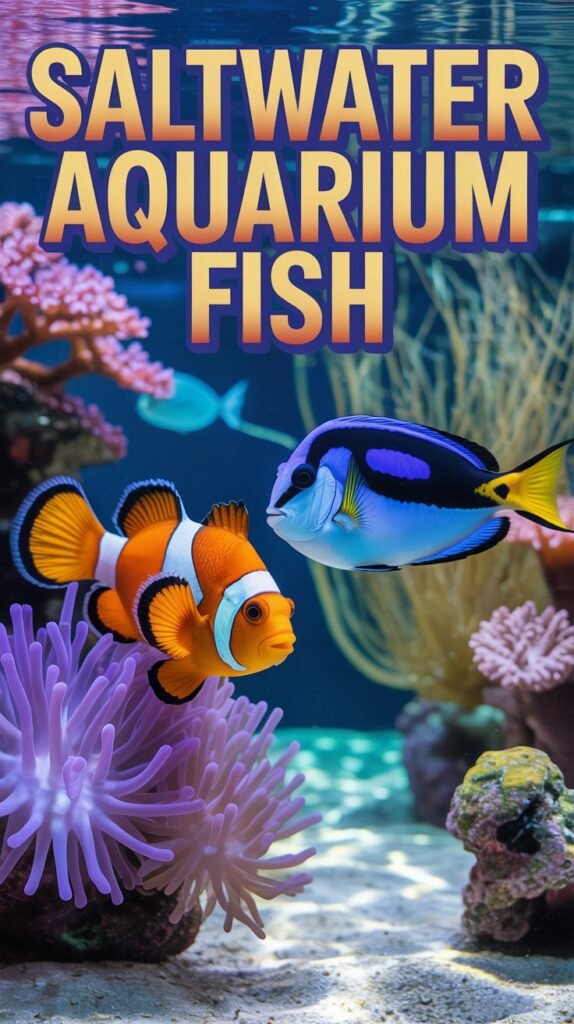
1. Clownfish (Amphiprioninae)
Perhaps the most iconic saltwater fish, Clownfish are hardy, colorful, and easy to care for. They thrive in pairs and often form symbiotic relationships with sea anemones.
- Size: 3–4 inches
- Diet: Omnivore
- Tank Size: 20+ gallons
- Temperament: Peaceful
2. Damselfish (Pomacentridae)
Damselfish are tough and adaptable, making them ideal starter fish. However, they can be territorial in small tanks.
- Size: 2–3 inches
- Diet: Omnivore
- Tank Size: 30+ gallons
- Temperament: Semi-aggressive
3. Firefish Goby (Nemateleotris magnifica)
Known for their elegance and peaceful nature, Firefish Gobies are excellent community fish.
- Size: 2–3 inches
- Diet: Carnivore (small meaty foods)
- Tank Size: 20+ gallons
- Temperament: Peaceful
4. Royal Gramma (Gramma loreto)
This purple-and-yellow beauty is reef-safe and easy to care for, making it perfect for smaller tanks.
- Size: 3 inches
- Diet: Carnivore
- Tank Size: 30+ gallons
- Temperament: Peaceful
5. Blenny (Blenniidae)
Blennies are fun to watch as they perch on rocks and eat algae. They’re also excellent at keeping your tank clean.
- Size: 4–5 inches
- Diet: Herbivore/Omnivore
- Tank Size: 30+ gallons
- Temperament: Peaceful
Intermediate and Advanced Saltwater Fish
Once your experience grows, you can explore more challenging species.
1. Tang (Surgeonfish)
Tangs are active swimmers that require large tanks. They help control algae growth and bring bright color to your aquarium.
- Size: 6–12 inches
- Tank Size: 75+ gallons
- Diet: Herbivore (algae, seaweed)
- Temperament: Semi-aggressive
2. Angelfish (Pomacanthidae)
Marine Angelfish are stunning but need stable water quality and plenty of space. Some species are not reef-safe.
- Size: 6–15 inches
- Tank Size: 100+ gallons
- Diet: Omnivore
- Temperament: Semi-aggressive
3. Wrasse (Labridae)
Wrasses are colorful, active, and useful for pest control. Some eat unwanted parasites like flatworms.
- Size: 3–8 inches
- Tank Size: 50+ gallons
- Diet: Carnivore
- Temperament: Peaceful to semi-aggressive
4. Butterflyfish (Chaetodontidae)
These elegant fish are often seen in coral reefs. They require stable conditions and may not be suitable for beginners.
- Size: 5–9 inches
- Tank Size: 75+ gallons
- Diet: Omnivore
- Temperament: Peaceful
5. Hawkfish (Cirrhitidae)
Hawkfish are small predators that perch on corals or rocks, watching their surroundings.
- Size: 4–5 inches
- Tank Size: 40+ gallons
- Diet: Carnivore
- Temperament: Semi-aggressive
Feeding Saltwater Aquarium Fish
Saltwater fish have diverse diets based on their species. It’s important to offer a variety of foods for balanced nutrition.
Types of Foods:
- Flake and pellet food – Designed for marine fish.
- Frozen or live food – Brine shrimp, mysis shrimp, or krill.
- Seaweed and algae sheets – For herbivorous fish like Tangs and Blennies.
- Coral foods – If you have reef fish and corals together.
Feeding Tips:
- Feed small portions twice a day.
- Remove uneaten food after 5 minutes.
- Rotate foods for variety.
- Supplement diet with vitamins to boost color and immunity.
Tank Mates and Compatibility
Choosing compatible tank mates is essential to avoid aggression.
Peaceful Species:
- Clownfish
- Gobies
- Firefish
- Chromis
Semi-Aggressive Species:
- Damselfish
- Wrasses
- Tangs
Aggressive Species:
- Triggerfish
- Lionfish
- Groupers
Avoid mixing aggressive and peaceful species in small tanks. Always research compatibility before introducing new fish.
Maintaining a Saltwater Aquarium
Proper maintenance is vital for the long-term health of your saltwater aquarium fish.
Daily Tasks:
- Check fish behavior and feeding response.
- Ensure equipment (filters, heaters, lights) is functioning.
Weekly Tasks:
- Test water parameters.
- Perform 10–20% water changes.
- Clean algae from glass and decorations.
Monthly Tasks:
- Clean filters using old tank water.
- Inspect for salt buildup.
- Replace worn-out equipment if necessary.
Common Diseases in Saltwater Aquarium Fish
Saltwater fish can be prone to several diseases, especially if water quality is poor.
- Marine Ich (Cryptocaryon irritans) – White spots, scratching, and labored breathing.
- Treatment: Quarantine and copper-based medications.
- Velvet Disease – Fine gold or dust-like coating on fish.
- Treatment: Copper treatment and increased aeration.
- Brooklynella (Clownfish Disease) – Mucus buildup, rapid breathing, lethargy.
- Treatment: Formalin baths and quarantine.
- Fin Rot – Torn fins caused by bacteria or stress.
- Treatment: Antibiotics and improved water conditions.
Regular observation and quarantining new fish can prevent most outbreaks.
Best Practices for Healthy Saltwater Fish
- Quarantine new arrivals for 2–3 weeks.
- Avoid overcrowding – Too many fish can cause ammonia spikes.
- Provide hiding places – Rocks and corals reduce stress.
- Maintain stable salinity – Sudden changes can be fatal.
- Use high-quality marine salt mix for water changes.
- Avoid using freshwater fish food – It lacks essential marine nutrients.
Popular Saltwater Fish Combinations
For a peaceful, colorful display, try the following combinations:
- Clownfish + Goby + Royal Gramma – Great for beginners, vibrant, and reef-safe.
- Tang + Wrasse + Blenny – Perfect for medium-sized tanks with active swimmers.
- Firefish + Damselfish + Clownfish – Adds color and diversity with minimal conflict.
Always add fish slowly, one or two at a time, allowing your biological filter to adjust.
Conclusion
Keeping saltwater aquarium fish is a blend of art and science. It requires commitment, but the rewards are truly breathtaking. By setting up the right tank, maintaining stable conditions, and choosing compatible fish, you can create a thriving marine ecosystem that mirrors the beauty of the ocean.
Remember: success in saltwater aquariums comes from patience, observation, and care. With time, your aquarium will flourish into a stunning underwater world full of life and color.
FAQs About Saltwater Aquarium Fish
Q1: Are saltwater fish harder to keep than freshwater fish?
A: Yes, saltwater fish require more precise water conditions and maintenance, but modern equipment makes it easier for beginners.
Q2: How often should I feed my saltwater fish?
A: Feed small portions once or twice a day, ensuring all food is eaten within a few minutes.
Q3: Can I mix freshwater and saltwater fish?
A: No. Freshwater and saltwater fish have completely different environmental needs and cannot survive in the same water.
Q4: What is the ideal salinity for saltwater aquarium fish?
A: Maintain a salinity level of 1.020–1.026 specific gravity using a hydrometer or refractometer.
Q5: Do I need live rock in my saltwater aquarium?
A: Yes, live rock provides natural filtration, beneficial bacteria, and hiding places for fish.
Q6: How many fish can I keep in my saltwater tank?
A: A general rule is one inch of fish per five gallons of water, depending on species and filtration strength.
Q7: What is the lifespan of saltwater fish?
A: Most saltwater fish live 5–15 years, though some species like Clownfish can live over 20 years with proper care.
Q8: Can I start with a nano reef tank?
A: Yes, but nano tanks are more sensitive to parameter changes. Beginners are advised to start with at least a 30–50-gallon setup.