
 By admin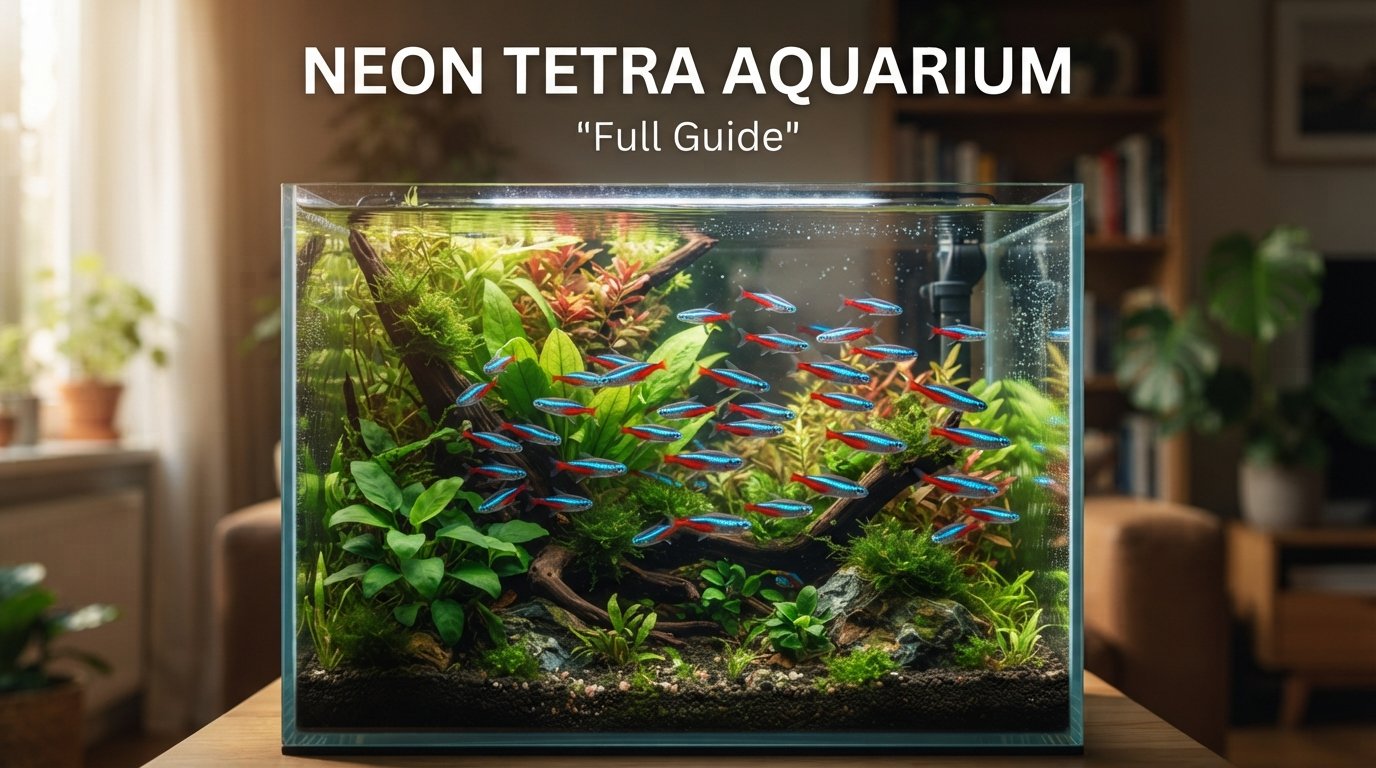
A tetra aquarium can be one of the most colorful and peaceful additions to a freshwater fish collection. Tetras are small schooling fish that come in many varieties, making them suitable for a wide range of planted and community aquariums. Their active swimming behavior and bright colors look especially impressive in groups.
Whether you are interested in neon tetras, cardinal tetras, ember tetras, or another variety, creating the right environment is essential for keeping them healthy.
What Is a Tetra Aquarium?
A tetra aquarium is a freshwater aquarium designed to provide suitable conditions for one or more species of tetra fish.
Tetras are generally schooling fish, so they are best kept in groups rather than individually.
A good tetra aquarium usually includes:
- Open swimming space
- Live plants
- Gentle water movement
- Suitable filtration
- Natural substrate
- Hiding areas
- Stable water parameters
Popular Types of Tetra Fish
There are many tetra species available to aquarium keepers.
Popular varieties include:
- Neon Tetra
- Cardinal Tetra
- Ember Tetra
- Black Skirt Tetra
- Glowlight Tetra
- Rummy Nose Tetra
- Lemon Tetra
- Congo Tetra
- Serpae Tetra
- Pristella Tetra
Each species has slightly different requirements, so research the specific tetra before adding it to your aquarium.
Best Aquarium Size
The appropriate aquarium size depends on the tetra species and group size.
A small group of nano tetras may be kept in a suitable smaller aquarium, while larger or more active species need significantly more swimming space.
A longer aquarium is often preferable because it provides horizontal swimming room.
Why Tetras Need Groups
Tetras are schooling fish that generally feel safer and behave more naturally when kept with others of their species.
A larger group can encourage:
- Natural schooling behavior
- More confident swimming
- Reduced stress
- Better social interaction
- More attractive displays
For many commonly kept small tetras, a group of at least six is a reasonable starting point, although larger groups often look and behave even better when the aquarium can support them.
Aquarium Setup
A tetra aquarium should provide a combination of open swimming areas and planted shelter.
A basic setup can include:
- Aquarium substrate
- Aquarium-safe rocks
- Driftwood
- Live plants
- Filter
- Heater when required
- Aquarium lighting
- Thermometer
Avoid creating a tank that is completely filled with decorations. Tetras need open areas for schooling.
Best Plants for Tetras
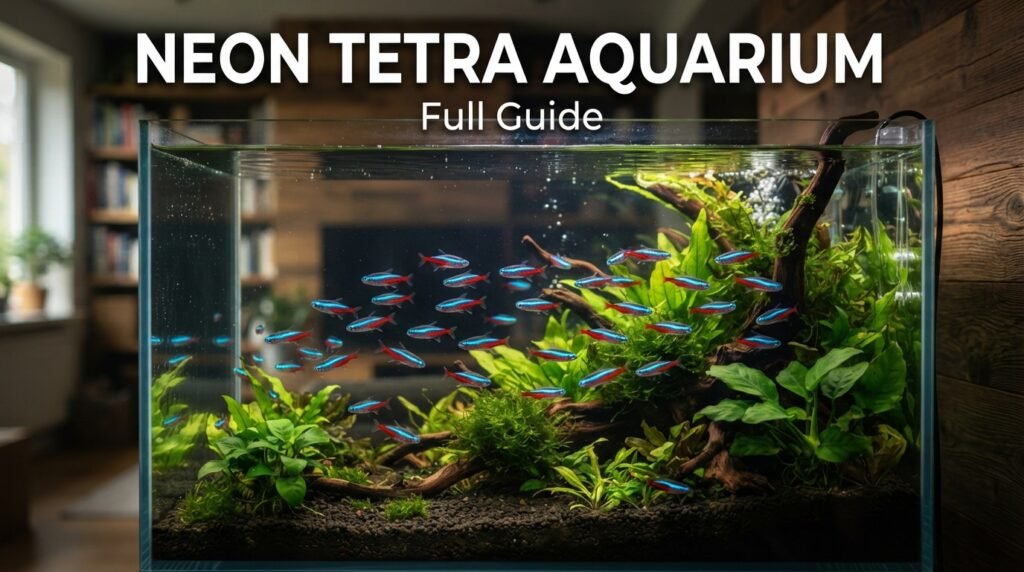
Live plants are excellent additions to a tetra aquarium.
Good choices include:
- Java Fern
- Anubias
- Amazon Sword
- Cryptocoryne
- Vallisneria
- Java Moss
- Water Sprite
- Hornwort
Tall plants can be placed toward the back while shorter plants create foreground cover.
Tetra Aquascape Ideas
Planted Forest
Use driftwood surrounded by dense plants to create an underwater forest.
Blackwater Style
Dark substrate, driftwood, leaf litter, and subdued lighting can create a blackwater-inspired environment.
Minimalist Layout
Use a few rocks, one main piece of driftwood, and carefully selected plants.
Jungle Aquarium
Dense vegetation creates shelter while leaving open areas in the center for schooling.
Best Substrate
Tetras can live with a variety of aquarium substrates.
Popular options include:
- Fine sand
- Natural gravel
- Dark gravel
- Aquasoil
The substrate should be aquarium-safe and appropriate for the plants and other inhabitants.
Water Parameters
Many commonly kept tetras prefer stable, clean freshwater conditions.
| Parameter | General Range |
|---|---|
| Temperature | Around 72–78°F (22–26°C) |
| pH | Around 6.0–7.5 |
| Ammonia | 0 ppm |
| Nitrite | 0 ppm |
| Nitrate | Low |
Requirements vary among species, so use the needs of your particular tetra as the final guide.
Filtration
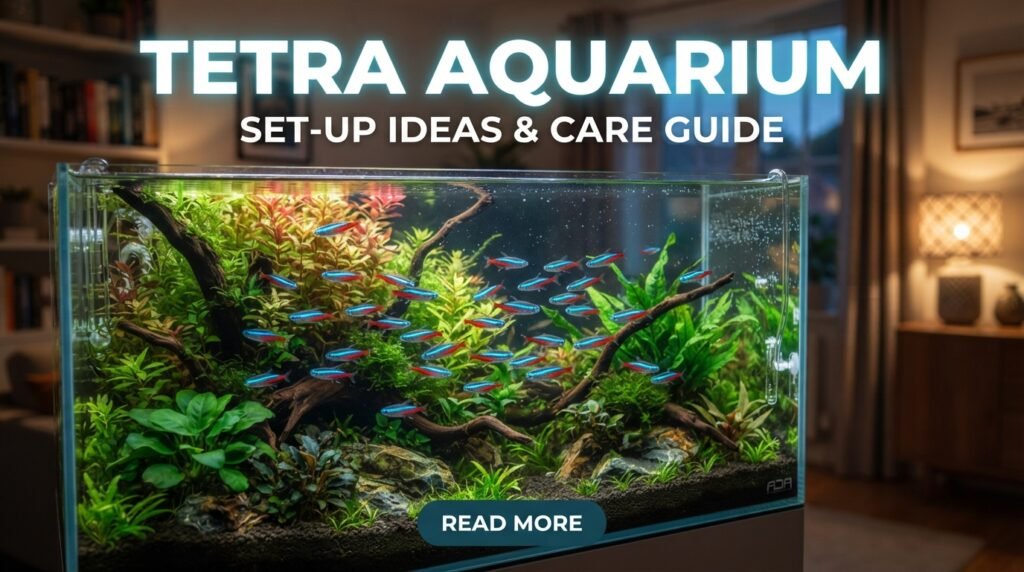
Tetras generally do best with clean, well-oxygenated water and moderate circulation.
Suitable filtration options include:
- Sponge filters
- Hang-on-back filters
- Internal filters
- Canister filters
Avoid creating excessively strong currents for small tetra species.
Lighting
Tetras usually do not require extremely intense lighting.
Moderate aquarium lighting can help:
- Show off their colors
- Support live plants
- Create a natural appearance
Floating plants can provide shaded areas that make some tetras feel more comfortable.
Feeding Tetras
Tetras are generally omnivorous and benefit from a varied diet.
Suitable foods include:
- High-quality tropical flakes
- Micro pellets
- Frozen foods
- Small live foods
- Freeze-dried foods
Feed small portions that the fish can consume quickly. Overfeeding can cause water-quality problems.
Tetra Community Tank Mates
Many peaceful fish can live with compatible tetra species.
Potential tank mates include:
- Corydoras
- Small rasboras
- Peaceful gouramis
- Small peaceful livebearers
- Otocinclus
- Compatible freshwater shrimp
Avoid aggressive or very large fish that may chase, injure, or eat small tetras.
Tetra Aquarium Maintenance
Weekly Water Changes
Perform regular partial water changes based on stocking and water quality.
Clean the Glass
Remove algae when necessary.
Maintain the Filter
Clean filter components without unnecessarily disrupting beneficial biological media.
Test the Water
Regularly monitor ammonia, nitrite, nitrate, pH, and temperature.
Observe the Fish
Watch for changes in swimming, appetite, coloration, or behavior.
Common Tetra Aquarium Mistakes
Keeping Only One Tetra
Tetras generally need companions of their own species.
Overstocking
Too many fish can cause poor water quality and stress.
Adding Fish to an Uncycled Tank
A new aquarium should be properly cycled before introducing fish.
Strong Water Flow
Excessive current can make it difficult for small tetras to swim comfortably.
Poor Water Quality
Tetras benefit from stable, clean water.
Choosing Incompatible Tank Mates
Aggressive fish can cause chronic stress and injury.
How to Make Tetras Look More Colorful
A well-designed environment can make tetra colors stand out.
Try:
- Dark natural substrate
- Green live plants
- Moderate lighting
- A darker background
- Larger schooling groups
- Clean, clear water
Avoid excessive lighting if it causes fish to hide.
Tetra Aquarium Design Ideas
Neon Tetra Display
Create a heavily planted aquarium with dark substrate and open swimming space. A large group of neon tetras can create an attractive blue-and-red schooling display.
Ember Tetra Nano Aquarium
Use a planted nano aquarium with moss, small driftwood, and subdued lighting to highlight the orange color of ember tetras.
Cardinal Tetra Planted Tank
A larger planted aquarium with tall background plants and open swimming space can showcase the striking red and blue coloration of cardinal tetras.
Community Tetra Aquarium
Combine a peaceful tetra school with compatible bottom-dwelling fish and live plants to create a balanced community environment.
Conclusion
A tetra aquarium can be a beautiful, active, and peaceful freshwater display when designed around the natural behavior of schooling fish. Provide an appropriately sized aquarium, stable water conditions, gentle filtration, suitable plants, and a group of compatible tetras.
The key is to prioritize the fish’s needs rather than simply focusing on appearance. With proper planning and regular maintenance, a tetra aquarium can become a colorful centerpiece in almost any home.
Frequently Asked Questions
How many tetras should be kept together?
Many common tetra species should be kept in groups of at least six, although larger groups are often preferable when the aquarium has enough space.
What size tank do tetras need?
The appropriate size depends on the species and group. Small species may work in smaller aquariums, while larger or more active tetras require substantially more swimming space.
Can tetras live with guppies?
Many peaceful tetra species can live with guppies when water parameters and temperament are compatible. Avoid overcrowding and monitor interactions.
Do tetras need live plants?
Live plants are not absolutely required, but they provide shelter, improve the appearance of the aquarium, and can help fish feel secure.
What do tetra fish eat?
Tetras can eat quality flakes, micro pellets, frozen foods, and appropriately sized live or freeze-dried foods.
Are tetras good for beginners?
Many common tetra species are suitable for beginners when kept in a properly cycled aquarium with stable water conditions and compatible tank mates.