
 By admin
Aquarium plants not only enhance the beauty of your aquascape but also play a vital role in creating a healthy environment for fish, shrimp, and other aquatic species. Among the wide variety of aquarium plants, Rotala Wallichii stands out as one of the most eye-catching and delicate stem plants. With its fine, needle-like leaves and vibrant reddish-pink to orange hues, it is a favorite among aquascapers who wish to create a soft, colorful contrast in their tanks.
In this comprehensive guide, we will explore everything you need to know about Rotala Wallichii in aquariums, including its origin, ideal water parameters, planting methods, maintenance, propagation, common issues, aquascaping uses, and more. By the end, you will have all the knowledge required to successfully grow and enjoy this stunning aquarium plant.
1. Introduction to Rotala Wallichii
What is Rotala Wallichii?
Rotala Wallichii is a fast-growing stem plant belonging to the family Lythraceae. It originates from Southeast Asia, particularly in regions like India, Vietnam, Laos, and Thailand, where it grows in shallow rivers, marshes, and wetlands. Known for its feathery needle-like leaves, this plant can produce shades ranging from green at the base to pinkish-red or orange at the tips when grown under optimal conditions.
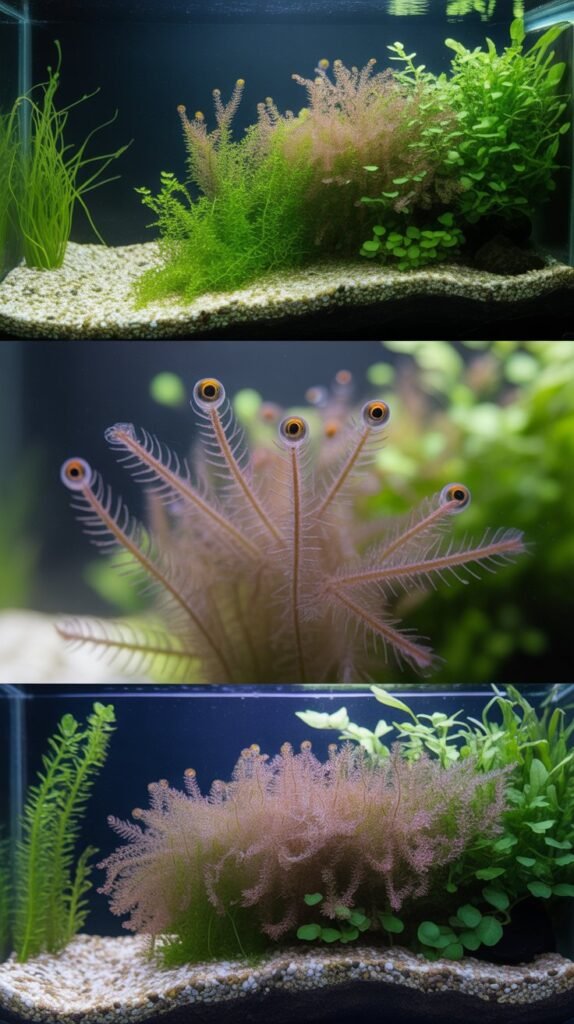
It is often considered a medium to advanced-level plant because it requires stable water conditions, adequate lighting, and CO₂ supplementation to thrive.
Key Characteristics
- Scientific name: Rotala Wallichii
- Plant type: Stem plant
- Growth rate: Medium to fast (depending on conditions)
- Height: 10–30 cm (4–12 inches)
- Coloration: Green to pinkish-red/orange under strong lighting
- Difficulty level: Medium to advanced
- Placement: Midground or background
2. Benefits of Rotala Wallichii in Aquariums
- Aesthetic Appeal – The plant adds vibrant colors and fine textures, making the aquascape look lush and natural.
- Oxygenation – Like other aquatic plants, it produces oxygen during photosynthesis, benefiting fish and shrimp.
- Natural Filtration – Absorbs nitrates, ammonia, and other toxins, keeping water parameters stable.
- Shelter for Fish and Shrimp – Its fine leaves provide cover and hiding places for fry and shrimp.
- Algae Control – Competes with algae for nutrients, reducing unwanted growth.
3. Ideal Aquarium Conditions for Rotala Wallichii
For Rotala Wallichii to show its best colors and healthy growth, you need to maintain stable and suitable tank conditions.
Tank Size
- Recommended minimum: 20 gallons (75 liters)
- Larger tanks allow better stability and space for grouping.
Lighting
- Requires moderate to high lighting (0.5–1 watt per liter).
- High-intensity LED or T5/T8 fluorescent lights are ideal.
- Strong lighting enhances red and pink coloration.
CO₂ Requirement
- CO₂ injection is highly recommended for optimal growth.
- Around 20–30 ppm CO₂ ensures vibrant coloration and faster growth.
Water Parameters
- Temperature: 22–28°C (72–82°F)
- pH: 5.5–7.0 (slightly acidic preferred)
- GH: 2–8 dGH
- KH: 0–4 dKH
- Water flow: Gentle to moderate, as strong currents may damage delicate leaves.
Substrate
- Although Rotala Wallichii can absorb nutrients from the water column, it thrives best in a nutrient-rich substrate.
- Soil-based substrates or root tabs help in faster establishment.
Fertilization
- Requires regular dosing of liquid fertilizers (micro and macro nutrients).
- Iron supplementation helps intensify red coloration.
4. Planting Rotala Wallichii in the Aquarium
Step-by-Step Guide:
- Prepare the substrate – Ensure your aquarium substrate is nutrient-rich or add root tabs.
- Trim the stems – Cut healthy stems about 3–4 inches long before planting.
- Plant in groups – Insert stems at least 2–3 cm apart to allow proper light penetration.
- Anchor properly – Push the stems gently into the substrate to avoid floating.
- Provide adequate lighting and CO₂ – Essential for rooting and vibrant growth.
Tip: Planting Rotala Wallichii in small clusters creates a bushy appearance once the stems branch out.
5. Growth and Maintenance
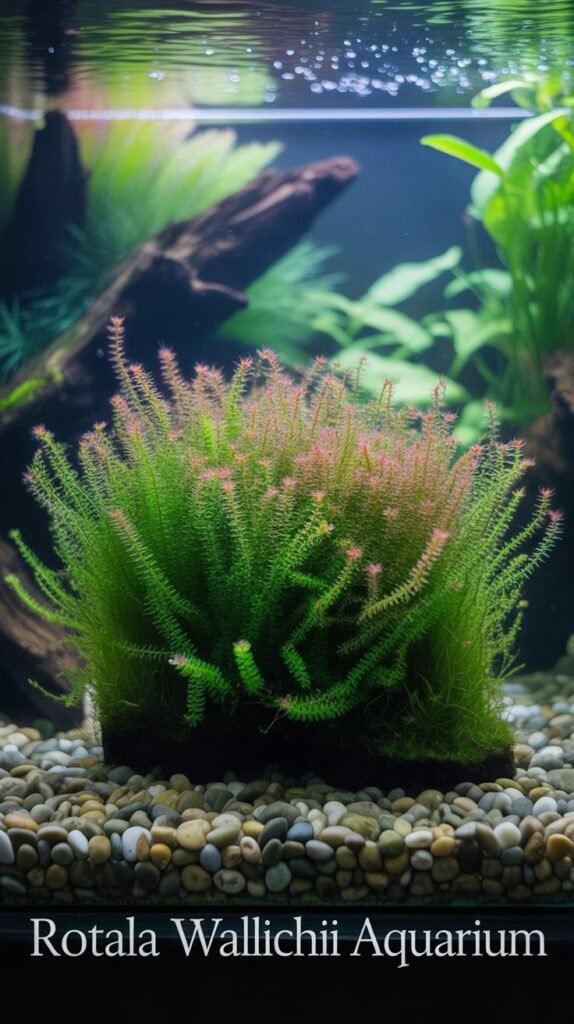
Rotala Wallichii grows relatively fast under the right conditions but requires regular trimming to maintain shape and prevent overshadowing other plants.
Trimming
- Trim the tops once they reach the water surface.
- Replant trimmed tops to encourage bushier growth.
Preventing Melting
- Avoid sudden changes in water parameters.
- Transition slowly when moving the plant from one tank to another.
Algae Prevention
- Maintain proper balance between lighting, CO₂, and fertilization.
- Regular water changes (25–40% weekly) help keep algae in check.
6. Propagation of Rotala Wallichii
Propagation is simple and similar to other stem plants.
- Cut a healthy stem about 4–6 inches long.
- Remove the lower leaves near the cutting point.
- Plant the cutting into the substrate.
- Within a few weeks, roots will develop, and new shoots will grow.
Propagation ensures continuous replenishment of the plant and helps in creating a fuller aquascape.
7. Common Problems and Solutions
1. Leaves Turning Brown or Melting
- Cause: Poor lighting, lack of CO₂, or unstable water parameters.
- Solution: Increase lighting, add CO₂ injection, and stabilize water quality.
2. Pale Green or Yellowish Leaves
- Cause: Nutrient deficiency (especially iron).
- Solution: Add liquid fertilizers and iron supplements.
3. Weak Growth or Stunted Stems
- Cause: Insufficient CO₂ and low light intensity.
- Solution: Improve CO₂ supply and upgrade lighting system.
4. Algae Growth on Leaves
- Cause: Imbalance in nutrients and lighting.
- Solution: Reduce lighting duration, adjust fertilizers, and introduce algae eaters like Amano shrimp.
8. Aquascaping with Rotala Wallichii
Rotala Wallichii is a popular choice in aquascaping due to its striking appearance and ability to add vibrant colors.
Placement Ideas
- Background plant: Works best in the background due to its height.
- Midground accents: Can also be used in the midground of larger tanks.
- Contrast creation: Pair with green plants like Vallisneria, Hygrophila, or Cryptocoryne.
- Nature-style aquascapes: Adds a soft, flowing texture, resembling underwater bushes.
- Dutch-style aquascapes: Perfect for creating colorful rows and contrasts.
Best Plant Companions
- Rotala Rotundifolia
- Ludwigia Repens
- Hemianthus Callitrichoides (dwarf baby tears)
- Hygrophila Corymbosa
- Alternanthera Reineckii
9. Tank Mates for Rotala Wallichii
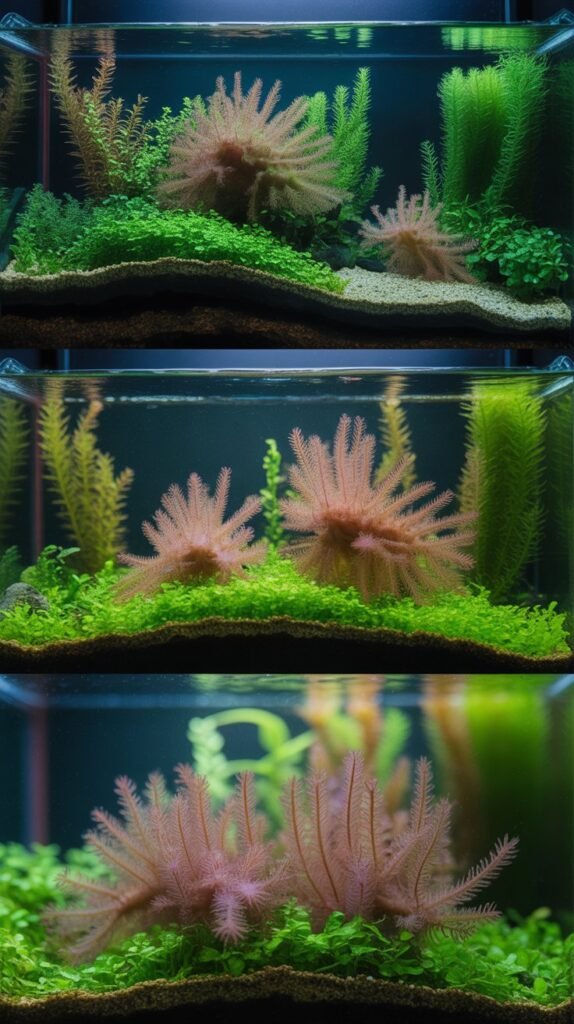
This delicate plant is best kept with peaceful fish and invertebrates that won’t damage its fragile leaves.
Ideal Tank Mates
- Guppies
- Neon Tetras
- Cardinal Tetras
- Rasboras
- Otocinclus Catfish
- Amano Shrimp
- Cherry Shrimp
Tank Mates to Avoid
- Goldfish
- Large Cichlids
- Plecos (that nibble on plants)
- Any aggressive or plant-eating species
10. Tips for Success with Rotala Wallichii
- Always use high-intensity lighting for rich coloration.
- Keep CO₂ supplementation consistent to prevent melting.
- Regularly dose fertilizers to avoid nutrient deficiencies.
- Perform weekly water changes to maintain clean water.
- Trim regularly for a bushy, compact growth pattern.
11. Is Rotala Wallichii Suitable for Beginners?
Rotala Wallichii is not the easiest plant for beginners because it requires:
- Stable water parameters
- High lighting
- CO₂ injection
- Regular trimming and care
However, intermediate and advanced aquascapers will find it highly rewarding due to its stunning color contrasts and decorative value.
FAQs About Rotala Wallichii Aquarium
Q1: Does Rotala Wallichii require CO₂ to grow?
Yes, while it can survive without CO₂, it will not thrive or show vibrant colors without proper CO₂ supplementation.
Q2: Why is my Rotala Wallichii turning green instead of red?
This usually happens due to low light intensity or lack of iron in the water. Increase lighting and add iron-rich fertilizers.
Q3: How fast does Rotala Wallichii grow?
With sufficient light and CO₂, it grows moderately fast and requires trimming every 1–2 weeks.
Q4: Can I grow Rotala Wallichii in a low-tech aquarium?
It may survive but will struggle to thrive. For best results, a high-tech setup with CO₂ is strongly recommended.
Q5: How do I make Rotala Wallichii bushier?
Trim the tops frequently and replant the cuttings in the substrate to encourage side shoots.
Q6: What type of substrate is best for Rotala Wallichii?
A nutrient-rich substrate, such as aquasoil, works best. However, it can also do well with inert substrates if you provide root tabs and liquid fertilizers.
Q7: Is Rotala Wallichii safe for shrimp and fry tanks?
Yes, its delicate leaves provide excellent hiding places for shrimp and fish fry.
Conclusion
Rotala Wallichii is a true gem in the aquascaping world. With its vibrant red hues, fine feathery texture, and elegant growth pattern, it can transform any aquarium into a stunning underwater garden. While it requires some extra care in terms of lighting, CO₂, and nutrient dosing, the rewards are well worth the effort.
For aquarists who enjoy the challenge of cultivating colorful and delicate stem plants, Rotala Wallichii is an excellent choice that will not disappoint. By following the guidelines outlined in this article, you can successfully grow, propagate, and design breathtaking aquascapes with this remarkable plant.