
 By admin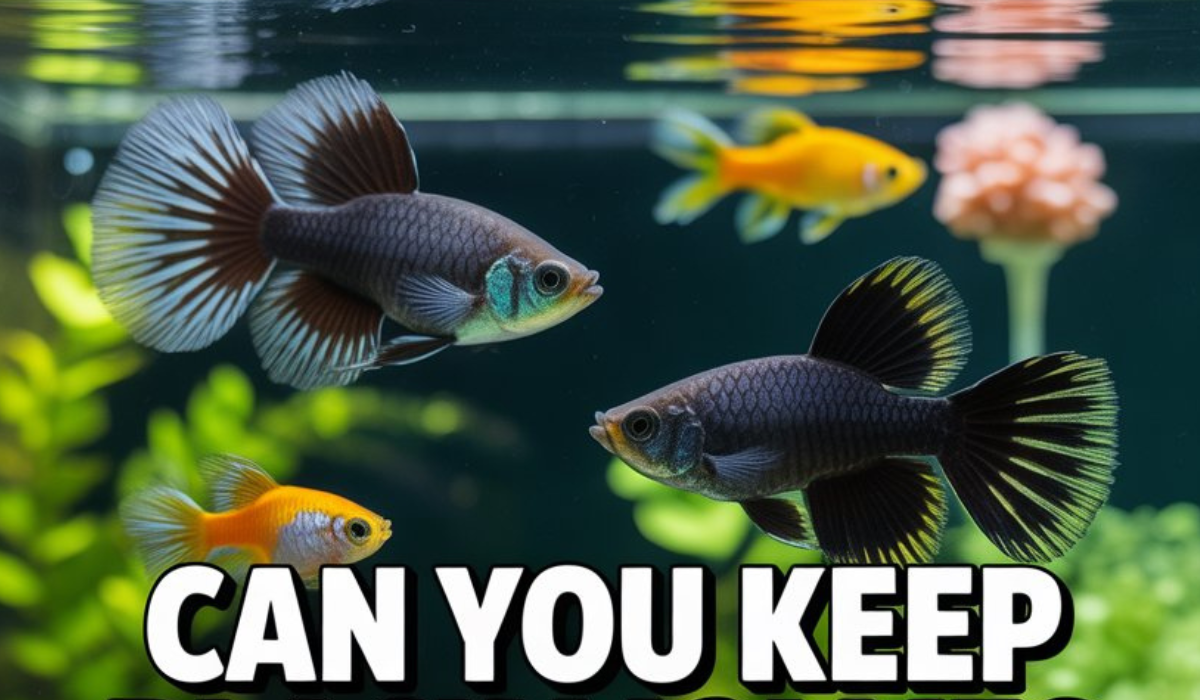
When starting or expanding a community aquarium, many aquarists wonder: Can you keep Black Mollies and Guppies together?
The short answer is YES — Black Mollies and Guppies can live together peacefully, provided you create the right tank conditions. Both species are hardy, active, and colorful, making them a beautiful combination for freshwater tanks.
However, while they share many similarities, they also have some differences that aquarists must understand before housing them together. This comprehensive guide will explain compatibility, ideal tank setup, water conditions, feeding habits, behavior, breeding concerns, and important tips for keeping both species healthy.
This article is fully SEO-friendly, user-friendly, and detailed for beginners and experienced fishkeepers.
Introduction: Black Mollies and Guppies in the Same Tank
Black Mollies and Guppies belong to the same family — Poeciliidae — which means they share:
- Temperament
- Breeding style (livebearers)
- Dietary habits
- Water parameter preferences
- General tank requirements
Because of these similarities, they are often considered ideal tank mates. Black Mollies are known for their dark, velvety bodies and calm nature, while Guppies are famous for their bright colors and active behavior.
But compatibility doesn’t just depend on temperament. Factors like tank size, male-to-female ratios, feeding style, hardness level, and water stability also play a role.
This guide explores everything you need to keep both species thriving together.
Are Black Mollies and Guppies Compatible?
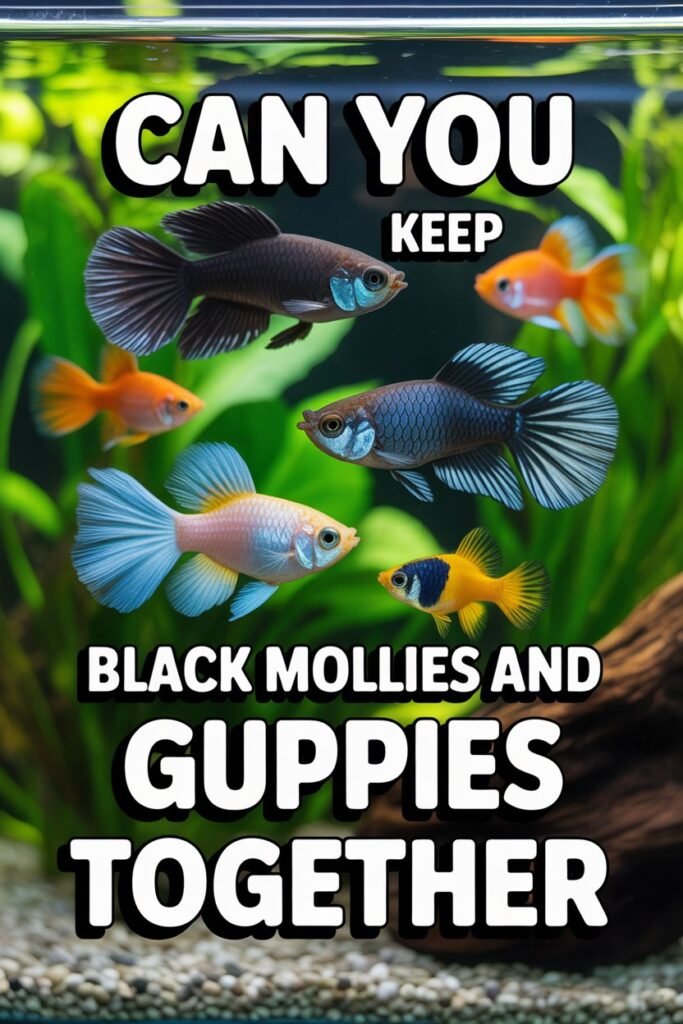
Yes — Black Mollies and Guppies are very compatible. Both are peaceful community fish, social, active, and non-aggressive.
Reasons They’re Good Tank Mates
- Both are peaceful livebearers
- Both prefer similar temperatures (24–28°C / 75–82°F)
- Both thrive in hard, alkaline water
- Both are active mid-to-top swimmers
- Both enjoy plants and open swimming space
- Neither are fin-nippers or aggressive
Their shared care requirements make them easy to keep together.
Basic Species Overview
Black Mollies (Poecilia sphenops)
- Size: 3–5 inches
- Temperament: Peaceful
- Lifespan: 3–5 years
- Water: Hard, alkaline
- Behavior: Active, calm, social
- Breeding: Livebearer
Guppies (Poecilia reticulata)
- Size: 1.5–2.5 inches
- Temperament: Peaceful
- Lifespan: 2–3 years
- Water: Slightly hard
- Behavior: Energetic, playful
- Breeding: Livebearer
Black Mollies grow larger and require stable parameters, while Guppies are smaller and more tolerant. However, their overall needs align well.
Important Considerations Before Keeping Them Together
Even though the species are compatible, you need to consider several factors to avoid stress, aggression, or poor health.
1. Water Hardness and Salinity Requirements
Both species prefer hard water, but Mollies, especially Black Mollies, enjoy:
- Slightly brackish conditions sometimes
- Higher mineral content
- Higher water stability
Ideal Parameters for Both Species
- Temperature: 24–28°C
- pH: 7.0–8.5
- GH: 10–20 dGH
- KH: 8–12 dKH
Black Mollies can tolerate mild salinity, but Guppies can too — so adding a very small amount of aquarium salt is optional but not required.
2. Tank Size
Black Mollies grow larger and need more space.
Minimum Tank Size
- At least 30 gallons for both species together
Why?
- Mollies produce more waste
- They need extra swimming room
- Guppies require peaceful flow and space to avoid being chased
A smaller tank increases stress and disease risk.
3. Tank Mates and Community Setup
Both fish are friendly, so they do well in peaceful community tanks with species like:
- Platies
- Swordtails
- Corydoras
- Tetras (small peaceful types)
- Danios
- Shrimp (if hiding places exist)
Avoid aggressive fish like barbs, cichlids, and bettas.
4. Feeding Style
Both species are omnivores and enjoy a similar diet.
Foods they love:
- High-quality flakes
- Micro pellets
- Frozen brine shrimp
- Bloodworms
- Daphnia
- Algae wafers
- Spirulina
- Vegetables (spinach, peas, cucumber)
Mollies eat more plant matter and algae, while guppies enjoy more protein, so a balanced diet helps both.
5. Temperature Sensitivity
Both species love warmer water, but Mollies need extra stability. Sudden drops or fluctuations can stress or sicken them.
Behavior of Black Mollies and Guppies in the Same Tank
Temperament
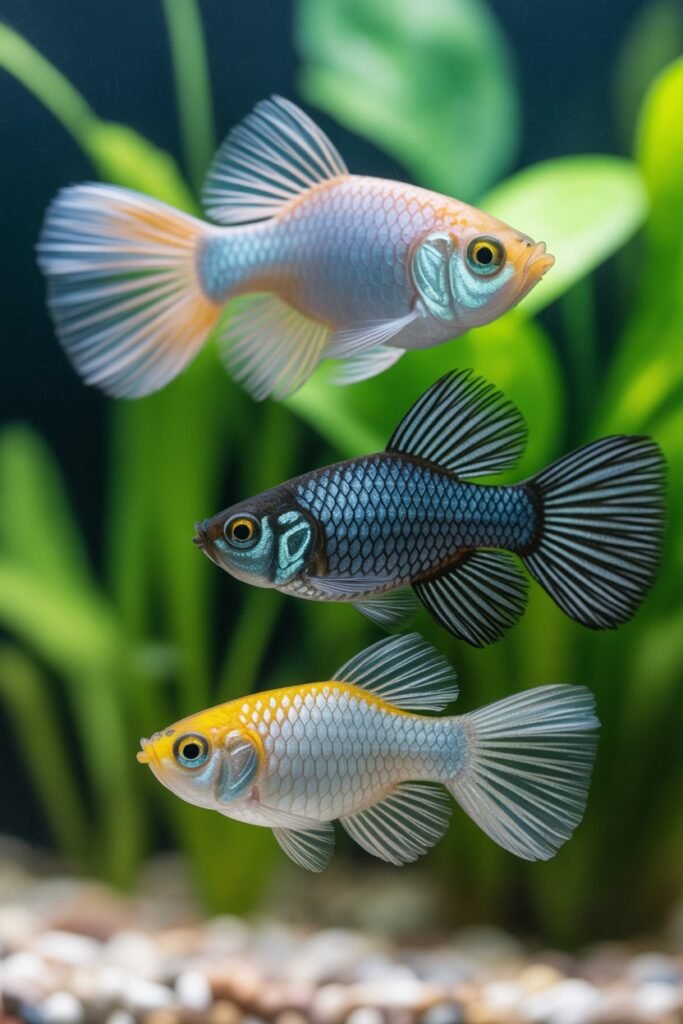
Both are peaceful and rarely show aggression.
Schooling Behavior
- Guppies like to swim in small groups
- Mollies prefer groups of at least three
Stress Behavior
You may see:
- Chasing
- Hiding
- Clamped fins
This usually happens if:
- Tank is overcrowded
- Male-to-female ratios are wrong
- Water is unstable
Male-to-Female Ratios Matter
Both species are livebearers and males constantly chase females. To prevent stress:
Ideal Ratio
- 1 male : 2 or 3 females for each species
This reduces:
- Stress
- Overbreeding
- Aggressive courting
If you keep too many males, guppies especially may get chased excessively.
Breeding Concerns: What Happens When They Mix?
1. Molly–Guppy Hybridization
Many fishkeepers ask:
Can Black Mollies and Guppies breed with each other?
Technically sometimes — but the hybrid fry rarely survive, and it is unpredictable. Successful hybrids are extremely rare and often unhealthy. So while they may try to breed, viable offspring are unlikely.
2. Overbreeding
Both species reproduce quickly.
Expect:
- New fry every 4 weeks
- Up to 20–50 fry per birth
If you don’t want a population explosion:
- Keep more males
- Add larger peaceful fish that eat fry
- Provide fewer hiding places
- Separate genders
Tank Setup for Keeping Black Mollies and Guppies Together
1. Plants
Live plants make the environment natural and safe.
Recommended plants:
- Hornwort
- Java moss
- Water wisteria
- Vallisneria
- Anubias
- Amazon sword
- Floating plants (frogbit, duckweed)
Plants also:
- Reduce stress
- Improve water quality
- Provide hiding spaces for fry
2. Filtration
Because Mollies produce more waste, you need a strong, efficient filter.
Recommended filter types:
- Hang-on-back
- Sponge + biological media
- Canister filter for larger tanks
3. Tank Decorations
Include:
- Driftwood
- Rocks
- Caves
- Open swimming space
Both species enjoy exploring.
4. Substrate
Any substrate works:
- Sand
- Gravel
- Planted-soil substrates
Sand is great for Mollies, as they sometimes forage at the bottom.
Water Quality Management
Maintaining clean water is essential.
Weekly routines
- 25–30% water changes
- Vacuum substrate
- Rinse filters (in tank water)
- Test ammonia, nitrite, nitrate
Ideal levels
- Ammonia: 0 ppm
- Nitrite: 0 ppm
- Nitrate: < 20–30 ppm
Keeping water stable prevents fin rot, ich, and stress diseases.
Common Problems When Keeping Mollies and Guppies Together
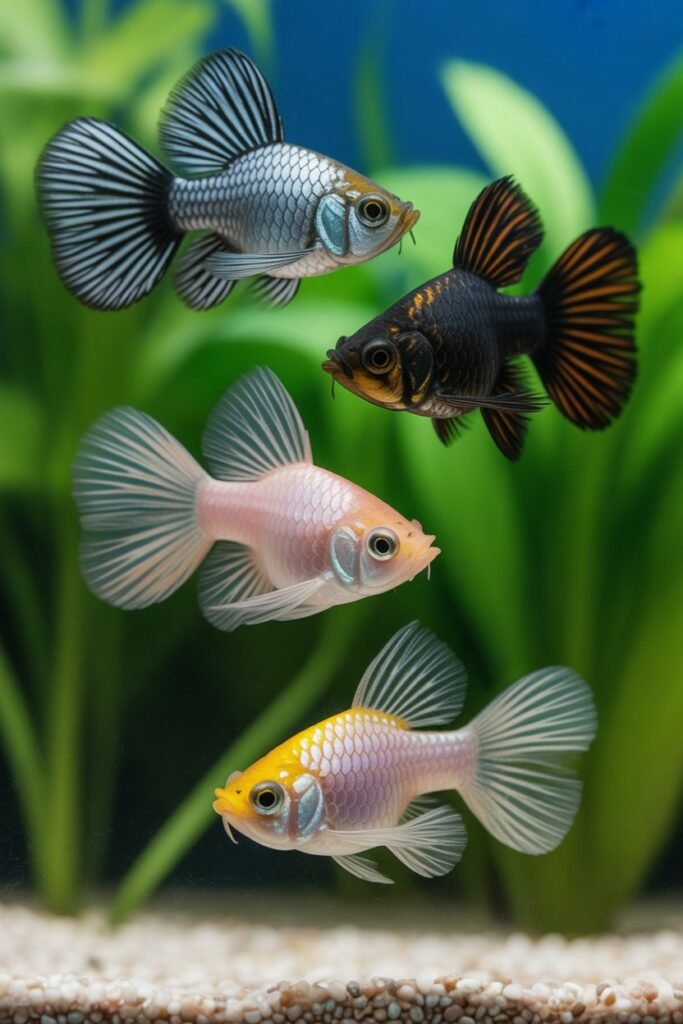
1. Molly Aggression Toward Small Guppies
Rare, but can happen in:
- Overcrowded tanks
- Too many males
- Lack of hiding spaces
Solution: provide plants and reduce aggression by increasing space.
2. Temperature and Hardness Issues
If water is too soft, mollies may develop:
- Fungus
- Shimmies
- Internal problems
Use crushed coral or mineral supplements to increase hardness.
3. Overbreeding
Fry can quickly fill the tank. You must control reproduction.
4. Guppy Fin Damage
Guppies have delicate fins. Strong currents or nibbling fish can damage them.
Advantages of Keeping Black Mollies and Guppies Together
- Beautiful color contrast
- Active and lively community
- Easy beginner-friendly setup
- Similar care needs
- Strong immune systems
- Help control algae (mollies are great algae eaters)
- Low maintenance
Their compatibility makes them one of the best combinations for freshwater aquariums.
Best Tank Size for a Balanced Group
Ideal Stocking
- 6–8 guppies
- 4–6 black mollies
- In a 30–40 gallon tank
This gives both species room to swim and reduces stress.
Larger tanks provide better water stability.
Feeding Tips for Keeping Both Species Healthy
Morning
- Flakes or pellets
- Spirulina for mollies
Evening
- Frozen/live foods
- Veggies for mollies
Weekly
- Fast one day to improve digestion
Both species benefit from algae-based foods, but mollies require more fiber.
Health Issues to Watch Out For
Common Diseases in Mollies
- Ich
- Fin rot
- Shimmies
- Columnaris
- Fungus
Common Diseases in Guppies
- Swim bladder issues
- Ich
- Velvet
- Internal parasites
Prevent Illness by:
- Keeping water warm
- Avoiding overcrowding
- Maintaining stable hardness
- Providing clean water
- Feeding nutritious food
- Quarantining new fish
Conclusion: Can You Keep Black Mollies and Guppies Together?
Yes, you absolutely can keep Black Mollies and Guppies together, and they make wonderful tank mates. Both species share similar water conditions, temperaments, and diets, making them one of the most compatible combinations in the aquarium hobby.
To ensure success:
- Choose a tank of at least 30 gallons
- Maintain hard, warm, clean water
- Keep proper male-to-female ratios
- Feed a varied diet
- Add plants and hiding spaces
- Monitor breeding
With the right care, both species will thrive, show beautiful colors, and create a peaceful, active community aquarium.
FAQs About Keeping Black Mollies and Guppies Together
1. Can Black Mollies and Guppies live together peacefully?
Yes. Both are peaceful, social fish and excellent tank mates.
2. What tank size is best for keeping them together?
A minimum of 30 gallons is recommended.
3. Do Black Mollies need brackish water to live with guppies?
Not necessarily. Both can live in fresh, hard water. Light salt is optional.
4. Do Mollies bully Guppies?
Rarely. Mild chasing may occur in overcrowded tanks or with too many males.
5. Can they crossbreed?
Crossbreeding is extremely rare and fry seldom survive.
6. What should I feed them?
A mix of flakes, pellets, veggies, algae foods, and live/frozen foods.
7. What water parameters do they need?
Temperature 24–28°C, pH 7.0–8.5, and moderately hard water.
8. Will they overbreed?
Yes. Both species reproduce quickly. Control population if needed.
9. Are they beginner-friendly?
Very much. Both species are hardy and easy to care for.
10. Are Mollies good tank mates for Guppies?
Yes. They share the same peaceful temperament and water preferences.