
 By admin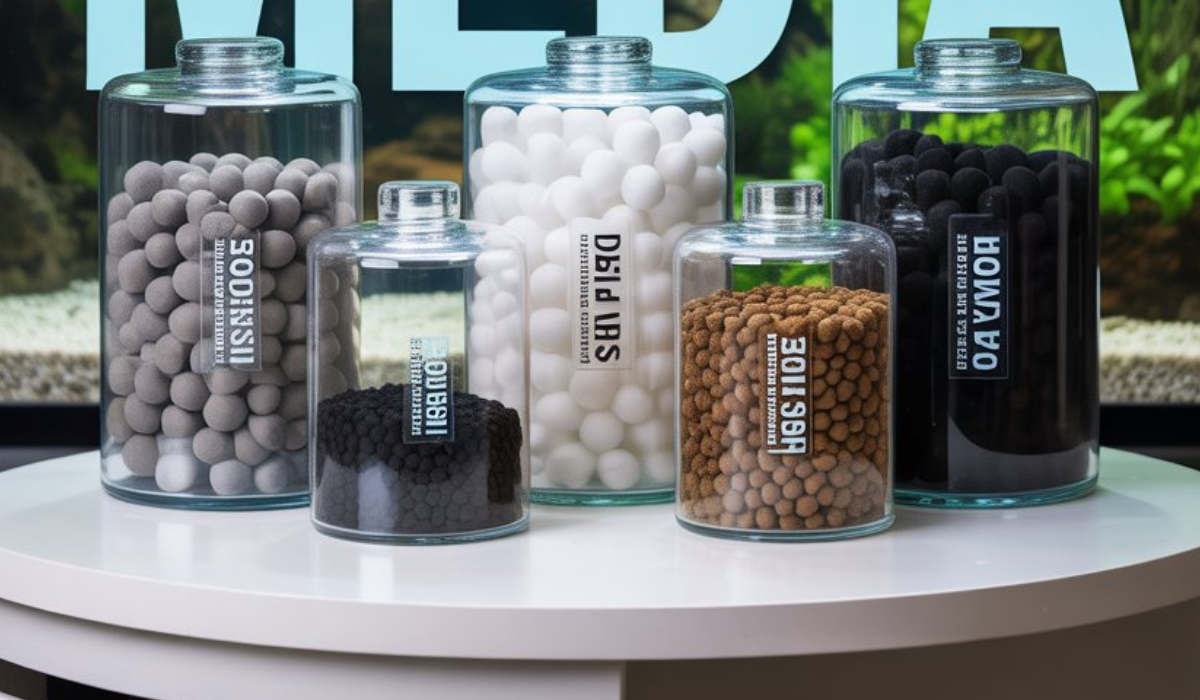
An aquarium filter media is the heart of any filtration system. While the filter itself moves water, the filter media does the real work—removing waste, breaking down toxins, and maintaining crystal-clear, healthy water. Without proper aquarium filter media, even the most expensive filter cannot keep fish healthy.
Whether you keep a small freshwater tank, a planted aquarium, or a large saltwater system, understanding aquarium filter media is essential for long-term success. This detailed guide explains all types of aquarium filter media, how they work, when to use them, and how to choose the right combination for your aquarium.
What Is Aquarium Filter Media?
Aquarium filter media refers to the materials placed inside a filter that clean and purify aquarium water. These materials trap debris, remove harmful chemicals, and support beneficial bacteria that convert toxic waste into safer compounds.
Filter media works in three main ways:
- Mechanical filtration
- Biological filtration
- Chemical filtration
Most successful aquariums use a combination of all three.
Why Aquarium Filter Media Is Important
1. Removes Fish Waste
Fish waste releases ammonia, which is highly toxic.
2. Supports Beneficial Bacteria
Biological media houses bacteria that detoxify water.
3. Improves Water Clarity
Mechanical media traps uneaten food and debris.
4. Maintains Stable Water Parameters
Chemical media removes harmful substances.
5. Prevents Fish Disease
Clean water reduces stress and illness.
The Three Main Types of Aquarium Filter Media
Understanding these categories is key to choosing the right setup.
1. Mechanical Aquarium Filter Media
Mechanical filter media physically removes solid particles from aquarium water.
How Mechanical Media Works
Water flows through the media, trapping:
- Fish waste
- Uneaten food
- Plant debris
- Floating particles
This keeps the water visually clean.
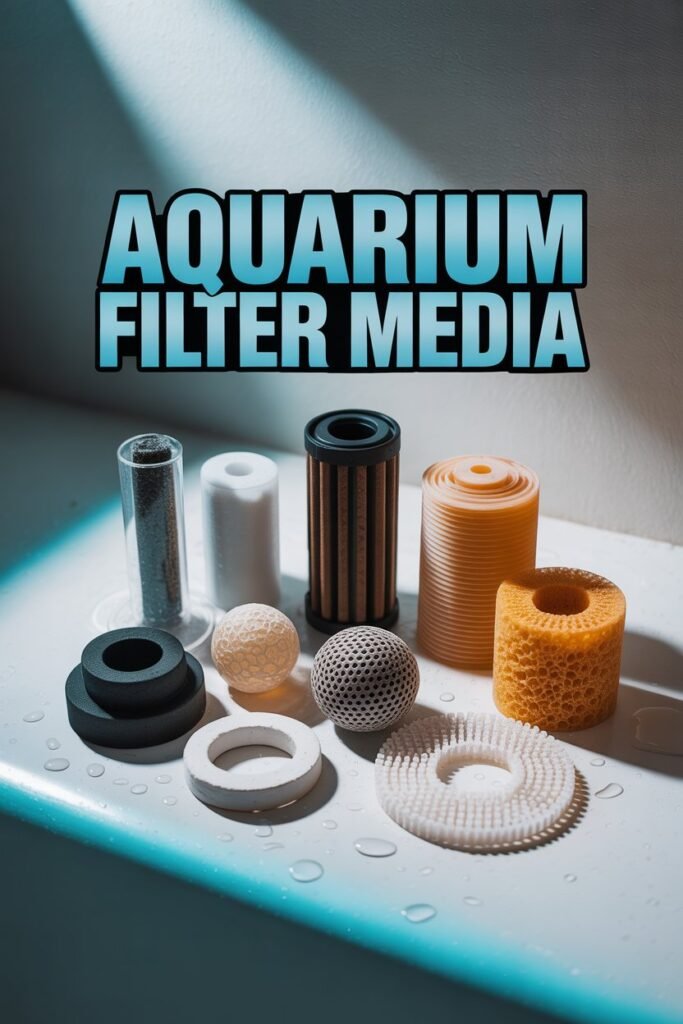
Types of Mechanical Filter Media
Filter Sponge
- Most common mechanical media
- Reusable and easy to clean
- Also supports some biological filtration
Best for beginners and sponge filters.
Filter Floss
- Fine fiber material
- Polishes water to crystal clarity
- Traps very small particles
Needs frequent replacement.
Filter Pads
- Thick layered material
- Available in different densities
- Often used in hang-on-back and canister filters
Pre-Filter Sponge
- Installed on filter intake
- Prevents debris from entering the filter
- Protects small fish and shrimp
Advantages of Mechanical Filter Media
- Improves water clarity
- Prevents clogging of biological media
- Easy to maintain
2. Biological Aquarium Filter Media
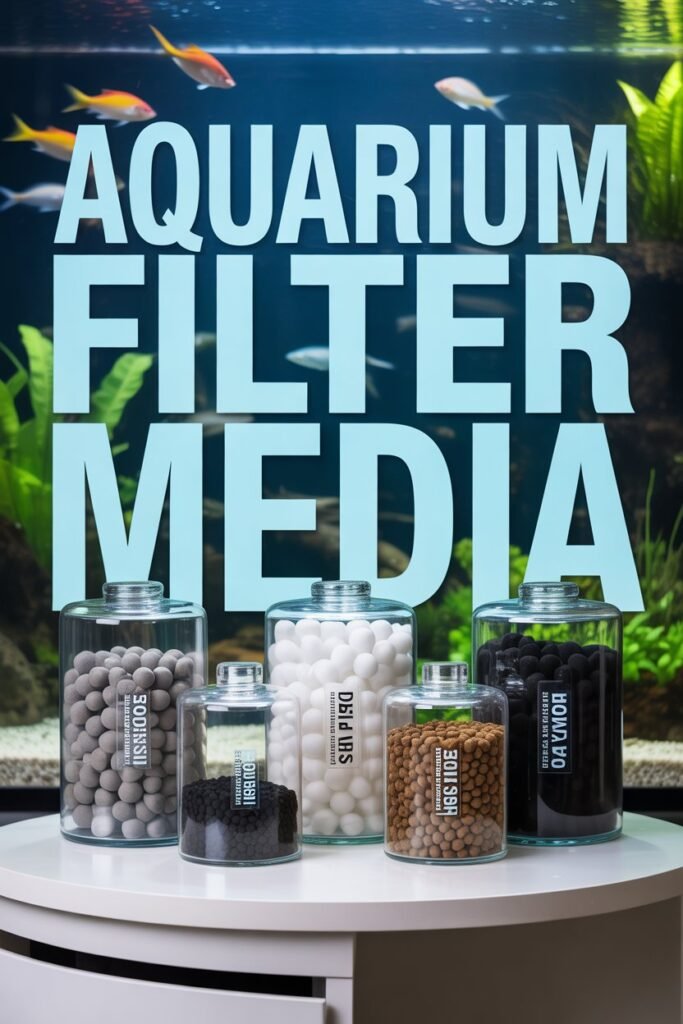
Biological filter media is the most important type of aquarium filter media.
How Biological Media Works
Beneficial bacteria colonize the media surface and convert:
- Ammonia → Nitrite → Nitrate
This process is known as the nitrogen cycle.
Types of Biological Filter Media
Ceramic Rings
- Popular and effective
- Porous surface for bacteria
- Long-lasting
Ideal for most aquariums.
Bio Balls
- Plastic balls with large surface area
- Excellent water flow
- Common in wet/dry filters
Sintered Glass Media
- Extremely porous
- High bacteria capacity
- Used in advanced systems
Lava Rock
- Natural and affordable
- Provides good bacterial surface
- Must be cleaned before use
Sponge Media
- Acts as both mechanical and biological media
- Ideal for breeding and shrimp tanks
Advantages of Biological Filter Media
- Detoxifies aquarium water
- Maintains stable water parameters
- Essential for fish survival
3. Chemical Aquarium Filter Media
Chemical filter media removes dissolved substances from water.
How Chemical Media Works
It absorbs or neutralizes chemicals, odors, and toxins.
Types of Chemical Filter Media
Activated Carbon
- Most widely used chemical media
- Removes odors, discoloration, and impurities
- Improves water clarity
Needs regular replacement.
Zeolite
- Absorbs ammonia
- Useful in emergency situations
- Mostly for freshwater tanks
Not recommended for established biological filters.
Phosphate Removers
- Reduces algae-causing phosphates
- Common in planted and saltwater tanks
Resin Media
- Targets specific contaminants
- Used in specialized systems
Advantages of Chemical Filter Media
- Improves water quality quickly
- Removes toxins not handled by bacteria
- Useful for problem solving
Aquarium Filter Media by Filter Type
Filter Media for Sponge Filters
Best media:
- Sponge only
Benefits:
- Gentle filtration
- Ideal for fry and shrimp
Filter Media for Hang-On-Back Filters
Best media:
- Filter sponge
- Filter floss
- Ceramic rings
- Activated carbon
Layering improves efficiency.
Filter Media for Canister Filters
Best media:
- Mechanical pads
- Ceramic rings
- Sintered glass
- Optional chemical media
Canister filters support large media volume.
Filter Media for Internal Filters
Best media:
- Sponge
- Carbon cartridges
Compact but effective.
Aquarium Filter Media for Different Tank Types
Freshwater Aquarium Filter Media
Recommended:
- Sponge
- Ceramic rings
- Optional activated carbon
Simple and effective.
Planted Aquarium Filter Media
Recommended:
- High biological media
- Minimal carbon
- Fine mechanical filtration
Avoid overuse of chemical media.
Saltwater Aquarium Filter Media
Recommended:
- Biological media
- Phosphate removers
- Mechanical filtration
Protein skimmers often reduce chemical media needs.
Shrimp and Breeding Tanks
Recommended:
- Sponge filters
- Fine mechanical media
Safe for small animals.
How to Arrange Aquarium Filter Media (Layering)
Correct order improves performance:
- Mechanical media first
- Biological media second
- Chemical media last
This prevents clogging and maximizes efficiency.
How Often to Clean or Replace Aquarium Filter Media
Mechanical Media
- Rinse every 2–4 weeks
- Replace only when worn
Biological Media
- Never replace all at once
- Rinse gently in tank water
Chemical Media
- Replace every 3–6 weeks
- Follow product recommendations
Common Mistakes with Aquarium Filter Media
- Replacing all media at once
- Washing media with tap water
- Using too much chemical media
- Ignoring biological filtration
These mistakes can crash the aquarium cycle.
Benefits of Using the Right Aquarium Filter Media
- Clear water
- Healthy fish
- Stable nitrogen cycle
- Reduced maintenance
- Long-term aquarium success
Aquarium Filter Media FAQs
What is the most important aquarium filter media?
Biological filter media is the most important.
Can I use only sponge as filter media?
Yes, for small and lightly stocked tanks.
How long does aquarium filter media last?
Biological media can last for years.
Is activated carbon necessary?
No, it is optional in most aquariums.
Can I mix different filter media?
Yes, mixing improves filtration efficiency.
How do I clean filter media safely?
Rinse gently in aquarium water, not tap water.
Do planted tanks need special filter media?
They benefit from strong biological filtration and minimal chemical media.
Final Thoughts
Aquarium filter media is the foundation of a healthy aquarium. While filters move water, the media inside performs the essential work of cleaning, detoxifying, and stabilizing the aquatic environment. By understanding mechanical, biological, and chemical filter media—and using the right combination—you can maintain clear water, healthy fish, and a stable aquarium with minimal effort.