
 By admin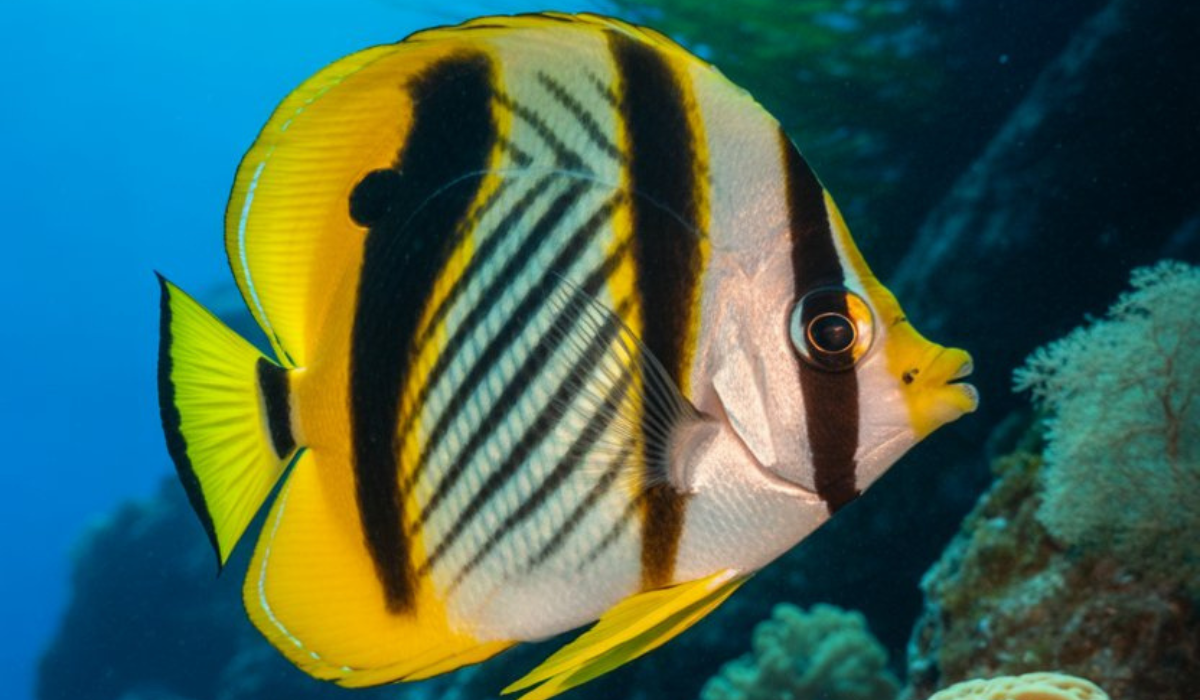
Butterflyfish are among the most elegant and recognizable marine fish in the ocean. With their bright colors, bold stripes, and graceful swimming style, they are a favorite in both coral reefs and saltwater aquariums.
Belonging to the family Chaetodontidae, Butterflyfish are closely related to angelfish and are found in tropical and subtropical seas worldwide.
In this complete guide, you’ll learn everything about Butterflyfish — natural habitat, types, care requirements, diet, tank mates, reef compatibility, and expert aquarium tips.
What Is a Butterflyfish?
Butterflyfish are small to medium-sized marine fish known for:
- Thin, disk-shaped bodies
- Bright contrasting colors
- Eye-stripe markings
- Graceful, fluttering swimming motion
Their name comes from their wing-like pectoral fins and vibrant patterns that resemble butterflies.
Natural Habitat of Butterflyfish
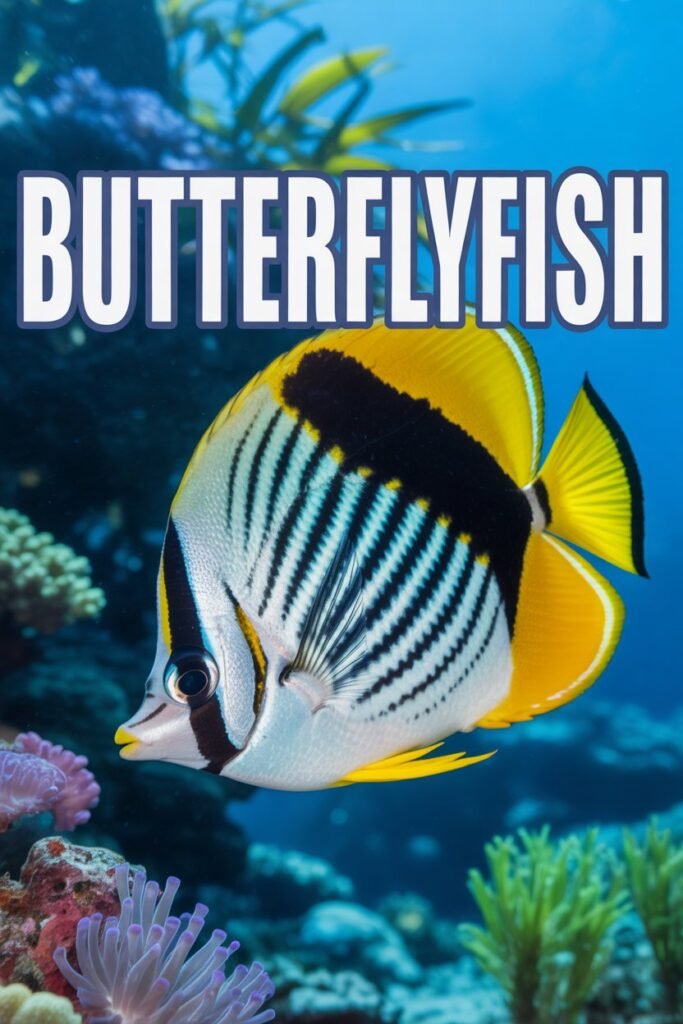
Butterflyfish are mainly found in:
- Indo-Pacific region
- Red Sea
- Atlantic Ocean
- Caribbean reefs
They live in:
- Coral reefs
- Lagoons
- Reef slopes
- Shallow tropical waters
Habitat Conditions:
- Temperature: 24–28°C (75–82°F)
- Clear, oxygen-rich water
- Abundant coral growth
- Plenty of hiding spaces
Some species live in pairs, while others form schools.
Physical Appearance
Butterflyfish are known for their stunning beauty.
Key Features:
- Flat, round body
- Small mouth with fine teeth
- Continuous dorsal fin
- Bright yellow, white, black, orange patterns
Many species have a black stripe across the eye. This helps confuse predators by hiding their real eye location.
Size
- 4 to 9 inches (depending on species)
Lifespan
- 5–10 years in aquariums
- Longer in the wild with ideal conditions
Popular Types of Butterflyfish
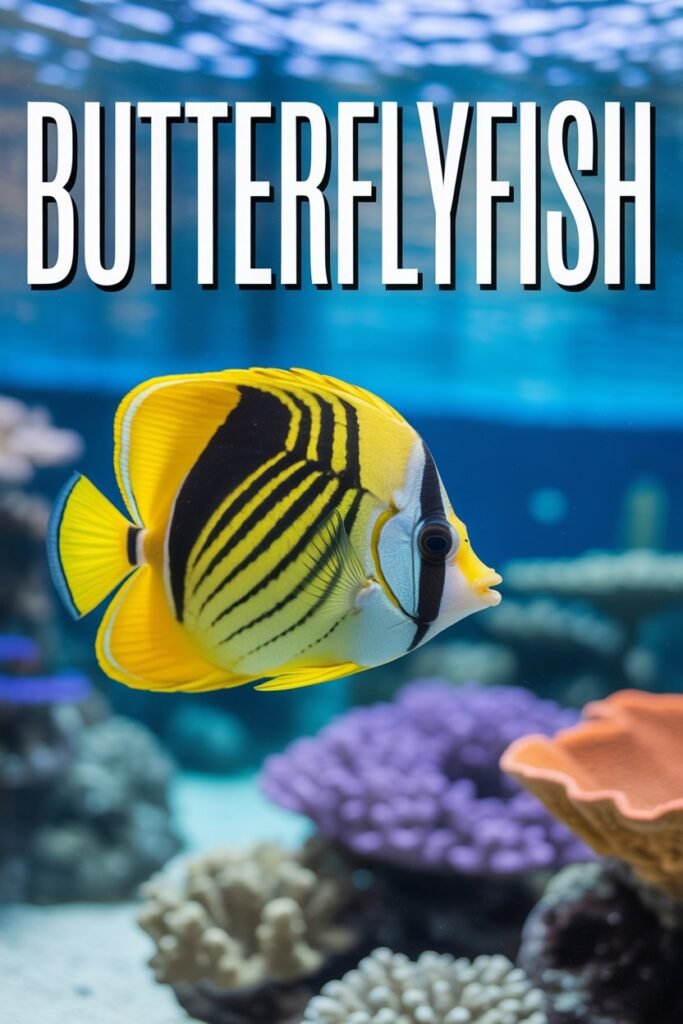
There are over 100 species of Butterflyfish. Here are some popular ones:
1. Copperband Butterflyfish
Chelmon rostratus
- White body with orange vertical bands
- Long snout
- Known for eating Aiptasia anemones
2. Raccoon Butterflyfish
Chaetodon lunula
- Yellow body
- Black “mask” around eyes
- Hardy compared to other species
3. Threadfin Butterflyfish
Chaetodon auriga
- Long trailing dorsal filament
- White body with diagonal stripes
4. Longnose Butterflyfish
Forcipiger flavissimus
- Bright yellow body
- Long pointed snout
- Excellent for reef observation tanks
Each species has slightly different care needs.
Butterflyfish Tank Requirements
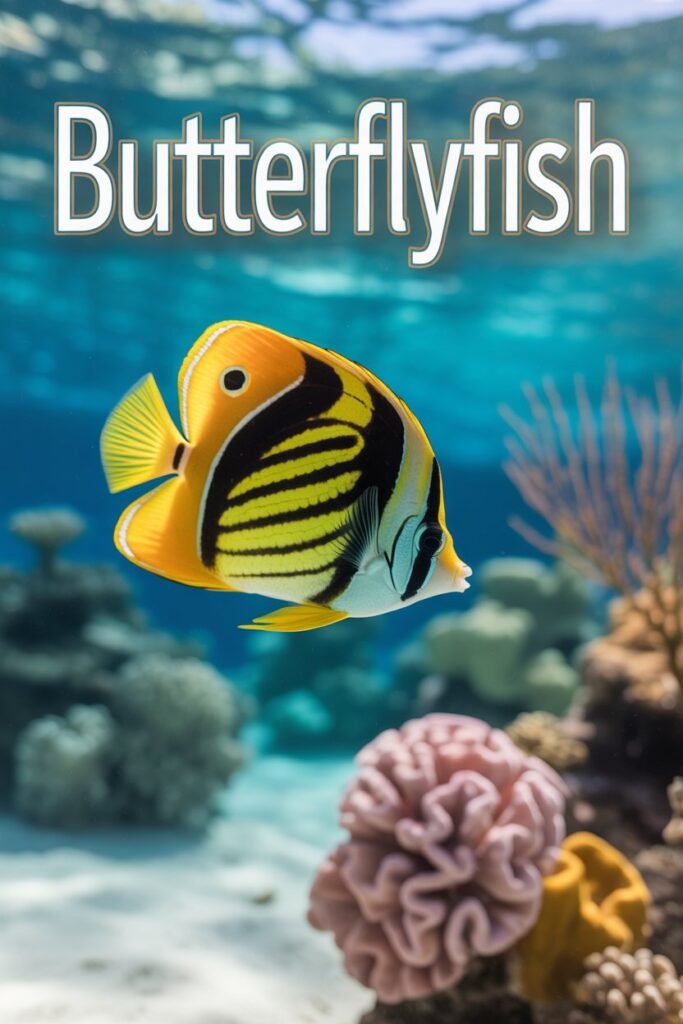
Butterflyfish are moderately difficult to keep.
Minimum Tank Size
- 75 gallons (small species)
- 125+ gallons (larger species)
Water Parameters
- Temperature: 24–28°C
- pH: 8.1–8.4
- Salinity: 1.023–1.025
- Ammonia/Nitrite: 0 ppm
- Nitrate: Below 20 ppm
Tank Setup
- Live rock structures
- Open swimming space
- Stable, mature system
- Strong filtration
- Moderate water flow
Butterflyfish are sensitive to sudden water parameter changes.
Butterflyfish Diet
In the wild, Butterflyfish feed on:
- Coral polyps
- Small invertebrates
- Worms
- Crustaceans
- Algae (some species)
Feeding in Aquarium
They may accept:
- Frozen mysis shrimp
- Brine shrimp
- Clams
- Marine pellets
- Sponge-based foods
Some species are picky eaters and may starve in captivity if not carefully monitored.
Are Butterflyfish Reef Safe?
This depends on the species.
Reef-Safe (With Caution):
- Some Longnose species
- Certain Raccoon varieties
Not Reef Safe:
- Many species eat coral polyps
- May nip at soft and stony corals
If you have a coral reef tank, research the exact species before purchase.
Butterflyfish Behavior
Butterflyfish are generally peaceful but may show territorial behavior toward:
- Other Butterflyfish
- Similar-shaped fish
Social Behavior
- Some species form lifelong pairs
- Others live alone
- A few species school in large groups
They are active swimmers and need space.
Tank Mates for Butterflyfish
Good Tank Mates:
- Tangs
- Angelfish (non-aggressive)
- Clownfish
- Wrasses
- Gobies
Avoid:
- Aggressive triggers
- Large groupers
- Very territorial fish
Always introduce Butterflyfish into a calm, stable environment.
Common Problems
1. Coral Nipping
Many Butterflyfish feed on coral polyps.
2. Starvation
Some species refuse prepared foods.
3. Marine Ich
They can be sensitive to parasites.
4. Stress from Small Tanks
They require open swimming space.
Is Butterflyfish Good for Beginners?
Not usually.
Butterflyfish are best suited for:
- Intermediate aquarists
- Large, established tanks
- Fish-only marine systems
Beginners may struggle with feeding and reef compatibility issues.
Expert Tips for Success
- Choose hardy species like Raccoon Butterflyfish
- Avoid mixing multiple Butterflyfish in small tanks
- Provide varied diet
- Maintain stable water quality
- Quarantine before adding to display tank
Captive care success depends heavily on research and preparation.
Why Butterflyfish Are So Popular
Butterflyfish are admired for:
- Exotic color combinations
- Elegant swimming style
- Reef beauty representation
- Pair bonding behavior
They are often considered one of the most visually striking marine fish families.
Final Thoughts
Butterflyfish are stunning marine fish that bring elegance and tropical charm to any large saltwater aquarium. However, they are not ideal for small reef tanks or beginners due to feeding habits and coral compatibility concerns.
With the right species selection, proper tank size, and stable water conditions, Butterflyfish can thrive and become the centerpiece of your marine aquarium.