
 By admin
Aquarium water is one of the most important parts of keeping healthy fish and a successful aquarium. Fish live entirely in water, so its quality directly affects their health, behavior, growth, and overall appearance. Clear-looking water does not always mean that aquarium water is healthy. Important factors such as ammonia, nitrite, nitrate, pH, temperature, hardness, and chlorine can affect fish even when the water looks perfectly clean.
Whether you have a small aquarium, a planted tank, a community aquarium, or a large freshwater setup, understanding aquarium water will help you prevent many common fishkeeping problems. Proper water preparation, filtration, testing, water changes, and maintenance can keep the aquarium stable and provide fish with a safe environment.
Why Aquarium Water Is Important
Aquarium water is more than just a place for fish to swim. It is the environment in which they breathe, feed, move, and live.
Fish release waste into the water, leftover food decomposes, and organic material can accumulate over time. Without proper filtration and maintenance, harmful substances can build up.
Healthy aquarium water supports fish health and helps beneficial bacteria maintain the aquarium’s biological balance.
Water quality can also affect fish coloration and behavior. Fish experiencing poor water conditions may become less active, lose appetite, hide more frequently, or show unusual swimming behavior.
What Makes Good Aquarium Water?
Good aquarium water should be appropriate for the specific fish and aquatic life being kept.
Several characteristics are especially important:
| Water Factor | Why It Matters |
|---|---|
| Temperature | Supports normal metabolism and activity |
| Ammonia | Should remain at a safe level |
| Nitrite | Should remain at a safe level |
| Nitrate | Needs regular management |
| pH | Affects biological and physiological processes |
| Hardness | Important for many fish and invertebrates |
| Chlorine | Can damage fish and beneficial bacteria |
| Water clarity | Helps indicate general tank condition |
| Oxygen | Essential for fish and beneficial bacteria |
There is no single perfect aquarium water value for every species. Different fish come from different natural environments, so their preferred conditions can vary.
Aquarium Water Temperature
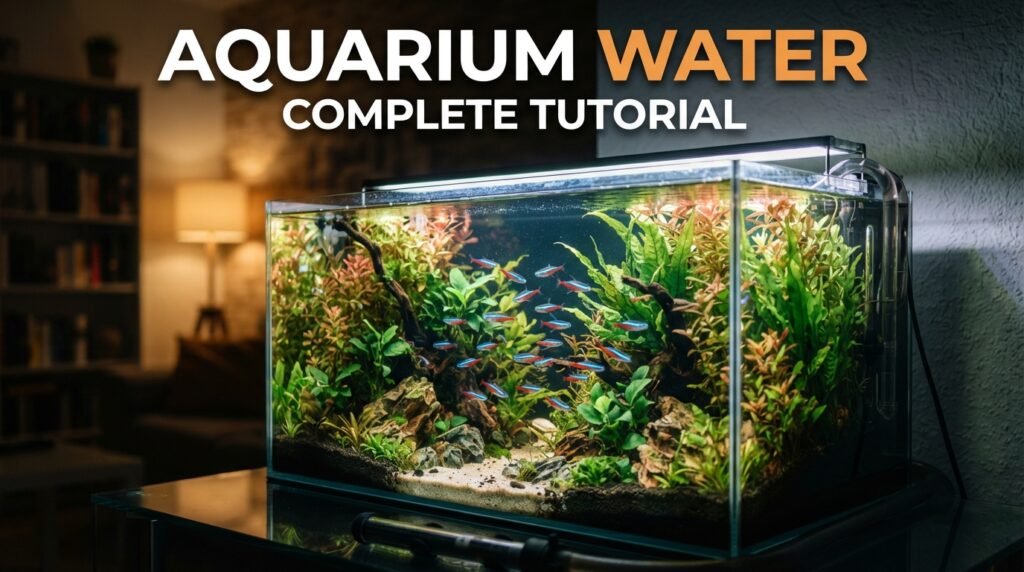
Temperature is one of the first things aquarium owners should monitor.
Tropical freshwater fish generally require warmer water than many temperate or cold-water species. Maintaining a stable temperature is often more important than making frequent large changes.
Sudden temperature fluctuations can stress fish.
A reliable aquarium thermometer allows you to monitor water temperature regularly. If tropical fish are being kept, an appropriately sized aquarium heater may be necessary.
The correct temperature should always be based on the species in your aquarium.
Tap Water for an Aquarium
Many aquarium owners use tap water as their primary water source. Tap water can be suitable, but it should not usually be added directly to a fish tank without appropriate treatment.
Municipal water may contain chlorine or chloramine, which are used to make drinking water safer for humans but can harm fish and beneficial aquarium bacteria.
A suitable aquarium water conditioner can neutralize these substances.
Always follow the instructions on the water conditioner and use the appropriate amount for the volume of water being treated.
Chlorine and Chloramine
Chlorine is dangerous to fish because it can damage delicate tissues such as gills.
Chloramine is another disinfectant that can be present in some municipal water supplies. It is more stable than chlorine and cannot simply be allowed to evaporate quickly.
For this reason, aquarium owners should use a water conditioner designed to treat the substances present in their local tap water.
If you are unsure whether your water supply contains chlorine or chloramine, check your local water information or test the water.
Aquarium Water pH
pH measures how acidic or alkaline water is.
Different fish species have different natural preferences. Some fish naturally occur in softer, more acidic environments, while others are adapted to harder, more alkaline water.
It is important not to chase a particular pH number without understanding your fish and overall water chemistry.
A stable pH that is appropriate for your fish is generally preferable to constantly making adjustments.
Aquarium Water Hardness
Water hardness describes the concentration of certain dissolved minerals in water.
Two commonly discussed measurements are general hardness and carbonate hardness.
Some fish naturally prefer soft water, while others do better in harder water. Certain aquarium plants and freshwater shrimp can also have specific mineral requirements.
Knowing your water hardness can help you choose species that are naturally compatible with your local water supply.
Aquarium Water Testing

Regular aquarium water testing can help identify problems before fish show obvious symptoms.
Important tests may include ammonia, nitrite, nitrate, pH, and sometimes hardness.
Testing is particularly important when setting up a new aquarium, after adding fish, when fish appear stressed, or when there are unexplained changes in water quality.
A test result gives you information that cannot always be obtained by simply looking at the aquarium.
Ammonia in Aquarium Water
Ammonia is one of the most important substances to monitor in an aquarium.
Fish produce waste, and organic material can decompose into ammonia. In an established aquarium, beneficial bacteria help process ammonia through the nitrogen cycle.
Ammonia can be harmful to fish, especially when levels become elevated.
If ammonia is detected, investigate possible causes such as overfeeding, overstocking, decaying organic matter, inadequate biological filtration, or an immature aquarium.
Nitrite in Aquarium Water
Nitrite is produced during the biological conversion of ammonia.
It is also harmful to fish and should not accumulate in a healthy established aquarium.
Beneficial bacteria convert nitrite into nitrate, which is generally easier to manage through regular maintenance and water changes.
The presence of measurable nitrite can indicate that the aquarium’s biological cycle is not fully established or that the biological system has been disrupted.
Nitrate in Aquarium Water
Nitrate is a later product of the nitrogen cycle.
Compared with ammonia and nitrite, nitrate is generally less immediately dangerous at moderate levels, but excessive accumulation is undesirable.
Regular partial water changes, appropriate stocking, plant growth, and good aquarium maintenance can help manage nitrate.
Aquatic plants can also absorb nitrate and other nutrients, although plants should not be treated as a replacement for proper aquarium maintenance.
Why Aquarium Water Becomes Cloudy
Cloudy aquarium water is one of the most common concerns among fishkeepers.
Cloudiness can have several causes. A newly established aquarium may develop bacterial cloudiness as microorganisms multiply and the biological system develops.
Cloudy water can also result from disturbed substrate, overfeeding, excessive organic waste, or filtration problems.
The correct solution depends on the cause. Simply replacing all the water is not always the best approach because it may disturb the developing biological system.
Why Aquarium Water Turns Green
Green aquarium water is usually associated with suspended algae.
It can occur when there is excessive light combined with available nutrients.
Reducing excessive lighting, controlling nutrient accumulation, maintaining appropriate water changes, and improving aquarium balance can help.
In some situations, aquarists use specialized filtration methods to clear suspended algae, but identifying the underlying cause is still important.
Brown Aquarium Water
Brown or tea-colored aquarium water is often caused by tannins released from natural materials such as driftwood.
Tannins can give water a yellow or brown appearance. In many setups, especially natural-style aquariums, this is intentional and can create a blackwater appearance.
If clear water is your goal, appropriate water changes and filtration can gradually reduce the coloration.
Activated carbon can also remove many dissolved organic compounds, including some tannins, depending on the setup.
How to Make Aquarium Water Clear
Clear aquarium water usually comes from good aquarium management rather than a single product.
Start with appropriate mechanical filtration to remove suspended particles. Maintain biological filtration so beneficial bacteria can process fish waste.
Avoid overfeeding and remove uneaten food when necessary.
Do not overcrowd the aquarium because excessive stocking increases waste production.
Regular partial water changes can also help maintain water quality and clarity.
How Often Should Aquarium Water Be Changed?
Water change schedules depend on aquarium size, stocking, filtration, feeding, plants, and test results.
Many aquariums benefit from regular partial water changes rather than occasional complete water replacements.
The goal is to remove accumulated waste and replenish water while avoiding sudden changes in chemistry and temperature.
Instead of following a rigid schedule without testing, observe the aquarium and monitor water parameters to determine an appropriate maintenance routine.
How to Perform an Aquarium Water Change
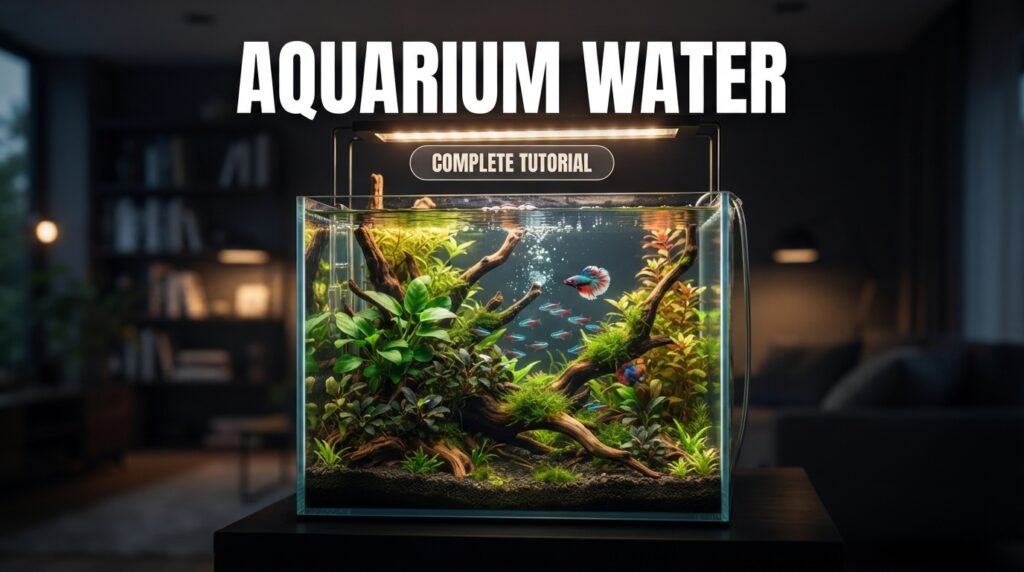
A basic water change involves removing a portion of aquarium water and replacing it with appropriately conditioned water.
First, prepare replacement water. Make sure it is treated to remove chlorine or chloramine and is reasonably close to the aquarium’s temperature.
Remove the desired amount of aquarium water using an appropriate container or aquarium siphon.
If necessary, use the siphon to remove debris from the substrate.
Add the prepared replacement water slowly to avoid disturbing fish, plants, and decorations.
Avoid unnecessarily replacing all aquarium water at once because large changes can destabilize the aquarium.
Aquarium Water and the Nitrogen Cycle
The nitrogen cycle is fundamental to aquarium water quality.
Fish waste and decomposing organic material produce ammonia. Beneficial bacteria convert ammonia into nitrite, and another group of bacteria converts nitrite into nitrate.
This biological process is supported by the aquarium filter and surfaces throughout the tank.
A new aquarium needs time to establish this biological system. Adding too many fish too quickly can overwhelm the developing bacterial population.
Understanding the nitrogen cycle is one of the most important steps for anyone learning aquarium care.
Beneficial Bacteria in Aquarium Water
Beneficial bacteria are essential for biological filtration.
They colonize filter media, substrate, decorations, and other surfaces where suitable conditions exist.
These bacteria help process toxic nitrogen compounds produced by fish and decomposing organic material.
When cleaning filter media, avoid unnecessarily destroying the biological colony. Follow appropriate maintenance practices and avoid washing biological media with untreated tap water if chlorine or chloramine could damage the bacteria.
Aquarium Water for Planted Tanks
Planted aquariums have additional considerations.
Aquatic plants require light, carbon dioxide availability, and nutrients to grow. Different plants have different requirements.
Plants can help absorb nutrients and contribute to aquarium stability, but a planted aquarium still needs proper filtration and maintenance.
Dead leaves should be removed before they decompose excessively and contribute to organic waste.
Aquarium Water for Freshwater Shrimp
Freshwater shrimp can be particularly sensitive to changes in water chemistry.
Stable conditions are important. Sudden changes in temperature, pH, hardness, or mineral content can stress shrimp.
Shrimp keepers should understand the specific requirements of the species they maintain.
Because shrimp depend on appropriate mineral availability for molting and shell development, water hardness and mineral content can be especially important.
Aquarium Water for Fish Breeding
Water quality becomes especially important when breeding fish.
Some species require specific temperature, pH, hardness, or other environmental conditions to encourage spawning.
Breeding tanks should be kept clean and stable. Eggs and fry can also be sensitive to poor water quality.
If you plan to breed a particular species, research its specific water requirements rather than applying general aquarium rules.
Distilled Water and Aquarium Use
Distilled or purified water contains very few dissolved minerals compared with typical tap water.
It can be useful in certain aquarium situations, but it should not automatically be used as the only water source for every aquarium.
Some fish and aquatic animals require minerals in the water. Completely mineral-free water can therefore be unsuitable unless it is properly remineralized.
The correct water source depends on the species and the desired water chemistry.
Reverse Osmosis Water
Reverse osmosis systems can remove many dissolved substances from water.
Aquarists sometimes use RO water when they need greater control over water chemistry, especially for sensitive species or specialized setups.
RO water may require remineralization before being used in an aquarium because many beneficial minerals are also removed during filtration.
Common Aquarium Water Mistakes
One of the biggest mistakes is assuming that clear water automatically means healthy water.
Water can look crystal clear while containing dangerous ammonia or nitrite.
Another common mistake is changing too much water too quickly without understanding the reason.
Overfeeding is also a major problem because uneaten food decomposes and contributes to waste.
Overstocking can overwhelm filtration and increase waste production.
Finally, constantly changing pH without understanding the aquarium’s natural chemistry can create instability that is more harmful than a stable value slightly outside an ideal target.
Tips for Maintaining Healthy Aquarium Water
Maintain a properly sized filter for your aquarium and stock level.
Feed fish appropriately and avoid excessive food.
Test water regularly, especially when problems appear.
Perform consistent partial water changes.
Remove dead plant material and excessive debris.
Keep the aquarium appropriately stocked.
Maintain stable temperature.
Treat tap water before adding it to the aquarium.
Avoid unnecessary chemical treatments.
Observe fish behavior every day so you can notice changes early.
Final Thoughts
Aquarium water is the foundation of a healthy fish tank. Fish depend on stable and appropriate water conditions for breathing, feeding, growth, activity, and overall health. Good aquarium water management involves more than making the tank look clear.
Understanding temperature, pH, hardness, ammonia, nitrite, nitrate, chlorine, filtration, and the nitrogen cycle gives you the knowledge needed to maintain a stable aquarium environment.
Regular testing, appropriate water changes, good filtration, sensible feeding, and careful stocking can prevent many common water-quality problems. Instead of trying to create perfectly clear water through quick fixes, focus on building a balanced aquarium ecosystem.
When aquarium water is properly maintained, fish can display natural behavior, plants can grow successfully, and the entire aquarium can become a healthier and more attractive underwater environment.
Frequently Asked Questions About Aquarium Water
What is the best water for an aquarium?
The best water depends on the fish and aquatic animals being kept. Conditioned tap water is suitable for many freshwater aquariums when its chemistry is appropriate.
Can I put tap water directly into my fish tank?
Tap water should generally be treated before being added because it may contain chlorine or chloramine that can harm fish and beneficial bacteria.
How often should aquarium water be changed?
Many aquariums benefit from regular partial water changes. The ideal schedule depends on stocking, filtration, plants, feeding, and water test results.
Why is my aquarium water cloudy?
Cloudy water can result from bacterial growth, disturbed substrate, overfeeding, excess waste, or filtration problems. The cause should be identified before choosing a solution.
Why is my aquarium water green?
Green water is usually caused by suspended algae. Excessive light and available nutrients can contribute to the problem.
What should aquarium water pH be?
There is no universal pH that is perfect for every fish. The appropriate range depends on the species, and stable conditions are generally important.
Is distilled water safe for fish tanks?
Distilled water can be used in certain aquarium setups, but it may need to be remineralized because it contains very few minerals.
How do I make aquarium water clear?
Good mechanical filtration, biological filtration, appropriate feeding, regular maintenance, proper stocking, and partial water changes can help keep aquarium water clear.
What causes bad aquarium water quality?
Common causes include overfeeding, overstocking, inadequate filtration, decaying organic matter, poor maintenance, and an immature or disrupted biological cycle.
Is clear aquarium water always healthy?
No. Water can appear completely clear while containing harmful ammonia or nitrite. Regular testing is therefore important.
Do aquarium plants improve water quality?
Healthy aquatic plants can absorb nutrients and contribute to aquarium balance, but they do not replace filtration, testing, and regular maintenance.
Why does my aquarium water smell bad?
Bad odors can be caused by decomposing organic matter, uneaten food, excessive waste, poor circulation, or other water-quality problems. Inspect the aquarium and check its water parameters.