
 By admin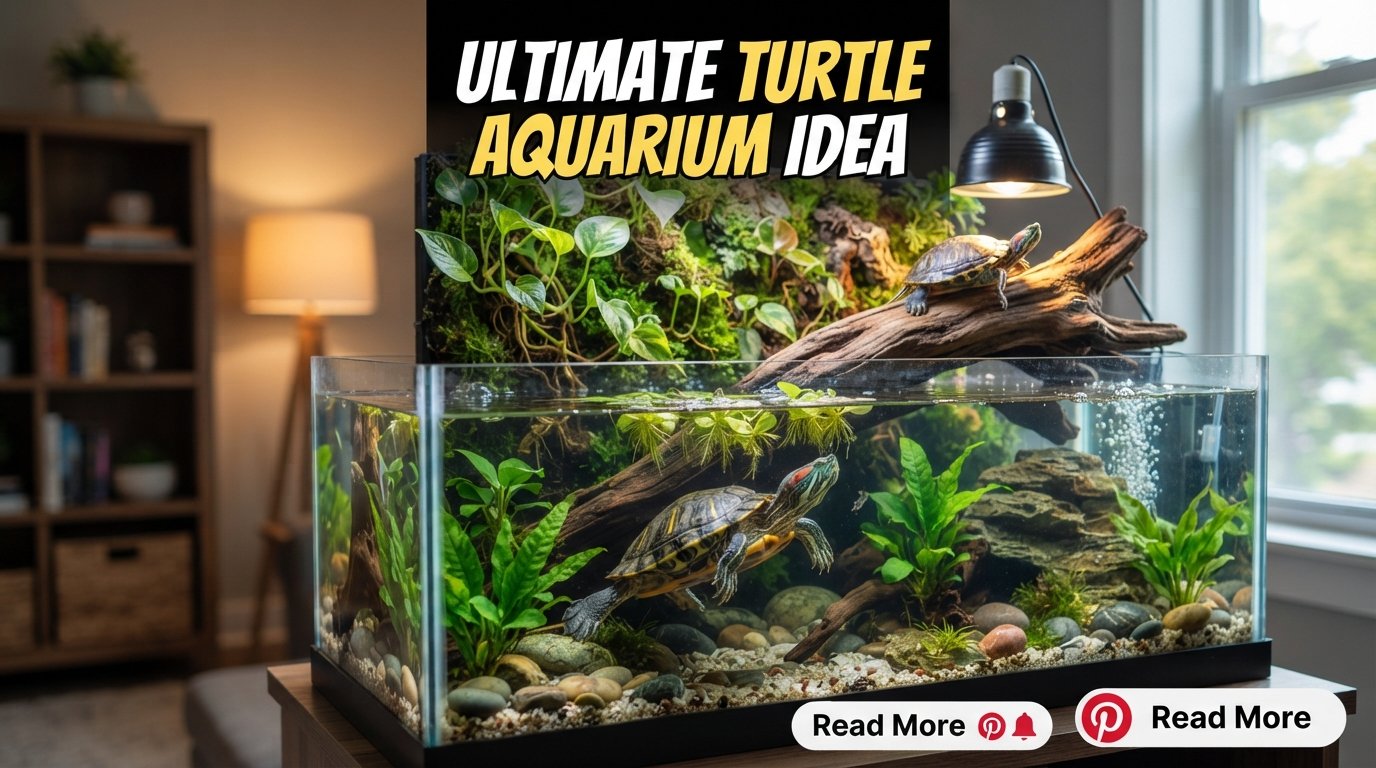
A turtle aquarium idea can help you transform a basic turtle habitat into a beautiful, functional, and comfortable aquatic environment. Turtles are fascinating pets, and a well-designed aquarium can provide them with swimming space, a dry basking area, plants, hiding places, suitable lighting, and an attractive natural appearance. Unlike a decorative fish aquarium, a turtle aquarium needs to be designed around the turtle’s behavior, size, strength, and care requirements.
Whether you are setting up a small turtle habitat for a young aquatic turtle or planning a larger enclosure for an adult, there are many creative ways to combine practical features with an attractive design. From natural river-style habitats to modern minimalist setups, the right turtle aquarium idea can make the enclosure enjoyable for both the turtle and its owner.
What Makes a Good Turtle Aquarium Idea?
A good turtle aquarium should prioritize the animal’s needs before decoration. Turtles need enough water for swimming, a secure area where they can completely leave the water and bask, proper heating, appropriate lighting, filtration, and easy access to clean water.
The aquarium should also provide enough room for the turtle to move comfortably. A small turtle may look comfortable in a small tank initially, but many aquatic turtles grow significantly as they mature.
A beautiful design is useful only when it also creates a safe and functional habitat.
Essential Parts of a Turtle Aquarium
Before choosing decorations, it helps to understand the basic components needed for a turtle aquarium.
| Aquarium Feature | Purpose |
|---|---|
| Large tank | Provides swimming and living space |
| Water area | Allows aquatic turtles to swim |
| Basking platform | Gives the turtle a completely dry resting area |
| UVB lighting | Supports normal calcium and shell health |
| Heat source | Provides appropriate basking temperatures |
| Filtration | Helps manage waste and water quality |
| Secure lid | Helps prevent escapes and protects equipment |
| Substrate or bare bottom | Provides the desired tank-floor design |
| Hiding area | Gives the turtle a place to retreat |
| Thermometer | Helps monitor temperatures |
| Water conditioner | Treats suitable tap water before use |
The exact equipment and environmental requirements depend on the turtle species.
1. Natural River Turtle Aquarium
One of the most attractive turtle aquarium ideas is a natural river-style setup.
Use smooth rocks, driftwood, aquatic plants, and a sandy or bare-bottom area to create the appearance of a shallow river environment.
The design can include a larger swimming area in the center with plants and structures around the edges.
Avoid sharp rocks or decorations that could injure the turtle. Any heavy decoration should also be positioned securely so it cannot collapse.
2. Turtle Aquarium With Basking Island
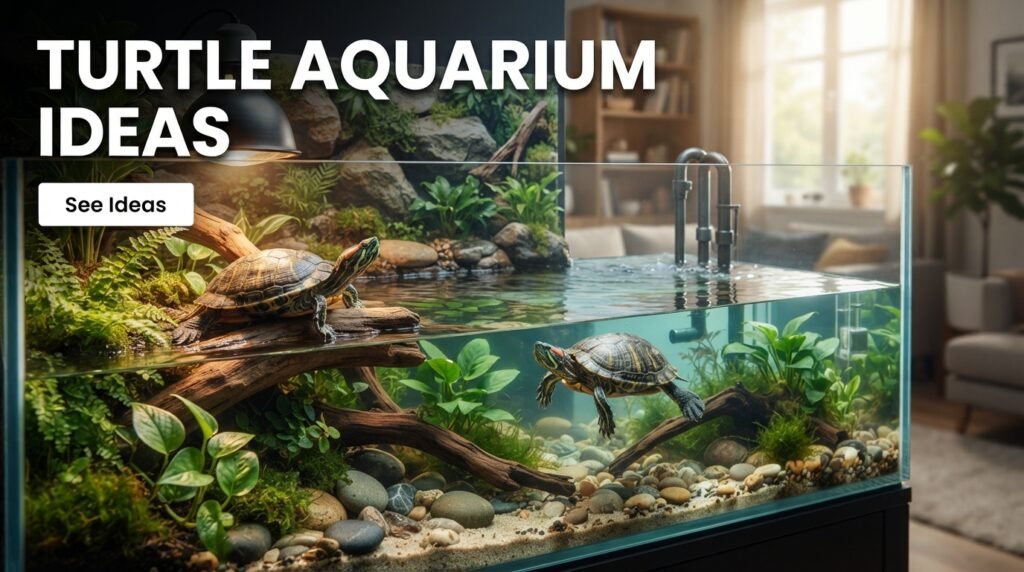
A basking island is one of the most important features of an aquatic turtle habitat.
Instead of using a simple floating platform, you can design a larger island that looks like a natural rock formation.
The turtle should be able to climb onto the platform easily and completely dry its body.
Make sure the platform is stable and strong enough for the turtle. The basking area should also be positioned appropriately beneath the heating and UVB equipment.
3. Turtle Aquarium With Dock
A turtle dock provides a dedicated dry area above the water.
Commercial docks can be useful because they are designed specifically for aquatic turtles, but the most important consideration is functionality rather than appearance.
The dock should be secure, easy for the turtle to access, and large enough for the turtle to rest comfortably.
As the turtle grows, the dock may need to be upgraded.
4. Planted Turtle Aquarium
Aquatic plants can give a turtle aquarium a natural appearance.
Plants can be arranged around the edges of the swimming area while leaving plenty of open water for movement.
However, turtles may uproot, bite, or damage plants. Choose plants according to the turtle species and its behavior.
Artificial plants can also be considered when live plants are repeatedly destroyed, but they should be made from safe aquarium materials and positioned securely.
5. Turtle Aquarium With Driftwood
Driftwood can create a beautiful natural appearance and provide additional structure.
Large pieces can form underwater caves, shaded areas, or visual focal points.
Make sure the wood is aquarium-safe and securely positioned. Avoid unstable pieces that could fall or trap a turtle.
Driftwood can also provide climbing opportunities, although any climbing structure must be designed so the turtle cannot escape from the enclosure.
6. Minimalist Turtle Aquarium
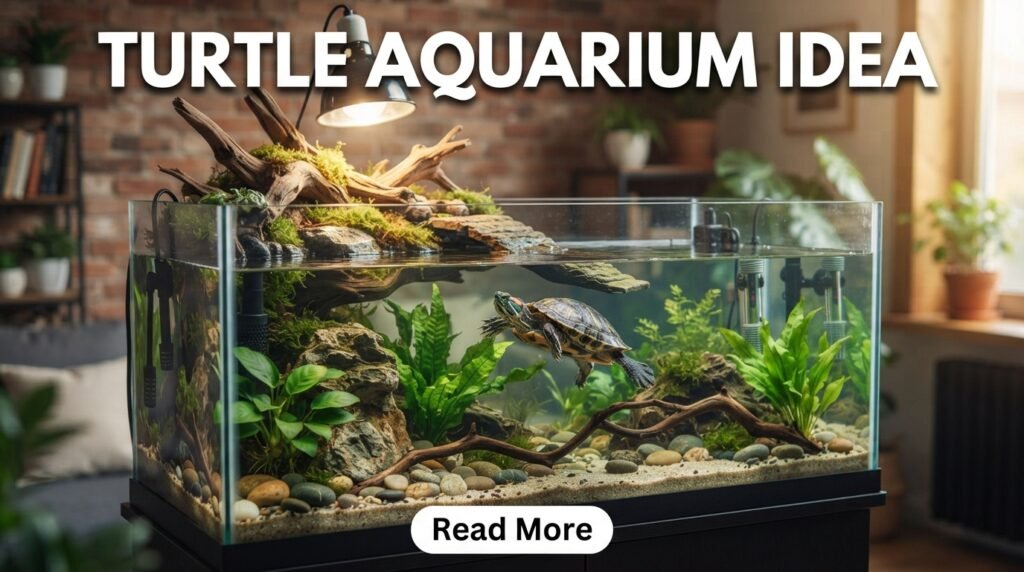
If you prefer a clean and modern appearance, consider a minimalist turtle aquarium.
Use a bare bottom or simple substrate, one attractive basking platform, a few carefully selected decorations, and plenty of open swimming space.
A minimalist setup can also make maintenance easier because there are fewer objects collecting waste.
The simplicity should never mean removing essential equipment or reducing the turtle’s living space.
7. Turtle Aquarium With Rock Design
A rock-themed aquarium can create the appearance of a natural shoreline.
Use smooth aquarium-safe rocks in different sizes to create visual depth.
Large rocks can be positioned around the sides while smaller pieces can fill empty areas.
Avoid creating unstable piles. Turtles are strong animals and can move decorations, so every structure should be stable.
8. Turtle Aquarium With Cave
A cave can provide a shaded retreat where the turtle can hide and feel secure.
You can create a cave using aquarium-safe decorations, smooth rocks, or commercially designed turtle hides.
The entrance should be large enough for the turtle to enter and leave without becoming trapped.
Never create a structure with narrow gaps where the turtle could wedge itself.
9. Large Turtle Aquarium Idea
For larger aquatic turtles, a large aquarium or custom enclosure can provide much more comfortable living space.
Large setups can include separate zones for swimming, basking, hiding, and resting.
Instead of filling the entire tank with decorations, concentrate structures along one side and leave a large open swimming area.
This arrangement gives the turtle room to move while keeping the aquarium visually organized.
10. Turtle Aquarium With Waterfall
A small waterfall can create an attractive natural appearance and provide additional water movement.
However, waterfalls should be designed carefully. The equipment must be protected from the turtle, and water should not splash excessively outside the aquarium.
A waterfall is an optional decorative feature, not a replacement for a properly sized filtration system.
11. Turtle Aquarium With Shoreline
A shoreline design can make the aquarium resemble a natural pond.
Create a clear transition between the swimming area and dry basking area. Rocks, driftwood, plants, and appropriate decorations can be used to create a natural edge.
The turtle should always have an easy route from the water to the dry area.
12. Modern Turtle Aquarium Idea
A modern turtle aquarium can use clean shapes, simple decorations, and a carefully planned layout.
A large glass enclosure with a simple basking platform, a few natural decorations, and organized equipment can look attractive without becoming overcrowded.
Modern designs are especially useful for people who want the turtle habitat to fit naturally into a contemporary room.
13. Turtle Aquarium With Sand
Sand can create a natural appearance, especially in turtle habitats inspired by rivers, ponds, or shorelines.
However, substrate choice should be based on safety and the turtle species.
Fine particles may be ingested by some turtles, while larger gravel can also present risks. If you use substrate, choose it carefully and monitor how the turtle interacts with it.
A bare-bottom setup is another practical option because it makes waste easier to see and remove.
14. Turtle Aquarium With Floating Plants
Floating plants can provide shade and make the aquarium look more natural.
They can also create areas where turtles can explore and rest.
However, turtles may eat or destroy floating plants, and rapidly growing plants can cover too much of the water surface.
Maintain enough open water for normal swimming and ensure the basking area remains accessible.
15. Small Turtle Aquarium Idea
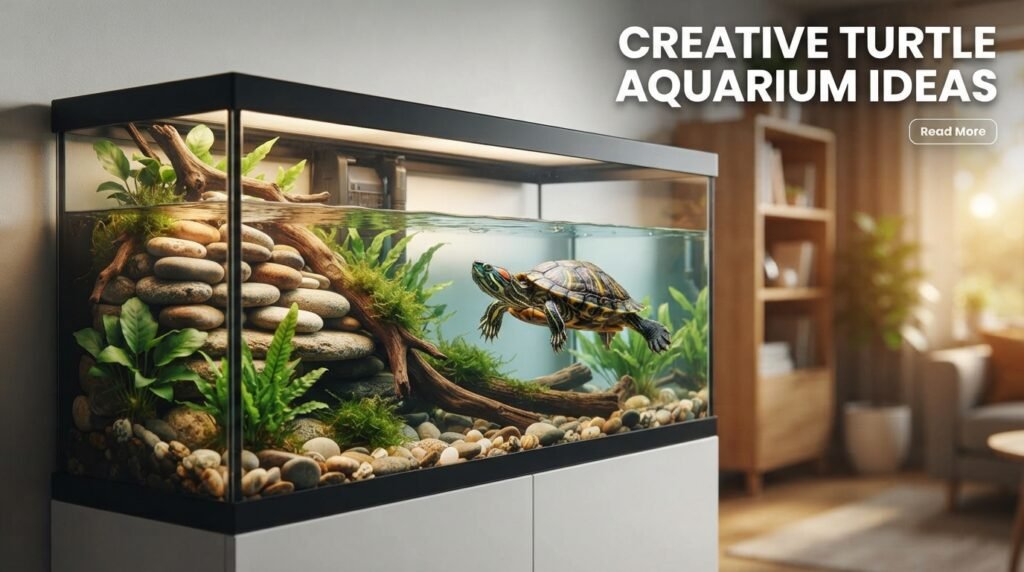
Young turtles may initially fit comfortably in smaller aquariums, but planning for future growth is important.
Instead of choosing a tank based only on the turtle’s current size, research the adult size of the species.
A temporary smaller setup can be useful for a young turtle, but owners should be prepared to upgrade the enclosure as the animal grows.
Choosing the Right Turtle Aquarium Size
Tank size is one of the most important decisions.
Aquatic turtles need enough room to swim, turn around, rest, and access their basking area.
Different turtle species reach different adult sizes, so there is no single tank size that works for every turtle.
A turtle aquarium should be selected based on the turtle’s species and expected adult size rather than simply how large the turtle is when purchased.
Water Depth for a Turtle Aquarium
Water depth should allow the turtle to swim naturally while also providing safe access to resting areas.
The exact depth depends on the turtle species, age, size, swimming ability, and enclosure design.
Young or weak swimmers may require special consideration.
Make sure the turtle cannot become trapped beneath decorations or equipment.
Turtle Aquarium Filtration
Turtles produce a significant amount of waste compared with many aquarium fish.
A strong filtration system is therefore particularly important.
Choose filtration based on the actual biological load and water volume rather than simply matching a filter to the tank’s nominal size.
Mechanical filtration removes particles, while biological filtration provides surfaces for beneficial bacteria.
Regular maintenance is still necessary even when a powerful filter is installed.
Turtle Basking Area
A dry basking area is essential for many aquatic turtle species.
The turtle should be able to climb completely out of the water and dry its shell and body.
The platform needs to be stable and large enough for the turtle. It should not wobble when the turtle climbs onto it.
The basking area should also be positioned appropriately relative to the heating and UVB lighting.
UVB Lighting for Turtles
UVB lighting is an important part of proper care for many captive aquatic turtles.
It helps support the biological processes associated with vitamin D3 and calcium metabolism.
The lighting setup should follow the requirements of the specific turtle species, and bulbs should be replaced according to the manufacturer’s recommendations because UVB output can decline even when a bulb still produces visible light.
Heating a Turtle Aquarium
Aquatic turtles generally need appropriate temperatures for both their water and basking area.
An aquarium heater may be required for the water, depending on the species and room temperature.
A separate heat source is generally used for the basking area.
Always use appropriate temperature-monitoring equipment and protect heaters from damage caused by the turtle.
Turtle Aquarium Water Quality
Clean water is essential for a healthy turtle.
Turtles produce considerable waste, so water quality can deteriorate quickly in an undersized or poorly filtered aquarium.
Regular partial water changes, appropriate filtration, careful feeding, and monitoring water parameters can help maintain a healthy environment.
Tap water should be treated appropriately before being added if it contains substances such as chlorine or chloramine.
Turtle Aquarium Decorations
Decorations should be chosen for safety first.
Smooth rocks, suitable driftwood, turtle-safe hides, and appropriate aquatic plants can create an attractive environment.
Avoid sharp decorations, unstable structures, toxic materials, or objects small enough to be swallowed.
Remember that turtles are stronger and more destructive than many aquarium fish. Decorations that are safe for fish may not necessarily remain secure in a turtle enclosure.
Turtle Aquarium Cleaning
A turtle aquarium usually requires consistent cleaning because of the amount of waste produced.
Remove visible waste when necessary, maintain the filter, clean appropriate surfaces, and perform partial water changes.
Do not completely sterilize the aquarium every time you clean it. Maintaining beneficial biological filtration is important.
When cleaning biological filter media, avoid exposing it unnecessarily to untreated chlorinated water.
Common Turtle Aquarium Mistakes
One common mistake is choosing a tank that is too small.
Another is creating a beautiful underwater section without providing a proper dry basking area.
Some owners also underestimate how much waste turtles produce and use inadequate filtration.
Overcrowding the aquarium with decorations can reduce swimming space.
Unstable rocks and climbing structures can also create safety hazards.
Finally, relying only on appearance instead of researching the turtle species can result in an unsuitable habitat.
How to Make a Turtle Aquarium Look Beautiful
The best-looking turtle aquariums usually have a clear layout.
Place the major structure, such as the basking area or rock formation, toward one side rather than filling the entire aquarium.
Keep a large open swimming zone.
Use plants and decorations to create depth around the edges.
Choose a simple color palette that complements the turtle.
Most importantly, hide or organize cables and equipment where possible while keeping them accessible for maintenance.
A Simple Turtle Aquarium Layout
A practical layout can have three main zones.
The first is the open swimming area. This should provide the turtle with enough room to move freely.
The second is the basking area, positioned above the water and equipped appropriately with heat and UVB lighting.
The third is the decoration or hiding zone, which can contain plants, driftwood, rocks, or a suitable cave.
This simple structure can produce an attractive aquarium without compromising functionality.
Final Thoughts
A turtle aquarium idea should combine beauty, safety, and practical animal care. Natural river designs, rock layouts, planted aquariums, modern minimalist setups, shoreline habitats, and basking-island designs can all create attractive turtle environments.
However, the turtle’s needs should always come first. Adequate swimming space, a secure dry basking area, appropriate UVB and heating, strong filtration, clean water, safe decorations, and regular maintenance are more important than appearance alone.
As your turtle grows, its aquarium requirements may also change. Planning for adult size and choosing equipment that can handle the turtle’s waste load will help create a healthier long-term habitat.
With thoughtful planning, you can create a turtle aquarium that is not only beautiful to look at but also comfortable, stimulating, and appropriate for your turtle.
Frequently Asked Questions About Turtle Aquarium Ideas
What is the best turtle aquarium idea?
A natural-style aquarium with a large swimming area, secure basking platform, safe plants, stable decorations, and strong filtration is a practical starting point for many aquatic turtles.
How big should a turtle aquarium be?
The appropriate size depends on the turtle species, current size, adult size, and swimming needs. Always research the species before choosing an enclosure.
Do turtles need a basking area?
Many aquatic turtles require a dry basking area where they can completely leave the water. The exact requirements depend on the species.
Do turtle aquariums need filters?
Yes. Aquatic turtles produce substantial waste, so appropriate filtration is an important part of maintaining water quality.
Can I put plants in a turtle aquarium?
Yes, depending on the turtle species and plant type. Turtles may eat, uproot, or damage plants, so choose suitable species and secure them appropriately.
Can I use rocks in a turtle aquarium?
Smooth, stable rocks can be used when they are appropriately sized and securely positioned. Avoid sharp or unstable rocks.
Do turtles need UVB lighting?
Many commonly kept aquatic turtles require UVB exposure as part of proper husbandry. The exact lighting requirements should be based on the species.
Can I use sand in a turtle aquarium?
Sand can be used in some setups, but substrate safety depends on the turtle species and its behavior. A bare-bottom aquarium can also be a practical option.
How do I keep a turtle aquarium clean?
Use appropriate filtration, remove waste, avoid overfeeding, perform regular partial water changes, and maintain the filter according to its requirements.
What should I put at the bottom of a turtle aquarium?
You can use a bare bottom, an appropriate substrate, or carefully selected natural materials depending on the turtle species and your maintenance preferences.
Can a turtle live in a fish aquarium?
An aquarium can be used for certain aquatic turtles if it provides adequate space, water depth, basking facilities, filtration, heating, and lighting. The setup must be designed specifically for the turtle.
How can I make a turtle aquarium look natural?
Use safe rocks, suitable driftwood, aquatic plants, a natural-looking substrate, and a shoreline-style layout while keeping plenty of open swimming space.