
 By admin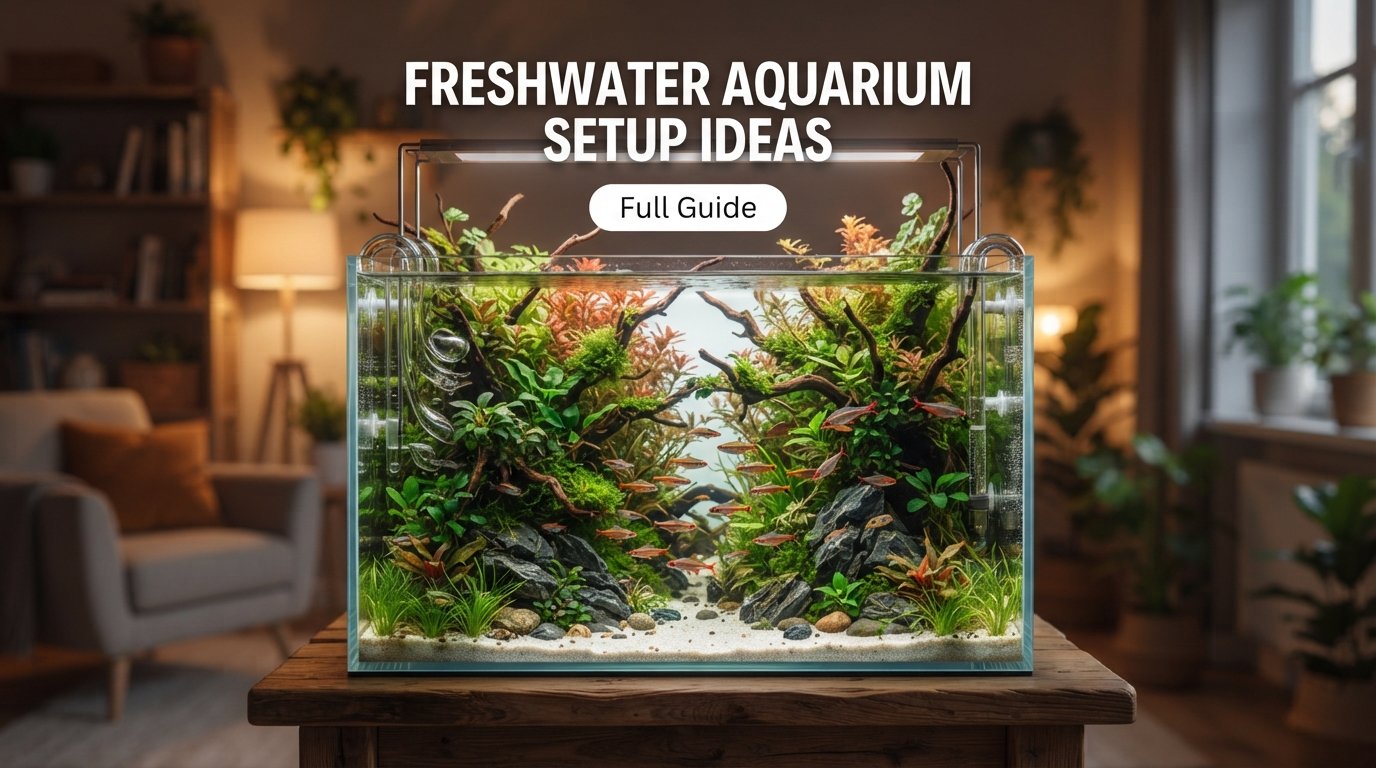
Aquarium setup ideas freshwater can help you create a beautiful underwater environment that is both attractive and comfortable for your fish. A freshwater aquarium gives you almost unlimited possibilities when it comes to plants, fish, rocks, driftwood, substrate, lighting, and decorations. Whether you prefer a simple beginner aquarium or a detailed planted aquascape, the right setup can turn a fish tank into a natural centerpiece for your home.
A successful freshwater aquarium is about more than choosing beautiful decorations. The aquarium needs appropriate filtration, heating, lighting, water quality, swimming space, and compatible fish. Once these basic requirements are planned, you can choose a design that matches your personal style.
This guide explores a wide range of aquarium setup ideas freshwater, including natural planted tanks, minimalist aquariums, community setups, nano aquariums, colorful fish tanks, aquascapes, and creative layouts for different tank sizes.
What Is a Freshwater Aquarium Setup?
A freshwater aquarium setup is the complete arrangement of a fish tank and its equipment, including the aquarium, filter, heater, lighting, substrate, plants, decorations, and aquatic animals.
Freshwater aquariums can recreate natural environments such as rivers, streams, lakes, and forest pools. They can also use completely modern or artistic designs.
The best setup depends on the fish and plants you want to keep. Some fish need open swimming space, while others prefer dense vegetation or hiding areas.
Essential Freshwater Aquarium Equipment
Before decorating the aquarium, it is important to establish the basic equipment.
| Equipment | Main Purpose |
|---|---|
| Aquarium | Provides the living environment |
| Filter | Removes waste and supports biological filtration |
| Heater | Maintains suitable water temperature for tropical fish |
| Aquarium light | Supports visibility and plant growth |
| Thermometer | Monitors water temperature |
| Substrate | Creates the aquarium floor |
| Water conditioner | Treats tap water when needed |
| Test kit | Checks important water parameters |
| Air pump | Can improve water movement and gas exchange |
| Lid | Helps prevent fish from jumping out |
Not every aquarium requires every piece of equipment. Requirements depend on the species and setup.
1. Natural Planted Aquarium Setup
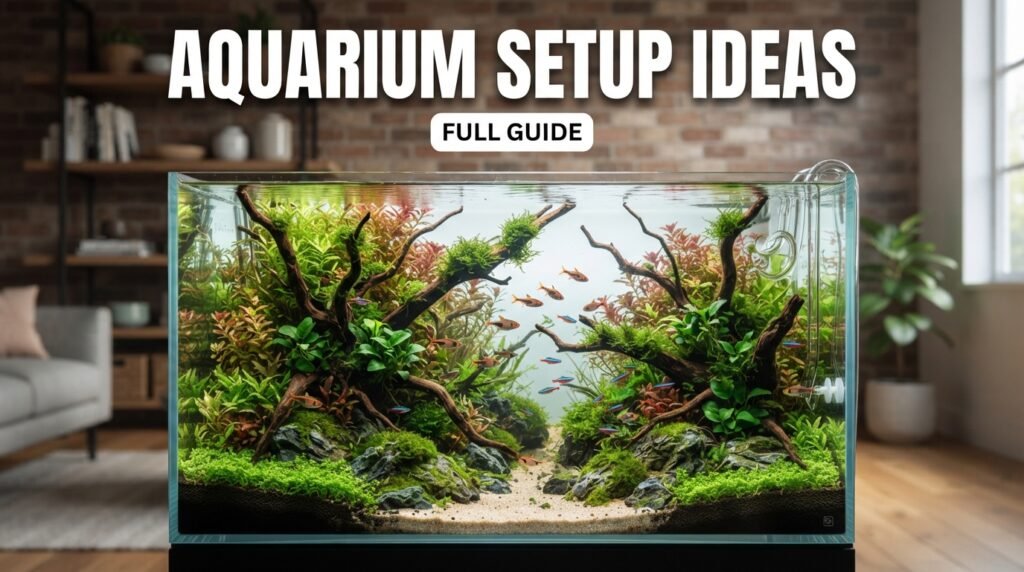
A natural planted aquarium is one of the most popular freshwater aquarium setup ideas.
Use live aquatic plants, driftwood, rocks, and a natural-looking substrate to create a miniature underwater landscape.
Tall plants can be placed toward the back, medium-sized plants in the middle, and shorter plants toward the front.
Leave enough open space for fish to swim naturally.
This type of aquarium can look peaceful and organic while providing fish with hiding places and environmental enrichment.
2. Minimalist Freshwater Aquarium
If you prefer a clean appearance, try a minimalist setup.
Use a simple substrate, a few carefully selected rocks or pieces of driftwood, and a limited number of plants.
The goal is to create visual balance rather than filling every part of the tank.
A minimalist aquarium can be particularly attractive in modern homes because it has a clean and uncluttered appearance.
3. Freshwater Community Aquarium
A community aquarium contains several compatible freshwater species.
You might combine peaceful schooling fish with bottom-dwelling species and a suitable centerpiece fish.
For example, a setup could include small tetras, peaceful bottom fish, and compatible centerpiece species.
However, compatibility should always be researched before combining fish. Consider adult size, temperament, water requirements, and feeding behavior.
4. Nano Freshwater Aquarium
A nano aquarium is a small tank designed around appropriately sized aquatic life.
Small planted aquariums can look impressive despite their limited dimensions.
Use tiny plants, small rocks, moss, and carefully selected small fish or invertebrates.
Because water volume is limited, small aquariums can experience changes in water parameters more quickly. Consistent maintenance is therefore particularly important.
5. Betta Aquarium Setup
A betta can be the centerpiece of a beautiful freshwater aquarium.
Use live plants, smooth decorations, hiding places, and gentle water movement.
Avoid creating strong currents that make swimming difficult for the betta.
A simple planted arrangement with a few natural decorations can make the betta’s flowing fins and bright colors stand out.
6. Guppy Aquarium Setup
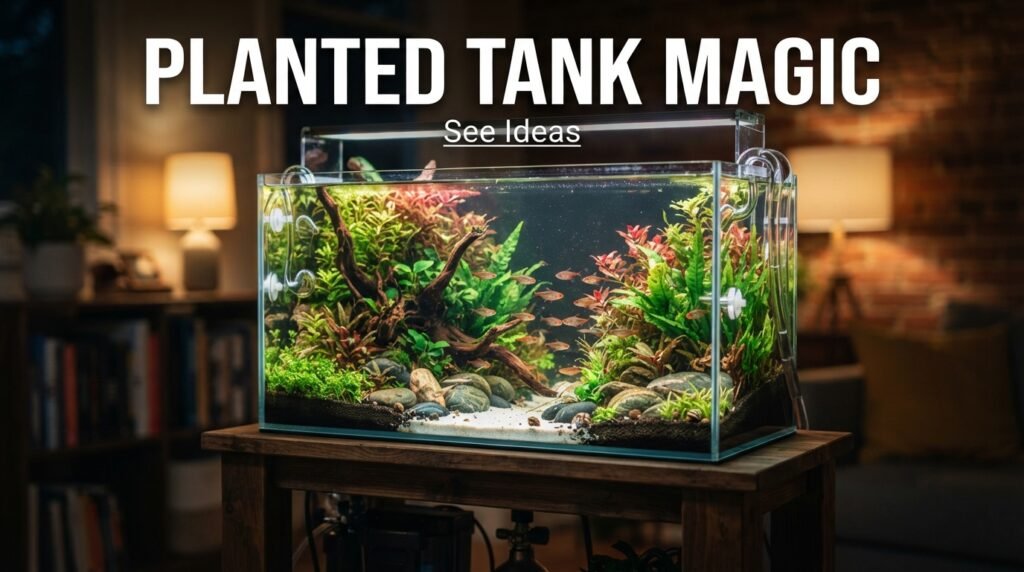
Guppies are excellent subjects for colorful freshwater aquarium designs.
Their bright colors and flowing tails look especially attractive against green plants.
A guppy aquarium can use a combination of tall background plants, floating plants, and open swimming areas.
If both male and female guppies are kept together, be prepared for frequent breeding and population growth.
7. Neon Tetra Aquarium Setup
Neon tetras can create an impressive visual effect when kept in a group.
Their blue and red coloration stands out against dark substrate and green plants.
Create an open central swimming area with plants around the edges.
Dimmer or carefully controlled lighting can also help their colors stand out without overwhelming the aquarium.
8. Aquascape Freshwater Aquarium
Aquascaping focuses heavily on the artistic arrangement of plants, rocks, wood, substrate, and open space.
Popular aquascaping styles include nature-style layouts, forest-inspired designs, island arrangements, and rock-focused compositions.
A successful aquascape usually has a clear focal point and a sense of depth.
Avoid placing every decoration directly in the center. Off-center compositions often create a more natural visual balance.
9. Iwagumi-Inspired Setup
An Iwagumi-inspired aquarium focuses primarily on carefully arranged rocks and simple plant growth.
The rocks become the main visual feature.
Low-growing plants can create a carpet around the stones while leaving the rock structure visible.
This style works especially well for people who prefer minimalist freshwater aquarium designs.
10. Jungle Aquarium Setup
A jungle aquarium uses dense plant growth to create a wild underwater appearance.
Tall plants can fill the background, while medium and low-growing plants occupy the middle and foreground.
Driftwood can be used to create additional structure.
This setup provides many hiding areas for fish and can create a dramatic natural environment.
Regular trimming is necessary to prevent plants from taking over the aquarium.
11. River-Inspired Freshwater Aquarium
Create a river-style aquarium using smooth stones, driftwood, aquatic plants, and open swimming areas.
Arrange the decorations so they look like they were shaped by flowing water.
A curved pathway of gravel or sand can create the appearance of a natural riverbed.
Choose fish and plants that are compatible with the intended water conditions.
12. Blackwater Aquarium Setup
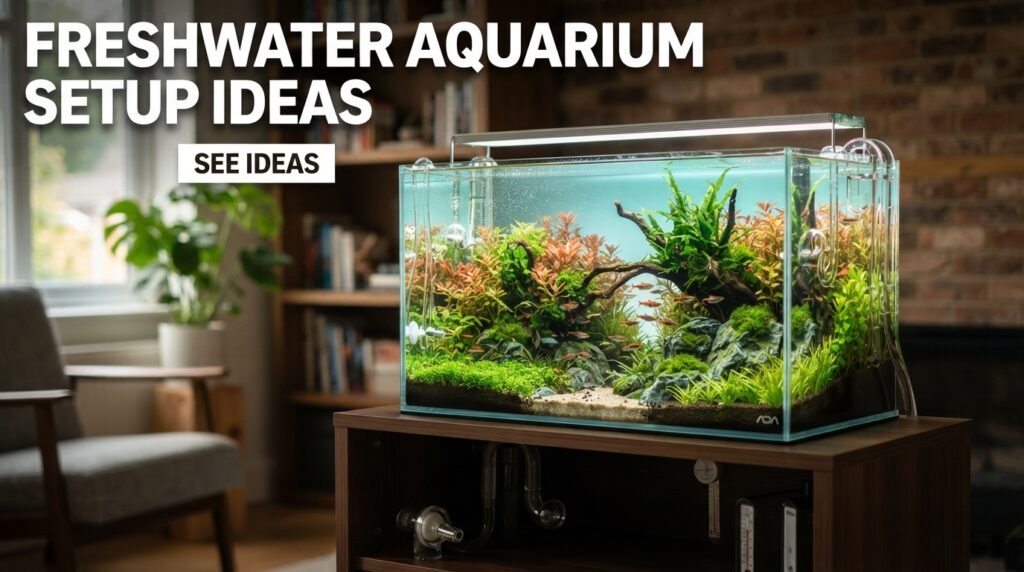
A blackwater aquarium recreates the appearance of naturally dark, tannin-rich aquatic environments.
Driftwood, leaf litter, subdued lighting, and appropriate plants can create a warm brown or tea-colored appearance.
Some fish naturally come from environments with these characteristics.
A blackwater aquarium can have a mysterious and highly natural appearance, but its water chemistry and livestock should be researched carefully.
13. Forest Aquarium Setup
A forest-inspired aquarium can create the feeling of looking into a submerged woodland.
Use tall driftwood branches that extend upward through the aquarium. Add moss and plants around the wood to resemble vegetation.
Dark substrate and subdued lighting can strengthen the forest effect.
This style is especially attractive in taller aquariums.
14. Rock and Driftwood Aquarium
Combining rocks with driftwood provides an easy way to create structure and depth.
Position larger pieces toward the back or sides and smaller pieces toward the foreground.
Make sure heavy rocks are securely positioned.
Leave open areas between structures so fish have room to swim.
15. Colorful Freshwater Aquarium
If you love bright colors, create a colorful community setup using vibrant fish and contrasting plants.
Red plants can contrast with green foliage, while colorful fish can become the focal point.
Avoid using too many competing colors. A limited palette often produces a more attractive aquarium.
16. Black and White Aquarium Theme
A black substrate combined with pale rocks, green plants, and silver or white fish can create a sophisticated appearance.
This theme works particularly well in modern interiors.
The dark background can also help bright fish stand out visually.
17. White Sand Freshwater Aquarium
White or light-colored substrate can create a bright and open appearance.
It can look especially attractive with green plants and colorful fish.
However, light substrate can show algae and waste more easily, so regular maintenance may be more noticeable.
Choose substrate based on fish safety as well as appearance.
18. Freshwater Shrimp Aquarium
Shrimp tanks can be small, colorful, and heavily planted.
Moss, small plants, rocks, and driftwood provide surfaces for grazing and hiding.
Because shrimp can be sensitive to water chemistry and sudden changes, stable water conditions are especially important.
A shrimp-focused setup generally works best without fish that may eat shrimp or shrimp babies.
19. Freshwater Aquarium With Snails
Snails can add movement and visual interest to a freshwater aquarium.
They can also help consume certain types of algae and leftover organic material, although they should not be considered a complete cleaning solution.
Choose snail species according to the aquarium’s conditions and your stocking goals.
20. 10-Gallon Freshwater Aquarium Setup
A 10-gallon tank can be an excellent size for a small freshwater project.
Because space is limited, choose a simple layout.
A good design might include a small group of appropriately sized fish or a species-focused setup, live plants, a small piece of driftwood, and a few rocks.
Avoid trying to recreate a large community aquarium in a small tank.
21. 20-Gallon Freshwater Aquarium Setup
A 20-gallon aquarium provides more flexibility.
You can create a planted community aquarium with a larger swimming area and several types of plants.
A carefully selected group of peaceful fish can occupy different areas of the tank.
The additional water volume can also provide somewhat more stability than a very small aquarium, although regular maintenance remains essential.
22. 29-Gallon Freshwater Aquarium Setup
A 29-gallon aquarium provides enough space for more elaborate planted designs.
You can create a larger driftwood centerpiece, add taller background plants, and establish separate swimming zones.
This tank size can work well for community aquariums when compatible fish are selected carefully.
23. 40-Gallon Freshwater Aquarium Setup
A 40-gallon aquarium provides considerably more design freedom.
You can create larger rock formations, extensive planted areas, or a dramatic driftwood layout.
There is also more room for larger fish species, depending on the aquarium dimensions and stocking plan.
The tank should still be stocked according to the adult size and needs of the fish.
Choosing Freshwater Aquarium Substrate
Substrate plays both a practical and visual role.
Common options include gravel, sand, planted-tank substrates, and bare-bottom designs.
Gravel is versatile and easy to use.
Sand can create a natural river or beach appearance.
Specialized planted substrates can support certain aquatic plants.
The best substrate depends on the fish, plants, maintenance requirements, and desired appearance.
Choosing Aquarium Plants
Plants are among the most effective ways to improve a freshwater aquarium setup.
Background plants create height, midground plants fill the center, and foreground plants can create a carpet-like appearance.
Moss can be attached to rocks and driftwood.
Floating plants can provide shade and create an interesting surface layer.
Choose plants according to lighting, growth requirements, water conditions, and your willingness to perform maintenance.
Aquarium Lighting Ideas
Lighting can dramatically change the appearance of a freshwater aquarium.
Bright lighting can highlight colorful fish and plants, while softer lighting can create a calm atmosphere.
If you keep live plants, select lighting appropriate for their requirements.
Avoid leaving aquarium lights on excessively because too much light can contribute to algae problems.
A consistent lighting schedule is usually preferable to constantly changing the duration.
Freshwater Aquarium Background Ideas
A background can make the aquarium look deeper and help equipment disappear visually.
Black backgrounds are popular because they create contrast with green plants and colorful fish.
Frosted or light backgrounds can produce a bright modern appearance.
Natural backgrounds can also be created with carefully arranged plants and driftwood.
How to Create Depth in a Freshwater Aquarium
Depth is one of the most important principles in aquarium design.
Use larger objects toward the front and smaller objects toward the back.
Create height differences with plants.
Leave some open space rather than filling every area.
A curved pathway made from sand or gravel can create the illusion of distance.
The goal is to make the aquarium look larger and more three-dimensional.
Common Freshwater Aquarium Setup Mistakes
One common mistake is buying decorations before planning the layout.
Another is overcrowding the aquarium with too many fish.
Some beginners also choose fish based only on appearance without checking adult size and compatibility.
Overfeeding is another frequent problem because excess food contributes to poor water quality.
Finally, beginners may neglect the nitrogen cycle and add too many fish before the aquarium’s biological filtration has become established.
How to Build a Freshwater Aquarium Step by Step
Start by placing the aquarium on a strong, level stand.
Add the appropriate substrate after rinsing it according to its instructions.
Position rocks and driftwood securely.
Add plants and arrange them according to their intended height and growth pattern.
Install the filter, heater, thermometer, and appropriate lighting.
Fill the aquarium carefully with conditioned water.
Allow the aquarium’s biological system to establish before fully stocking it.
Once the aquarium is ready, introduce compatible livestock gradually rather than adding too many fish at once.
Maintaining a Freshwater Aquarium
A beautiful freshwater aquarium requires regular maintenance.
Check water temperature and monitor water quality.
Perform appropriate partial water changes.
Remove dead plant material and excessive waste.
Clean the glass when necessary.
Maintain filter equipment according to its requirements.
Trim plants before they become overcrowded.
Observe fish every day for changes in appetite, behavior, swimming, or appearance.
Final Thoughts
Aquarium setup ideas freshwater can range from simple minimalist tanks to elaborate planted aquascapes filled with rocks, driftwood, and colorful fish. The best setup is one that combines visual appeal with the biological and environmental needs of its inhabitants.
Start with the basics: an appropriately sized aquarium, reliable filtration, suitable water conditions, proper lighting, and compatible livestock. Once those elements are planned, experiment with plants, substrate, rocks, wood, and different layouts.
Whether you prefer a natural river aquarium, colorful community tank, jungle aquascape, blackwater setup, nano aquarium, or modern minimalist design, careful planning can help you create a freshwater aquarium that is attractive, stable, and enjoyable to maintain.
Frequently Asked Questions About Aquarium Setup Ideas Freshwater
What is the best freshwater aquarium setup for beginners?
A simple planted community aquarium with compatible peaceful fish, reliable filtration, appropriate lighting, and easy-to-maintain plants can be a practical choice for beginners.
What should I put in a freshwater aquarium?
A typical freshwater aquarium may include a suitable substrate, filter, heater when required, thermometer, lighting, plants, decorations, conditioned water, and compatible fish or invertebrates.
What are the best plants for a freshwater aquarium?
The best plants depend on lighting, water conditions, tank size, and maintenance preferences. Beginner-friendly options can include hardy plants and mosses.
How many fish can I put in a freshwater aquarium?
There is no universal number. Stocking depends on aquarium volume, dimensions, filtration, adult fish size, behavior, and maintenance.
Does a freshwater aquarium need a heater?
Many tropical freshwater fish require a heater to maintain an appropriate temperature. Cold-water species may have different requirements.
What is the easiest freshwater aquarium setup?
A simple species-focused or lightly stocked planted aquarium can be easier to manage than a heavily decorated, densely stocked community aquarium.
Should I use sand or gravel in a freshwater aquarium?
Both can work. Sand can provide a natural appearance, while gravel is versatile and easy to maintain. The best choice depends on the fish, plants, and desired design.
How long should aquarium lights stay on?
The appropriate lighting period depends on the aquarium and plants. A consistent schedule is generally preferable, and excessive lighting can encourage algae.
How do I make my freshwater aquarium look natural?
Use live plants, natural-looking rocks, driftwood, an appropriate substrate, open swimming space, and a balanced layout with different heights and textures.
How long does it take to set up a freshwater aquarium?
The physical setup can be completed relatively quickly, but a new aquarium needs time for its biological filtration system to establish before it is fully stocked.
What fish are good for a freshwater community aquarium?
Suitable fish depend on tank size and water conditions. Peaceful species such as certain tetras, rasboras, livebearers, and compatible bottom-dwelling fish can work in appropriate combinations.
How do I keep a freshwater aquarium clean?
Use appropriate filtration, avoid overfeeding, perform regular partial water changes, remove waste and dead plant material, clean the glass, and maintain the filter regularly.