
 By admin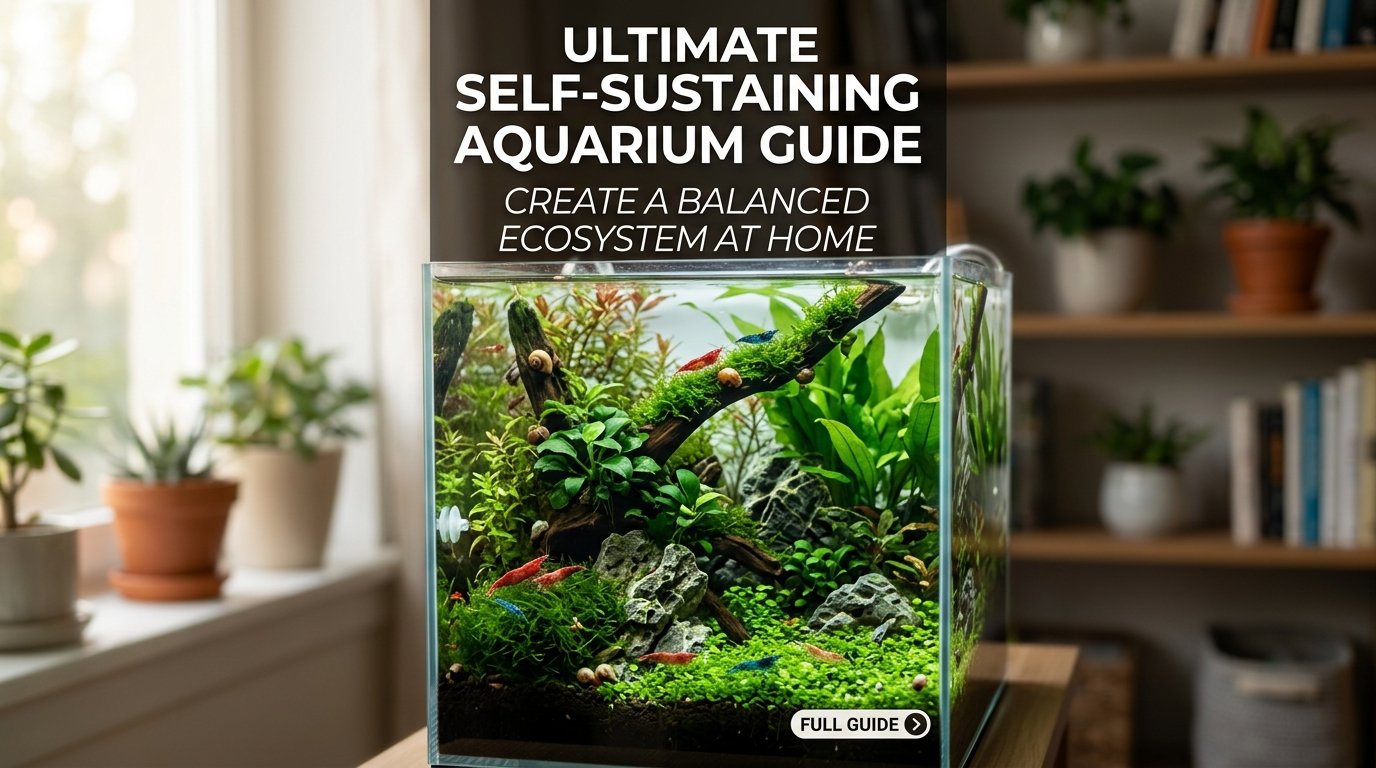
A self sustaining aquarium is one of the most fascinating concepts in the aquarium hobby. Instead of relying heavily on constant maintenance, a self sustaining aquarium is designed to function as a balanced ecosystem where plants, beneficial bacteria, microorganisms, and aquatic animals work together to maintain water quality and ecological stability. While no aquarium is completely maintenance-free, a properly designed self sustaining aquarium can dramatically reduce the amount of work required while providing a healthy and beautiful environment for aquatic life.
Whether you are a beginner looking for a low-maintenance setup or an experienced aquarist interested in natural ecosystems, a self sustaining aquarium offers a rewarding and educational experience.
What Is a Self Sustaining Aquarium?
A self sustaining aquarium is an aquarium designed to mimic natural aquatic ecosystems. In these systems, plants, beneficial bacteria, microorganisms, and aquatic animals create a biological balance that helps maintain water quality naturally.
The goal is to establish an environment where:
- Plants absorb waste nutrients
- Beneficial bacteria process harmful compounds
- Microorganisms recycle organic matter
- Animals contribute to the ecosystem without overwhelming it
The result is a healthier and more stable aquarium that requires fewer interventions.
Can an Aquarium Be Completely Self Sustaining?
One of the most common questions is whether an aquarium can truly sustain itself forever.
The reality is that most home aquariums still require occasional:
- Water top-offs
- Plant trimming
- Equipment checks
- Population control
- Light maintenance
However, a well-balanced self sustaining aquarium can operate with very little maintenance compared to conventional aquariums.
Benefits of a Self Sustaining Aquarium
Lower Maintenance
The biggest advantage is reduced maintenance requirements.
Natural Beauty
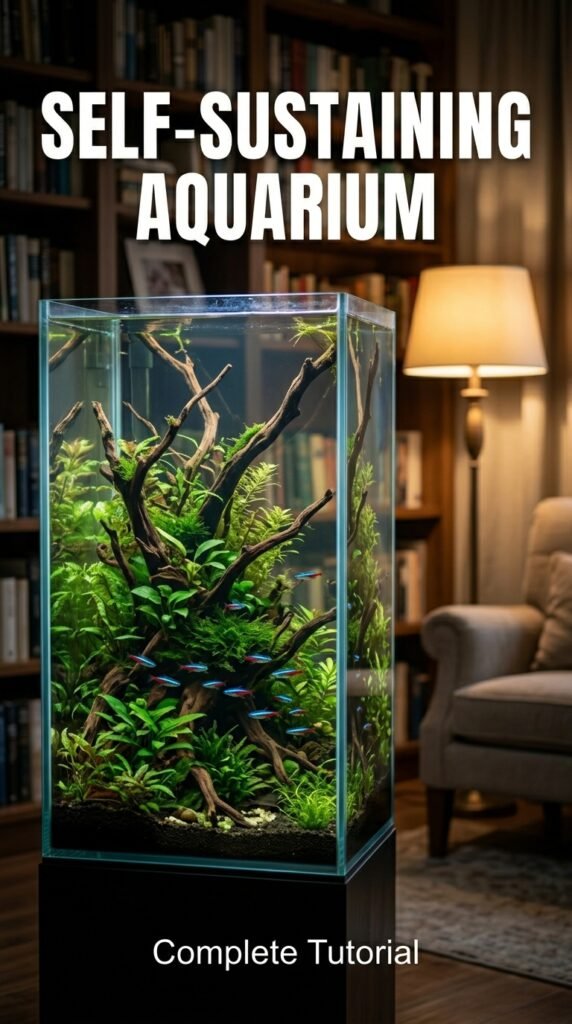
These aquariums often resemble natural ponds, streams, and wetlands.
Stable Water Conditions
Balanced ecosystems tend to experience fewer water quality fluctuations.
Educational Value
A self sustaining aquarium demonstrates ecological relationships and biological cycles.
Reduced Equipment Dependence
Many systems require minimal technology compared to traditional aquariums.
How a Self Sustaining Aquarium Works
Several biological processes contribute to the system’s stability.
The Nitrogen Cycle
Fish and other animals produce waste that releases ammonia.
Beneficial bacteria convert:
- Ammonia into nitrite
- Nitrite into nitrate
Plants then absorb nitrates as nutrients.
Plant Growth
Aquatic plants play a crucial role by:
- Absorbing waste nutrients
- Producing oxygen
- Providing shelter
- Stabilizing water conditions
Microorganisms
Tiny organisms help break down organic debris and recycle nutrients.
Natural Balance
When the number of plants and animals is balanced, the ecosystem becomes more stable over time.
Best Aquarium Size for a Self Sustaining System
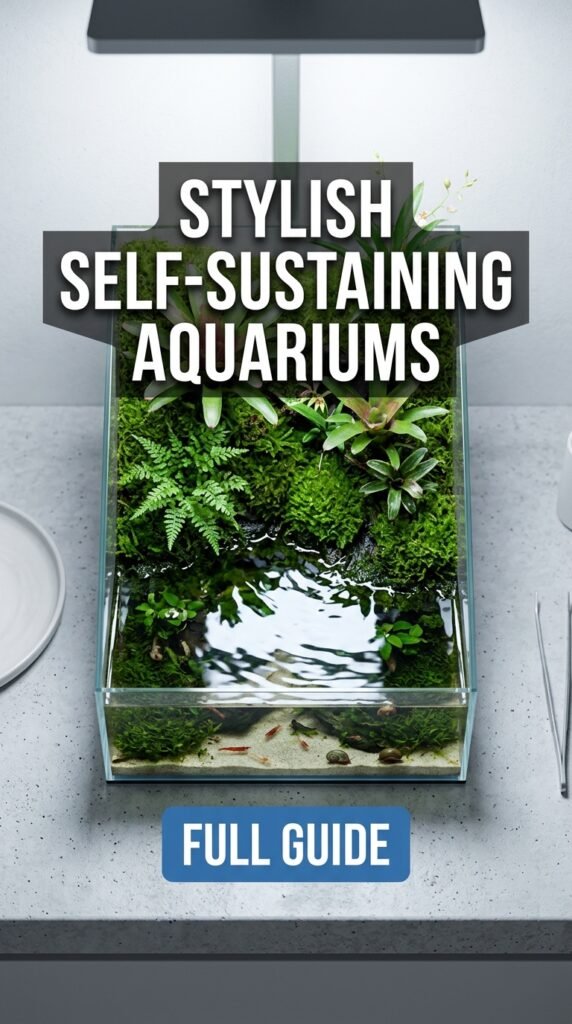
Larger aquariums generally perform better because they are more stable.
Recommended sizes include:
- 10 gallons
- 20 gallons
- 29 gallons
- 40 gallons and larger
Small aquariums can become self sustaining, but they are often more sensitive to environmental changes.
Choosing the Right Substrate
The substrate serves as the foundation of the ecosystem.
Nutrient-Rich Soil
Natural aquarium soil supports healthy plant growth.
Aquasoil
Specialized aquasoils provide nutrients and support beneficial bacteria.
Sand and Gravel Layers
Many hobbyists combine soil with sand or gravel for a natural appearance.
A healthy substrate encourages biological activity and root development.
Best Plants for a Self Sustaining Aquarium
Plants are the heart of the system.
Java Moss
Benefits include:
- Easy care
- Excellent biological filtration
- Shelter for microorganisms
Anubias
A hardy plant suitable for beginners.
Java Fern
Thrives in a wide range of conditions.
Hornwort
A fast-growing plant that absorbs excess nutrients.
Water Wisteria
Provides rapid growth and nutrient removal.
Vallisneria
Creates dense vegetation and natural habitats.
Duckweed
A floating plant that absorbs nutrients efficiently.
Best Animals for a Self Sustaining Aquarium
Choosing appropriate inhabitants is essential.
Shrimp
Popular choices include:
- Cherry Shrimp
- Amano Shrimp
- Blue Dream Shrimp
Shrimp help consume algae and organic debris.
Snails
Useful species include:
- Nerite Snails
- Ramshorn Snails
- Malaysian Trumpet Snails
They contribute to cleaning and nutrient recycling.
Small Fish
Suitable options include:
- Guppies
- Endlers
- Ember Tetras
- White Cloud Mountain Minnows
Avoid overstocking to maintain ecological balance.
Building a Self Sustaining Aquarium
Step 1: Select the Aquarium
Choose a tank large enough to provide stability.
Step 2: Add Substrate
Use nutrient-rich substrate or layered soil systems.
Step 3: Plant Heavily
Introduce a variety of aquatic plants.
Step 4: Add Water
Fill carefully to avoid disturbing the substrate.
Step 5: Cycle the Aquarium
Allow beneficial bacteria to establish before adding animals.
Step 6: Introduce Inhabitants
Add fish, shrimp, or snails gradually.
Step 7: Monitor and Adjust
Observe the ecosystem and make small adjustments as needed.
Lighting for a Self Sustaining Aquarium
Adequate lighting is necessary for plant growth.
LED Lighting
Most modern planted aquariums use LED systems.
Natural Light
Some systems utilize indirect sunlight.
Avoid excessive sunlight, which can encourage algae growth.
Light Duration
Most planted aquariums benefit from 6 to 10 hours of light daily.
Filtration in a Self Sustaining Aquarium
Many self sustaining aquariums use minimal filtration.
Options include:
Sponge Filters
Provide gentle biological filtration.
Low-Flow Filters
Maintain water movement without disrupting the ecosystem.
Filterless Systems
Heavily planted aquariums may operate successfully without traditional filtration.
However, achieving balance requires careful planning.
Self Sustaining Aquarium Aquascaping Ideas
Natural Pond Style
Use:
- Driftwood
- Rocks
- Dense vegetation
Forest Stream Layout
Create a woodland-inspired underwater environment.
Jungle Aquarium
Emphasize lush plant growth and biodiversity.
Shrimp Ecosystem
Focus on mosses, plants, and shrimp colonies.
Common Challenges
Overfeeding
Excess food can disrupt the nutrient balance.
Overstocking
Too many animals produce more waste than the ecosystem can process.
Poor Plant Growth
Insufficient lighting or nutrients can weaken the system.
Algae Growth
Imbalances often lead to unwanted algae outbreaks.
Lack of Patience
Self sustaining aquariums require time to mature and stabilize.
Maintenance of a Self Sustaining Aquarium
Even balanced ecosystems need occasional care.
Tasks may include:
- Topping off evaporated water
- Trimming plants
- Removing excess algae
- Monitoring inhabitants
- Cleaning viewing glass
Maintenance requirements are generally much lower than traditional aquariums.
Self Sustaining Aquarium vs Traditional Aquarium
| Feature | Self Sustaining Aquarium | Traditional Aquarium |
|---|---|---|
| Maintenance | Low | Moderate to High |
| Plant Density | High | Variable |
| Equipment Needs | Minimal | Extensive |
| Water Changes | Less Frequent | More Frequent |
| Natural Processes | Primary | Supplemental |
| Ecosystem Balance | Strong Focus | Secondary Focus |
Mistakes to Avoid
Adding Too Many Fish
A common mistake that overwhelms the ecosystem.
Using Too Few Plants
Plants are essential for nutrient absorption.
Skipping the Cycling Process
Beneficial bacteria need time to establish.
Excessive Cleaning
Over-cleaning can disrupt biological balance.
Choosing Incompatible Species
Always select species suited to the ecosystem.
Conclusion
A self sustaining aquarium is a remarkable way to bring nature indoors while reducing maintenance and creating a thriving aquatic ecosystem. By combining healthy plants, beneficial bacteria, microorganisms, and carefully selected animals, you can establish a balanced environment that largely manages itself. Although no aquarium is completely maintenance-free, a well-designed self sustaining aquarium can remain stable, beautiful, and enjoyable for years with minimal intervention.
Whether you choose a shrimp ecosystem, a planted nano tank, or a larger natural aquarium, the principles of balance, biodiversity, and patience are the keys to long-term success.
Frequently Asked Questions
What is a self sustaining aquarium?
A self sustaining aquarium is a balanced aquatic ecosystem where plants, beneficial bacteria, and animals work together to maintain water quality naturally.
Can a self sustaining aquarium survive without a filter?
Some heavily planted aquariums can operate successfully without traditional filtration, but careful planning is required.
What fish are best for a self sustaining aquarium?
Small species such as guppies, Endlers, ember tetras, and white cloud mountain minnows are popular choices.
How many plants should a self sustaining aquarium have?
The more plants, the better. Dense planting helps absorb waste and stabilize the ecosystem.
Does a self sustaining aquarium need water changes?
Water changes are usually less frequent but may still be necessary occasionally.
How long does it take for a self sustaining aquarium to stabilize?
Most systems require several weeks to several months to develop a stable biological balance.