
 By admin
Aquarium soil is one of the most important components of a successful planted aquarium. Designed to provide nutrients for aquatic plants, aquarium soil supports healthy root growth, improves plant development, and helps create a beautiful natural aquascape. Whether you’re building a beginner-friendly planted tank or an advanced aquascape, choosing the right soil can make a significant difference in your aquarium’s long-term success.
This guide explains everything you need to know about aquarium soil, including its benefits, types, setup, maintenance, and the best plants to grow in nutrient-rich substrates.
What Is Aquarium Soil?
Aquarium soil is a specially designed substrate made for planted aquariums. Unlike ordinary gravel or sand, it contains nutrients that feed plant roots while helping create a stable environment for aquatic life.
Quality aquarium soil is designed to:
- Support healthy root systems
- Encourage plant growth
- Improve aquascaping
- Help establish beneficial bacteria
- Create a natural appearance
- Promote long-term aquarium stability
Many aquarium soils also help maintain slightly acidic water, making them suitable for many tropical freshwater plants and fish.
Benefits of Aquarium Soil
Using aquarium soil offers several advantages.
Benefits include:
- Rich source of plant nutrients
- Strong root development
- Healthier plant growth
- Attractive natural appearance
- Easy planting
- Supports beneficial bacteria
- Excellent for aquascaping
It is one of the best substrate choices for planted freshwater aquariums.
Types of Aquarium Soil
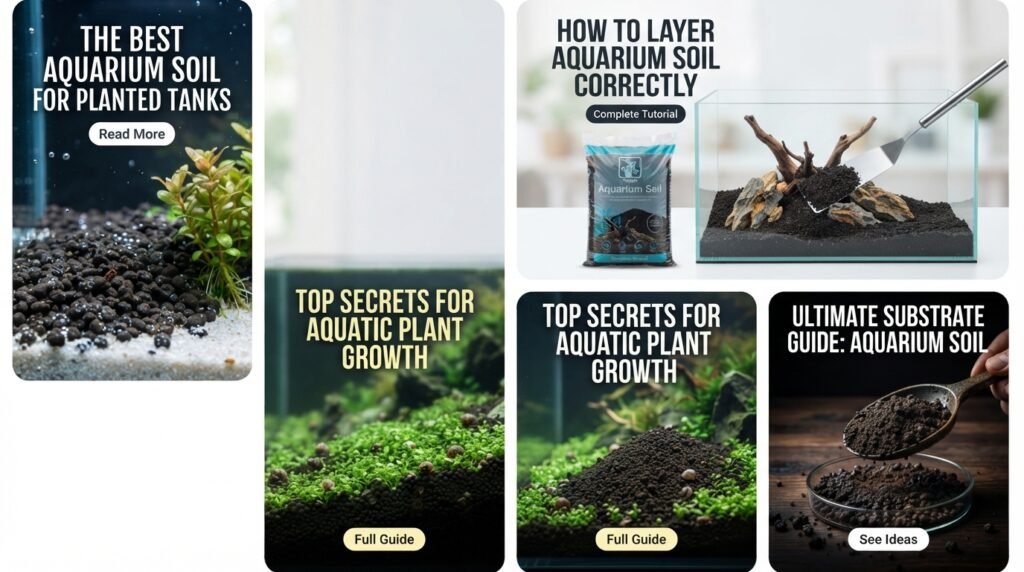
Different planted tanks benefit from different types of substrate.
Nutrient-Rich Aquasoil
This is the most popular option for planted aquariums.
Advantages include:
- High nutrient content
- Excellent plant growth
- Easy root development
- Natural appearance
Clay-Based Soil
Clay-based substrates hold nutrients well and gradually release them to plant roots.
Mineral-Rich Plant Soil
Designed to provide trace elements that support healthy aquatic plants over time.
Capped Soil Systems
Some hobbyists use nutrient-rich soil covered with a layer of sand or fine gravel to reduce cloudiness and help keep the soil in place.
Choosing the Right Aquarium
Aquarium soil can be used in tanks of almost any size.
Popular aquarium sizes include:
- 10-gallon planted aquarium
- 20-gallon long aquarium
- 29-gallon aquarium
- 40-gallon breeder aquarium
- Rimless planted aquarium
Larger aquariums provide more flexibility for aquascaping.
How Much Aquarium Soil Do You Need?
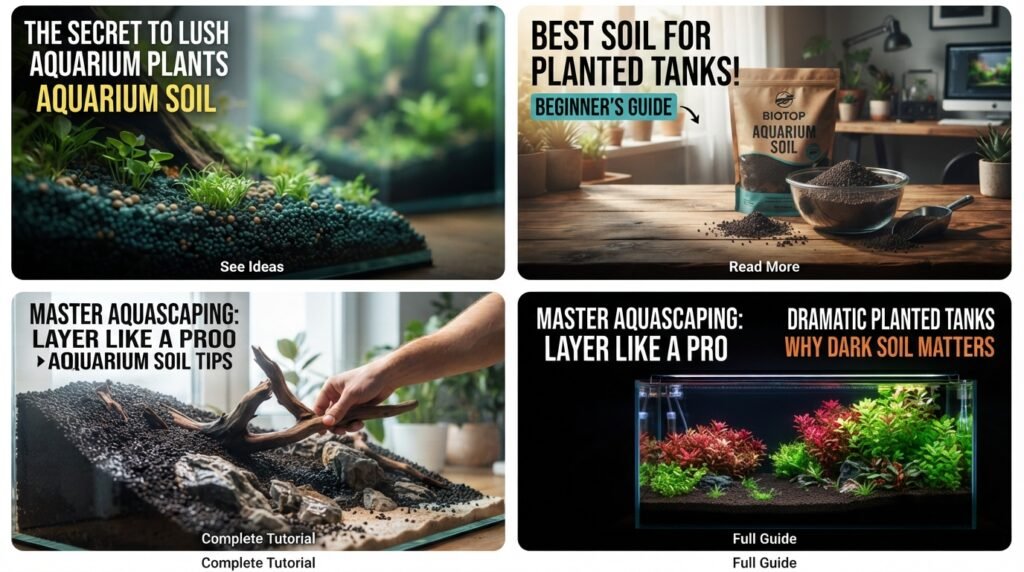
The amount of soil depends on the aquarium’s dimensions and the desired depth.
General recommendations:
- Front of aquarium: 1–2 inches (2.5–5 cm)
- Back of aquarium: 2–4 inches (5–10 cm)
A sloped substrate creates depth and improves the visual impact of the aquascape.
Best Plants for Aquarium Soil
Many aquatic plants thrive in nutrient-rich soil.
Popular choices include:
- Amazon Sword
- Cryptocoryne
- Vallisneria
- Dwarf Hairgrass
- Monte Carlo
- Rotala
- Ludwigia
- Bacopa
- Water Wisteria
Although plants like Anubias and Java Fern do not require soil because they grow attached to wood or rocks, they can still be used in planted aquariums with aquarium soil.
Best Fish for Soil-Based Aquariums
A planted aquarium with aquarium soil pairs well with many peaceful fish.
Excellent choices include:
- Guppies
- Neon Tetras
- Ember Tetras
- Harlequin Rasboras
- Corydoras Catfish
- Honey Gouramis
- Otocinclus
- Cherry Shrimp
Choose species that enjoy planted environments and compatible water conditions.
Lighting
Healthy plants require appropriate lighting.
Recommended lighting includes:
- Full-spectrum LED lights
- Adjustable brightness
- Automatic timer
- 6–8 hours of lighting daily
Balance lighting with nutrients to reduce algae growth.
Fertilization
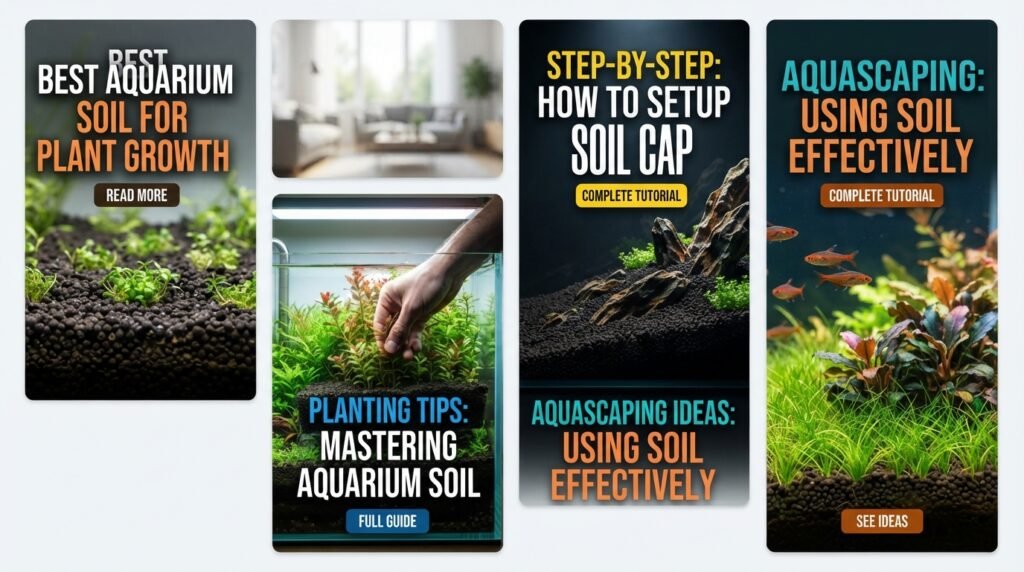
Aquarium soil supplies nutrients, but additional fertilization may eventually be needed.
Common options include:
- Liquid fertilizers
- Root tabs for older soil
- Trace element supplements
Follow product instructions and avoid excessive dosing.
Water Parameters
Stable water conditions help plants and fish thrive.
| Parameter | Recommended Range |
|---|---|
| Temperature | 72–78°F (22–26°C) |
| pH | 6.0–7.5 (depending on livestock) |
| Ammonia | 0 ppm |
| Nitrite | 0 ppm |
| Nitrate | Below 20 ppm |
Monitor water regularly, especially during the first few weeks after setting up a new planted aquarium.
Setting Up Aquarium Soil
Step 1: Clean the Aquarium
Rinse the aquarium itself if necessary. Follow the manufacturer’s instructions regarding whether the soil should be rinsed, as many aquarium soils are intended to be used without rinsing.
Step 2: Add the Soil
Create a gentle slope by placing a deeper layer at the back of the aquarium.
Step 3: Position Hardscape
Arrange rocks and driftwood before planting.
Step 4: Plant Carefully
Insert plant roots into the soil without crushing them.
Step 5: Fill the Aquarium Slowly
Pour water onto a plate or plastic bag placed on the substrate to avoid disturbing the soil.
Maintenance Tips
Perform Weekly Water Changes
Replace 20–30% of the water every week.
Trim Plants
Remove dead leaves and prune fast-growing species regularly.
Avoid Deep Vacuuming
Only lightly clean the surface of the soil to avoid disturbing plant roots and beneficial bacteria.
Monitor Nutrients
Observe plant growth and supplement nutrients only when necessary.
Test Water Quality
Regularly check ammonia, nitrite, nitrate, pH, and temperature.
Common Mistakes to Avoid
Using Too Little Soil
Shallow substrate can limit root growth for many plants.
Over-Fertilizing
Too many nutrients may contribute to algae problems.
Excessive Lighting
Long lighting periods can promote algae if nutrients and plant growth are unbalanced.
Disturbing the Soil Frequently
Frequent deep cleaning may release trapped debris and disrupt plant roots.
Overstocking Fish
Heavy fish loads increase waste and can affect water quality.
Aquarium Soil Aquascape Ideas
Nature Aquarium
Combine aquarium soil, driftwood, and lush green plants to recreate a natural river landscape.
Iwagumi Style
Use carefully arranged stones with a carpet of low-growing plants.
Jungle Aquarium
Plant densely with tall stem plants to create a vibrant tropical appearance.
Minimalist Aquascape
Use a small number of plant species and open foreground areas for a clean, modern design.
Benefits of Aquarium Soil
Aquarium soil provides:
- Strong root support
- Long-term plant nutrition
- Healthy biological filtration
- Beautiful natural appearance
- Excellent aquascaping foundation
- Improved plant growth
- Stable planted aquarium ecosystem
It is one of the best investments for anyone interested in planted aquariums.
Conclusion
Aquarium soil is an essential substrate for creating healthy and visually impressive planted aquariums. Its nutrient-rich composition supports vigorous plant growth, enhances aquascaping, and provides a stable foundation for a thriving underwater ecosystem.
By selecting quality soil, combining it with suitable lighting, healthy plants, and regular maintenance, you can enjoy a lush planted aquarium that remains attractive and easy to manage for years.
Frequently Asked Questions
What is aquarium soil used for?
Aquarium soil is used to support aquatic plant growth by providing nutrients, anchoring roots, and creating a suitable environment for beneficial bacteria.
Is aquarium soil better than gravel?
For planted aquariums, aquarium soil generally offers more nutrients than standard gravel. However, gravel may still be suitable for aquariums with few or no rooted plants.
Do I need fertilizer with aquarium soil?
New nutrient-rich soil often supplies many of the nutrients plants need. As the soil ages, liquid fertilizers or root tabs may be added if plant growth slows or nutrient deficiencies appear.
Can I keep fish with aquarium soil?
Yes. Most peaceful tropical freshwater fish thrive in planted aquariums that use aquarium soil, provided the water parameters match their needs.
Should I rinse aquarium soil before using it?
Follow the manufacturer’s instructions. Many commercial aquarium soils are designed to be added directly to the aquarium without rinsing.
How long does aquarium soil last?
Depending on the product, plant load, and maintenance routine, aquarium soil can continue supporting healthy plant growth for several years before nutrient supplementation or replacement becomes necessary.