
 By admin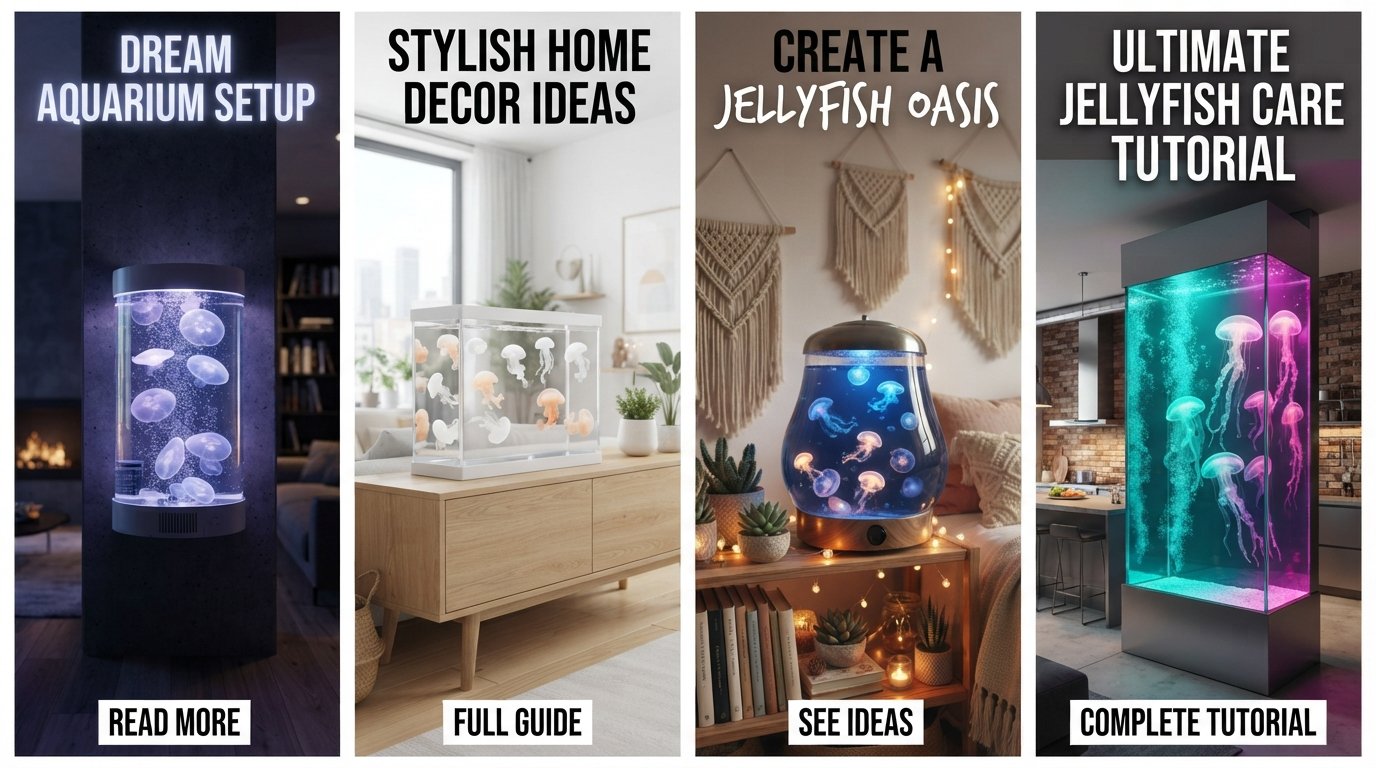
A jellyfish tank aquarium is one of the most elegant and mesmerizing additions you can bring into your home. Watching jellyfish gracefully drift through the water creates a calming atmosphere that few other aquariums can match. With their gentle movements, glowing appearance under LED lights, and unique body shapes, jellyfish make stunning living displays for modern homes and offices.
Unlike traditional fish tanks, jellyfish aquariums require specialized equipment and care to keep these delicate creatures healthy. This guide covers everything you need to know about choosing, setting up, and maintaining a home jellyfish aquarium.
What Is a Jellyfish Tank Aquarium?
A jellyfish tank is a specially designed aquarium that provides the gentle circular water flow jellyfish need to swim safely. Traditional aquariums have corners, strong filters, and uneven currents that can injure jellyfish, while jellyfish tanks are designed to prevent them from getting trapped or damaged.
These aquariums typically feature:
- Rounded or curved interiors
- Gentle circular water movement
- Fine filtration systems
- LED lighting
- Minimal decorations
Why Choose a Jellyfish Aquarium for Your Home?
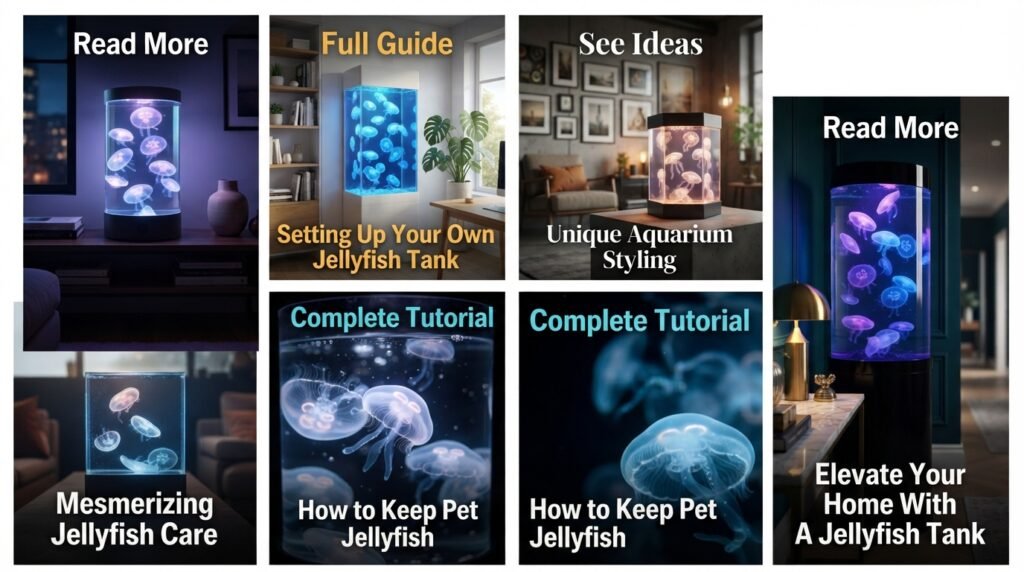
A jellyfish aquarium offers many advantages, including:
- Elegant and modern appearance
- Relaxing and calming movement
- Unique conversation piece
- Perfect for minimalist interiors
- Soft ambient lighting
- Fascinating marine life
Many homeowners choose jellyfish tanks as decorative centerpieces in living rooms, offices, and reception areas.
Choosing the Right Jellyfish Tank Size
Small Jellyfish Tanks (5–10 Gallons)
Best for:
- Desktop displays
- Small apartments
- One or two jellyfish
Medium Jellyfish Tanks (10–20 Gallons)
Ideal for:
- Most home aquariums
- Small groups of jellyfish
- Beginners
Large Jellyfish Tanks (20 Gallons and Above)
Suitable for:
- Multiple jellyfish
- Luxury home displays
- Public exhibits
- Experienced hobbyists
Larger tanks generally provide more stable water conditions.
Types of Jellyfish Suitable for Home Aquariums
Moon Jellyfish
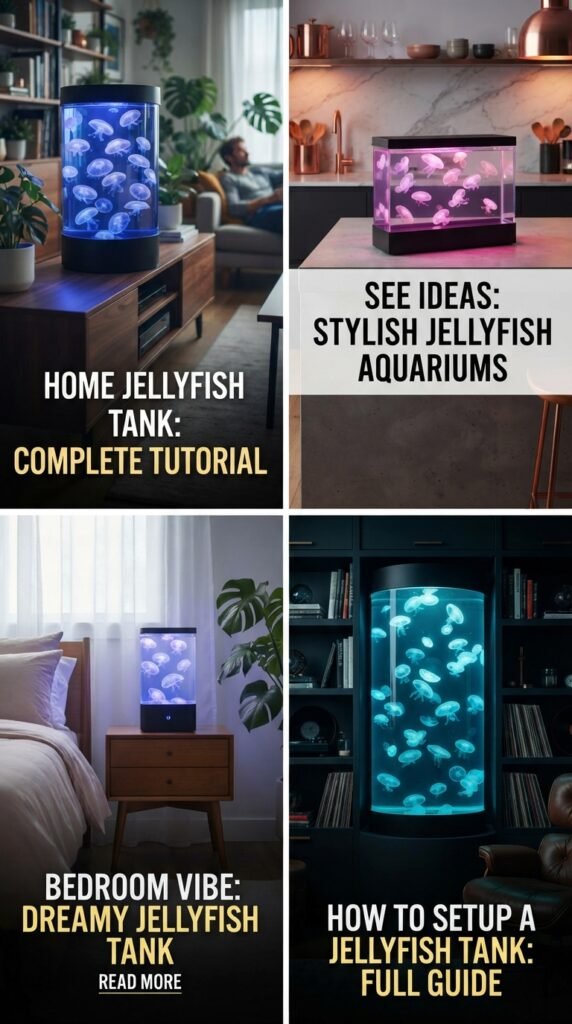
Moon jellyfish are the most popular species for home aquariums because they are relatively hardy and adapt well to captive environments.
Characteristics:
- Transparent body
- Gentle swimming motion
- Beautiful under blue lighting
Other Aquarium Jellyfish
Some specialized aquariums also keep:
- Blue blubber jellyfish
- Spotted jellyfish
- Upside-down jellyfish (with species-specific care)
Always research the specific needs of each species before purchasing.
Essential Equipment
Specialized Jellyfish Tank
A dedicated jellyfish aquarium is essential because it provides the correct water circulation.
Filtration System
A gentle filtration system helps maintain water quality without creating dangerous currents.
Protein Skimmer
Saltwater jellyfish tanks often benefit from a protein skimmer that removes dissolved organic waste.
Heater
Maintain a stable water temperature suitable for the jellyfish species.
LED Lighting
Soft LED lighting highlights the jellyfish’s graceful movements.
Blue lighting is particularly popular because it enhances their translucent appearance.
Water Parameters
Maintaining stable water conditions is critical.
| Parameter | Recommended Range |
|---|---|
| Temperature | Species-dependent, typically 68–77°F (20–25°C) |
| Salinity | 1.023–1.025 Specific Gravity |
| pH | 8.1–8.4 |
| Ammonia | 0 ppm |
| Nitrite | 0 ppm |
| Nitrate | As low as possible |
Frequent testing helps maintain a healthy environment.
Aquarium Lighting Ideas
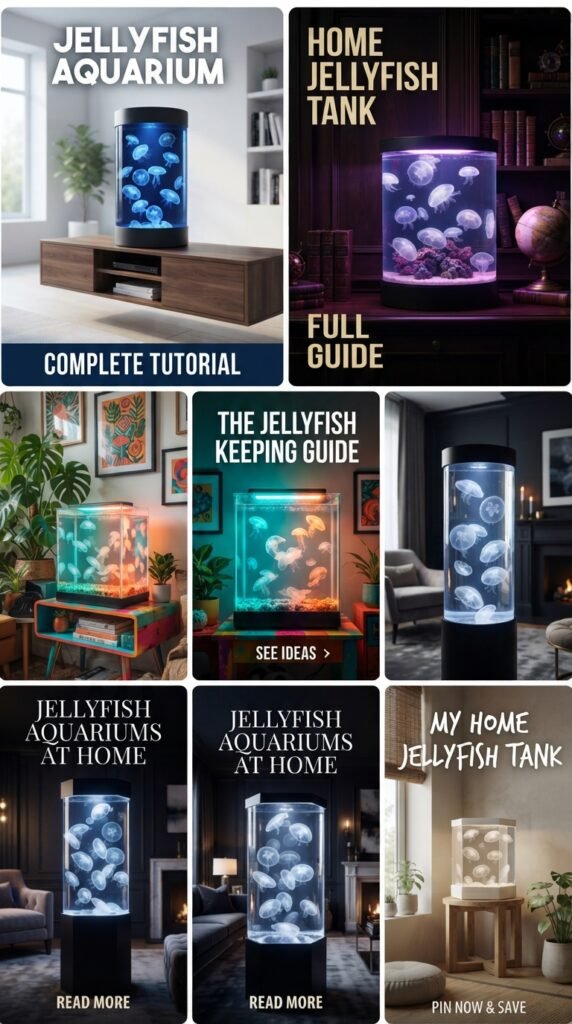
Lighting can dramatically enhance the appearance of a jellyfish aquarium.
Popular choices include:
- Blue LED lighting
- White ambient lighting
- Color-changing LEDs
- Programmable light cycles
Soft lighting creates a relaxing atmosphere while showcasing the jellyfish.
Decorating a Jellyfish Tank
Unlike traditional aquariums, jellyfish tanks should have minimal decorations.
Keep the interior simple with:
- Open swimming space
- Plain backgrounds
- Smooth surfaces
Avoid:
- Sharp rocks
- Driftwood
- Coral decorations
- Artificial plants
These objects can injure delicate jellyfish.
Feeding Jellyfish
Jellyfish require specialized foods, such as:
- Baby brine shrimp
- Specialized jellyfish diets
- Small plankton-based foods
Feed small amounts according to the needs of the species, and remove excess food to maintain water quality.
Maintenance Tips
Perform Regular Water Changes
Partial water changes help maintain excellent water quality.
Clean the Glass
Remove algae carefully without disturbing the jellyfish.
Monitor Water Flow
Ensure the circular current remains gentle and consistent.
Check Equipment
Inspect pumps, filters, and heaters regularly.
Test Water Frequently
Stable water conditions are essential for jellyfish health.
Best Locations for a Home Jellyfish Aquarium
A jellyfish tank looks stunning in:
- Living rooms
- Home offices
- Bedrooms
- Reception areas
- Hotel lobbies
- Meditation rooms
Its graceful movement creates a calming focal point.
Common Mistakes to Avoid
Using a Standard Aquarium
Traditional rectangular tanks are not suitable for most jellyfish species.
Strong Water Flow
Powerful currents can damage jellyfish.
Overfeeding
Excess food quickly reduces water quality.
Adding Decorations
Jellyfish need unobstructed swimming space.
Ignoring Water Quality
Jellyfish are sensitive to changes in water chemistry.
Home Décor Ideas
Enhance your jellyfish aquarium with:
- Minimalist furniture
- Dark backgrounds
- Floating shelves
- Soft room lighting
- Modern cabinets
Simple surroundings help the aquarium stand out.
Benefits of a Jellyfish Aquarium
A jellyfish aquarium offers many advantages:
- Elegant modern design
- Peaceful viewing experience
- Unique marine display
- Space-saving decorative feature
- Excellent conversation starter
- Relaxing atmosphere
Few home aquariums create such a tranquil and captivating effect.
Conclusion
A jellyfish tank aquarium for the home is a beautiful and unique way to enjoy marine life. While jellyfish require specialized tanks and careful maintenance, their graceful movements and ethereal beauty make them one of the most captivating aquarium inhabitants.
By choosing the proper equipment, maintaining excellent water quality, and providing a safe environment, you can create a stunning jellyfish display that brings elegance and tranquility to your home.
Frequently Asked Questions
Can jellyfish live in a regular fish tank?
No. Most jellyfish require specially designed aquariums with gentle circular water flow.
Are jellyfish difficult to care for?
They require more specialized equipment than many freshwater fish, but with proper care and maintenance, they can thrive.
What is the best jellyfish for beginners?
Moon jellyfish are generally considered the best choice for first-time jellyfish keepers.
Do jellyfish need lights?
They do not require lighting for survival, but LED lights enhance their appearance and make the aquarium more visually appealing.
Can jellyfish live with fish?
In most home setups, jellyfish are best kept in species-only aquariums because fish may injure them or compete for food.
How long do jellyfish live in an aquarium?
Lifespan varies by species and care, but many commonly kept jellyfish can live for several months to over a year under suitable conditions.