
 By admin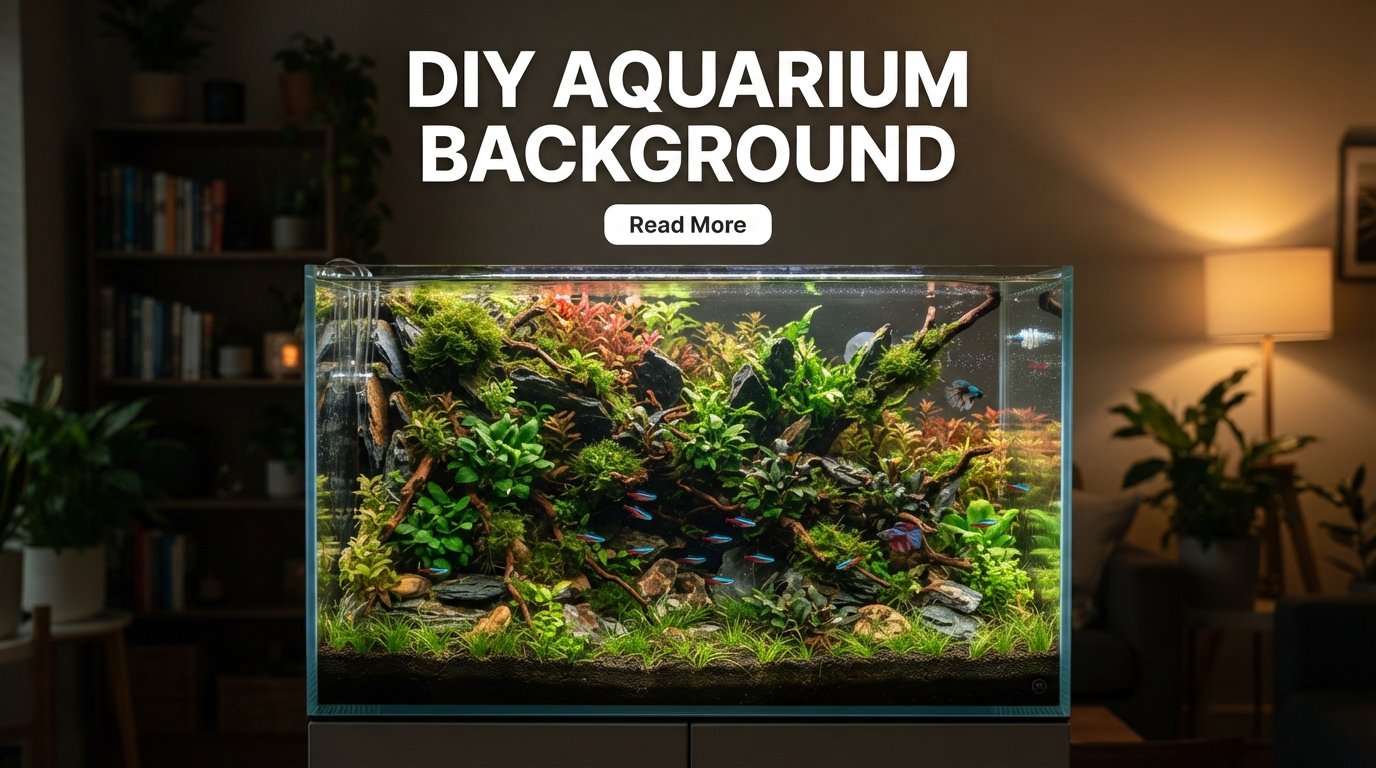
A DIY aquarium background can completely change the appearance of a fish tank without spending much money. You can create a natural rock wall, planted backdrop, black minimalist background, 3D scene, or colorful themed design depending on your aquarium style.
For anything placed inside the aquarium, use only materials that are confirmed aquarium-safe and non-toxic. A safer beginner option is to create the background on the outside of the tank.
1. Black DIY Aquarium Background
A black background is one of the easiest options and works with almost every aquascape.
Use:
- Black aquarium background film
- Matte black vinyl
- Aquarium-safe background paper
- Black paint specifically suitable for the exterior
A dark background makes green plants and colorful fish stand out.
2. DIY Rock Background
Create the appearance of a natural underwater rock wall.
Use appropriately aquarium-safe materials and build the background so it doesn’t reduce swimming space.
Add plants such as:
- Java Fern
- Anubias
- Java Moss
The plants growing over the rocks can make the background look much more natural.
3. 3D Aquarium Background
A 3D background creates depth inside the tank.
Possible designs include:
- Rocky cliffs
- Caves
- Mountain formations
- Tree roots
- Underwater ruins
Make sure the finished material is aquarium-safe, securely attached, and does not have sharp edges.
4. DIY Foam Aquarium Background
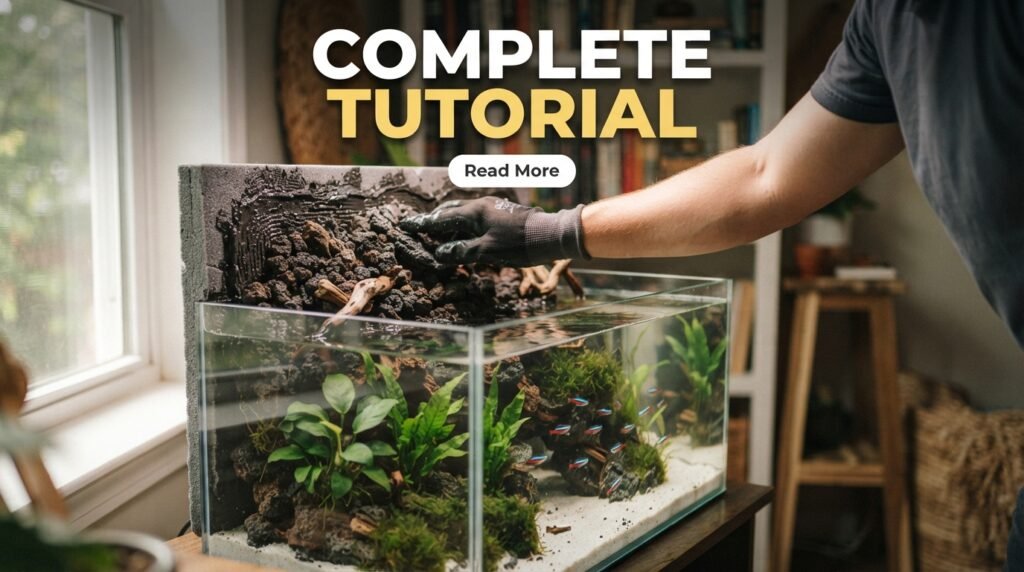
Aquarium hobbyists sometimes use rigid foam to sculpt rock formations.
A typical concept is:
Foam structure → aquarium-safe coating → curing → leak/safety testing → aquarium installation
Do not put untreated construction foam, unknown paints, or uncured coatings into an aquarium.
5. DIY Stone Wall Background
Create a layered stone appearance using aquarium-safe rocks.
Instead of making a completely flat wall, vary the depth:
Deep rocks → medium rocks → smaller stones
This creates a more realistic underwater cliff.
6. DIY Planted Aquarium Background
You can create a living background instead of an artificial one.
Use:
- Moss
- Java Fern
- Anubias
- Bucephalandra
- Vallisneria
Attach suitable plants to driftwood or aquarium-safe hardscape.
Over time, the plants can cover the background and create a natural underwater forest.
7. DIY Driftwood Background
Arrange several pieces of driftwood vertically to resemble tree roots.
Add moss to the branches for an underwater forest effect.
This works particularly well in:
- Natural aquascapes
- Blackwater aquariums
- Shrimp tanks
- Jungle-style aquariums
8. DIY Blue Aquarium Background
For a traditional aquarium appearance, use a blue exterior background.
Dark blue generally creates more depth than bright blue.
A gradient from darker blue at the top to lighter blue toward the bottom can create a subtle underwater effect.
9. DIY Concrete-Look Background
A gray geometric background can give a modern aquarium a minimalist appearance.
Combine it with:
- Black substrate
- Green plants
- White stones
- Small schooling fish
For anything submerged, use only aquarium-safe materials and coatings designed for continuous water exposure.
10. DIY Aquarium Background With Caves
A background containing caves provides visual interest and can create shelter for appropriate aquatic animals.
Don’t make passages so small that fish can become trapped.
Smooth all accessible surfaces and ensure the structure cannot collapse or detach.
DIY Aquarium Background Ideas by Style
| Style | Background Idea | Appearance |
|---|---|---|
| Minimalist | Matte black | Clean |
| Natural | Rocks + plants | Realistic |
| Jungle | Driftwood + moss | Lush |
| Mountain | Layered rocks | Dramatic |
| Blackwater | Roots + dark tones | Mysterious |
| Modern | Gray geometric design | Contemporary |
| Tropical | Blue + plants | Bright |
| 3D | Rock/cave structure | Immersive |
How to Make a DIY Aquarium Background
Step 1: Measure the Aquarium
Measure the back panel carefully before designing the background.
Step 2: Choose the Style
Decide whether you want a flat background, rock wall, planted design, or 3D scene.
Step 3: Plan Around Equipment
Leave space for:
- Filter intake
- Filter outlet
- Heater
- Air tubing
- Maintenance access
Step 4: Use Aquarium-Safe Materials
Anything submerged must be non-toxic and suitable for permanent aquarium use.
Step 5: Test Before Installation
Allow coatings and adhesives to cure completely according to their manufacturer’s instructions. Rinse and test the finished background before introducing aquatic life.
Step 6: Install Securely
The background should not be able to float, collapse, or fall onto fish.
DIY Aquarium Background Without Putting Anything Inside
The safest and easiest method is often an external background.
You can use:
- Black vinyl
- Frosted film
- Printed aquarium backgrounds
- Colored paper placed safely outside the tank
This avoids introducing unknown materials into the water and makes future changes easy.
DIY Aquarium Background for a Small Tank
For a nano aquarium, avoid thick 3D backgrounds because they can take up valuable swimming space.
A simple black background or thin natural-looking panel can make a small aquarium appear deeper.
DIY Aquarium Background for a Large Tank
A large aquarium gives you enough space for a dramatic 3D landscape.
Try:
Rock cliff + caves + driftwood + moss + open foreground
Keep the largest structures toward the back and create gradually smaller details toward the front.
How to Make a Background Look Natural
Avoid making everything perfectly symmetrical.
Instead:
- Vary rock sizes
- Create irregular gaps
- Add different textures
- Use plants to soften edges
- Leave some negative space
- Create depth with shadows
Natural asymmetry usually makes an aquarium background look more realistic.
Common DIY Background Mistakes
Using Unsafe Materials
Household paints, glues, plastics, metals, and decorations aren’t automatically aquarium-safe.
Blocking Filtration
Never completely cover filter intakes or outlets.
Making the Background Too Thick
A huge background can dramatically reduce the usable aquarium volume.
Poor Attachment
A detached background can damage fish, plants, or equipment.
Sharp Edges
Rough surfaces can injure fish, especially species with delicate fins.
Conclusion
A DIY aquarium background is an excellent way to personalize a fish tank and create a completely different atmosphere. From a simple black backdrop to a detailed 3D rock wall, there are options for almost every aquarium style.
For beginners, an external black or dark-blue background is the easiest and safest choice. For experienced aquascapers, a properly constructed aquarium-safe 3D background with rocks, caves, driftwood, and plants can create an impressive underwater landscape.
The most important rule is simple: never sacrifice aquarium safety for appearance. Every submerged material, adhesive, coating, and decoration should be confirmed suitable for aquarium use before it comes into contact with your fish or shrimp.