
 By admin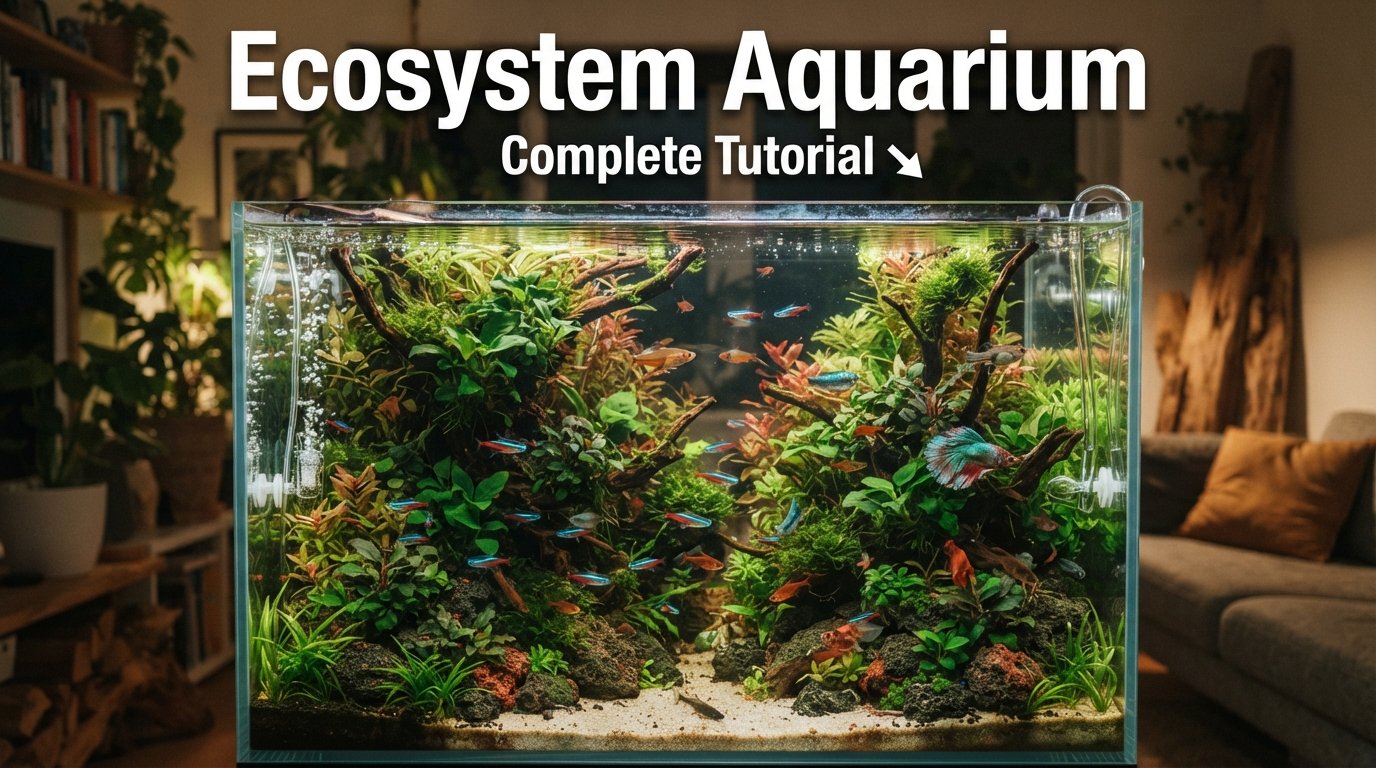
An ecosystem aquarium is designed to imitate a natural aquatic environment where plants, microorganisms, animals, substrate, light, and water work together. Instead of relying entirely on artificial decoration and frequent intervention, the goal is to create a balanced miniature ecosystem.
A truly maintenance-free aquarium is unrealistic, but a well-designed ecosystem aquarium can reduce maintenance and become increasingly stable as it matures.
What Is an Ecosystem Aquarium?
An ecosystem aquarium attempts to recreate some of the relationships found in nature.
For example:
Light → Plants → Oxygen + Growth → Microorganisms → Fish/other animals → Waste → Nutrients → Plants
Beneficial bacteria break down fish waste and other organic material, while plants can absorb nutrients and provide shelter.
The aquarium still needs monitoring, water changes when necessary, equipment maintenance, and appropriate feeding.
1. Natural Ecosystem Aquarium
Create a natural-looking freshwater environment using:
- Live plants
- Natural rocks
- Driftwood
- Sand or gravel
- Beneficial microorganisms
- Appropriate fish
Avoid excessive artificial decorations to make the aquarium resemble a natural habitat.
2. Planted Ecosystem Aquarium
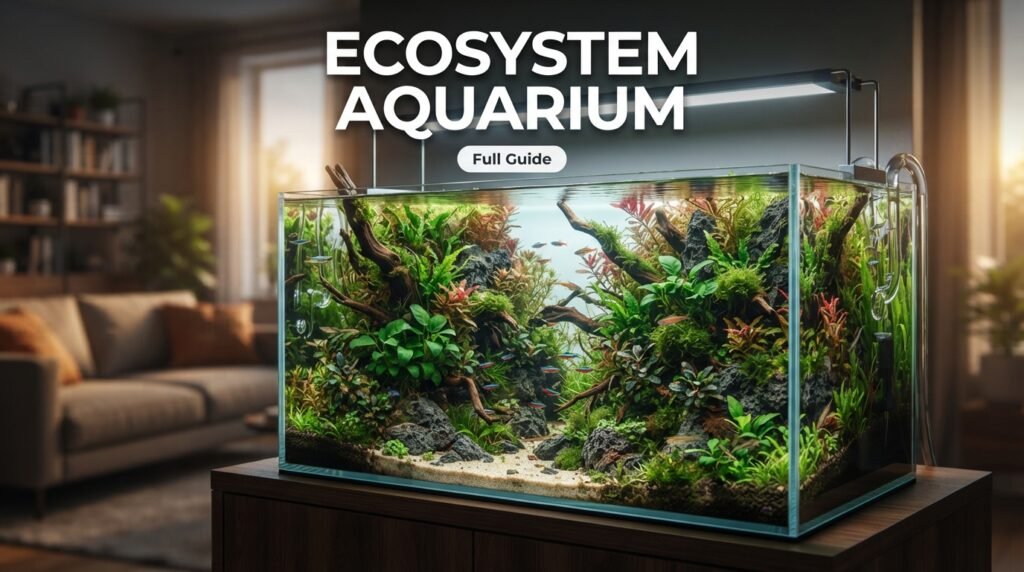
Live plants are central to this type of setup.
Good beginner-friendly options can include:
- Anubias
- Java Fern
- Java Moss
- Cryptocoryne
- Vallisneria
Choose plants according to your lighting, substrate, and aquarium conditions.
3. Ecosystem Aquarium With Shrimp
Shrimp can be excellent inhabitants for a mature planted ecosystem.
They constantly graze on surfaces and microorganisms.
A simple setup can contain:
Moss + driftwood + rocks + plants + shrimp
Avoid overfeeding because excess food can quickly create water-quality problems.
4. Ecosystem Aquarium With Snails
Some freshwater snails can contribute to the cleanup crew by consuming algae and leftover food.
Examples include:
- Nerite snails
- Ramshorn snails
- Malaysian trumpet snails
Choose species according to your aquarium conditions and whether their reproduction rate is acceptable for your setup.
5. Ecosystem Aquarium With Fish
Fish can be included, but the aquarium should be designed around their needs.
Provide:
- Adequate swimming space
- Appropriate filtration
- Stable temperature
- Suitable water chemistry
- Hiding places
- Proper nutrition
The goal isn’t to make the fish completely responsible for maintaining the ecosystem.
6. Low-Tech Ecosystem Aquarium
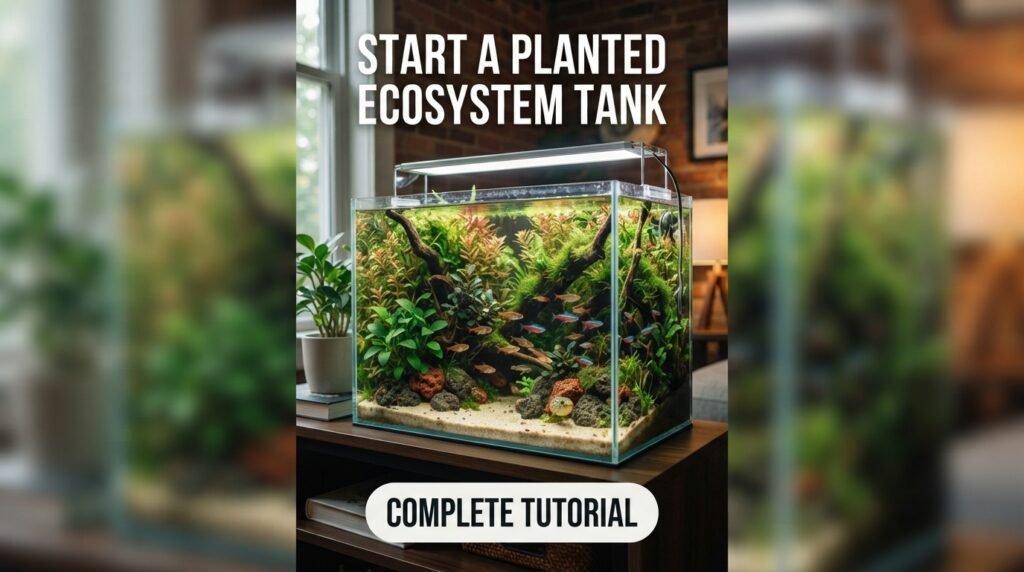
A low-tech setup can avoid complicated equipment.
You may use:
- Easy plants
- Moderate aquarium lighting
- Basic filtration
- Natural hardscape
- Appropriate livestock
Low-tech doesn’t mean no maintenance. It simply means the aquarium relies less on intensive technology.
7. Walstad-Style Ecosystem Aquarium
The Walstad method, associated with Diana Walstad, emphasizes natural biological processes and heavily planted aquariums.
These setups commonly use a soil-based substrate beneath a suitable cap and rely heavily on plants and microorganisms.
Because soil can release nutrients and ammonia during setup, careful preparation and monitoring are important.
8. Ecosystem Aquarium Without a Filter
Some advanced planted aquarium methods can operate without conventional mechanical filtration.
However, this isn’t automatically easier.
The aquarium needs:
- Appropriate stocking
- Strong biological activity
- Sufficient plant growth
- Good circulation/gas exchange
- Careful monitoring
A filter is generally the safer choice for beginners.
9. Ecosystem Jar Aquarium
A small planted jar can demonstrate ecosystem concepts.
A jar might contain:
- Aquatic plants
- Substrate
- Microorganisms
- Small natural hardscape
Avoid adding fish to tiny jars. Small water volumes can become unstable very quickly.
10. Ecosystem Pond Aquarium
Create a miniature pond-style aquarium with:
- Floating plants
- Tall plants
- Driftwood
- Mud-colored substrate
- Natural rocks
This can create a very different appearance from a conventional aquascape.
Ecosystem Aquarium Components
| Component | Purpose |
|---|---|
| Plants | Nutrient uptake + habitat |
| Beneficial bacteria | Waste decomposition |
| Substrate | Biological surface + plant support |
| Filter | Mechanical and biological filtration |
| Light | Plant growth |
| Hardscape | Structure + shelter |
| Fish | Part of the food web |
| Shrimp/snails | Grazing + cleanup |
How an Ecosystem Aquarium Works
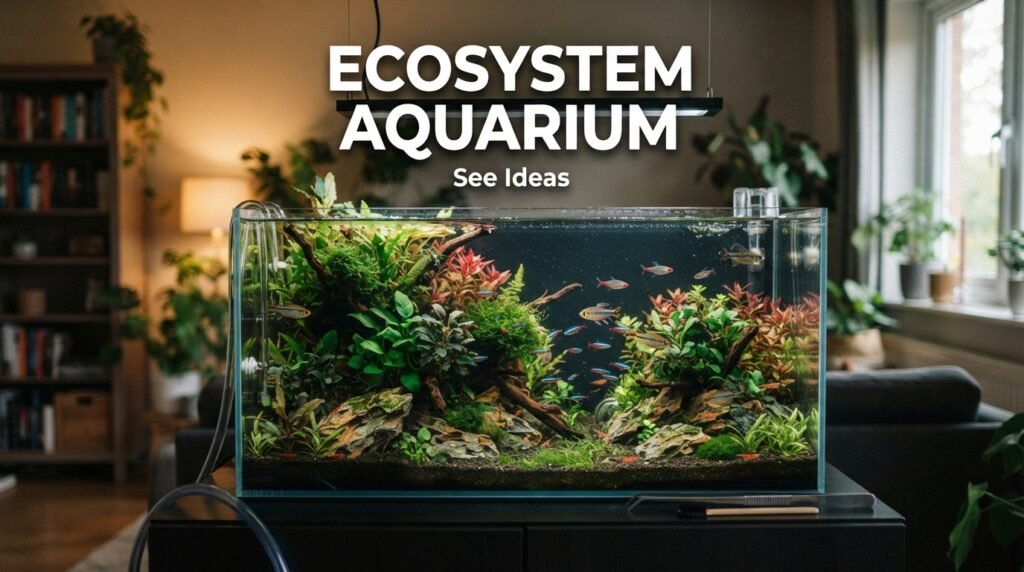
Fish Produce Waste
Fish release waste into the water.
Bacteria Process Waste
Beneficial bacteria convert toxic ammonia through the nitrogen cycle into less harmful compounds.
Plants Use Nutrients
Plants absorb nutrients and incorporate them into new growth.
Microorganisms Recycle Organic Matter
Microorganisms help break down organic material and contribute to nutrient cycling.
The Aquarist Maintains the System
You still need to:
- Test water
- Remove dead plant material
- Clean equipment
- Perform water changes when needed
- Feed animals appropriately
- Control algae
This human role is important because a home aquarium is not a completely closed natural ecosystem.
Best Plants for an Ecosystem Aquarium
For beginners, consider hardy plants such as:
Anubias
Slow-growing and tolerant of lower light.
Java Fern
Hardy and suitable for attaching to rocks or driftwood.
Java Moss
Excellent for shrimp and natural-looking layouts.
Cryptocoryne
Provides attractive foliage and can work well in low-tech planted aquariums.
Vallisneria
Useful for creating tall background growth.
Ecosystem Aquarium Substrate
Substrate provides both physical support for plants and surfaces for microorganisms.
Common options include:
- Aquarium gravel
- Sand
- Aquasoil
- Soil-based substrates in specialized setups
Choose the substrate based on the plants and livestock.
Ecosystem Aquarium Lighting
Light powers photosynthesis, making it one of the most important components.
Too little light can limit plant growth, while excessive light can encourage algae.
Use a consistent lighting schedule and adjust intensity according to plant requirements.
Ecosystem Aquarium Water Changes
Even a heavily planted ecosystem aquarium usually benefits from water changes.
Water changes can help manage:
- Nitrate
- Dissolved organic compounds
- Mineral imbalances
- Accumulated pollutants
Don’t assume that plants eliminate the need for water changes.
Ecosystem Aquarium Cycling
Before adding fish, establish the aquarium’s biological filtration.
During cycling, beneficial bacteria colonize surfaces and process ammonia and nitrite.
Testing water parameters helps determine when the aquarium is ready for livestock.
Ecosystem Aquarium Food Chain
A simple aquarium food web can look like:
Plants → microorganisms → shrimp/snails → fish
In reality, the relationships are much more complicated, with decomposers, algae, bacteria, detritus, and multiple feeding pathways all interacting.
How to Make an Ecosystem Aquarium
Step 1: Choose the Aquarium
Larger aquariums generally provide greater stability than very small containers.
Step 2: Add Substrate
Choose an appropriate substrate for your planned plants.
Step 3: Build the Hardscape
Add rocks and driftwood to create structure.
Step 4: Plant Heavily
Use a mixture of foreground, midground, and background plants.
Step 5: Fill the Aquarium
Add water carefully to avoid disturbing the substrate.
Step 6: Start Filtration
Allow biological filtration to establish.
Step 7: Cycle the Aquarium
Monitor ammonia and nitrite before introducing fish.
Step 8: Add Livestock Gradually
Avoid adding too many animals at once.
Step 9: Monitor and Maintain
Test water and observe the plants and animals regularly.
Ecosystem Aquarium vs Regular Aquarium
| Feature | Ecosystem Aquarium | Conventional Aquarium |
|---|---|---|
| Plants | Usually central | Optional to central |
| Natural processes | Strong emphasis | Used alongside equipment |
| Filtration | May be low-tech | Usually mechanical/biological |
| Maintenance | Reduced, not eliminated | Regular |
| Appearance | Natural | Any style |
| Stability | Depends on balance | Often equipment-supported |
Common Ecosystem Aquarium Mistakes
Overstocking
Too many animals produce more waste than the plants and biological filtration can handle.
Assuming It’s Self-Sustaining
An aquarium is not a completely closed ecosystem.
Too Much Food
Uneaten food decomposes and can cause water-quality problems.
Too Much Light
Excessive light can trigger algae outbreaks.
Adding Fish Too Early
An immature biological filter may not be able to process fish waste safely.
Choosing Incompatible Species
Every animal must have compatible environmental and behavioral requirements.
Can an Ecosystem Aquarium Be Completely Self-Sustaining?
Usually, no.
A sealed aquarium might survive for some time, but a stable home aquarium normally requires human intervention.
You may need to:
- Replace evaporated water
- Trim plants
- Remove dead material
- Clean equipment
- Feed animals
- Monitor water quality
- Perform water changes
Think of an ecosystem aquarium as low-maintenance, rather than maintenance-free.
Conclusion
An ecosystem aquarium brings together plants, animals, microorganisms, substrate, water, light, and filtration to create a miniature aquatic environment. The goal is to encourage natural nutrient cycling and biological balance while reducing unnecessary intervention.
For beginners, a well-planted freshwater aquarium with a reliable filter, natural hardscape, hardy plants, and moderate stocking is an excellent way to explore the ecosystem concept.
The most important principle is balance: don’t overload the aquarium with fish, don’t overfeed, provide suitable plants and filtration, and monitor the water regularly.
Frequently Asked Questions
What is an ecosystem aquarium?
It is an aquarium designed to imitate natural ecological processes by combining plants, microorganisms, substrate, animals, and water in a balanced environment.
Is an ecosystem aquarium self-sustaining?
Not completely. Even highly natural aquariums require monitoring and occasional maintenance.
Can I make an ecosystem aquarium without a filter?
Some specialized setups can operate without conventional filtration, but they require careful design and monitoring. Beginners generally benefit from using a reliable filter.
Are plants important in an ecosystem aquarium?
Yes. Plants can absorb nutrients, provide oxygen during photosynthesis, create habitat, and contribute to the overall nutrient cycle.
Can fish live in an ecosystem aquarium?
Yes, provided the aquarium is appropriately sized, cycled, filtered or otherwise biologically stable, and stocked according to the needs of the fish.
What is the easiest ecosystem aquarium for beginners?
A moderately sized, heavily planted freshwater aquarium with hardy plants, natural hardscape, reliable filtration, and a lightly stocked community is generally a good starting point.