
 By admin
An acrylic aquarium is a fish tank made from acrylic plastic rather than traditional glass. Acrylic tanks are popular because they are lightweight, highly customizable, and can be molded into unusual shapes that would be difficult or expensive to create with glass.
From small desktop aquariums to huge public displays, acrylic can be used for many different aquarium designs.
What Is an Acrylic Aquarium?
Acrylic is a transparent plastic material commonly used to manufacture aquariums.
Compared with glass, acrylic is:
- Lighter
- Impact-resistant
- Easy to shape
- Available in many custom designs
- Excellent for large viewing panels
Acrylic aquariums can be manufactured as rectangular, curved, cylindrical, corner, and custom-shaped tanks.
Acrylic vs Glass Aquarium
| Feature | Acrylic | Glass |
|---|---|---|
| Weight | Lightweight | Heavy |
| Impact resistance | High | Lower |
| Scratching | Easier to scratch | More scratch-resistant |
| Custom shapes | Excellent | More difficult |
| Insulation | Generally better | Generally lower |
| Clarity | Very good | Excellent |
| Repairs | Can often be polished | Scratches are harder to repair |
| Large custom tanks | Popular | Also widely used |
The best choice depends on the aquarium’s size, location, budget, and design.
1. Clear Acrylic Aquarium
A simple clear acrylic tank can have an almost seamless appearance.
This works particularly well for:
- Minimalist aquascapes
- Shrimp tanks
- Nano aquariums
- Modern interiors
Use a clean hardscape and avoid excessive decorations.
2. Acrylic Cube Aquarium
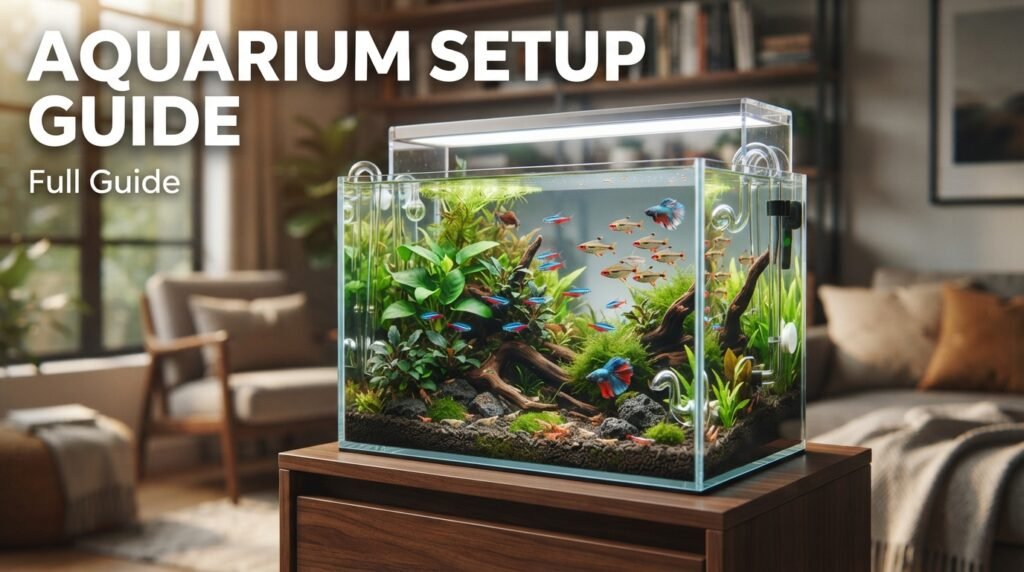
Acrylic is excellent for custom cube-shaped tanks.
A cube can be used for:
- Planted aquariums
- Shrimp aquariums
- Betta setups
- Aquascaping
- Small community aquariums
The shape provides excellent viewing from multiple angles.
3. Curved Acrylic Aquarium
One major advantage of acrylic is the ability to create curved panels.
A curved aquarium can become an impressive centerpiece in:
- Living rooms
- Offices
- Hotels
- Restaurants
- Reception areas
The curved design can create a distinctive panoramic appearance.
4. Cylindrical Acrylic Aquarium
Acrylic can also be used for tall cylindrical aquariums.
These tanks can look spectacular, but their dimensions need to be carefully selected for the fish species being kept.
Tall tanks are not automatically suitable for fish simply because they hold a large volume of water.
5. Acrylic Wall Aquarium
Acrylic can be incorporated into custom wall aquariums.
The transparent panel can create the appearance of an underwater window.
This design works well for:
- Modern homes
- Offices
- Restaurants
- Luxury interiors
Structural engineering is especially important for built-in aquariums.
6. Large Acrylic Aquarium
Acrylic is frequently considered for very large aquariums because of its lower weight and impact resistance compared with equivalent glass panels.
Large tanks require professional design and installation because water pressure, panel thickness, support, seams, and the building structure all become increasingly important.
7. Acrylic Aquarium for Aquascaping
Acrylic tanks can create a clean viewing experience for planted aquascapes.
Try:
- Natural rocks
- Driftwood
- Moss
- Anubias
- Cryptocoryne
- Small schooling fish
The transparent panels allow the aquascape to remain the visual focus.
8. Acrylic Shrimp Aquarium
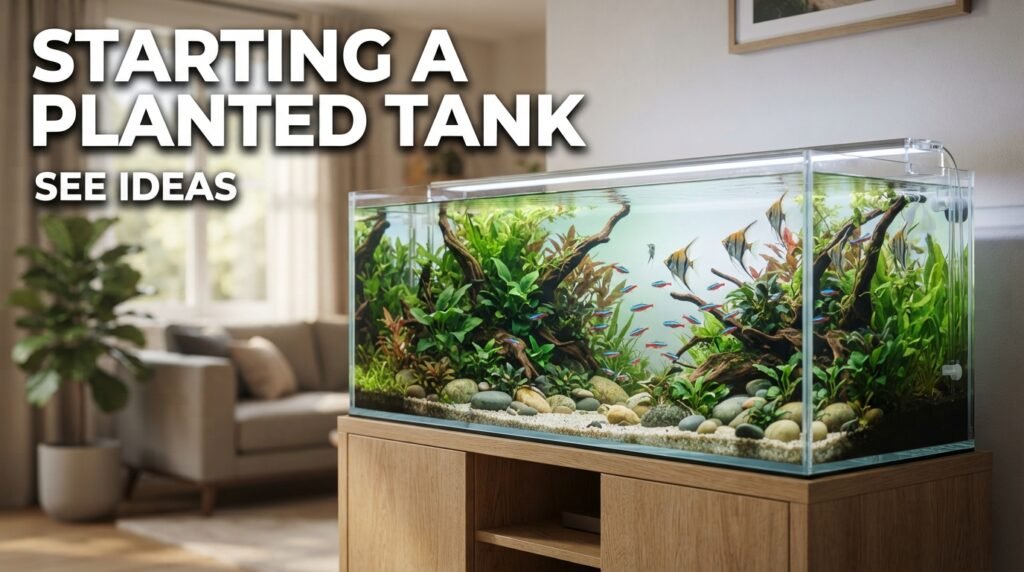
Acrylic is a popular material for small custom tanks.
A shrimp setup could feature:
Dark substrate + moss + driftwood + rocks + colorful shrimp
Keep the aquarium stable and provide suitable filtration.
9. Acrylic Betta Aquarium
Acrylic can be used for a betta aquarium, provided the tank is appropriately sized and equipped.
Add:
- Gentle filtration
- Heater
- Live plants
- Hiding places
- Secure cover
Avoid rough decorations that can damage delicate fins.
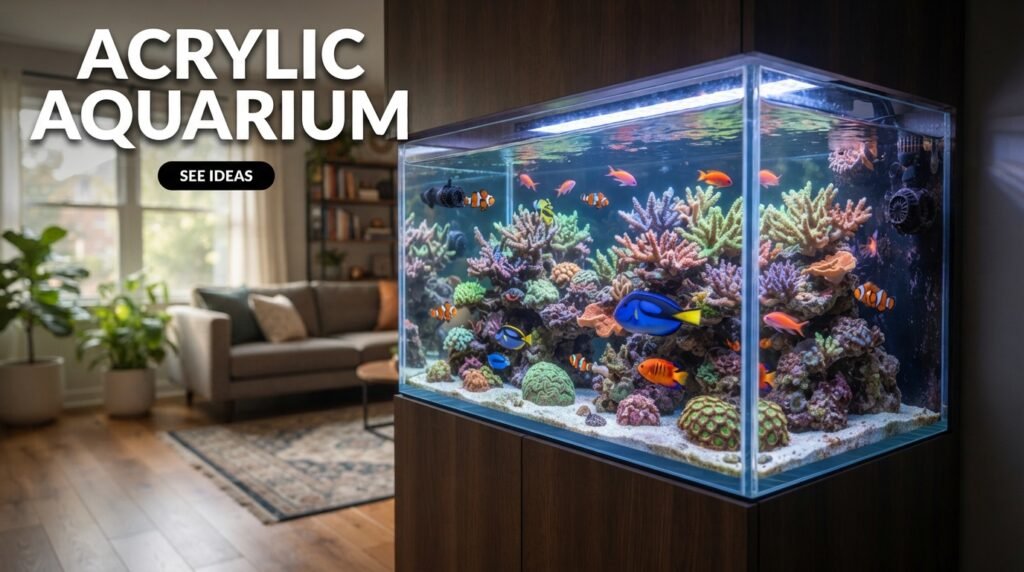
10. Acrylic Reef Aquarium
Acrylic can also be used for marine aquariums.
Acrylic reef tanks may include:
- Live rock
- Corals
- Marine fish
- Protein skimming
- Strong filtration
- Reef lighting
Marine systems require careful management of salinity, temperature, nutrients, and water chemistry.
Benefits of Acrylic Aquariums
Lightweight
Acrylic weighs substantially less than glass of comparable thickness.
This can make transportation and installation easier.
Impact Resistance
Acrylic is generally more resistant to impact than glass.
This can be useful in homes with children or in high-traffic environments.
Customization
Acrylic can be cut and formed into unusual shapes.
This allows manufacturers to create custom:
- Curved tanks
- Bowfront tanks
- Cylindrical tanks
- Built-in aquariums
- Large viewing panels
Good Insulation
Acrylic generally has better thermal insulation than glass, which can help reduce heat loss.
Disadvantages of Acrylic Aquariums
Scratches
The biggest drawback is that acrylic scratches more easily than glass.
Be careful when cleaning the panels.
Never use abrasive household cleaners or rough materials.
More Careful Cleaning
Use cleaning tools specifically designed for acrylic aquariums.
A trapped grain of sand between a cleaning magnet and the acrylic surface can create scratches.
Can Flex
Large acrylic panels can flex slightly depending on their thickness and construction.
Proper engineering is essential.
Cost
Custom acrylic aquariums can be expensive, particularly when using thick material and complex shapes.
How to Clean an Acrylic Aquarium
Cleaning acrylic requires a gentle approach.
Step 1: Use an Acrylic-Safe Algae Scraper
Choose a scraper specifically designed for acrylic.
Step 2: Check for Sand
Make sure no substrate particles are trapped between the cleaning tool and acrylic.
Step 3: Clean Slowly
Use gentle movements rather than aggressive pressure.
Step 4: Clean the Exterior
Use a clean, soft cloth and a product specifically safe for acrylic if needed.
Never use household glass cleaner around aquarium water or livestock.
How to Remove Scratches From Acrylic
Minor scratches can sometimes be polished out using an aquarium-safe acrylic polishing system.
Deep scratches may require more extensive professional polishing or replacement.
Don’t attempt aggressive sanding while the aquarium is full of water.
Acrylic Aquarium Background Ideas
Acrylic tanks work well with many background styles.
Try:
- Matte black
- Dark blue
- Natural rock
- Frosted background
- Transparent background
- Planted wall
A black background is particularly effective for colorful fish and green plants.
Acrylic Aquarium Stand Ideas
Match the stand to the tank design.
Modern
Black or white minimalist cabinet.
Natural
Walnut-style wood cabinet.
Industrial
Metal frame with a clean acrylic tank.
Luxury
Custom cabinetry with integrated lighting and storage.
Acrylic Aquarium for Living Room
Acrylic can work particularly well in contemporary interiors.
A frameless-looking acrylic aquarium combined with:
- Minimal furniture
- Neutral colors
- Green plants
- Natural stones
- Soft lighting
can create a sophisticated centerpiece.
Acrylic Aquarium for Office
A small acrylic aquarium can add a relaxing visual element to an office.
A planted nano aquarium or shrimp aquarium can be easier to integrate than a large fish tank.
Place it on a sturdy surface away from equipment that generates excessive heat.
Acrylic Aquarium Design Ideas
| Design | Best Feature |
|---|---|
| Cube | Modern and compact |
| Curved | Panoramic viewing |
| Cylindrical | Unique centerpiece |
| Wall-mounted | Architectural |
| Large custom | Dramatic display |
| Nano | Desktop friendly |
| Reef | Colorful marine display |
| Planted | Natural aquascape |
Acrylic Aquarium Safety
Never choose acrylic thickness based solely on appearance.
The required thickness and construction depend on:
- Tank dimensions
- Water depth
- Panel design
- Bracing
- Material properties
- Manufacturing method
Large or custom aquariums should be designed and built by qualified aquarium professionals.
Also ensure the stand can safely support the fully filled aquarium, not just the empty tank.
Is Acrylic Better Than Glass?
Neither material is universally better.
Choose acrylic if you prioritize:
- Lightweight construction
- Custom shapes
- Impact resistance
- Large viewing panels
Choose glass if you prioritize:
- Scratch resistance
- Very high optical clarity
- A more rigid panel
For a custom or unusually shaped aquarium, acrylic can offer significantly more design flexibility.
Conclusion
An acrylic aquarium offers excellent possibilities for modern, custom, and large aquarium designs. Its lightweight construction, impact resistance, and ability to be molded into unusual shapes make it particularly attractive for curved tanks, wall aquariums, cylindrical displays, and custom installations.
Its biggest disadvantage is its tendency to scratch more easily than glass. With careful cleaning and acrylic-safe tools, however, an acrylic aquarium can remain clear and attractive for many years.
For a modern home, a clear acrylic cube or curved aquarium with a minimalist planted aquascape, natural driftwood, green plants, and concealed equipment can create a particularly striking display.
Frequently Asked Questions
Is acrylic better than glass for an aquarium?
It depends on your priorities. Acrylic is lighter, more impact-resistant, and easier to customize, while glass is generally more resistant to scratching.
Does acrylic aquarium scratch easily?
Yes. Acrylic scratches more easily than glass, so you should use cleaning tools specifically designed for acrylic.
Are acrylic aquariums safe?
Yes, properly manufactured acrylic aquariums are widely used for aquatic displays. The tank must be correctly designed for its dimensions and water pressure.
Can acrylic aquariums be custom shaped?
Yes. One of acrylic’s biggest advantages is that it can be fabricated into curved, cylindrical, bowfront, and other custom shapes.
How do I clean an acrylic aquarium?
Use soft, acrylic-safe cleaning tools and make sure no sand or debris is trapped against the panel while cleaning.
How long does an acrylic aquarium last?
A well-made acrylic aquarium can last for many years with proper care. Avoid unnecessary scratching, excessive heat, harsh chemicals, and improper cleaning methods.