
 By admin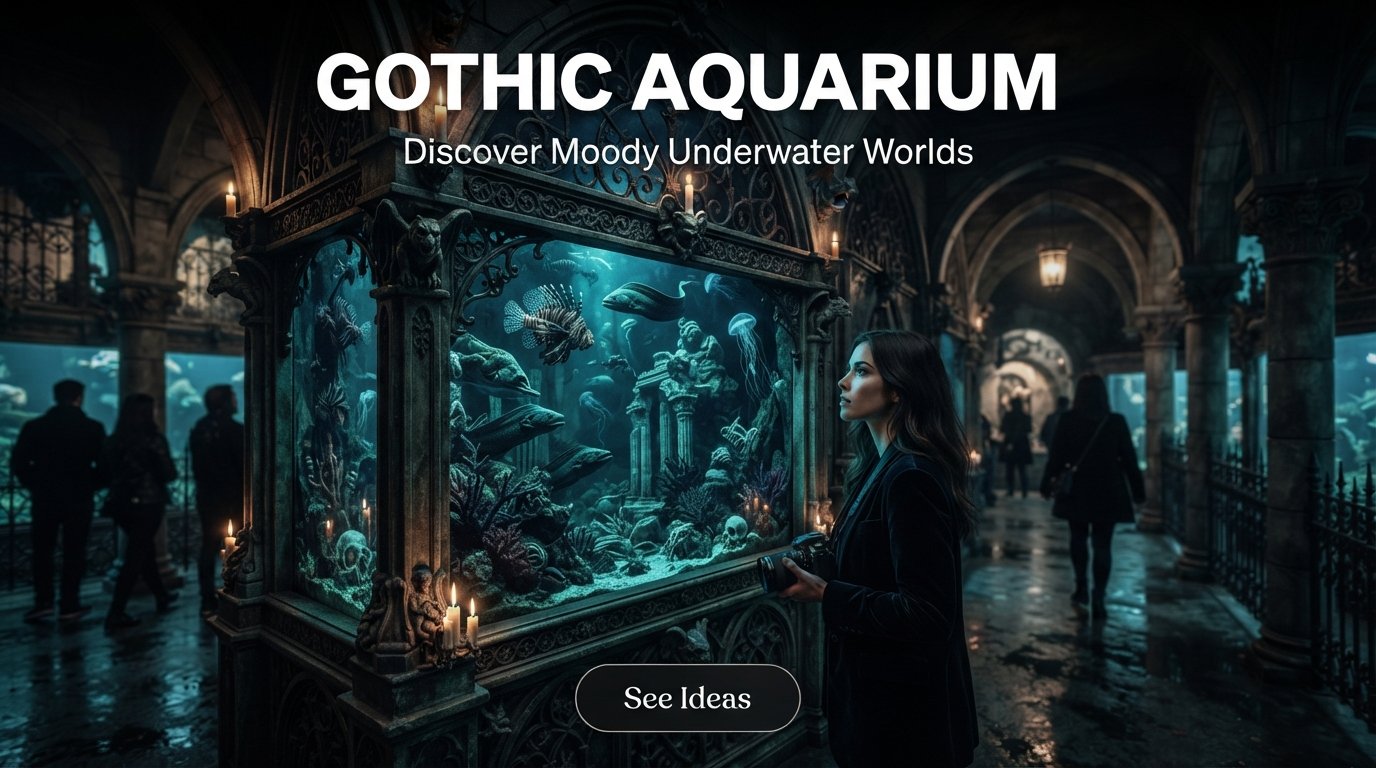
A gothic aquarium is a unique way to combine aquarium keeping with dark, mysterious, elegant, and fantasy-inspired design. Instead of the bright tropical appearance found in many traditional aquariums, gothic aquariums focus on dark colors, dramatic hardscape, ancient ruins, twisted driftwood, deep green plants, and atmospheric lighting.
A gothic aquarium can resemble an underwater castle, haunted forest, abandoned cemetery, ancient cathedral, mysterious cave, or forgotten underwater civilization. With the right design, it can become a striking centerpiece for a living room, bedroom, office, or entertainment area.
The most important thing is to balance the gothic appearance with the actual needs of your fish, shrimp, plants, and other aquatic life.
What Is a Gothic Aquarium?
A gothic aquarium is an aquarium designed around a dark or dramatic visual theme. The style can range from elegant Victorian-inspired designs to spooky Halloween-style aquascapes.
Common gothic aquarium elements include:
- Black backgrounds
- Dark substrate
- Gray and black rocks
- Twisted driftwood
- Ancient ruins
- Gothic arches
- Castle decorations
- Cathedral structures
- Moss-covered ornaments
- Dark green plants
- Red plant accents
- Aquarium-safe skull decorations
- Cave structures
- Soft atmospheric lighting
The best gothic aquariums don’t simply place several dark decorations inside a tank. Instead, the hardscape, plants, substrate, and lighting are arranged as one cohesive underwater scene.
Gothic Aquarium Castle
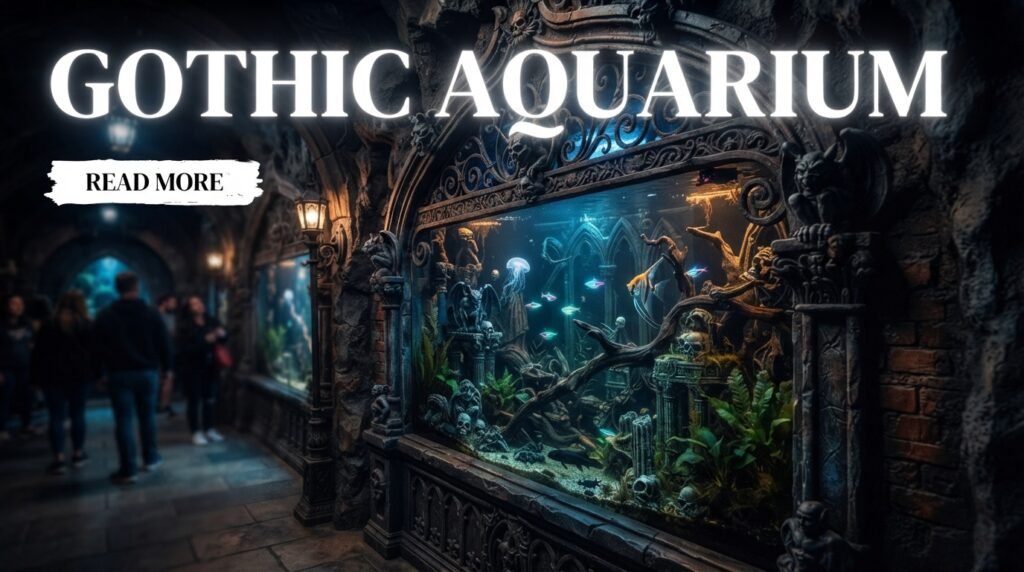
An underwater castle is one of the most popular gothic aquarium concepts.
Choose a castle or ruined fortress designed specifically for aquarium use. Position it slightly away from the center so it becomes a natural focal point.
Surround the structure with:
- Dark rocks
- Moss
- Driftwood
- Small plants
- Natural substrate
Allowing plants and moss to partially cover the structure can make it look old and abandoned.
Instead of making the castle look like a new decoration, create the impression that it has been underwater for many years.
Gothic Aquarium With Ancient Ruins
Ancient ruins can create a mysterious underwater civilization theme.
Use aquarium-safe arches, columns, walls, and broken stone structures. Place some pieces deeper into the substrate to make them look partially buried.
You can create a scene where plants are slowly taking over an abandoned city.
A simple composition might include one large arch in the background, smaller broken stones in the middle, and open substrate in the foreground.
Haunted Forest Aquarium
A haunted forest is an excellent option if you prefer a natural-looking gothic aquarium.
Use twisted pieces of aquarium-safe driftwood to create the appearance of underwater trees.
Add moss to selected branches and place darker plants around their bases.
The branches should extend upward and outward, creating interesting shadows and an irregular silhouette.
Keep some open swimming space between the branches so the aquarium doesn’t become too crowded.
Gothic Aquarium With Black Sand
Black substrate is an easy way to create a darker atmosphere.
It provides strong contrast against green plants and lighter-colored fish.
A black substrate can work particularly well with:
- Green moss
- Anubias
- Java fern
- Bucephalandra
- Pale rocks
- Gray ruins
- Red aquatic plants
When selecting substrate, make sure it is appropriate for aquarium use and suitable for the livestock you plan to keep.
Black and Red Gothic Aquarium
Black and deep red create one of the most dramatic gothic color combinations.
Keep black, gray, and dark green as the dominant colors and use red as an accent.
For example, you could use:
- Black substrate
- Gray rocks
- Dark driftwood
- Green plants
- A few red plants
- Dark background
Using too much red can make the aquarium look artificial, while a few carefully positioned red accents can create a much stronger visual effect.
Gothic Cathedral Aquarium
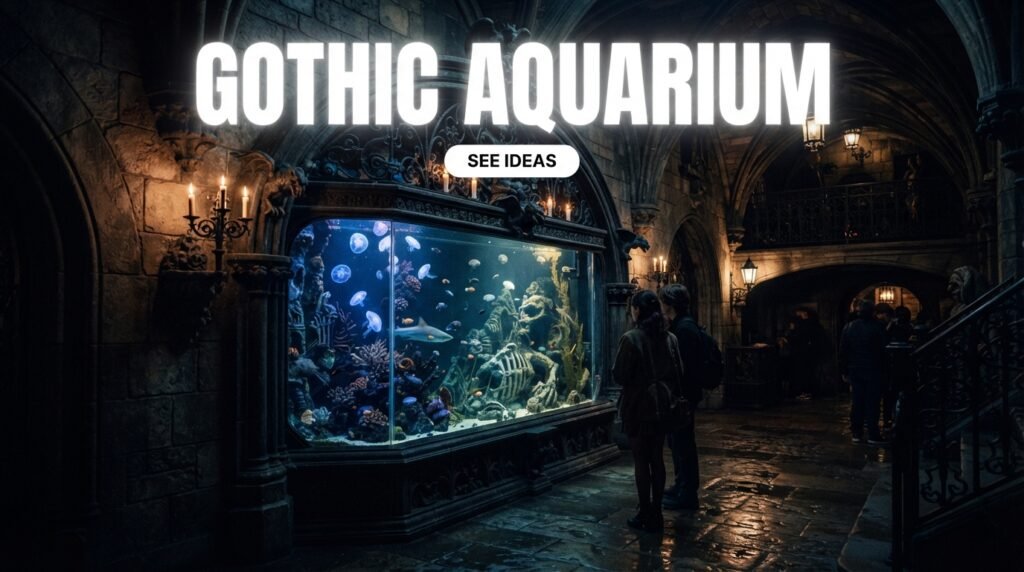
A miniature cathedral can become the centerpiece of an elaborate gothic aquarium.
Look for aquarium-safe structures featuring:
- Arched windows
- Tall columns
- Gothic arches
- Stone textures
- Towers
- Broken walls
Position the structure toward the rear of the aquarium and use plants around the base.
Moss growing across the structure can create the appearance of an ancient cathedral slowly being reclaimed by nature.
Gothic Skull Aquarium
Skull decorations are particularly popular for Halloween and dark fantasy aquarium themes.
If you want to use a skull, choose one specifically made for aquarium use or verify that its material and finish are safe for aquatic environments.
Avoid placing random decorative skulls, painted ornaments, metal objects, or unknown materials in the aquarium.
A skull can look more natural when partially hidden among rocks and plants instead of being placed directly in the center.
Gothic Cemetery Aquarium
A miniature underwater cemetery can create a spooky aquarium theme.
Use aquarium-safe miniature gravestones and stone structures together with moss and dark substrate.
You can create depth by placing larger gravestones farther back and smaller details toward the front.
Avoid filling the entire tank with tombstones. Leaving empty areas makes the scene look more realistic and gives fish space to swim.
Gothic Cave Aquarium
A dark cave can be the main feature of a gothic aquarium.
Build the cave using stable aquarium-safe rocks or use a purpose-made aquarium cave decoration.
The cave should have safe openings and enough space for the livestock to move through comfortably.
Never create unstable piles of rocks that could collapse and injure fish or damage the aquarium glass.
Gothic Aquarium With Driftwood
Driftwood is one of the best natural materials for a gothic aquarium.
Look for pieces with:
- Twisted branches
- Hollow sections
- Sharp natural shapes
- Multiple branches
- Dark coloration
A single dramatic piece of driftwood can sometimes create a stronger design than several artificial decorations.
Moss attached to the branches can make the wood look like an ancient underwater tree.
Gothic Aquarium With Dark Plants
Live plants can make a gothic aquarium look much more natural.
Some suitable options to consider include:
Anubias
Anubias has broad leaves and can be attached to rocks and driftwood. It works especially well around ruins and dark hardscape.
Java Fern
Java fern provides a natural, slightly wild appearance and can be attached to aquarium decorations rather than planted deeply into the substrate.
Java Moss
Java moss is excellent for creating an aged appearance. It can grow over rocks and driftwood and make artificial structures look more integrated into the aquascape.
Bucephalandra
Bucephalandra varieties are useful for smaller gothic aquascapes because of their compact growth and interesting leaf shapes.
Cryptocoryne
Cryptocoryne can provide dense growth around the base of rocks and ruins.
Red Aquarium Plants
Suitable red plants can be used as small accents in a dark gothic aquascape.
Minimalist Gothic Aquarium
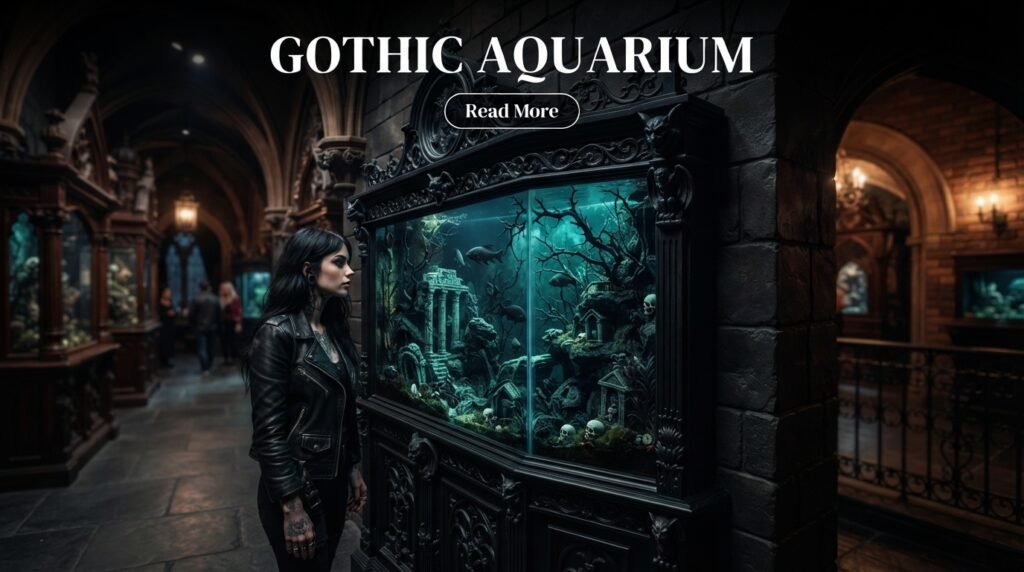
A gothic aquarium doesn’t need to contain castles, skulls, statues, and ruins.
A minimalist design can be much more elegant.
Try using:
- Black background
- Dark substrate
- One large rock
- One twisted piece of driftwood
- A small amount of moss
- A few aquatic plants
- Subtle lighting
The open space becomes an important part of the composition.
This style can work particularly well in modern homes and offices.
Victorian Gothic Aquarium
If you prefer elegance rather than horror, create a Victorian-inspired gothic aquarium.
Use dark furniture and refined aquarium decorations rather than obvious Halloween objects.
A Victorian gothic aquarium could feature:
- Black aquarium framing
- Dark wood cabinet
- Deep green plants
- Ornamental stone
- Elegant driftwood
- Subtle warm lighting
This style works especially well with traditional or vintage interior design.
Gothic Betta Aquarium
A betta aquarium can have a gothic appearance while still being designed around the fish’s needs.
A simple setup could include:
- Appropriate-sized aquarium
- Dark substrate
- Live plants
- Driftwood
- Smooth aquarium-safe rocks
- Gentle filtration
- Suitable heater
- Controlled lighting
Avoid sharp decorations and narrow openings that could damage delicate fins.
The gothic theme should never take priority over the fish’s health and comfort.
Gothic Shrimp Aquarium
Shrimp can look particularly striking against dark substrate.
A small shrimp aquarium could combine:
- Black substrate
- Moss-covered wood
- Dark rocks
- Small ruins
- Green plants
- A black background
Shrimp also benefit from surfaces where biofilm can develop, so moss, plants, wood, and hardscape can serve both decorative and functional purposes.
Gothic Aquarium Lighting
Lighting plays a major role in creating the gothic atmosphere.
Instead of making the entire aquarium extremely bright, use lighting to highlight specific parts of the aquascape.
You can emphasize:
- Castle arches
- Driftwood branches
- Rock formations
- Plant silhouettes
- Open swimming areas
For planted aquariums, lighting still needs to match the requirements of the plants. Excessive lighting can contribute to algae problems when the aquarium’s light, nutrients, and plant growth aren’t balanced.
Gothic Aquarium Color Ideas
| Gothic Style | Main Colors | Overall Look |
|---|---|---|
| Classic Gothic | Black, gray, dark green | Mysterious |
| Victorian Gothic | Black, brown, deep green | Elegant |
| Haunted Forest | Brown, black, dark green | Eerie |
| Vampire Theme | Black, red, gray | Dramatic |
| Ancient Ruins | Gray, black, green | Forgotten |
| Dark Fantasy | Black, purple, red | Magical |
| Minimal Gothic | Black, gray, green | Modern |
How to Create Depth
A gothic aquarium looks much better when it has foreground, middle ground, and background layers.
Foreground
Use:
- Fine substrate
- Small stones
- Short plants
- Small decorative details
Middle Ground
Use:
- Medium rocks
- Moss
- Driftwood
- Ruins
- Medium-height plants
Background
Use:
- Tall plants
- Large driftwood
- Large structures
- Dark background
This layered arrangement makes the aquarium appear deeper and more detailed.
How to Make Gothic Decorations Look Realistic
The biggest problem with themed aquariums is that decorations can look like objects simply dropped into the tank.
You can make them look more natural by:
- Partially burying the base of structures in substrate.
- Adding moss around ruins.
- Placing rocks around the structures.
- Allowing plants to partially cover decorations.
- Creating different levels of height.
- Leaving some open areas.
- Using one main focal point.
- Keeping equipment visually discreet.
These techniques help turn individual decorations into one underwater environment.
Gothic Aquarium for Halloween
A gothic aquarium naturally works as a Halloween decoration.
Popular themes include:
- Haunted castle
- Underwater cemetery
- Skeleton ruins
- Dark forest
- Abandoned cathedral
- Ghostly cave
- Ancient shipwreck
For a permanent aquarium, it’s usually better to create the dark theme through natural hardscape and plants rather than repeatedly changing the tank with temporary decorations.
Aquarium-Safe Gothic Decorations
Safety should always come before appearance.
Do not place an unknown decorative object into an aquarium simply because it looks attractive.
Avoid objects containing:
- Unsealed paint
- Unknown coatings
- Exposed metal
- Sharp edges
- Toxic materials
- Materials that can dissolve in water
Aquarium-specific decorations are generally the safer choice.
Also inspect decorations regularly for cracking, peeling, or deterioration.
Best Fish for a Gothic Aquarium
The theme itself does not determine which fish can live in the aquarium.
Instead, choose fish according to:
- Aquarium dimensions
- Water volume
- Adult size
- Swimming behavior
- Water temperature
- Water chemistry
- Compatibility
- Filtration
- Grouping requirements
Small schooling fish may look beautiful against a dark background, while a planted aquarium with a single centerpiece fish can create a completely different effect.
Always design the aquarium around the livestock rather than choosing livestock simply to match the decoration.
Gothic Aquarium Maintenance
A gothic aquarium needs the same basic maintenance as any other aquarium.
Regular maintenance may include:
- Partial water changes
- Glass cleaning
- Algae removal
- Plant trimming
- Filter maintenance
- Water testing
- Removing dead plant material
- Checking decorations
- Observing fish behavior
Make sure the decorations don’t block filter intake, restrict circulation, or make maintenance difficult.
Common Gothic Aquarium Mistakes
Using Too Many Decorations
A castle, skull, cemetery, cathedral, dragon, statue, and shipwreck in one small tank can quickly become visually confusing.
Choose one primary theme.
Removing Too Much Swimming Space
Fish need room to move. Decorations should not occupy the entire aquarium.
Using Unsafe Materials
Household decorations are not automatically aquarium-safe.
Ignoring Plant Requirements
A dark appearance should not mean keeping plants in inadequate lighting.
Making the Aquarium Too Dark
The aquarium can look gothic without depriving plants of appropriate light or making livestock difficult to observe.
Ignoring Maintenance Access
Large decorations can make it difficult to clean the glass, trim plants, or remove equipment.
Best Gothic Aquarium Setup
A balanced gothic aquarium could use:
Background: black background with tall aquatic plants
Center: twisted driftwood with an aquarium-safe gothic arch
Middle: dark rocks with moss
Foreground: dark natural substrate and open swimming area
Lighting: controlled aquarium lighting that highlights the main hardscape
Livestock: fish or invertebrates selected according to the aquarium’s actual dimensions and care requirements
This creates a dark and dramatic appearance without sacrificing functionality.
Final Thoughts
A gothic aquarium is a creative way to combine aquascaping with dark fantasy, medieval architecture, Victorian design, and mysterious underwater scenery. You can create an underwater castle, haunted forest, ancient cathedral, cemetery, cave, or minimalist black aquascape depending on your personal style.
The best designs are not necessarily the ones with the most decorations. A strong focal point, carefully selected hardscape, healthy plants, appropriate lighting, and plenty of open space can create a much more convincing gothic atmosphere.
Most importantly, remember that the aquarium is a living environment. Choose safe materials, provide appropriate conditions for the livestock, and design the gothic theme around the needs of the aquatic life.
Frequently Asked Questions
What is a gothic aquarium?
A gothic aquarium is a fish tank designed around dark, mysterious, medieval, fantasy, or haunted aesthetics. It commonly uses dark substrate, ruins, driftwood, moss, rocks, gothic structures, and atmospheric lighting.
What colors are best for a gothic aquarium?
Black, dark gray, deep green, brown, and small amounts of deep red work especially well. Purple and dark blue can also be used for fantasy-inspired designs.
Can I put a skull in a gothic aquarium?
Yes, but the skull should be confirmed to be aquarium-safe. Avoid painted decorations, exposed metal, unknown coatings, or household objects that haven’t been designed for underwater use.
What plants are good for a gothic aquarium?
Java moss, Anubias, Java fern, Bucephalandra, Cryptocoryne, and suitable red aquarium plants can work well in gothic aquascapes.
How do I make my aquarium look haunted?
Use twisted driftwood, dark rocks, moss, ruins, a dark background, and carefully controlled lighting. Creating shadows and leaving open spaces can make the aquarium feel more mysterious.
Can I create a gothic aquarium without decorations?
Yes. Dark rocks, black substrate, twisted driftwood, moss, and live plants can create a gothic appearance without artificial castles or skulls.
Can a gothic aquarium have live fish?
Absolutely. The gothic theme does not prevent fishkeeping. The fish must simply be compatible with the aquarium’s size, water conditions, filtration, temperature, and other livestock.
Is black sand good for a gothic aquarium?
Black aquarium-safe sand or substrate can be an excellent choice because it creates a dark foundation and provides contrast with green plants and colorful fish.
What is the best centerpiece for a gothic aquarium?
A ruined castle, gothic arch, cathedral, ancient statue, cave, or dramatic piece of driftwood can work as a centerpiece. Choosing one dominant focal point usually creates a cleaner design.
Can I make a gothic aquarium for a small tank?
Yes. Small tanks can use minimalist gothic themes with dark substrate, moss, a small piece of driftwood, compact plants, and one carefully selected aquarium-safe decoration.