
 By admin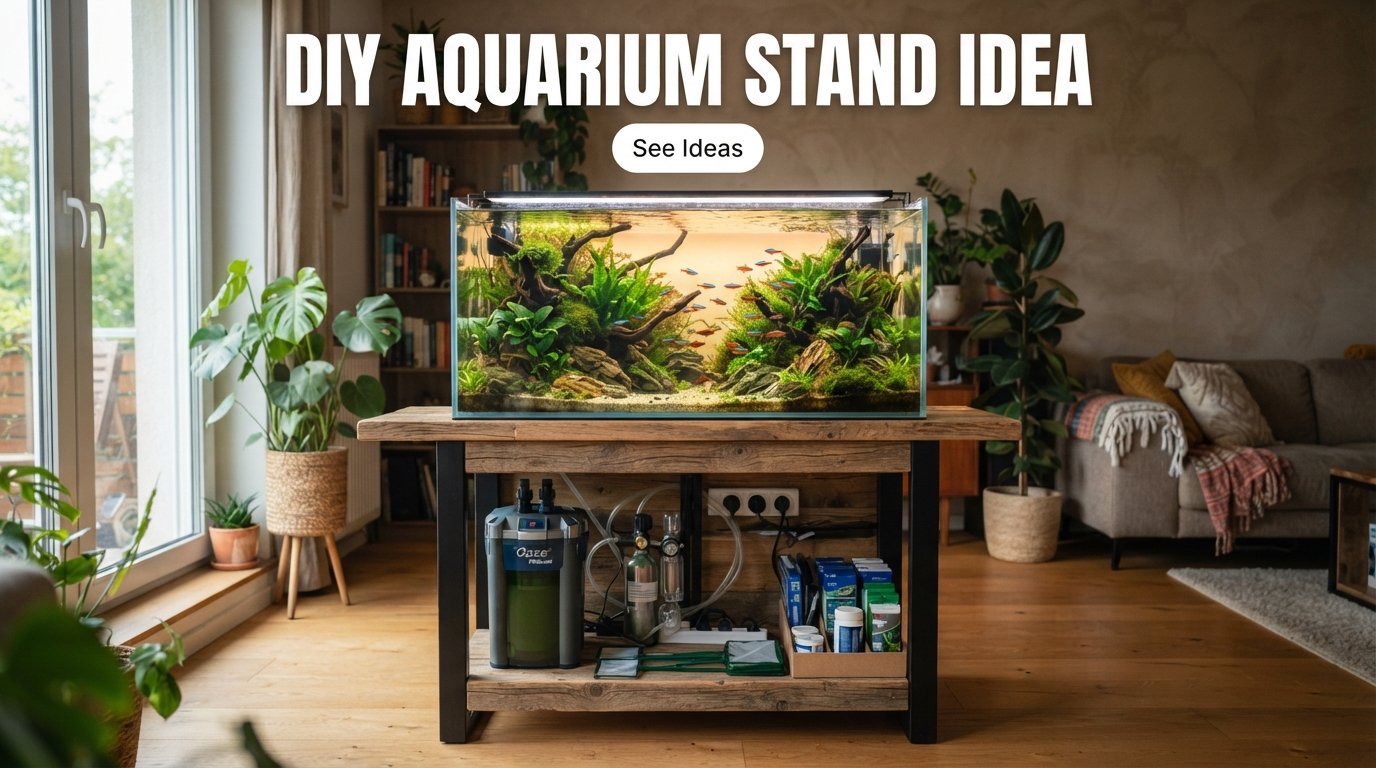
An aquarium stand design is an important part of creating a safe, attractive, and functional fish tank setup. An aquarium stand does much more than simply lift the tank off the floor. It supports the full weight of the aquarium, provides stability, creates storage for equipment, and can become an important part of the room’s interior design.
A filled aquarium can be surprisingly heavy because the total weight includes water, glass or acrylic, substrate, rocks, driftwood, decorations, filters, and other equipment. For this reason, the best aquarium stand design combines structural strength with a style that complements the aquarium and surrounding space.
Whether you have a small nano aquarium, a 20-gallon tank, a 55-gallon aquarium, or a large custom display, choosing the right stand can make the entire setup look more organized and professional.
What Is an Aquarium Stand?
An aquarium stand is a specially designed support structure that holds an aquarium at a suitable height while distributing its weight safely.
Unlike an ordinary table or cabinet, an aquarium stand should be designed around the dimensions and weight of the aquarium. It should provide stable support and a level surface while also allowing convenient access to filters, pumps, heaters, food, and maintenance supplies.
Many aquarium stands combine a strong frame with enclosed cabinets or open shelving.
Best Aquarium Stand Design Ideas
| Aquarium Stand Design | Best For | Main Feature |
|---|---|---|
| Modern Cabinet Stand | Living Rooms | Clean appearance |
| Wooden Aquarium Stand | Natural Interiors | Warm appearance |
| Steel Aquarium Stand | Large Tanks | High strength |
| Open Shelf Stand | Small Tanks | Easy access |
| Minimalist Stand | Modern Homes | Simple design |
| Corner Aquarium Stand | Small Rooms | Space saving |
| Built-In Aquarium Cabinet | Custom Homes | Integrated design |
| Industrial Stand | Large Aquariums | Metal frame |
| Floating-Style Cabinet | Modern Rooms | Contemporary look |
| DIY Aquarium Stand | Hobbyists | Custom dimensions |
Modern Aquarium Stand Design
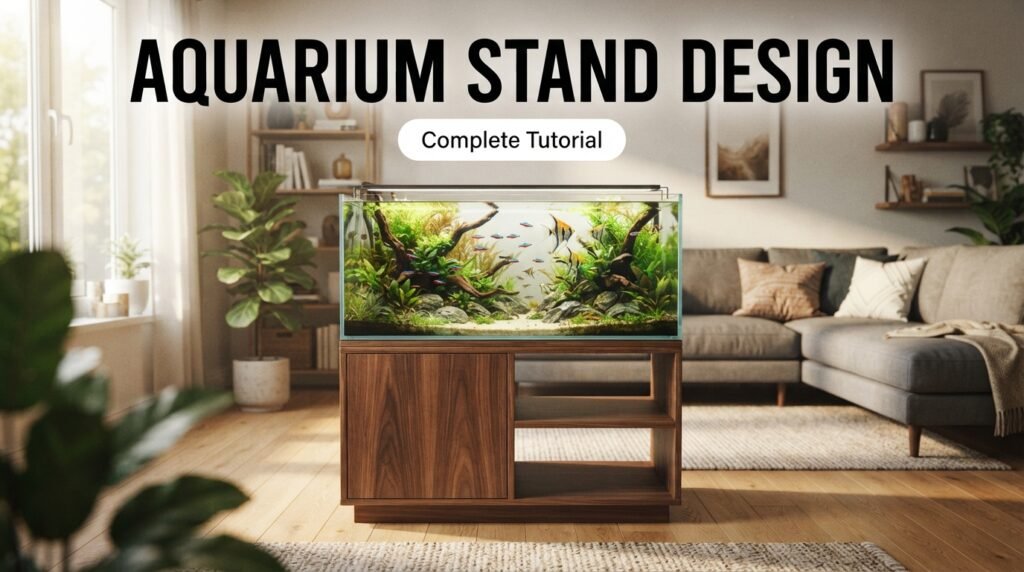
A modern aquarium stand usually focuses on clean lines, simple surfaces, and minimal visual clutter.
A frameless aquarium placed on a simple cabinet can create a sophisticated appearance. White, black, gray, and natural wood finishes can work well with modern interiors.
The cabinet can hide filtration equipment, electrical connections, aquarium food, and cleaning supplies.
The most important feature, however, remains structural strength. Modern appearance should never be prioritized over proper support.
Wooden Aquarium Stand
Wood is one of the most popular materials for aquarium stands because it can combine strength with attractive interior design.
A wooden aquarium stand can be made from properly selected solid wood, plywood, or other suitable structural materials.
Natural wood finishes work especially well with planted aquariums and aquascapes featuring driftwood and rocks.
A wooden cabinet can also provide plenty of enclosed storage beneath the aquarium.
Steel Aquarium Stand
Steel stands are particularly useful for larger aquariums because properly designed steel frames can provide substantial strength.
A simple steel frame can support the aquarium while leaving the lower area open for filtration equipment and storage.
Steel aquarium stands can also be covered with decorative panels if you prefer the appearance of a traditional cabinet.
For larger or unusually shaped aquariums, structural design should be taken seriously because the consequences of stand failure can be significant.
Aquarium Stand With Storage
One of the most useful aquarium stand designs is a cabinet with integrated storage.
The area beneath the aquarium can be divided into compartments for:
- Fish food
- Water conditioners
- Test kits
- Filter media
- Nets
- Towels
- Cleaning equipment
- Spare equipment
- Electrical accessories
Storage keeps aquarium supplies organized and prevents the area around the aquarium from becoming cluttered.
Open Shelf Aquarium Stand
An open shelf stand is a simple option for smaller aquarium setups.
Instead of enclosing everything behind cabinet doors, the stand uses open shelves for equipment and supplies.
This design can make a small aquarium setup feel lighter and more open.
However, electrical equipment and aquarium supplies should still be protected from water and organized carefully.
Minimalist Aquarium Stand
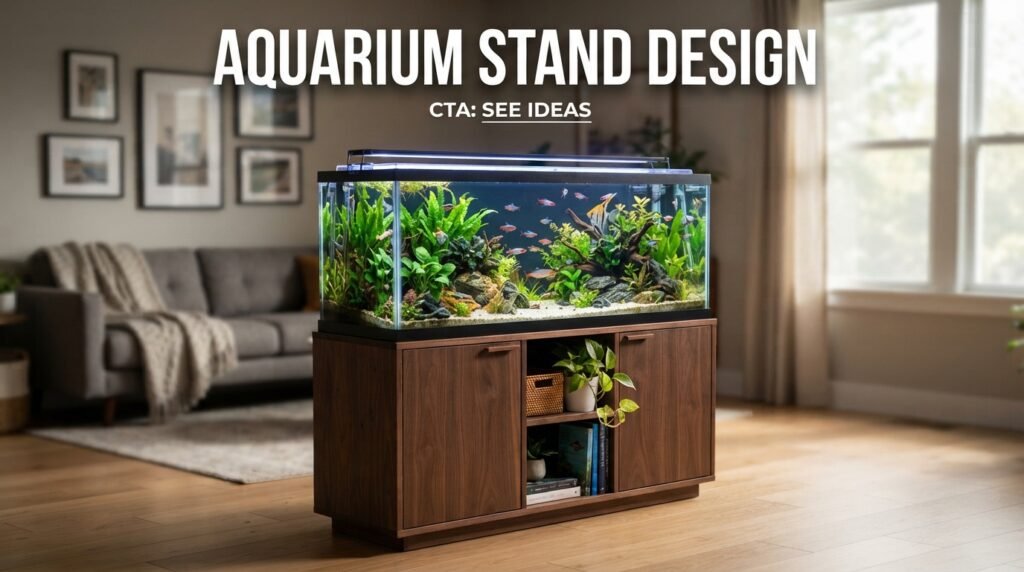
Minimalist aquarium stands are ideal for contemporary homes.
The design can feature a simple rectangular cabinet with smooth surfaces and no unnecessary decoration.
A minimalist stand works especially well with:
- Planted aquariums
- Nano aquariums
- Betta aquariums
- Modern aquascapes
- Frameless tanks
The aquarium itself becomes the main visual feature.
DIY Aquarium Stand Design
Building a DIY aquarium stand can allow you to customize the dimensions, storage, materials, and appearance.
A DIY stand can be designed specifically around the aquarium rather than trying to fit a standard piece of furniture underneath it.
Before building, calculate the complete aquarium weight and determine how that load will be transferred through the frame to the floor.
The design should also account for leveling, moisture exposure, equipment access, and long-term stability.
Aquarium Stand for a 10-Gallon Tank
A 10-gallon aquarium is relatively compact, making it easier to accommodate in smaller rooms.
A simple cabinet or purpose-built stand can provide enough height while creating storage underneath.
Even with a small aquarium, the stand should be specifically suitable for the aquarium’s full filled weight rather than being chosen only because it fits the dimensions.
Aquarium Stand for a 20-Gallon Tank
A 20-gallon aquarium requires more support than a small nano aquarium.
A cabinet-style stand can provide useful storage and help the tank become part of the room’s furniture.
A wooden frame with properly supported vertical sections can create an attractive design, while a steel frame can provide a more industrial appearance.
Aquarium Stand for a 29-Gallon Aquarium
A 29-gallon aquarium is relatively tall compared with some similarly sized tanks, so stand height and stability become especially important.
A properly sized cabinet can provide convenient viewing height while keeping equipment hidden underneath.
Avoid using an ordinary table unless it is specifically rated for the complete aquarium load and provides appropriate support.
Aquarium Stand for a 40-Gallon Aquarium
A 40-gallon aquarium can become a significant feature in a living room, office, or hobby room.
A strong cabinet or metal-frame stand can provide the necessary support while creating storage space.
At this size, the quality of the stand becomes increasingly important because the total filled weight can be substantial.
Aquarium Stand for a 55-Gallon Tank
A 55-gallon aquarium is heavy enough that a purpose-built aquarium stand is strongly preferable to ordinary household furniture.
A traditional cabinet stand can provide a clean appearance, while a steel frame can provide a strong structural foundation.
The floor beneath the aquarium should also be considered, particularly in larger installations.
Corner Aquarium Stand Design
A corner aquarium stand can make good use of otherwise unused space.
Corner stands can be designed for triangular or curved aquariums, but a conventional rectangular aquarium can also be positioned in a corner using a suitable stand.
The stand should still provide full and appropriate support across the aquarium base.
Aquarium Stand With Cabinet Doors
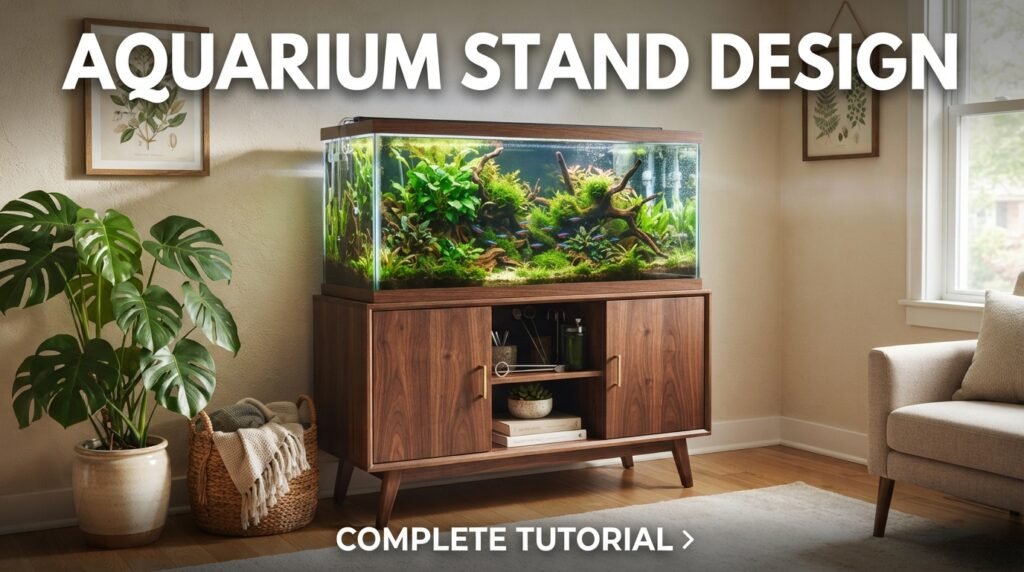
Cabinet doors provide a simple way to hide aquarium equipment and supplies.
You can use single doors, double doors, sliding doors, or push-to-open cabinet mechanisms.
Ventilation should be considered when equipment such as filters and pumps are stored inside.
The doors should also allow easy access to equipment for maintenance.
Aquarium Stand With Open Back
An open-back aquarium stand can make plumbing and electrical installation easier.
Filters, hoses, pipes, and cables can be routed through the open area without requiring complicated modifications.
This design can be particularly useful for aquariums using external canister filters or sump filtration.
The downside is that equipment and cables may be more visible.
Aquarium Stand With Sump
Large aquariums may use a sump system located beneath the display tank.
In this situation, the aquarium stand must provide enough internal space for:
- Sump tank
- Return pump
- Plumbing
- Filter media
- Protein skimmer where applicable
- Valves
- Electrical equipment
- Maintenance access
The cabinet should be designed around the sump rather than trying to squeeze equipment into a stand that was not designed for it.
Industrial Aquarium Stand Design
An industrial-style aquarium stand can combine a metal frame with wood or wood-effect panels.
Black metal and natural wood can create a strong contemporary appearance.
This style works particularly well with large planted aquariums, aquascaping displays, and minimalist interiors.
The frame should be designed specifically for the aquarium’s dimensions and load.
Luxury Aquarium Stand Design
A luxury aquarium stand can integrate the aquarium into high-end interior furniture.
Possible features include:
- Custom cabinetry
- Premium wood finishes
- Hidden equipment
- Soft-close doors
- Integrated lighting
- Decorative wall panels
- Built-in storage
- Custom handles
- Matching furniture
The goal is to make the aquarium look like a permanent part of the interior.
Floating-Style Aquarium Stand
A floating-style cabinet creates the visual impression that the aquarium furniture is suspended above the floor.
This can create a modern appearance, but the structure must still transfer the full aquarium load safely to an appropriate supporting structure.
For heavy aquariums, a floating appearance should only be used when the underlying structural support has been properly designed.
Aquarium Stand for a Planted Tank
Planted aquariums often benefit from simple stands that allow the aquascape to remain the focus.
A natural wood cabinet can complement plants and driftwood, while a black cabinet can create contrast.
Storage beneath the tank is useful for fertilizers, plant tools, water conditioners, and maintenance equipment.
Aquarium Stand for a Reef Tank
Reef aquariums can require substantial equipment, so cabinet design becomes particularly important.
A reef aquarium stand may need room for:
- Sump
- Protein skimmer
- Return pump
- Plumbing
- Dosing equipment
- Electrical systems
- Filter media
- Water reservoirs
Easy access to these components can make maintenance much easier.
Aquarium Stand for a Nano Aquarium
Nano aquariums require less physical space, so their stands can be compact.
A small cabinet, dedicated nano stand, or appropriately rated tabletop can work depending on the aquarium’s size and weight.
A simple design with one storage compartment can be enough for a small aquarium.
The surface should be stable and level, and the aquarium should receive appropriate support across its base.
Aquarium Stand Height
The ideal aquarium stand height depends on the tank dimensions, viewing position, and maintenance requirements.
A very low stand can make the aquarium uncomfortable to view, while an excessively tall stand can make maintenance difficult and increase stability concerns.
Many hobbyists prefer a height that places the main viewing area near comfortable eye level while standing or sitting.
The final height should also take into account the aquarium’s own height.
Aquarium Stand Material Choices
Different materials offer different benefits.
Wood
Wood provides a warm and traditional appearance and can be used for both frames and decorative cabinetry.
Plywood
Properly designed plywood structures can provide excellent strength while allowing custom construction.
Steel
Steel provides high strength and is commonly used for larger aquarium frames.
Aluminum
Aluminum framing can create lightweight structural frames and is popular for some custom aquarium installations.
The material should always be selected based on the aquarium size, design, environment, and required load capacity.
Waterproofing an Aquarium Stand
Water exposure is common around aquariums.
Water can reach the stand during water changes, filter maintenance, cleaning, or accidental splashes.
Wooden or engineered-wood components should therefore be appropriately protected from moisture.
However, waterproofing is not a substitute for structural strength.
A stand can be water-resistant and still be completely unsuitable if it cannot support the aquarium.
Leveling an Aquarium Stand
A stable, level setup is extremely important.
The aquarium should be installed according to the tank manufacturer’s requirements, and the stand should sit securely on the floor.
Do not attempt to compensate for an uneven floor by placing random objects underneath the aquarium or stand.
A properly designed leveling system can be incorporated into some aquarium stands when appropriate.
Aquarium Stand and Floor Protection
Large aquariums can place considerable loads on floors.
Before installing a large aquarium, consider the floor structure, location, and how the weight will be distributed.
For heavy custom aquariums, professional assessment may be appropriate, especially in buildings where floor loading is a concern.
Protecting the floor from water is also important. A small leak or spilled bucket can cause damage if water is allowed to remain underneath the stand.
Cable Management
A clean aquarium stand should have a plan for cables.
Lighting, filters, heaters, pumps, and other equipment may require electrical connections.
Cable openings can be incorporated into the rear of the cabinet. Equipment should remain accessible for maintenance, and electrical connections should be protected from water.
Avoid creating a cabinet where electrical components are placed directly underneath areas that could leak.
Common Aquarium Stand Design Mistakes
One of the biggest mistakes is choosing a stand based only on appearance.
Another is using ordinary household furniture without confirming its suitability for the aquarium’s full weight.
Other common mistakes include:
- Poor weight distribution
- Weak joints
- Insufficient vertical support
- Ignoring floor conditions
- No access to filtration
- Poor moisture protection
- Inadequate ventilation
- No cable management
- Making maintenance difficult
- Choosing an unstable or excessively tall design
A good aquarium stand should be attractive, but safety and function should always come first.
How to Design an Aquarium Stand
Start by measuring the aquarium’s exact length, width, and height.
Next, determine the approximate full weight of the aquarium, including water, substrate, rocks, decorations, and equipment.
Choose the stand material and determine how the weight will be transferred through the structure.
Then plan storage, filtration access, cable routing, and ventilation.
Finally, consider the appearance. Select a finish that complements the aquarium and the room.
Aquarium Stand Design for Modern Homes
For a modern home, a simple cabinet with clean lines can work extremely well.
A frameless aquarium, neutral cabinet, hidden equipment, and minimalist aquascape can create a sophisticated display.
The stand can match nearby furniture or intentionally provide contrast.
Aquarium Stand Design for Small Spaces
If space is limited, use a compact cabinet with vertical storage.
Corner stands can make use of unused areas, while narrow aquarium cabinets can work well along walls.
Avoid sacrificing structural support simply to reduce the stand’s footprint.
Final Thoughts
A well-planned aquarium stand design can make an aquarium safer, more attractive, and easier to maintain. The stand should be considered part of the entire aquarium system rather than an afterthought.
From modern cabinets and natural wooden stands to steel frames, DIY designs, sump cabinets, and minimalist furniture, there are many ways to create a stand that matches your aquarium and home.
The most important consideration is always structural support. A filled aquarium can be extremely heavy, so the stand must be appropriate for the tank’s complete weight and dimensions.
Once safety and stability are addressed, you can focus on storage, materials, colors, lighting, and other design details to create an aquarium setup that looks professional and fits naturally into your space.
Frequently Asked Questions
What is the best material for an aquarium stand?
Wood, properly constructed plywood, steel, and aluminum can all be used for aquarium stands. The best material depends on aquarium size, design, environment, and required structural strength.
Can I use a normal cabinet as an aquarium stand?
You should not assume that a normal cabinet is suitable. It must be specifically capable of supporting the complete weight of the filled aquarium and providing appropriate support.
How strong should an aquarium stand be?
The stand should be designed and rated to safely support the aquarium’s complete filled weight, including water, tank, substrate, rocks, decorations, and equipment.
Is a steel aquarium stand better than a wooden stand?
Not necessarily. Both can work when properly designed. Steel can provide excellent structural strength, while wood can offer attractive cabinetry and storage.
What is the ideal aquarium stand height?
There is no single ideal height. It depends on the aquarium’s dimensions, viewing position, room layout, and maintenance requirements.
Can I build my own aquarium stand?
Yes. DIY aquarium stands can be customized to fit specific tank dimensions. Structural strength, weight distribution, leveling, moisture protection, and stability should be carefully considered.
Should an aquarium stand have storage?
Storage is not required, but it is highly useful. A cabinet can hide filters, food, tools, test kits, and other aquarium supplies.
Can an aquarium stand support a sump?
Yes, provided the stand is specifically designed with enough space and structural capacity for the sump, plumbing, and other equipment.
Do aquarium stands need to be waterproof?
They should be appropriately protected against normal aquarium moisture and splashes. However, moisture protection does not replace adequate structural strength.
What is the most important part of an aquarium stand design?
Structural stability and proper weight support are the most important factors. Appearance, storage, and style should come after safety and appropriate support.