
 By admin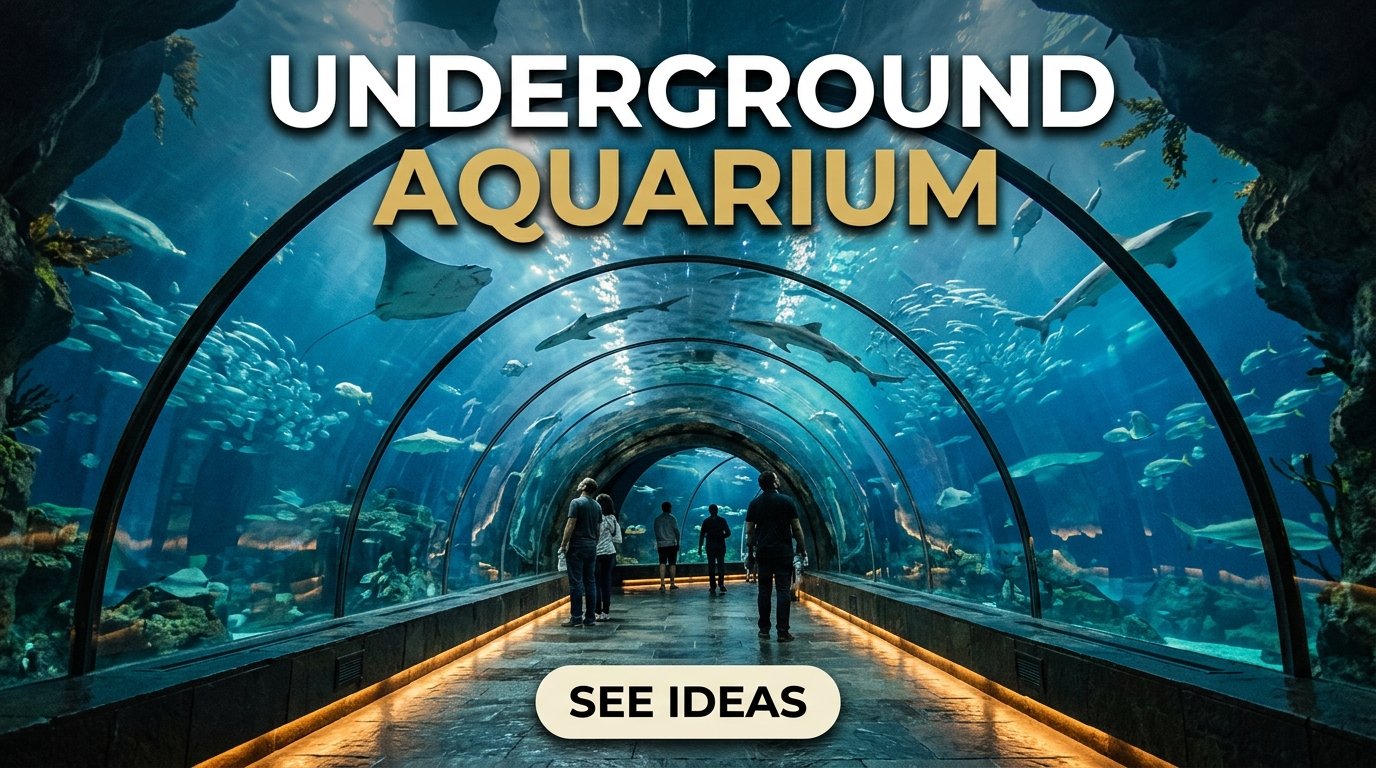
Underground aquarium designs offer a unique way to bring aquatic life into spaces where a traditional fish tank might not fit the desired look. An underground aquarium can mean a partially buried outdoor fish tank, an aquarium built into the floor, a sunken viewing window, or a hidden aquarium integrated into a basement or garden. These designs create the impression of looking into an underwater world from an unusual perspective.
Whether you want a modern aquarium beneath a glass floor, a natural pond with an underground viewing chamber, or a creative indoor fish tank built into the architecture, there are many ways to explore underground aquarium ideas. The best design depends on the available space, budget, building structure, aquarium size, and type of fish you plan to keep.
Underground aquariums can be visually impressive, but they require more planning than ordinary aquariums. Waterproof construction, structural support, access for maintenance, proper filtration, and safe viewing panels are essential. This guide explores different underground aquarium designs, practical installation considerations, suitable aquatic environments, and maintenance tips.
What Is an Underground Aquarium?
An underground aquarium is an aquatic display installed partly or entirely below the surrounding floor or ground level. Unlike a standard aquarium placed on a cabinet, it is integrated into the building, landscape, or ground structure.
The term can describe several different designs. Some underground aquariums are built beneath transparent floor panels, allowing people to look down at fish swimming below. Others use viewing windows in a sunken garden, basement wall, or underground room. Outdoor versions may resemble ponds with submerged viewing chambers.
An underground aquarium is not necessarily a natural underground habitat. It is a specially designed aquarium or aquatic enclosure whose position creates an underground viewing experience.
These designs can be used in private homes, gardens, hotels, restaurants, commercial displays, and large architectural projects. Smaller versions can also be created with a partially recessed aquarium, provided the structure is designed to support the tank and allow safe access.
1. Glass Floor Underground Aquarium
A glass floor aquarium is one of the most striking underground aquarium ideas. It allows people to walk above a transparent viewing surface while observing fish swimming underneath.
The aquarium is installed below floor level, with a specially engineered transparent panel forming part of the floor. The viewing panel must be designed for the expected loads, including people walking across it, and must account for water pressure, panel support, impact resistance, and long-term safety.
This is not a suitable do-it-yourself project using ordinary aquarium glass. The floor structure and viewing panel should be engineered by qualified professionals who understand both aquatic installations and building requirements.
A glass floor aquarium can create a beautiful focal point in a living room, hallway, hotel lobby, or luxury home. However, the design must also provide access to the aquarium for feeding, cleaning, equipment maintenance, and emergency repairs.
2. Underground Aquarium in a Living Room
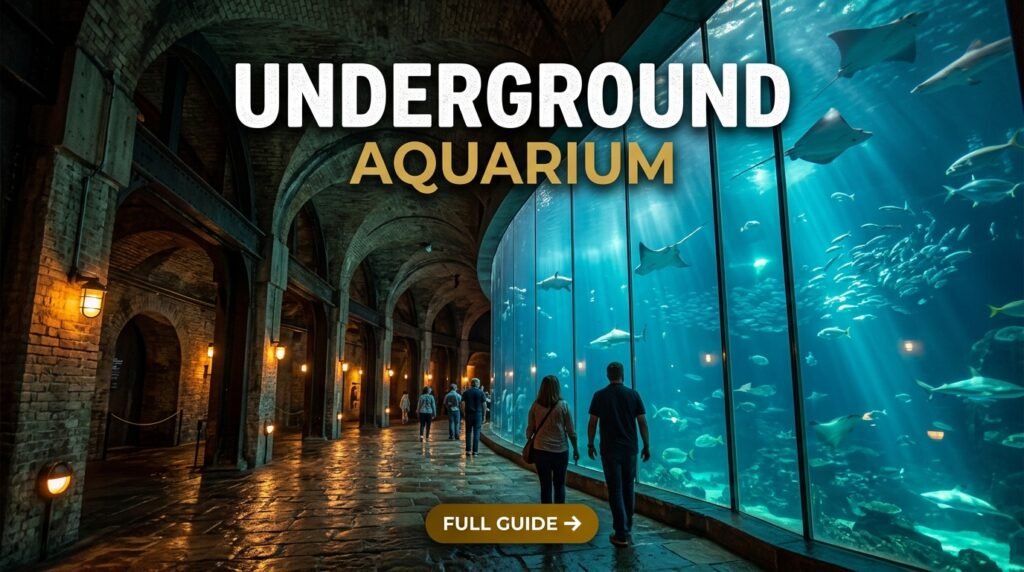
An underground aquarium in a living room can make the space feel modern and distinctive. Rather than placing a fish tank on a stand, the aquarium is integrated into a recessed section of the floor or into a sunken architectural feature.
One option is a recessed aquarium with a viewing window at floor level. Another is a sunken seating area beside a large underwater viewing panel.
Dark flooring, natural stone, and subtle lighting can complement the aquarium without distracting from the fish. A planted freshwater aquarium may suit a calm, contemporary interior, while a rocky layout can create the appearance of a natural stream.
Before choosing the design, consider how the aquarium will be accessed. A tank hidden beneath a floor can be difficult to maintain if there is no service hatch or equipment room. The structure must also be designed to prevent water leaks from damaging the building.
3. Underground Aquarium With a Viewing Window
A viewing-window underground aquarium allows people to observe aquatic life through a transparent panel installed in a wall or recessed structure.
This design is particularly useful when the aquarium itself is located in a separate room, basement, or service area. The viewing window can be positioned in a living room, garden wall, hallway, or entertainment space.
The viewing panel should be selected according to the aquarium’s dimensions, water depth, mounting method, and structural loads. Acrylic and specially engineered glass may both be used in aquatic installations, but their suitability depends on the project.
Professional design is important because water pressure increases with depth. Panel thickness, edge support, seals, and the surrounding structure must all be appropriate for the specific installation.
For a more natural appearance, arrange plants, driftwood, and stones around the visible underwater area. Keep the aquarium’s equipment accessible from the service side.
4. Underground Aquarium in a Garden
An underground aquarium in a garden can combine landscaping with underwater viewing. It may be built into a raised or recessed pond structure, with a transparent side panel that reveals fish beneath the waterline.
The surrounding garden can include natural stones, ornamental grasses, small shrubs, and seating areas. A partially recessed pond can create a sense of depth without requiring the entire aquarium to be installed below ground.
Outdoor installations need additional protection against weather, soil movement, temperature changes, and groundwater. The design must also prevent runoff, fertilizers, pesticides, and other contaminants from entering the aquarium.
Direct sunlight can encourage algae growth and cause overheating, so consider shade and seasonal temperature changes. Choose aquatic animals that can tolerate the actual conditions of the system rather than assuming every fish is suitable for an outdoor installation.
5. Underground Aquarium Beneath a Staircase
The space beneath a staircase can sometimes accommodate a recessed aquarium or a built-in aquatic display. An underground-style design can make use of an otherwise underused area.
A compact aquarium can be integrated into a custom cabinet or recessed wall, while a more ambitious design might include a viewing window positioned close to floor level.
The available height, depth, and access area should determine the aquarium’s dimensions. Leave enough room to remove the filter, reach the tank, and perform water changes.
Do not assume that the floor beneath the staircase can support any size of aquarium. Water is heavy, and a filled aquarium also includes the weight of the tank, substrate, rocks, and equipment. Consult a structural professional before making changes to floors or load-bearing elements.
6. Underground Aquarium in a Basement
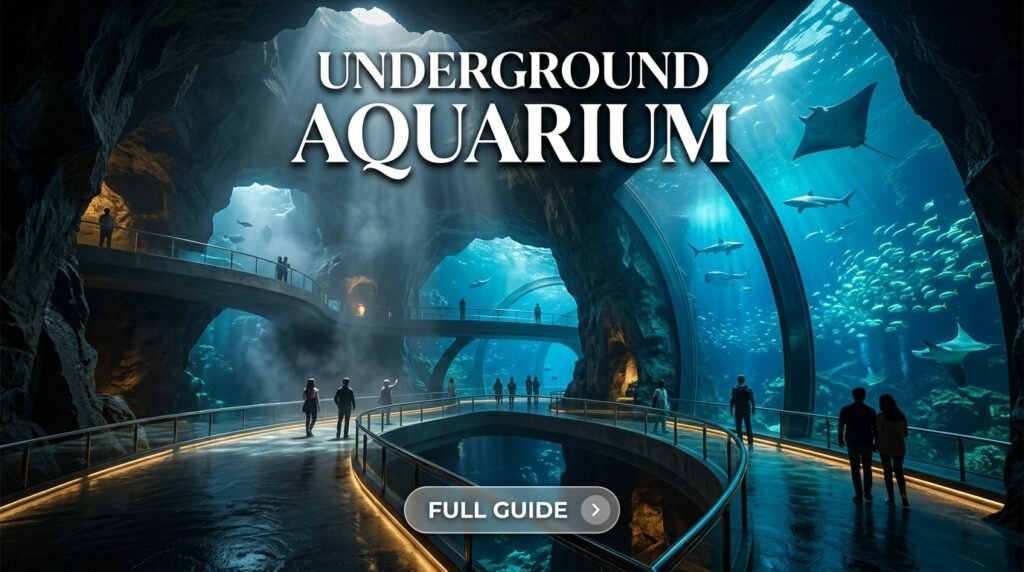
A basement can provide space for a large aquarium or a dedicated aquatic viewing room. Because basements are already below ground level, they can be suitable locations for designs that create an underground underwater experience.
One approach is to install the aquarium along a basement wall with a large viewing panel. Another is to place the aquarium in a separate technical room and let visitors observe it through a professionally installed window.
A basement aquarium can feature natural rocks, driftwood, live plants, or a carefully planned marine environment. The layout should be based on the needs of the aquatic species and the capabilities of the filtration system.
Moisture control is especially important in basements. Provide appropriate ventilation, protect electrical equipment, and use suitable waterproofing. Install leak detection where practical, and make sure water can be removed safely if a leak occurs.
7. Underground Aquarium With a Sunken Viewing Room
A sunken viewing room creates the feeling of entering an underwater world. In this design, people sit or stand in a recessed area beside one or more large aquarium windows.
The aquarium may be installed behind the viewing room, allowing visitors to observe fish through a large transparent panel. The room can be designed with comfortable seating, subdued lighting, and materials that complement the underwater scene.
This concept is suitable for large homes, hospitality projects, and commercial attractions. It requires careful coordination between architects, aquarium engineers, structural specialists, and waterproofing professionals.
Emergency access, ventilation, drainage, and maintenance routes must be planned before construction. The viewing area should also have safe lighting and clear pathways so visitors can move around comfortably.
8. Underground Aquarium With a Natural River Theme
A river-themed underground aquarium can resemble a submerged stream running beneath a garden or indoor landscape.
Use aquarium-safe stones, carefully selected driftwood, and plants that suit the chosen fish species. A winding arrangement of rocks can create a natural channel, while an open foreground makes the display easier to observe.
The water current should match the needs of the animals. Some river fish prefer stronger currents, while others inhabit calmer areas. Filtration and circulation equipment should be selected accordingly.
If the aquarium is installed outdoors or near soil, prevent earth, fertilizer, and contaminated runoff from entering the water. Underground placement should not mean allowing untreated groundwater or soil to mix with the aquarium.
9. Underground Aquarium With a Planted Layout
A planted underground aquarium uses living aquatic plants to create a green underwater landscape beneath the surrounding floor or ground.
Arrange taller plants toward the back, medium-height plants around the main feature, and shorter plants in the foreground. Driftwood and stones can create a natural focal point.
Choose plants according to the available lighting, water conditions, and maintenance schedule. Anubias and Java fern can be useful in suitable freshwater systems because they can be attached to hardscape rather than buried in the substrate.
Underground installations may receive little or no natural light, so artificial aquarium lighting is usually necessary. Use a timer to maintain a consistent light cycle and avoid excessive lighting that can encourage algae growth.
Ensure that the lighting and electrical equipment are designed for the damp environment and installed according to applicable electrical safety requirements.
10. Underground Aquarium With Fish Pond Design
An underground aquarium can be combined with a pond to create a more natural outdoor display. In some designs, the main pond sits at ground level while a viewing chamber or window extends below it.
This arrangement allows people to observe fish from a different angle while maintaining a natural-looking garden above.
The system must be designed for the combined water volume, circulation, filtration, and access requirements. Pond fish can grow much larger than many common aquarium fish, so the dimensions and stocking plan must account for their adult size.
Koi, for example, generally require a properly designed pond rather than a small recessed aquarium. Smaller species may be suitable for other systems, depending on their environmental needs.
The structure should withstand soil pressure and the weight of the water. Waterproofing, drainage, and protection against groundwater infiltration are especially important for buried installations.
11. Underground Aquarium for a Modern Home
A modern underground aquarium can be designed with clean lines, minimal decorations, and a simple architectural finish.
Black, gray, or neutral-colored surfaces can make the water and fish stand out. A rectangular viewing panel can provide an uninterrupted view, while a discreet service hatch keeps the maintenance area out of sight.
A minimalist aquatic layout can include a small number of rocks, driftwood, and carefully arranged plants. Alternatively, a marine aquarium can display live rock and suitable marine organisms if the system is designed for saltwater conditions.
The most important consideration is the balance between appearance and access. A beautiful aquarium that cannot be cleaned properly or serviced safely will become difficult to manage.
12. Small Underground Aquarium Ideas
A small underground aquarium can provide the appearance of a built-in aquatic feature without the complexity of a large architectural installation.
A partially recessed freshwater aquarium may fit into a custom furniture unit or a purpose-built platform. Another option is a compact aquarium installed behind a small viewing window in a garden feature.
Choose decorations that leave enough room for swimming and water circulation. Avoid using oversized ornaments simply to make the aquarium appear dramatic.
Small aquariums can experience rapid changes in temperature and water chemistry because they contain less water. Their dimensions should be chosen according to the fish’s needs, and regular monitoring is important.
A recessed design should still provide convenient access to the top of the aquarium or a properly designed service area.
13. Underground Aquarium With LED Lighting
Lighting can emphasize the architecture of an underground aquarium and make the underwater landscape easier to appreciate.
Use appropriate aquarium lighting to illuminate plants and fish. For decorative effects, indirect lighting around the outer frame or viewing area can highlight the aquarium without requiring the water itself to remain brightly illuminated at all times.
Blue, white, and other colored lighting may be used where appropriate, but the lighting schedule should account for plant growth and the natural day-night cycle of fish.
Avoid intense lights that remain on all night. Continuous illumination can disturb fish and promote algae growth.
All electrical equipment must be suitable for its installation environment. Underground spaces can be damp, so professional electrical installation and appropriate protection against water exposure are essential.
14. Underground Aquarium With a Rock Cave
A rock-cave theme can create the impression of an underground freshwater cavern. It combines dark stones, sheltered spaces, and subdued visual elements.
Use aquarium-safe rocks that are stable and compatible with the intended water chemistry. Arrange the stones to create a natural focal point, but avoid unstable piles that might collapse.
Caves and crevices can provide shelter for certain fish, but openings must be large enough to prevent animals from becoming trapped. Some species may also defend caves as territories, so provide suitable space and hiding places.
For a natural look, add plants that tolerate the aquarium’s conditions around the edges of the rockwork. Leave open swimming areas and make sure the filter can circulate water throughout the display.
15. Underground Aquarium for Commercial Spaces
Restaurants, hotels, shopping centers, and entertainment venues may use underground aquariums as architectural features.
A large viewing window beneath a walkway or beside a sunken seating area can create a memorable visitor experience. The design can be tailored to the building’s style, from a natural freshwater landscape to a marine display.
Commercial installations need professional planning for structural loads, waterproofing, filtration, animal care, emergency response, and public safety. Access for aquarium technicians should be incorporated into the design from the beginning.
The system should also have a realistic maintenance budget. Large aquariums may require specialized filtration, substantial water changes, monitoring equipment, and trained personnel.
Materials Used in Underground Aquarium Construction
| Material or component | Purpose | Important consideration |
|---|---|---|
| Engineered glass | Transparent viewing panels | Must be designed for the specific water depth and structural loads |
| Aquarium-grade acrylic | Lightweight transparent viewing panels in suitable designs | Requires appropriate thickness, support, and scratch management |
| Reinforced concrete | Structural support and enclosure | Needs proper engineering and waterproofing |
| Aquarium-safe sealants | Sealing appropriate joints | Must be compatible with the materials and intended aquatic use |
| Waterproofing membrane | Protects the surrounding structure | Must suit the installation and expected water exposure |
| Filtration system | Removes waste and supports biological filtration | Must be sized for the aquarium and its livestock |
| Water circulation pumps | Move water through the system | Flow must suit the fish and aquarium layout |
| Leak detection equipment | Helps identify water escaping from the system | Should be positioned where leaks can be detected and addressed |
| Access panels | Allow cleaning and servicing | Must remain safely reachable after construction |
Important Things to Consider Before Building an Underground Aquarium
Structural Safety
Water weighs approximately one kilogram per liter, before accounting for the weight of the aquarium, substrate, rocks, and equipment. A large underground aquarium can therefore place a substantial load on the surrounding structure.
A qualified structural engineer should assess the floor, supporting walls, foundation, and viewing panel. Do not cut into a floor or foundation without professional approval.
Waterproofing
Leaks in an underground aquarium can damage flooring, walls, foundations, and nearby electrical systems. The enclosure requires an appropriate waterproofing design and a plan for detecting and managing leaks.
A buried aquarium may also face groundwater pressure from outside the tank. Waterproofing must account for the actual soil and site conditions rather than relying on ordinary aquarium sealant alone.
Filtration and Water Quality
An underground aquarium needs appropriate mechanical and biological filtration, along with circulation suitable for the species being kept.
Install equipment where it can be inspected, cleaned, and repaired. Monitor temperature and water quality, and establish the nitrogen cycle before introducing fish.
Maintenance Access
Every underground aquarium needs practical access for feeding, cleaning, trimming plants, removing debris, and servicing equipment.
Include suitable service openings, access doors, or a separate equipment room. Do not permanently seal the aquarium beneath a floor without a reliable maintenance solution.
Temperature and Ventilation
Underground spaces can experience different temperatures and humidity levels from the rooms above. Plan for temperature control, condensation management, and adequate ventilation.
Use a heater or cooling solution if needed to maintain conditions appropriate for the selected aquatic species.
Electrical Safety
Pumps, heaters, lights, and filters must operate safely around water. Use equipment appropriate for the installation and have electrical work completed by qualified professionals according to local requirements.
Consider leak detection, safe cable routing, and suitable protection against electrical faults.
Common Underground Aquarium Mistakes
Using ordinary glass for a floor panel: A standard aquarium panel is not automatically suitable for people walking above it. Floor panels require specific structural design.
Ignoring groundwater: Underground structures may experience pressure from surrounding soil and groundwater. The enclosure and waterproofing must be designed for site conditions.
Making maintenance impossible: Hidden filters, sealed access points, and narrow service openings can turn routine care into a major problem.
Choosing fish before planning the system: Fish have different space, temperature, and water-quality requirements. Stocking should be planned around the aquarium’s finished dimensions and filtration capacity.
Installing inadequate filtration: A visually attractive aquarium can still suffer from poor water quality if the filtration system is undersized or poorly maintained.
Ignoring the consequences of a leak: Water escaping from a buried aquarium may be difficult to detect. A practical drainage and leak-response plan is important.
Frequently Asked Questions
What is an underground aquarium?
An underground aquarium is a fish tank or aquatic display installed partly or completely below ground or floor level. It may include a transparent viewing panel in a floor, wall, basement, garden, or sunken viewing area.
Can you build an aquarium under a glass floor?
Yes, but the transparent floor must be specifically engineered for the water pressure, structural loads, support conditions, and expected foot traffic. It should not be built using ordinary glass selected only for aquarium use.
How much does an underground aquarium cost?
The cost depends on the tank dimensions, viewing panel, excavation, structural reinforcement, waterproofing, filtration, access arrangements, and professional installation. Small recessed projects are generally less complex than large walk-on glass or underground viewing-room installations. Obtain project-specific quotes before construction.
Is an underground aquarium safe?
It can be safe when professionally designed and maintained. Structural support, suitable viewing panels, waterproofing, electrical safety, and reliable access for maintenance are essential.
Can I build an underground aquarium in my garden?
Yes, provided the site, soil conditions, drainage, waterproofing, and temperature requirements are suitable. Outdoor installations should be protected from contaminated runoff and excessive sunlight.
What fish can live in an underground aquarium?
Many freshwater or marine species may be suitable, depending on the aquarium’s size, filtration, water chemistry, temperature, and habitat design. The underground location itself does not determine which fish are appropriate.
Does an underground aquarium need a filter?
Yes. Most stocked aquariums need appropriate filtration and circulation to manage waste and support beneficial bacteria. The system should be sized for the water volume and the animals being kept.
How do you clean an underground aquarium?
Cleaning depends on the design. A recessed aquarium may have a service hatch, while a large viewing-window installation may require access from a separate technical room. The aquarium should be designed for routine cleaning before construction begins.
Can an underground aquarium be built in a basement?
Yes. A basement can accommodate an aquarium with a viewing window or a dedicated underwater display. Waterproofing, ventilation, electrical safety, humidity control, and maintenance access should be planned carefully.
Is a glass floor aquarium the same as an underground aquarium?
Not always. A glass floor aquarium is one type of underground aquarium design. Other versions use wall-mounted viewing panels, recessed ponds, basement displays, or sunken viewing rooms.
Conclusion
Underground aquarium ideas offer an unusual way to integrate aquatic life into a building or landscape. From glass floor aquariums and basement viewing windows to garden ponds with underwater panels, these designs can create a dramatic experience that differs from a conventional fish tank.
The key to a successful installation is planning the structure, waterproofing, filtration, and maintenance access before focusing on decorations. Choose fish according to the completed system’s conditions, use appropriate lighting, and make sure the aquarium can be inspected and serviced safely.
For smaller projects, a professionally supported recessed aquarium may provide the underground appearance without the complexity of a large architectural display. For larger installations, working with experienced structural and aquarium professionals is essential. With the right design, an underground aquarium can become a distinctive feature while providing a safe and healthy environment for its aquatic inhabitants.