
 By admin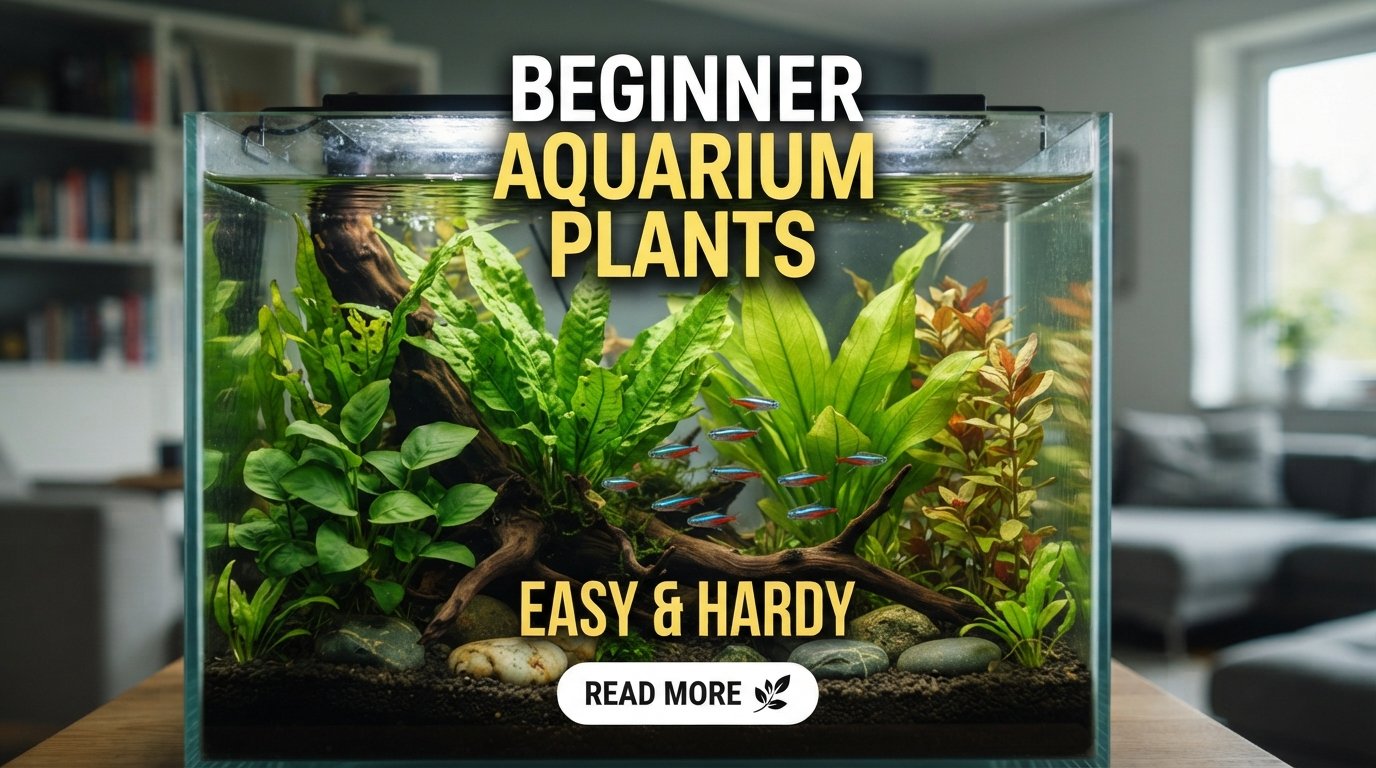
Choosing the right aquarium plants for beginners is one of the easiest ways to create a healthy, beautiful, and natural freshwater aquarium. Beginner-friendly plants are hardy, adaptable, and require minimal maintenance, making them perfect for first-time aquarists. They help improve water quality, provide shelter for fish, and transform an ordinary fish tank into a vibrant underwater landscape.
This guide covers the best beginner aquarium plants, their care requirements, planting tips, and common mistakes to avoid.
Why Add Live Plants to Your Aquarium?
Live plants offer many benefits beyond decoration.
Advantages include:
- Improve water quality
- Produce oxygen during daylight
- Absorb excess nutrients
- Help reduce algae growth
- Provide hiding places for fish and shrimp
- Create natural breeding areas
- Enhance the beauty of the aquarium
- Support a balanced ecosystem
Even a few easy-care plants can make a noticeable difference in the health and appearance of your aquarium.
Best Aquarium Plants for Beginners
Java Fern
Java Fern is one of the easiest aquarium plants to grow. It tolerates a wide range of water conditions and doesn’t require nutrient-rich substrate.
Features:
- Slow-growing
- Low-light tolerant
- Easy to maintain
- Ideal for driftwood and rocks
Do not bury the rhizome. Attach it to wood or stone using thread or aquarium-safe glue.
Anubias
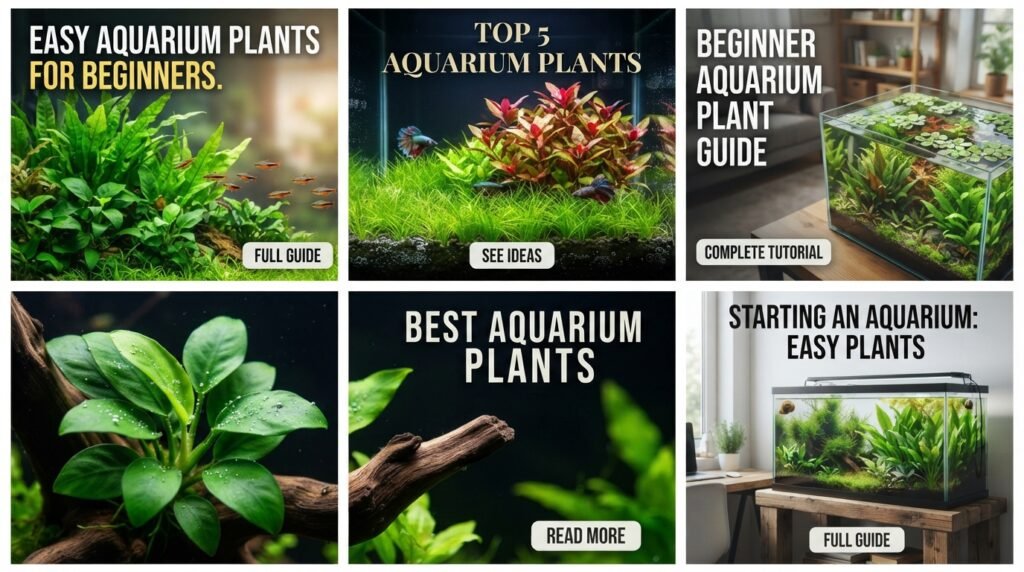
Anubias is another hardy plant that thrives in low to moderate lighting.
Benefits include:
- Thick, durable leaves
- Slow growth
- Beginner-friendly
- Excellent for community aquariums
Like Java Fern, its rhizome should remain above the substrate.
Amazon Sword
Amazon Sword is a classic background plant known for its large green leaves.
Advantages:
- Attractive centerpiece
- Easy to grow
- Provides shelter for fish
It grows best in nutrient-rich substrate or with root tabs.
Vallisneria
Vallisneria produces long, ribbon-like leaves that sway gently in the water.
Benefits:
- Fast-growing
- Excellent background plant
- Creates a natural appearance
- Easy to propagate through runners
Cryptocoryne
Cryptocoryne species are available in many shapes and colors.
Features:
- Adaptable
- Suitable for low light
- Great for midground planting
Newly planted Cryptocoryne may temporarily lose leaves before producing healthy new growth.
Java Moss
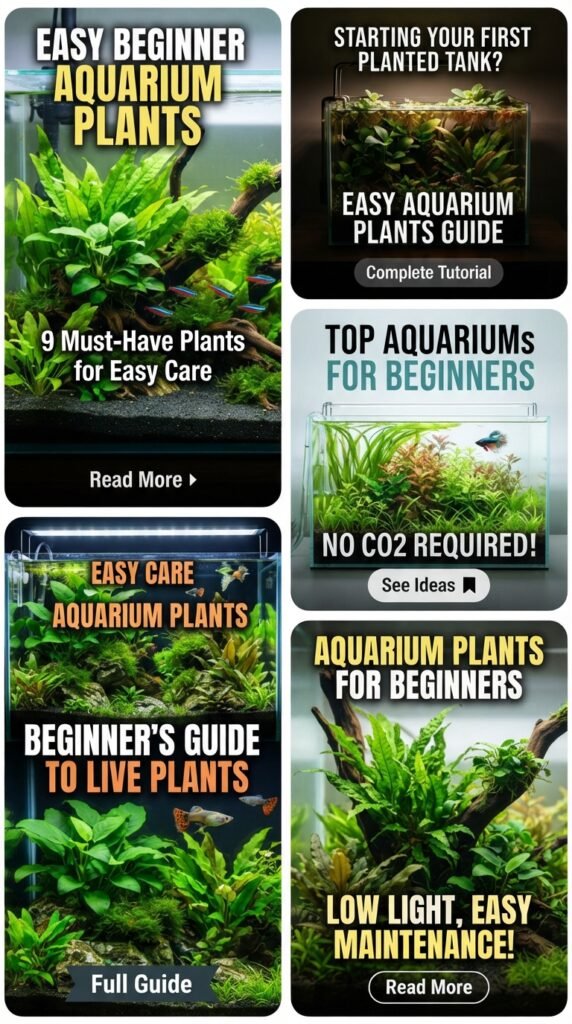
Java Moss is a versatile plant that grows on rocks, driftwood, and decorations.
It is ideal for:
- Shrimp tanks
- Fry protection
- Natural aquascapes
It requires very little maintenance.
Water Sprite
Water Sprite grows quickly and helps absorb excess nutrients from the water.
Benefits:
- Beginner-friendly
- Can be rooted or floated
- Helps reduce nitrate levels
Its delicate leaves create a soft, lush appearance.
Hornwort
Hornwort is a fast-growing stem plant that is easy to care for.
Advantages:
- No rooting required
- Floating or planted
- Excellent nutrient absorber
- Helps control algae by competing for nutrients
Choosing the Right Substrate
Not all beginner plants require specialized substrate.
Good options include:
- Fine aquarium gravel
- Sand with root tabs
- Nutrient-rich planted substrate
- Aquasoil
Plants such as Amazon Sword and Cryptocoryne benefit from root fertilizers.
Lighting Requirements
Most beginner plants thrive under moderate lighting.
Recommended setup:
- Full-spectrum LED aquarium light
- 6–8 hours of light daily
- Consistent lighting schedule using a timer
Avoid excessive lighting, which may encourage algae growth.
Do Beginner Plants Need CO₂?
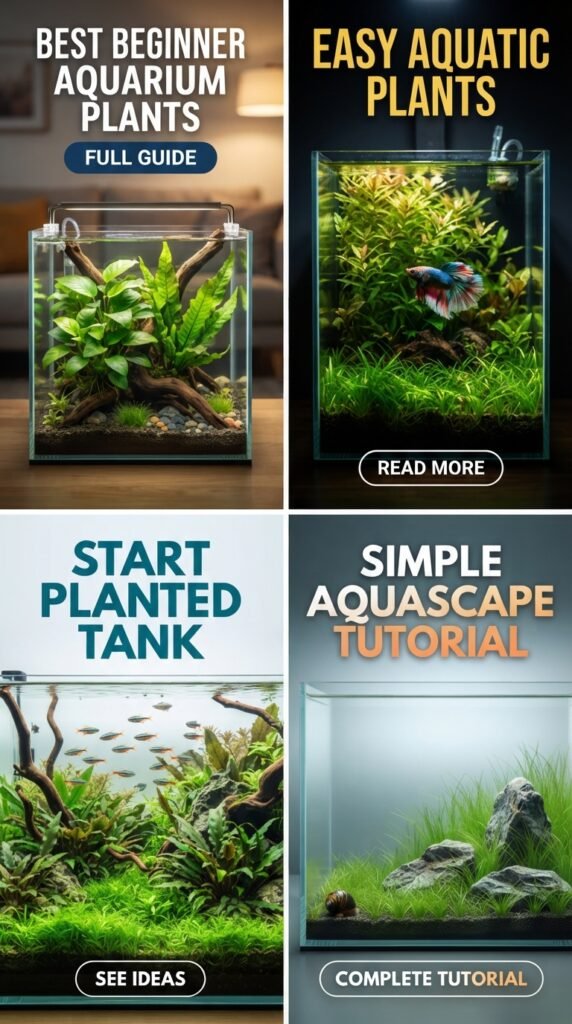
Most beginner-friendly plants grow well without additional carbon dioxide.
Plants that generally do not require CO₂ include:
- Java Fern
- Anubias
- Java Moss
- Vallisneria
- Hornwort
- Water Sprite
While CO₂ can increase growth, it is not necessary for these hardy species.
Fertilization
Many beginner plants appreciate occasional fertilization.
Common options include:
- Liquid fertilizers
- Root tabs for root-feeding plants
- Comprehensive plant nutrients
Follow the recommended dosage to avoid excess nutrients.
How to Plant Aquarium Plants
Step 1: Prepare the Aquarium
Add substrate and fill the aquarium partially with water.
Step 2: Arrange the Plants
Place:
- Foreground plants in front
- Midground plants in the center
- Background plants at the back
This creates depth and a balanced appearance.
Step 3: Plant Carefully
Use aquascaping tweezers to insert rooted plants into the substrate.
Attach rhizome plants like Java Fern and Anubias to rocks or driftwood rather than burying them.
Step 4: Fill the Tank
Slowly add the remaining water to avoid disturbing the plants.
Step 5: Start Maintenance
Provide regular lighting, fertilization if needed, and weekly water changes.
Best Fish for Beginner Planted Aquariums
Peaceful fish that pair well with live plants include:
- Neon Tetras
- Guppies
- Platies
- Harlequin Rasboras
- Corydoras Catfish
- Honey Gouramis
- Otocinclus Catfish
These species generally coexist well with aquatic plants.
Shrimp-Friendly Plants
Many beginner plants also provide excellent habitats for freshwater shrimp.
Popular shrimp include:
- Cherry Shrimp
- Amano Shrimp
- Blue Dream Shrimp
Java Moss and dense plants offer ideal hiding places and surfaces for grazing.
Maintenance Tips
Trim Overgrown Plants
Prune plants regularly to encourage healthy growth.
Remove Dead Leaves
Discard damaged or decaying foliage promptly.
Perform Weekly Water Changes
Routine water changes support healthy fish and plants.
Monitor Plant Health
Yellow leaves or slow growth may indicate nutrient deficiencies or inadequate lighting.
Clean the Aquarium Glass
Remove algae without disturbing the plants.
Common Mistakes to Avoid
Using Too Much Light
Excessive lighting can trigger algae growth.
Burying Rhizome Plants
Java Fern and Anubias should not have their rhizomes buried in the substrate.
Overstocking Fish
Too many fish can increase waste and reduce water quality.
Neglecting Maintenance
Regular trimming and water changes keep the aquarium healthy.
Expecting Instant Growth
Many aquatic plants require several weeks to establish before growing rapidly.
Beginner Aquascaping Ideas
Nature Aquarium
Use driftwood, stones, and hardy plants to recreate a natural river scene.
Jungle Aquarium
Fill the aquarium with a variety of easy-care plants for a lush, tropical look.
Minimalist Aquascape
Combine a few rocks with Anubias and Java Fern for a clean, elegant design.
Community Planted Tank
Mix colorful fish with live plants to create a lively, balanced ecosystem.
Benefits of Beginner Aquarium Plants
Easy-care plants provide many advantages:
- Improve water quality
- Create natural shelter for fish
- Require minimal maintenance
- Help reduce algae by absorbing nutrients
- Enhance the aquarium’s appearance
- Build confidence for new aquarists
They are an excellent starting point for anyone interested in planted aquariums.
Conclusion
Choosing the right aquarium plants for beginners makes it easy to build a thriving freshwater aquarium. Hardy species such as Java Fern, Anubias, Amazon Sword, Vallisneria, Cryptocoryne, Java Moss, Water Sprite, and Hornwort require little maintenance while providing significant benefits for fish and water quality.
With proper lighting, routine maintenance, and patience, these plants will help you create a beautiful underwater environment that is both healthy and rewarding.
Frequently Asked Questions
What is the easiest aquarium plant for beginners?
Java Fern and Anubias are widely considered two of the easiest aquarium plants because they tolerate a wide range of conditions and require minimal care.
Do beginner aquarium plants need CO₂?
Most beginner-friendly plants grow well without supplemental CO₂, making them ideal for simple freshwater aquariums.
Which beginner plants grow in low light?
Java Fern, Anubias, Java Moss, and many Cryptocoryne species perform well in low to moderate lighting.
How long should aquarium lights stay on?
Most planted aquariums benefit from 6–8 hours of lighting each day.
Can live plants reduce algae?
Healthy live plants compete with algae for nutrients, which can help reduce algae growth when combined with proper lighting and maintenance.
Which fish are best for a beginner planted aquarium?
Peaceful community fish such as guppies, neon tetras, rasboras, corydoras, honey gouramis, and otocinclus are excellent choices for planted freshwater tanks.