
 By admin
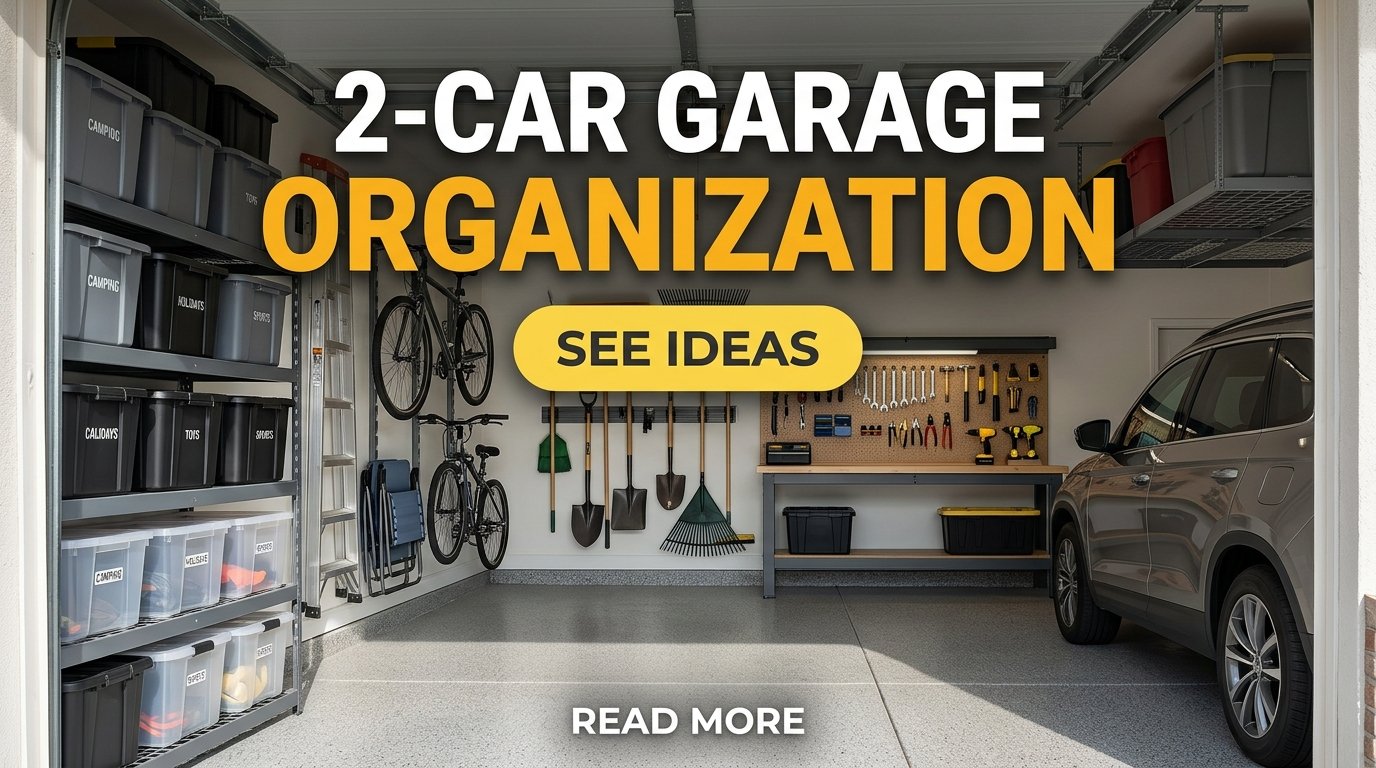
Two car garage organization can transform a cluttered garage into a clean, practical, and attractive space where you can park both vehicles comfortably while keeping tools, sports equipment, gardening supplies, and household items organized. A two-car garage offers plenty of potential, but without a clear storage plan, boxes, bicycles, tools, and seasonal decorations can quickly take over the available floor space.
The best two car garage organization ideas focus on using vertical walls, maximizing overhead storage, creating designated storage zones, and keeping frequently used items easy to reach. Whether your garage is small, spacious, attached to your home, or used for multiple purposes, a thoughtful layout can make everyday activities easier and help you maintain a tidy environment.
In this guide, you will discover practical two-car garage organization ideas, storage systems, shelving solutions, layout tips, and simple ways to create more usable space without making the garage feel crowded.
1. Start With a Complete Garage Cleanout
Before installing shelves or purchasing storage containers, begin by removing everything from your garage that you no longer need. Organizing around unnecessary belongings wastes space and makes it harder to maintain a clean layout.
Divide your belongings into four categories: keep, donate, sell, and discard. Group similar items together so you can see how much space your tools, sports equipment, automotive supplies, and seasonal decorations actually require.
Clean the floor, wipe down shelves, and inspect the walls for moisture or damage. Check that the garage door, lighting, electrical outlets, and other essential features are working properly.
Once the cleanout is complete, measure the garage and identify the areas that must remain clear. Include the parking spaces, door-opening areas, walking paths, and access to any interior door.
This initial step makes it easier to design a storage system that fits your actual needs instead of filling the garage with organizers that do not solve the problem.
2. Create a Two Car Garage Layout Plan
A good layout is the foundation of successful two car garage organization. Before moving anything back into the garage, decide where each category of belongings should live.
A practical arrangement includes two dedicated parking spaces, wall storage for tools, shelving for household supplies, and a separate area for bulky equipment. Frequently used items should be positioned near the garage entrance, while seasonal belongings can be stored higher up or farther from the parking area.
Avoid placing storage cabinets where they prevent car doors from opening fully. Measure your vehicles and account for mirrors, walking space, and the clearance needed to enter and exit comfortably.
| Garage zone | Best items to store | Recommended organization |
|---|---|---|
| Back wall | Shelves, bins, seasonal supplies | Storage cabinets or sturdy shelving |
| Side walls | Tools, hoses, small equipment | Wall rails, hooks, and pegboards |
| Overhead area | Lightweight seasonal belongings | Properly rated ceiling racks |
| Near entrance | Shoes, frequently used items | Small shelves or labeled bins |
| Work area | Hand tools and repair supplies | Workbench with drawers |
| Sports equipment area | Balls, helmets, rackets | Dedicated baskets and hooks |
| Gardening area | Pots, gloves, hand tools | Wall-mounted tool holders |
| Parking area | Vehicles and essential access | Keep floor space clear |
The ideal layout depends on the dimensions of your garage, the size of your vehicles, and how much storage you need.
3. Use Vertical Wall Storage
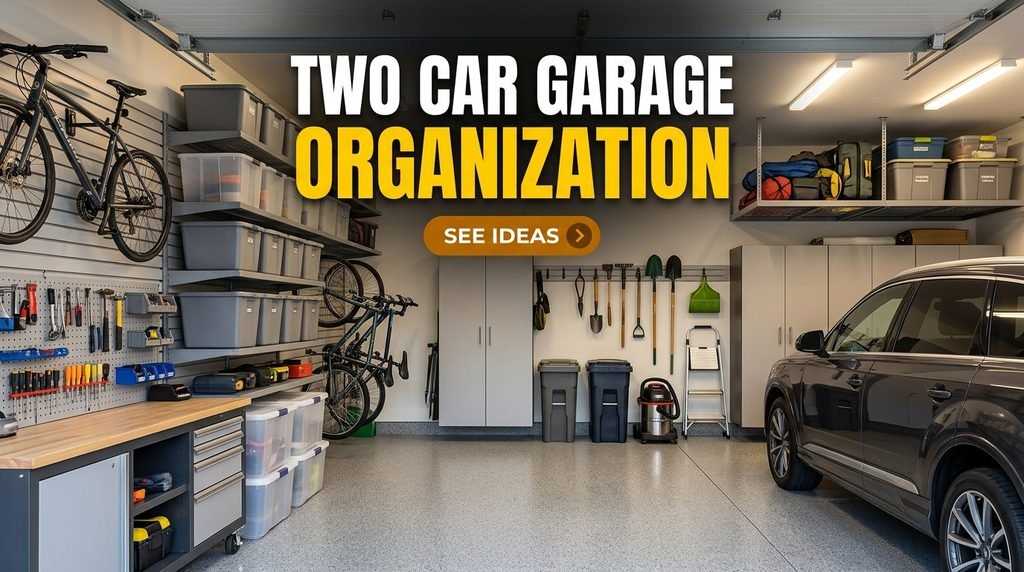
Vertical storage is one of the most effective ways to organize a two-car garage because it moves belongings off the floor and makes use of otherwise empty wall space.
Install suitable wall-mounted shelves, hooks, pegboards, or adjustable rail systems. These options can accommodate everything from hand tools and extension cords to garden equipment and sports accessories.
Keep heavier objects on lower shelves, where they are easier to lift safely. Place lightweight items and infrequently used supplies higher up.
Before mounting a storage system, confirm the wall construction and install fasteners into appropriate structural supports. Do not assume that drywall alone can safely support heavy shelves or loaded cabinets.
A coordinated wall-storage system can make the entire garage look cleaner because each item has a designated location.
4. Install Garage Shelving for Better Storage
Garage shelving is useful for organizing storage bins, automotive supplies, cleaning products, paint supplies, and household items.
Choose shelving based on the weight of the items you plan to store. Heavy-duty shelving may be appropriate for tools and equipment, while lighter shelving can hold small containers and lightweight belongings.
Adjustable shelves offer flexibility because the spacing can be changed as your storage needs evolve. Metal shelving can work well in many garages, while enclosed cabinets can help keep dust off stored items.
Use clear or consistently sized storage bins to create a uniform appearance. Label each bin on the front so you can identify its contents without moving other containers.
Avoid placing heavy objects on unstable shelves or storing items where they could fall onto vehicles. Secure tall shelving units against tipping when required by the manufacturer.
5. Make Use of Overhead Garage Storage
The ceiling can provide valuable storage space when the garage floor and walls are already occupied. Overhead racks are particularly useful for holiday decorations, camping equipment, and other items that are not needed every day.
Choose a ceiling storage system designed for the structure and load involved. The rack must be securely attached to suitable framing or structural supports, and the total load must remain within the manufacturer’s limits.
Before installation, check the garage door’s movement, tracks, opener, lighting, and any other ceiling-mounted equipment. Keep enough clearance for vehicles and avoid storing anything that could interfere with the garage door.
Use labeled bins to make seasonal belongings easier to identify. Place frequently used items at a more accessible height instead of relying on a ladder every time you need them.
Do not store heavy objects overhead unless the system is explicitly rated for them and the installation is appropriate.
6. Organize Tools With a Pegboard
A pegboard is a simple and flexible solution for organizing hand tools in a two-car garage. It allows you to hang frequently used tools where they are visible and easy to reach.
Install a suitable pegboard above or beside a workbench. Arrange screwdrivers, pliers, measuring tapes, wrenches, and other small tools by category.
You can outline frequently used tools on the board to make it easier to return them to the correct location after a project. Small containers and accessory holders can store screws, nails, drill bits, and other hardware.
Keep sharp tools secure and position heavier tools according to the board system’s load limits. Make sure the mounting hardware is appropriate for the wall and the weight of the tools.
A pegboard works best when it holds items you use regularly rather than every tool you own.
7. Create a Functional Garage Workbench
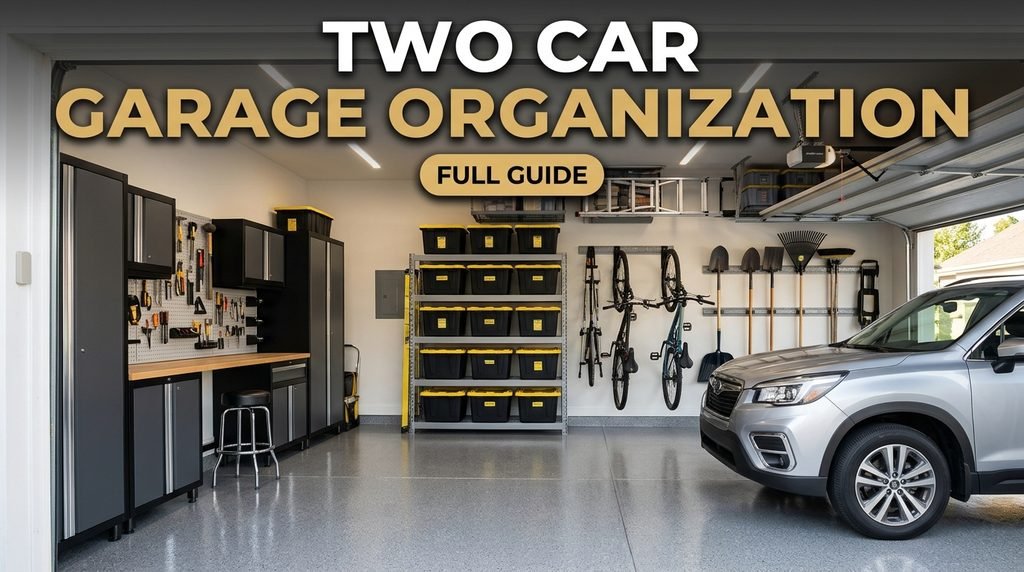
If you enjoy home repairs, woodworking, or DIY projects, a dedicated workbench can make your garage much more useful.
Position the workbench along a wall so it does not interfere with vehicle parking. Add drawers beneath the work surface for hand tools, measuring equipment, fasteners, and small accessories.
A wall-mounted shelf or pegboard above the bench can provide additional storage. Keep the work surface as clear as possible so you have room to complete projects safely.
Choose a workbench that fits your available space and the tasks you perform. A compact folding workbench may be useful when you need to reclaim floor space for a vehicle.
Keep flammable products, power tools, and sharp equipment stored appropriately. If your projects involve sparks, dust, or fumes, plan for suitable ventilation and fire safety.
8. Organize Sports Equipment
Sports equipment can quickly clutter a two-car garage because it often comes in irregular shapes and sizes. Bicycles, footballs, basketballs, helmets, tennis rackets, and outdoor toys all need convenient storage.
Use sturdy wall hooks or purpose-built racks for bicycles, ensuring that the mounting system is rated for the weight and securely attached. Store balls in a dedicated basket or ball rack rather than allowing them to roll across the floor.
Place helmets, gloves, and smaller accessories in labeled bins or shelves near the equipment they belong to.
If children use the garage frequently, keep their everyday sports equipment at a reachable height while storing heavier items higher or in a separate area.
A dedicated sports zone helps prevent equipment from spreading into the parking spaces and makes it easier to find everything before leaving home.
9. Build a Gardening and Yard Tool Station
Garden tools are easier to manage when they have a dedicated storage area. Long-handled tools such as rakes, shovels, brooms, and hoes can be mounted vertically on suitable wall holders.
Place smaller items such as gardening gloves, seed packets, pruning tools, and plant labels in labeled containers or drawers.
Store potting supplies together on a shelf, but keep soil bags and heavy containers low to reduce lifting hazards. Use closed containers for products that need protection from moisture or pests.
Fertilizers, pesticides, and other chemical products should remain in their original labeled containers and be stored according to their instructions, away from children, pets, and incompatible substances.
Keep the gardening area near an exterior door if possible. This makes it convenient to take equipment outside without walking through the entire garage.
10. Use Cabinets to Hide Garage Clutter
Garage cabinets are ideal for homeowners who prefer a clean, streamlined appearance. Unlike open shelving, cabinets conceal miscellaneous belongings and reduce the visual clutter created by different boxes and containers.
Choose cabinets according to the items you need to store. Tall cabinets can hold long or bulky supplies, while smaller cabinets work well for hand tools, cleaning accessories, and automotive products.
Lockable cabinets can provide an additional layer of security for items that should not be accessible to children. However, hazardous products must still be stored according to their safety instructions.
Keep heavy items on lower shelves and avoid overloading doors or shelves. Secure tall cabinets where required to prevent tipping.
For a coordinated look, choose a consistent cabinet finish and group similar storage units together.
11. Organize the Garage Floor for Easy Parking
One of the main goals of two car garage organization is keeping both parking spaces usable.
Start by removing boxes, tools, bicycles, and other items from the floor. Move them to designated wall storage, cabinets, or properly installed overhead racks.
Use floor markings or visual guides to help position vehicles consistently. Parking sensors or suitable garage parking aids can also help drivers avoid getting too close to walls or stored equipment.
Keep walking paths clear, particularly between the vehicles and the door leading into the home. Avoid leaving extension cords, hoses, or loose tools on the floor where someone could trip.
If you use floor mats or protective coverings, choose products suitable for garage conditions and ensure they do not curl, slide, or obstruct vehicle movement.
12. Add a Bicycle Storage System
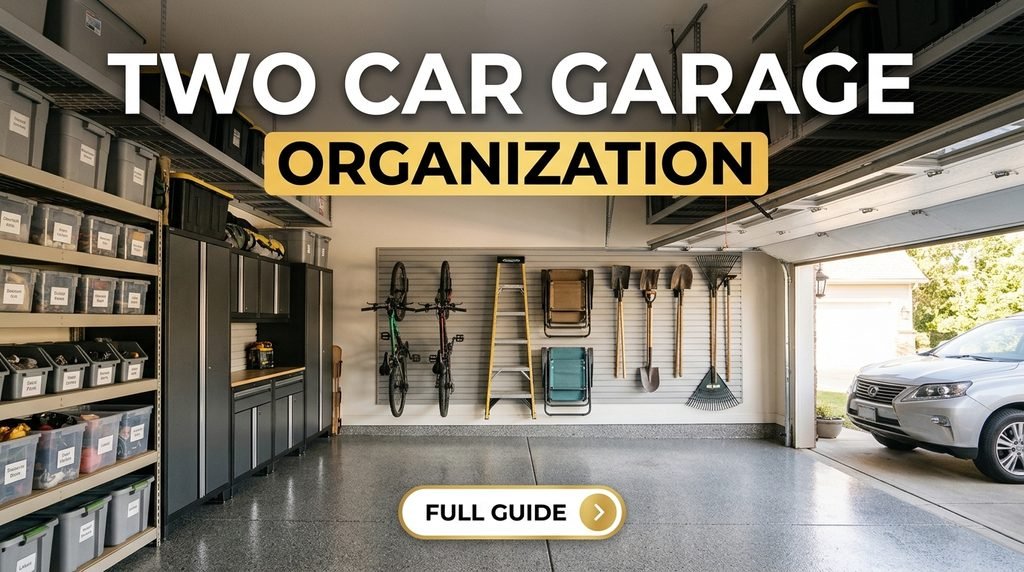
Bicycles can consume a surprising amount of room in a two-car garage, especially when several family members own them.
Wall-mounted bicycle hooks, horizontal racks, and freestanding bicycle stands can help organize the available space. Select a design that suits the bicycle frame, wheel type, weight, and available wall clearance.
Position bicycles away from car doors and walking paths. If a bike must be lifted overhead, make sure the storage method is safe and practical for the person using it.
For households with multiple bicycles, a dedicated bike zone can prevent handlebars and pedals from becoming tangled with other equipment.
Store helmets, locks, pumps, and repair kits nearby so everything associated with cycling stays together.
13. Use Clear Bins and Labels
Clear storage bins make it easier to see what is inside without opening every container. They are particularly helpful for holiday decorations, small household supplies, sports accessories, and seasonal clothing.
Choose a limited range of bin sizes so they stack neatly and fit your shelves. Use sturdy containers with secure lids for items that need protection from dust.
Label bins with specific descriptions such as “Camping Equipment,” “Christmas Decorations,” or “Car Cleaning Supplies.” Avoid vague labels like “Miscellaneous” whenever possible.
Keep an inventory of items stored overhead or in hard-to-reach areas. This can save time when you need something that is not used regularly.
Store chemicals in their original containers rather than transferring them into unmarked bins or bottles.
14. Create a Small Automotive Maintenance Station
If you maintain your vehicles at home, a dedicated automotive station can keep car-care supplies organized.
Use a cabinet or shelf for microfiber cloths, car shampoo, tire-pressure equipment, cleaning brushes, and other suitable automotive products. Store frequently used supplies at a convenient height.
Keep automotive fluids in their original containers and follow the manufacturer’s storage instructions. Separate incompatible products, protect them from excessive heat, and prevent leaks from reaching the garage floor or drainage system.
Place a small, suitable waste container nearby for ordinary used cloths and packaging. Materials contaminated with oil or flammable products may require special handling and should not be mixed indiscriminately with household waste.
Avoid storing items in the path of vehicle movement. The station should be accessible without requiring you to step around a parked car.
15. Improve Garage Lighting
Good lighting makes a garage safer and more comfortable to use. It helps you identify stored items, read labels, find tools, and complete projects accurately.
Use general overhead lighting to illuminate the parking area. Add task lighting above the workbench and inside darker storage zones where necessary.
Choose fixtures suitable for the garage environment and have electrical work installed safely. Keep lights and cables clear of the garage door tracks and moving equipment.
Motion-activated lighting can be convenient when entering the garage with shopping bags or equipment. A combination of general and task lighting usually works better than relying on one bright fixture.
If you store items in deep cabinets or overhead racks, consider additional lighting that makes labels and contents easy to see.
16. Organize Seasonal Storage
Seasonal items often occupy space for much of the year, even though they are used only occasionally.
Create dedicated storage zones for holiday decorations, camping supplies, winter accessories, gardening equipment, and other seasonal belongings.
Use sturdy labeled bins and place infrequently used items in higher or less accessible storage locations. Keep everyday supplies closer to the entrance or workbench.
Before storing seasonal items, clean and dry them where appropriate. Moisture trapped in containers can encourage mold or damage certain materials.
Review seasonal storage at least once a year. Donate, recycle, or discard belongings that are broken or no longer needed.
17. Make a Small Two-Car Garage Feel Bigger
A small two-car garage can feel more spacious when its storage systems are carefully selected.
Use vertical shelving rather than bulky freestanding storage units in the center of the room. Choose cabinets with a compact footprint and install wall-mounted holders for long tools.
Keep the floor visible wherever possible. A clear floor creates a more open appearance and makes sweeping or cleaning easier.
Use a consistent color palette for bins, cabinets, and shelving to reduce visual clutter. White, gray, black, or neutral finishes can create a coordinated look, although durability and suitability for garage conditions should come first.
Avoid purchasing storage products before measuring the space. Even an attractive shelving unit can make the garage less functional if it interferes with parking or door clearance.
18. Budget-Friendly Two Car Garage Organization Ideas
You do not need an expensive renovation to organize a two-car garage. Many improvements can be completed gradually using practical storage solutions.
Start with a cleanout and reuse sturdy shelves, bins, and cabinets that you already own. Add inexpensive hooks for lightweight items and use labeled containers to group small supplies.
A simple tool board can organize frequently used equipment without requiring a large cabinet system. Repurposed storage containers can also work for nonhazardous household items if they are clean, sturdy, and appropriately sized.
Spend money first on storage that solves a specific problem, such as a bicycle rack or shelving unit that clears a parking space.
Avoid improvised ceiling storage, overloaded shelves, or homemade structures that are not rated for their intended loads. Saving money should never compromise structural or personal safety.
Two Car Garage Organization Checklist
Use this checklist to plan your project:
- Remove unwanted belongings and clean the garage.
- Measure the garage and both vehicles.
- Identify parking spaces and clear walking paths.
- Group belongings into categories.
- Install suitable wall storage and shelving.
- Organize tools and create a workbench area if needed.
- Create dedicated zones for bicycles, sports equipment, and gardening tools.
- Label storage bins and cabinets.
- Install overhead storage only where the structure supports it.
- Check garage door clearance and equipment access.
- Keep hazardous products stored safely.
- Establish a regular cleaning and decluttering routine.
Frequently Asked Questions
How do I organize a two-car garage?
Start by removing unnecessary items and measuring the available space. Create dedicated parking areas, move belongings to wall storage, use shelves and cabinets, and organize tools, sports equipment, and seasonal supplies into separate zones.
What is the best layout for a two-car garage?
A practical layout keeps the center of the garage open for vehicles, places storage along the walls, and uses the back wall for shelving or cabinets. Overhead storage can be useful for lightweight seasonal items when properly installed.
How can I fit two cars and storage in a garage?
Measure both vehicles and leave enough room to open doors and walk around them. Use wall-mounted storage, compact cabinets, and carefully planned shelving to minimize the amount of floor space occupied by belongings.
Is overhead garage storage safe?
It can be safe when the rack is designed for the intended load and attached to appropriate structural supports. Follow the manufacturer’s installation instructions and keep the rack clear of garage doors, tracks, and vehicles.
What should I store in garage cabinets?
Cabinets are useful for hand tools, car-care products, household supplies, and other items that benefit from enclosed storage. Store hazardous products according to their labels and keep heavy items on lower shelves.
How do I keep my garage organized long term?
Return items to their designated locations after use, label containers, keep the floor clear, and review stored belongings regularly. A short monthly tidy-up can prevent clutter from building up again.
How much does it cost to organize a two-car garage?
The cost varies according to the existing storage, shelving, cabinets, wall systems, and any professional installation required. A basic cleanout and labeling project can cost relatively little, while custom cabinetry and overhea