
 By admin
Wild guppies are the original, natural form of the popular aquarium fish we know today. Unlike fancy strains with exaggerated tails and intense colors, wild guppies are smaller, faster, and more naturally patterned.
Scientifically known as Poecilia reticulata, wild guppies are native to northeastern South America and nearby Caribbean islands.
This guide explains everything about wild guppies—habitat, behavior, care, breeding, and how they differ from fancy guppies.
???? Natural Habitat of Wild Guppies
Wild guppies are originally from:
- Trinidad
- Northern Venezuela
- Guyana
- Barbados
They live in:
- Slow-moving streams
- Shallow rivers
- Ponds
- Drainage canals
Interestingly, wild guppies have also been introduced worldwide to help control mosquito populations.
???? Appearance of Wild Guppies
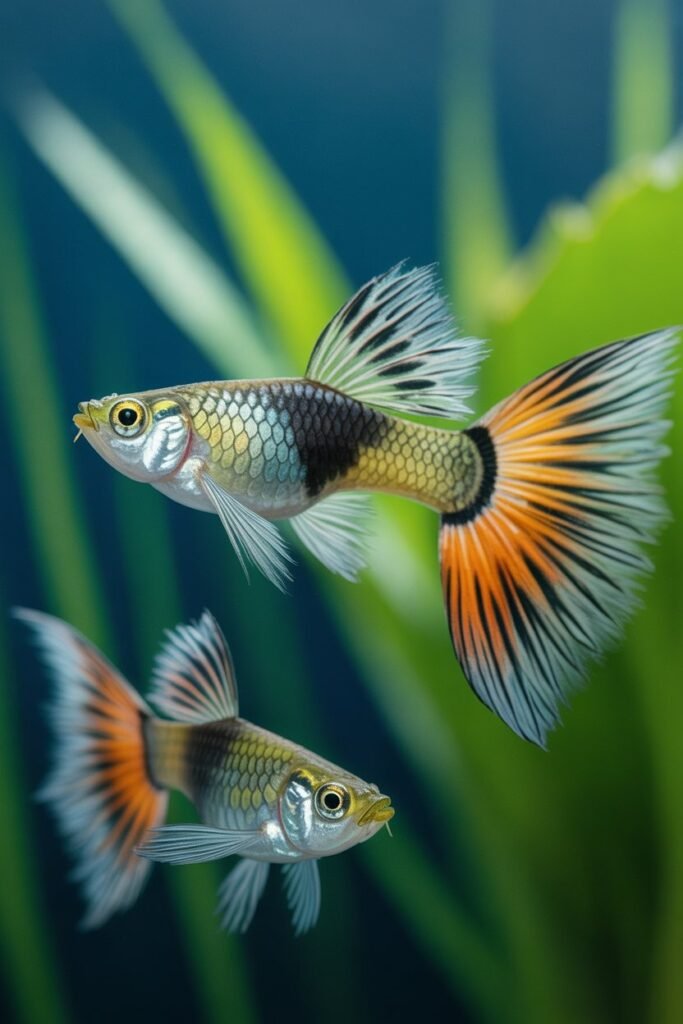
Wild guppies look very different from fancy strains.
Wild Males
- Smaller body size
- Shorter fins
- Subtle patterns
- Iridescent blue, green, or orange spots
- Streamlined body
Wild Females
- Larger than males
- Plain silver or gray
- Minimal coloration
- Strong, robust body
Wild guppies prioritize survival over showy beauty.
⚡ Behavior & Survival Traits
Wild guppies are:
- Extremely active
- Faster swimmers
- More alert
- Less delicate than fancy strains
Because they evolved in predator-rich environments, they are highly adaptable and resilient.
???? Keeping Wild Guppies in an Aquarium
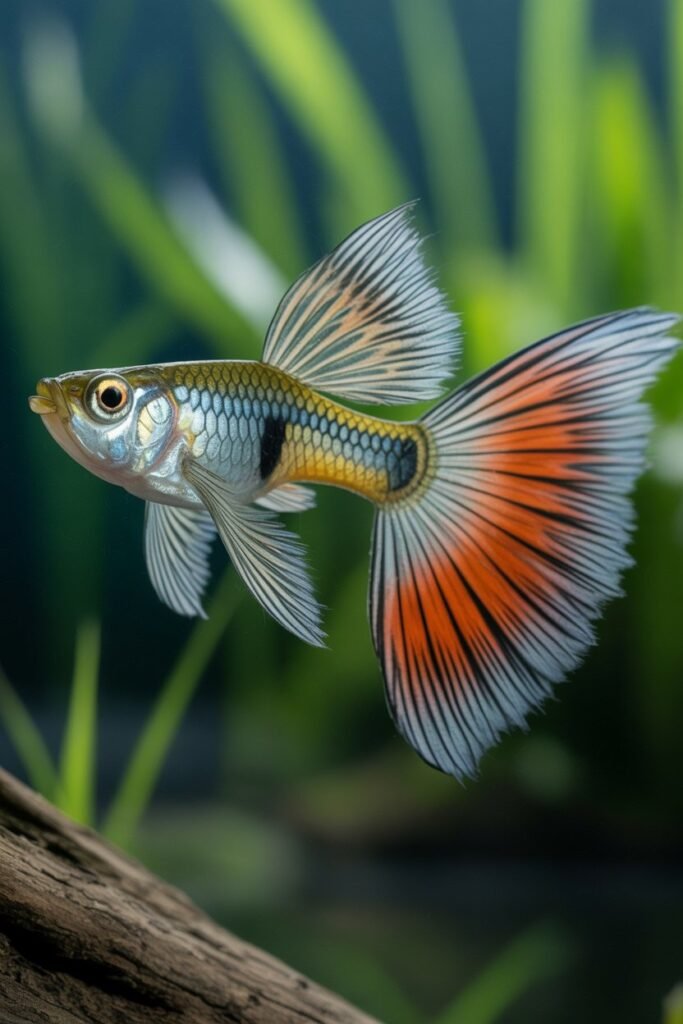
Wild guppies are hardy and easy to care for.
Tank Size
- Minimum: 10 gallons
- Ideal: 20+ gallons
Water Parameters
| Parameter | Ideal Range |
|---|---|
| Temperature | 24–27°C |
| pH | 6.8–7.5 |
| Hardness | Moderate |
| Ammonia | 0 ppm |
They tolerate wider conditions compared to fancy guppies.
???? Best Setup for Wild Guppies
To mimic natural habitat:
- Sandy or fine gravel substrate
- Driftwood
- River stones
- Moderate plant cover
- Gentle water flow
Plants like:
- Java moss
- Vallisneria
- Water sprite
Open swimming space is important.
???? Feeding Wild Guppies
In nature, they eat:
- Insect larvae
- Algae
- Microorganisms
- Small crustaceans
In aquariums, feed:
- High-quality flakes
- Micro pellets
- Brine shrimp
- Daphnia
They are not picky eaters.
???? Breeding Wild Guppies
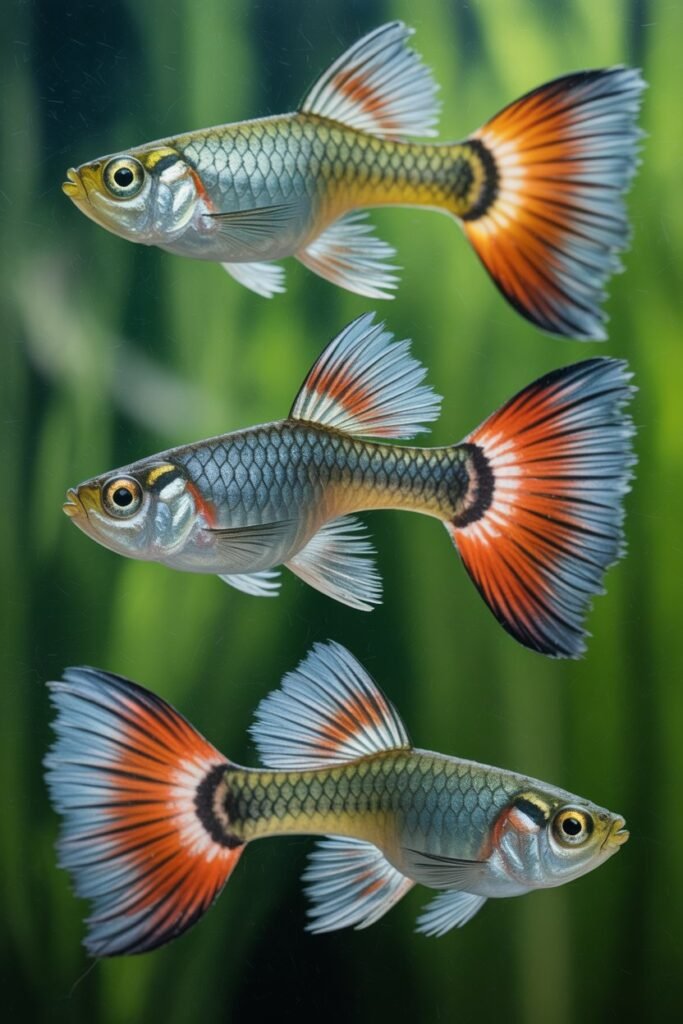
Wild guppies breed easily like fancy guppies.
- Gestation: 21–30 days
- Fry per batch: 15–40
- Fry are strong and fast-growing
Wild fry often have higher survival rates due to stronger genetics.
???? Wild vs Fancy Guppies
| Feature | Wild Guppy | Fancy Guppy |
|---|---|---|
| Color | Subtle | Bright & intense |
| Tail Size | Small | Large & flowing |
| Hardiness | Very strong | Slightly delicate |
| Growth | Fast | Moderate |
| Genetics | Diverse | Line-bred |
Fancy guppies were developed through selective breeding from wild ancestors.
???? Why Some Breeders Prefer Wild Guppies
- Strong immune system
- Better fertility
- Genetic diversity
- Used to improve weak bloodlines
Some breeders cross wild guppies with fancy strains to strengthen genetics.
???? Common Issues
Wild guppies are generally hardy but can still face:
- Poor water quality problems
- Overcrowding stress
- Parasites if imported
Regular maintenance prevents most issues.
???? Advantages of Wild Guppies
✔ Very hardy
✔ Active swimmers
✔ Natural appearance
✔ Strong breeding potential
✔ Lower risk of genetic deformities
⚠️ Things to Consider
- Less colorful than fancy guppies
- Harder to find in stores
- May mix genetics if housed with fancy strains
If keeping both, separate breeding groups to maintain purity.
???? Final Thoughts
Wild guppies represent the true natural form of Poecilia reticulata. They are resilient, fast, and genetically strong—perfect for hobbyists interested in natural aquariums or breeding projects.
While they may lack the dramatic tails of fancy strains, wild guppies offer something equally valuable: authenticity, hardiness, and fascinating natural behavior.