
 By admin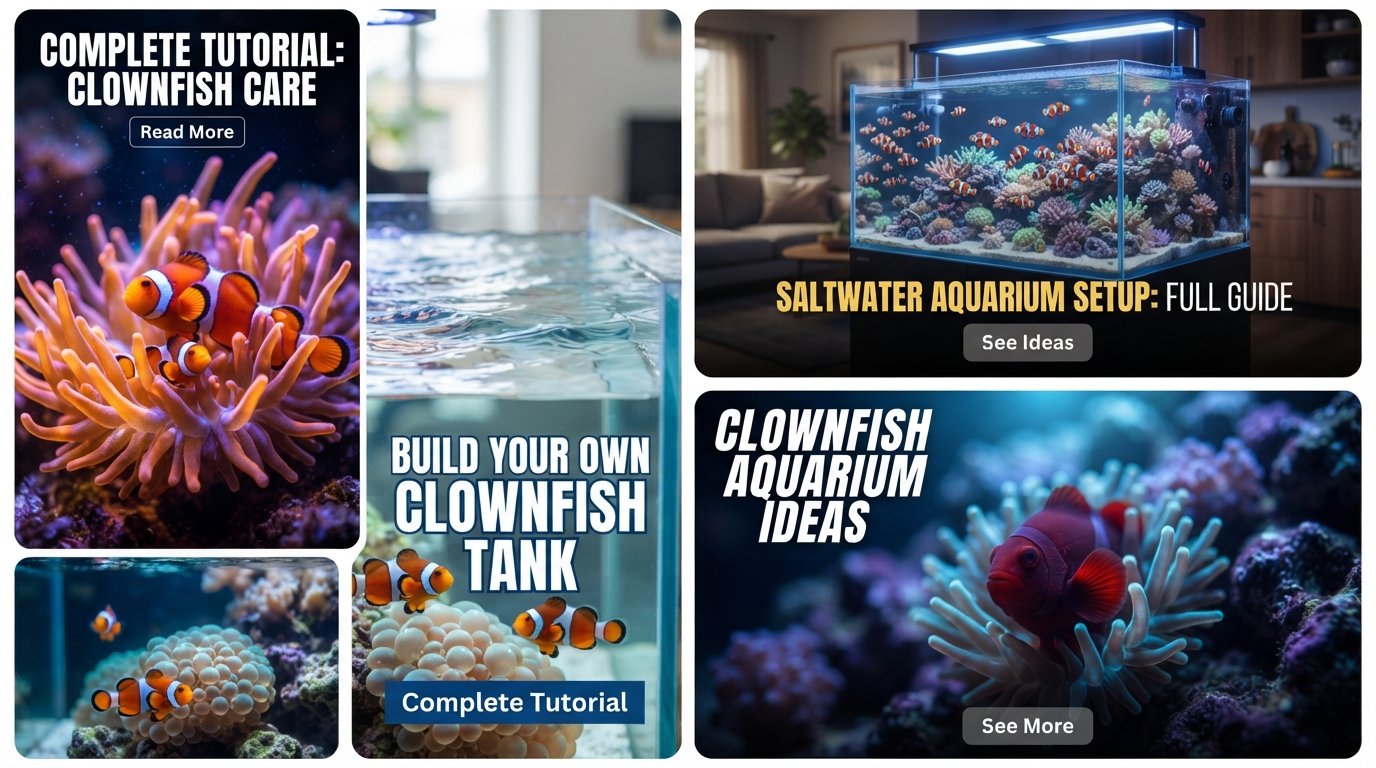
A clownfish aquarium is one of the most popular types of saltwater aquariums. Known for their bright orange coloration, bold white stripes, and playful personalities, clownfish are among the best marine fish for beginners. With the right aquarium setup, stable water conditions, and proper care, clownfish can live for many years and become the highlight of your marine aquarium.
This guide covers everything you need to know about creating and maintaining a thriving clownfish aquarium.
Why Choose a Clownfish Aquarium?
Clownfish are popular because they are hardy, colorful, and relatively easy to care for compared to many other saltwater species.
Benefits include:
- Bright and attractive colors
- Beginner-friendly marine fish
- Active and entertaining behavior
- Long lifespan with proper care
- Compatible with many peaceful marine species
- Suitable for reef aquariums
Their curious nature and distinctive appearance make them favorites among marine aquarium enthusiasts.
Choosing the Right Aquarium Size
20-Gallon Aquarium
A 20-gallon tank is generally considered the minimum size for a pair of common clownfish.
Suitable for:
- Beginner marine aquariums
- One bonded pair
- Simple reef setups
30–40 Gallon Aquarium
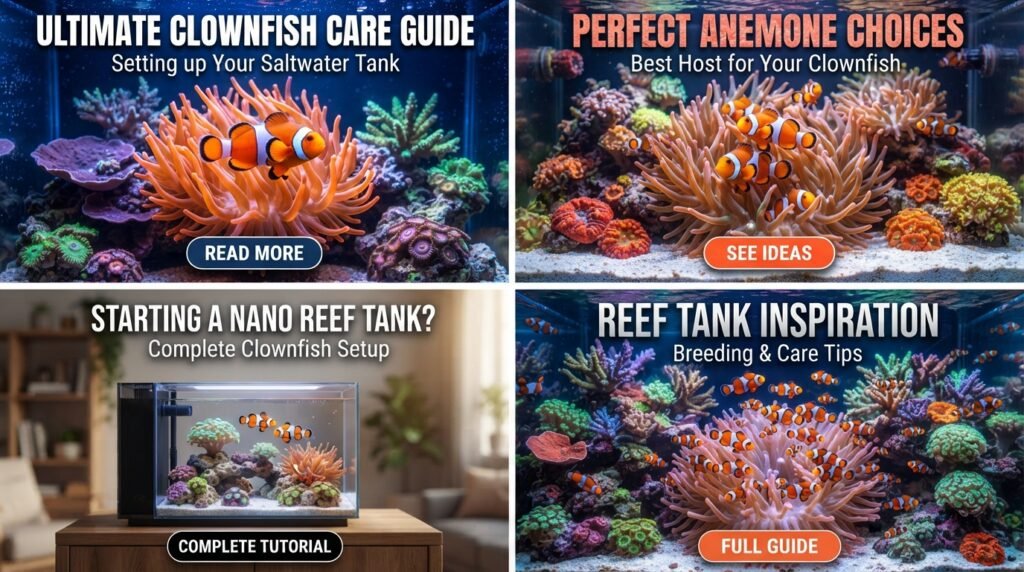
Provides more swimming space and greater water stability.
Ideal for:
- Clownfish with peaceful tank mates
- Small reef aquariums
- Beginner to intermediate hobbyists
55 Gallons and Larger
Perfect for:
- Mixed reef aquariums
- Multiple compatible fish species
- Larger coral collections
Larger tanks are easier to keep stable and allow for more aquascaping options.
Popular Clownfish Species
Ocellaris Clownfish
Often called the “False Percula,” this is one of the most common aquarium clownfish.
Characteristics:
- Bright orange body
- Three white stripes
- Peaceful temperament
- Excellent beginner fish
Percula Clownfish
Very similar to the Ocellaris but with thicker black markings around the white stripes.
Designer Clownfish
Selective breeding has produced many unique varieties, including:
- Snowflake Clownfish
- Black Ice Clownfish
- Picasso Clownfish
- Wyoming White Clownfish
- Black Ocellaris Clownfish
These varieties offer distinctive patterns and colors while requiring similar care.
Aquarium Equipment
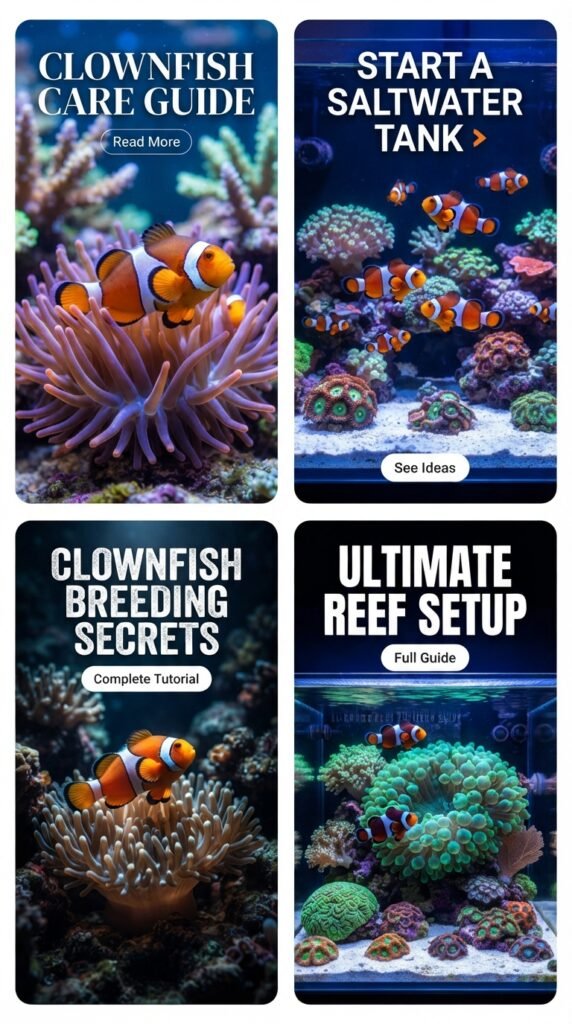
A healthy clownfish aquarium requires reliable equipment.
Essential items include:
- Marine aquarium
- Quality filtration system
- Protein skimmer (recommended for larger systems)
- Marine LED lighting
- Aquarium heater
- Water circulation pumps
- Marine salt mix
- Refractometer or hydrometer
- Water test kits
Stable water conditions are more important than excessive equipment.
Water Parameters
Maintain consistent marine water conditions.
| Parameter | Recommended Range |
|---|---|
| Temperature | 76–80°F (24–27°C) |
| Salinity | 1.023–1.026 Specific Gravity |
| pH | 8.1–8.4 |
| Ammonia | 0 ppm |
| Nitrite | 0 ppm |
| Nitrate | Below 20 ppm (lower for reef tanks) |
Regular testing helps ensure a healthy environment.
Live Rock and Aquascaping
Live rock provides:
- Natural biological filtration
- Hiding places
- Swimming pathways
- A natural appearance
Arrange the rockwork to create caves and open swimming areas while keeping the structure stable.
Do Clownfish Need Anemones?
No. Clownfish can thrive without sea anemones.
Although clownfish naturally associate with certain anemone species in the wild, many captive-bred clownfish live healthy lives without one. They may instead adopt:
- Large soft corals
- Leather corals
- Mushroom corals
- Decorative rock structures
If you choose to keep an anemone, wait until your aquarium is mature and stable before adding one.
Best Tank Mates
Peaceful companions include:
- Royal Gramma
- Firefish Goby
- Banggai Cardinalfish
- Watchman Goby
- Blennies
- Cleaner Shrimp
- Snails
- Hermit Crabs
Research compatibility before introducing any new species.
Feeding Clownfish
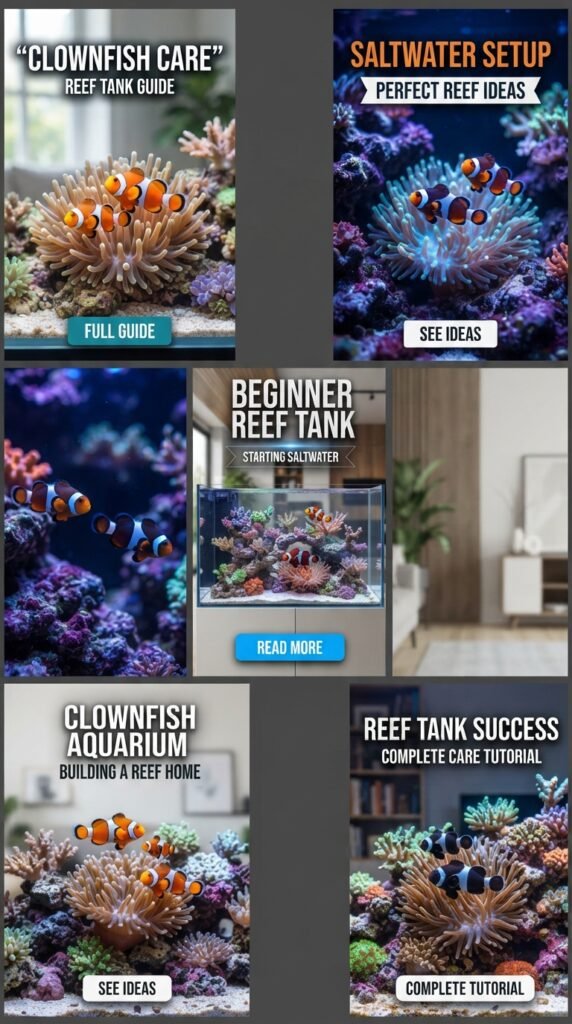
Clownfish are omnivores and enjoy a varied diet.
Offer:
- Marine pellets
- Marine flakes
- Frozen mysis shrimp
- Brine shrimp
- Finely chopped seafood
- High-quality frozen marine foods
Feed small portions one or two times per day.
Lighting
Lighting requirements depend on your aquarium.
Fish-Only Aquarium
Standard marine LED lighting is sufficient.
Reef Aquarium
If keeping corals, choose full-spectrum reef lighting designed to support coral growth.
Maintenance Tips
Perform Regular Water Changes
Replace 10–20% of the water every one to two weeks to maintain water quality.
Test Water Frequently
Monitor salinity, temperature, pH, ammonia, nitrite, and nitrate.
Clean the Glass
Remove algae with an aquarium-safe cleaner.
Service Equipment
Inspect pumps, filters, heaters, and skimmers regularly.
Feed Carefully
Avoid overfeeding to prevent excess nutrients in the water.
Common Mistakes to Avoid
Cycling the Tank Improperly
Never add clownfish before the aquarium has completed the nitrogen cycle.
Overstocking
Introduce fish gradually and avoid overcrowding.
Rapid Salinity Changes
Maintain stable salinity to reduce stress.
Choosing Aggressive Tank Mates
Avoid fish that may bully or injure clownfish.
Neglecting Maintenance
Regular maintenance is essential for long-term success.
Clownfish Aquarium Design Ideas
Coral Reef Aquarium
Combine live rock, corals, and colorful invertebrates for a natural reef appearance.
Minimalist Marine Tank
Use clean rockwork with open swimming space for a modern look.
Lagoon Theme
Create a peaceful aquascape with soft corals and sandy areas.
Mixed Reef Aquarium
Combine corals, clownfish, and peaceful reef-safe fish in a vibrant marine ecosystem.
Benefits of a Clownfish Aquarium
A clownfish aquarium offers many advantages:
- Colorful and lively display
- Beginner-friendly marine fish
- Suitable for reef aquariums
- Active and entertaining behavior
- Long lifespan with proper care
- Endless aquascaping possibilities
It is one of the best ways to enjoy the beauty of a saltwater aquarium.
Conclusion
A clownfish aquarium is an excellent choice for anyone interested in marine fishkeeping. By providing a properly cycled aquarium, stable water conditions, high-quality food, and compatible tank mates, you can create a healthy environment where clownfish thrive.
Whether you choose a simple fish-only setup or a vibrant reef aquarium, clownfish bring color, personality, and endless fascination to any marine tank.
Frequently Asked Questions
What size aquarium do clownfish need?
A 20-gallon aquarium is generally suitable for a bonded pair of common clownfish, while larger tanks provide greater stability and more room for additional compatible species.
Do clownfish need a sea anemone?
No. Captive-bred clownfish can live healthy lives without an anemone, although some may naturally host in corals or rock structures.
Are clownfish good for beginners?
Yes. They are among the hardiest and most beginner-friendly saltwater fish.
Can clownfish live with corals?
Yes. Most clownfish are considered reef-safe and can be kept in reef aquariums with compatible corals.
What do clownfish eat?
They thrive on a varied diet that includes marine pellets, flakes, frozen mysis shrimp, brine shrimp, and other high-quality marine foods.
How long do clownfish live?
With proper care, clownfish commonly live 10 to 15 years, and some individuals may live even longer in well-maintained aquariums.