
 By admin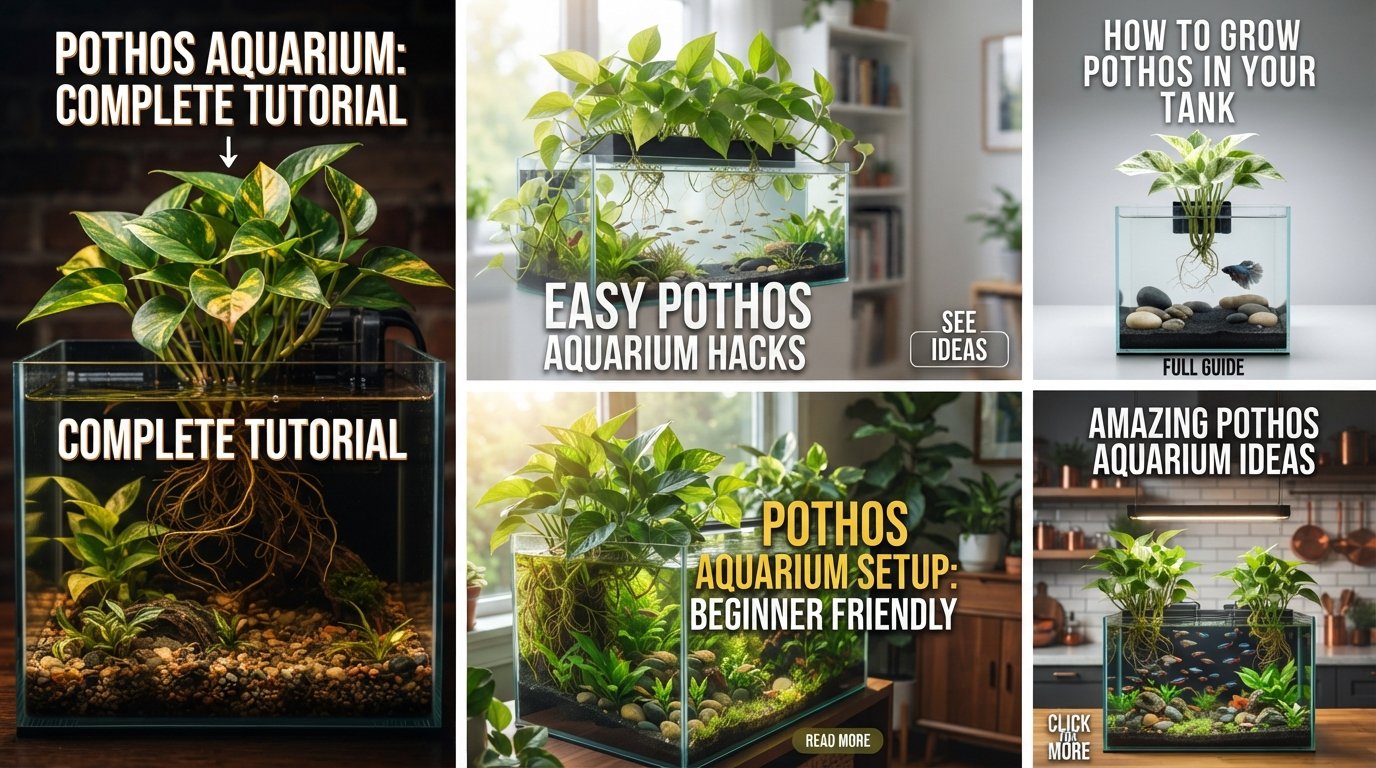
A pothos aquarium is a beautiful and practical way to improve your aquarium’s appearance while helping maintain excellent water quality. Pothos (Epipremnum aureum) is one of the most popular houseplants used in aquariums because its roots absorb excess nutrients from the water, helping reduce nitrate levels while creating a lush, natural look.
Unlike true aquatic plants, pothos should not be fully submerged. Only the roots should remain in the aquarium, while the leaves and stems stay above the water.
This guide explains everything you need to know about growing pothos in an aquarium, including setup, care, benefits, and common mistakes to avoid.
Why Use Pothos in an Aquarium?
Pothos is easy to grow, inexpensive, and highly adaptable. It quickly develops long roots that absorb nutrients from the water while adding greenery to your aquarium.
Benefits include:
- Helps reduce nitrate levels
- Improves water quality
- Creates a natural appearance
- Provides shelter for fish fry and shrimp
- Grows rapidly with minimal care
- Suitable for freshwater aquariums
- Easy for beginners to maintain
Many aquarists use pothos as a natural filtration aid in planted and non-planted tanks.
Can Pothos Grow in an Aquarium?
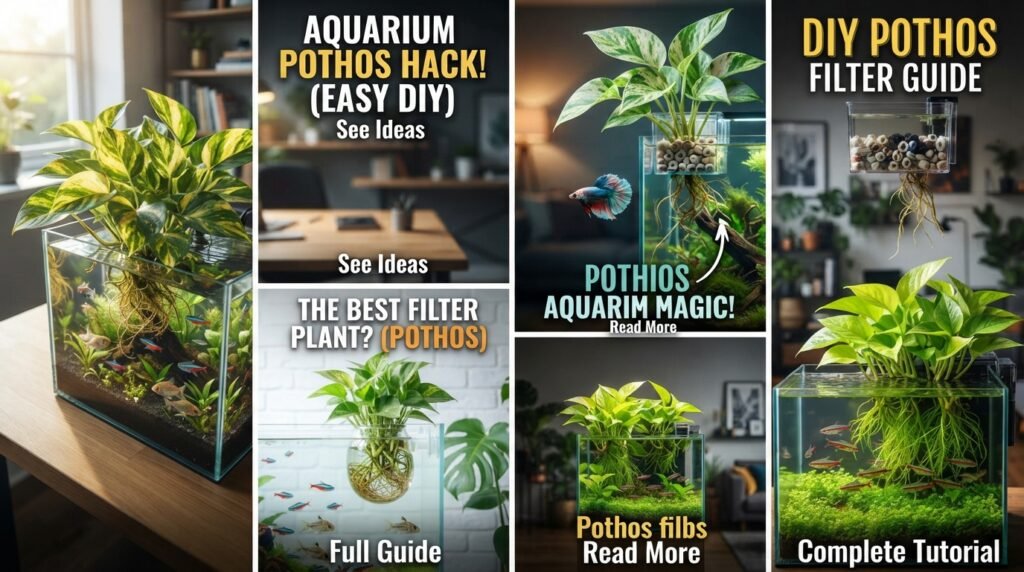
Yes, pothos grows exceptionally well with its roots submerged in aquarium water. However, it is important to keep the leaves above the waterline.
The ideal setup includes:
- Roots underwater
- Leaves above water
- Bright, indirect light
- Stable aquarium conditions
Submerging the leaves for long periods may cause them to rot.
Benefits of Pothos for Aquariums
Natural Nitrate Reduction
Pothos absorbs nitrates produced by fish waste, uneaten food, and decaying organic matter.
Lower nitrate levels can contribute to:
- Healthier fish
- Cleaner water
- Reduced algae growth
Regular water changes are still necessary, but pothos can help manage nutrient levels.
Enhanced Aquarium Appearance
Long white roots hanging into the aquarium create a natural riverbank effect that complements many aquascapes.
Fish Shelter
The roots provide hiding places for:
- Fry
- Shrimp
- Small community fish
This additional cover can reduce stress in shy species.
Low Maintenance
Pothos requires very little attention compared to many aquatic plants.
How to Add Pothos to an Aquarium
Step 1: Choose a Healthy Plant
Select a pothos cutting or a healthy plant with firm stems and vibrant green leaves.
Step 2: Rinse the Roots
Wash the roots thoroughly to remove soil and debris before placing them in the aquarium.
Step 3: Position the Plant
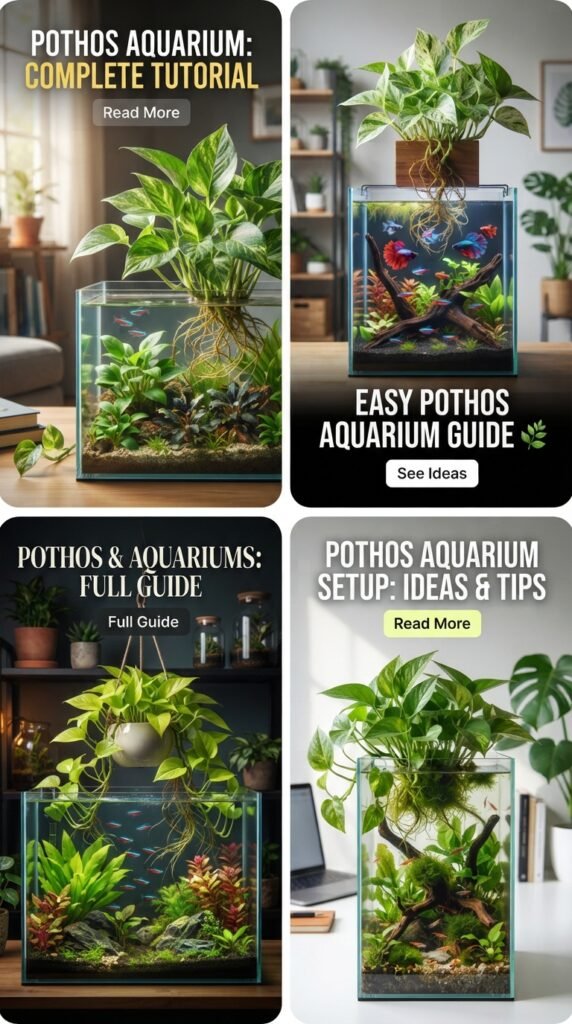
Secure the plant so that:
- Roots remain submerged
- Leaves stay above the water
Many aquarists use plant holders, suction cups, or clips attached to the aquarium rim.
Step 4: Provide Proper Lighting
Place the aquarium where the pothos receives bright, indirect light.
If natural light is limited, a nearby LED grow light can encourage healthy growth.
Best Freshwater Aquariums for Pothos
Pothos works well in many aquarium styles, including:
- Community aquariums
- Betta tanks
- Goldfish aquariums
- Shrimp tanks
- Turtle aquariums with dry basking areas
- Planted aquariums
- Paludariums
It is most commonly used in freshwater systems.
Best Fish to Keep with Pothos
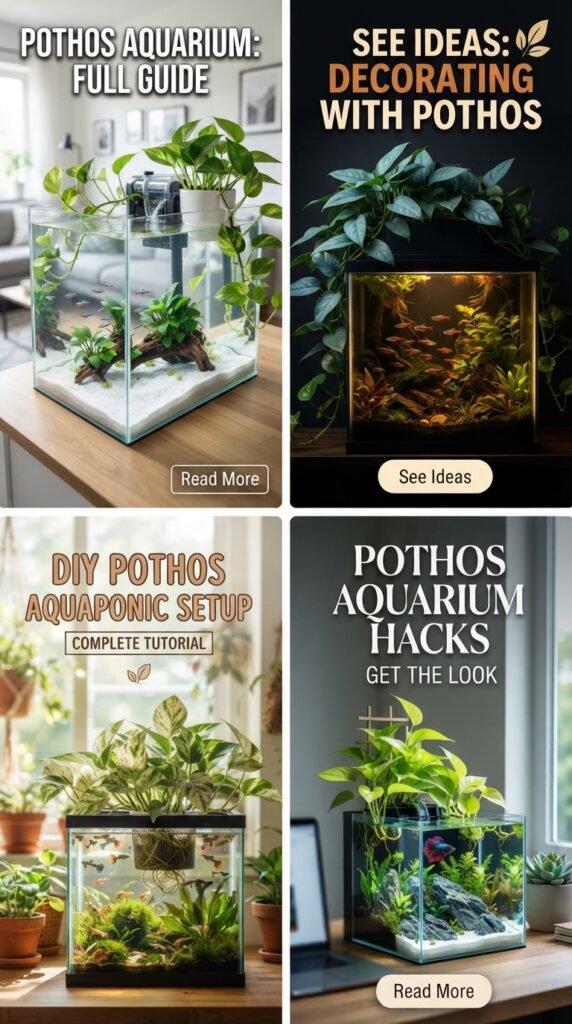
Pothos is compatible with many peaceful freshwater fish, including:
- Guppies
- Neon Tetras
- Cardinal Tetras
- Harlequin Rasboras
- Corydoras Catfish
- Honey Gouramis
- Bettas
- Angelfish
The hanging roots provide additional shelter without affecting swimming space.
Lighting Requirements
Pothos prefers:
- Bright, indirect sunlight
- LED grow lights
- Moderate indoor lighting
Avoid placing the plant in intense direct sunlight, which may scorch the leaves or contribute to algae growth in the aquarium.
Water Conditions
Pothos adapts well to most freshwater aquariums.
General conditions include:
| Parameter | Recommended Range |
|---|---|
| Temperature | 68–86°F (20–30°C) |
| pH | 6.0–8.0 |
| Water Type | Freshwater |
| Lighting | Bright indirect light |
Because pothos grows above water, it tolerates a wide range of aquarium conditions.
Maintenance Tips
Trim the Roots
Long roots can be pruned occasionally to prevent excessive growth and improve water circulation.
Remove Yellow Leaves
Trim damaged or yellowing leaves to encourage healthy new growth.
Perform Regular Water Changes
Pothos supports water quality but does not replace routine aquarium maintenance.
Monitor Plant Growth
Fast-growing vines can be trained along shelves, walls, or decorative supports near the aquarium.
Keep Leaves Dry
Only the roots should remain underwater to prevent leaf rot.
Common Mistakes to Avoid
Submerging the Entire Plant
Leaves should remain above the water surface.
Using Soil-Covered Roots
Always rinse away soil before introducing pothos to avoid contaminating the aquarium.
Depending Only on Pothos for Filtration
Pothos complements but does not replace a quality aquarium filter.
Ignoring Root Growth
Trim roots if they become excessively dense or interfere with equipment.
Using Pesticide-Treated Plants
Only use plants that are free from pesticides, fertilizers, or chemical treatments that could harm aquatic life.
Aquarium Design Ideas with Pothos
Natural Riverbank Theme
Allow roots to cascade into the aquarium while using driftwood and stones below.
Modern Minimalist Aquarium
Combine a rimless aquarium with trailing pothos vines for a clean, contemporary appearance.
Jungle Aquarium
Pair pothos with dense aquatic plants to create a lush tropical display.
Paludarium Style
Use pothos alongside mosses, ferns, and exposed driftwood to create a semi-aquatic environment.
Benefits of a Pothos Aquarium
Adding pothos to your aquarium offers many advantages:
- Improves water quality
- Helps absorb excess nitrates
- Enhances the aquarium’s appearance
- Provides natural shelter for fish and shrimp
- Requires very little maintenance
- Grows quickly in most indoor environments
It is one of the easiest and most rewarding plants to incorporate into a freshwater aquarium.
Conclusion
A pothos aquarium combines the beauty of a trailing houseplant with the practical benefits of natural nutrient absorption. By keeping the roots submerged and the leaves above water, pothos can thrive while helping maintain a healthier aquarium environment.
Whether you have a small betta tank or a large community aquarium, pothos is an affordable and attractive addition that can enhance both the appearance and stability of your freshwater setup.
Frequently Asked Questions
Can pothos grow completely underwater?
No. Only the roots should remain submerged. The leaves and stems need to stay above the water surface.
Does pothos reduce nitrates?
Yes. Pothos absorbs nitrates and other nutrients as it grows, helping improve water quality. However, it should not replace regular water changes or proper filtration.
Is pothos safe for aquarium fish?
Yes. Pothos is generally considered safe for freshwater aquariums when only the roots are placed in the water and the plant has not been treated with pesticides or harmful chemicals.
How fast does pothos grow in an aquarium?
Under bright, indirect light and stable conditions, pothos is a fast-growing plant and can develop extensive root systems within a few weeks.
Can I use pothos in a shrimp tank?
Yes. Shrimp often graze on biofilm that develops on the roots, and the root system provides excellent cover.
Does pothos replace an aquarium filter?
No. Pothos helps improve water quality by absorbing nutrients, but a properly sized filter is still essential for mechanical and biological filtration.