
 By admin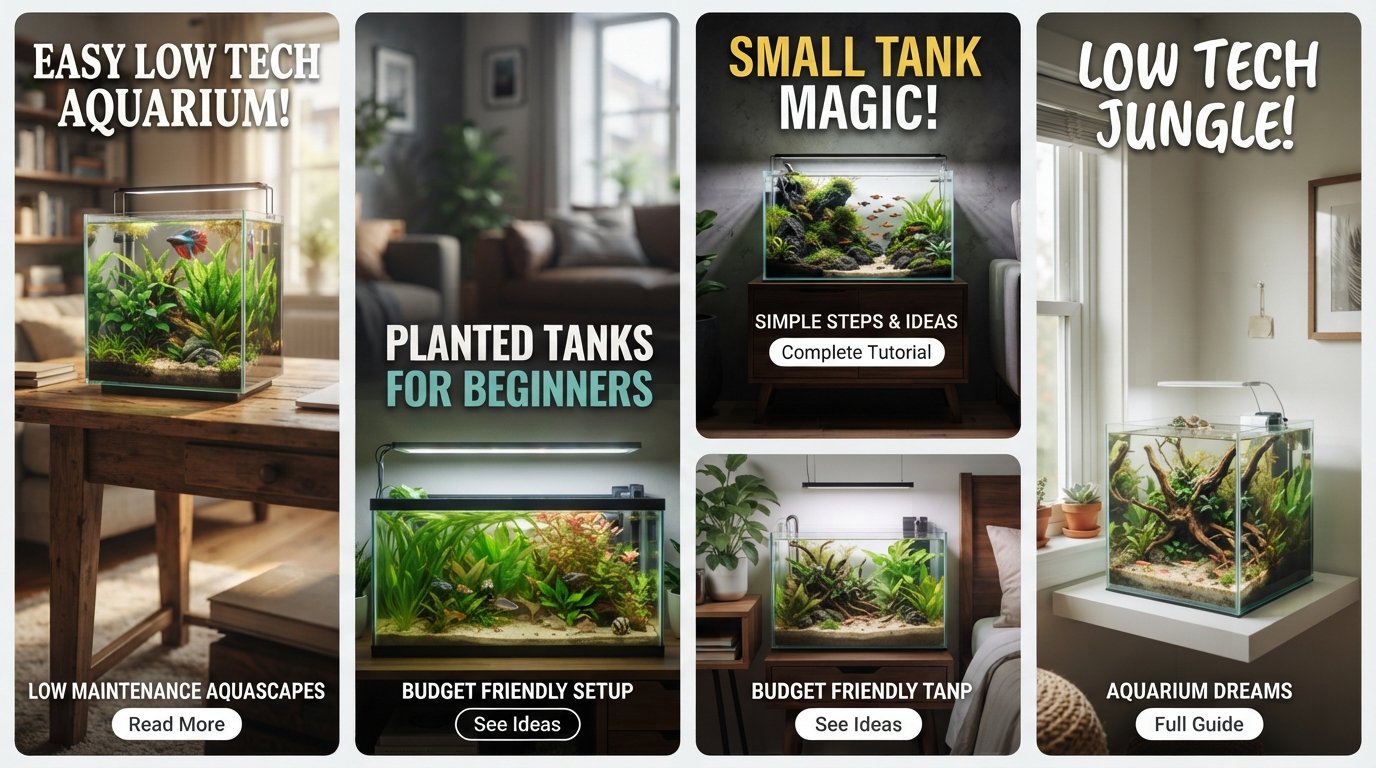
A low tech aquarium is one of the easiest and most rewarding ways to enjoy a planted fish tank. Unlike high-tech aquariums that require CO₂ injection, powerful lighting, and advanced equipment, a low-tech setup focuses on simplicity, natural balance, and low-maintenance plants. These aquariums are ideal for beginners, busy hobbyists, and anyone who wants a beautiful underwater landscape without complicated equipment.
This guide explains how to build a successful low-tech aquarium, choose the right plants and fish, and maintain a healthy ecosystem.
What Is a Low Tech Aquarium?
A low-tech aquarium is a planted tank that relies on moderate lighting, natural plant growth, and regular maintenance instead of pressurized CO₂ systems.
Key features include:
- No CO₂ injection required
- Moderate LED lighting
- Easy-care aquatic plants
- Simple filtration
- Lower maintenance
- Stable water conditions
- Budget-friendly setup
Low-tech aquariums can be just as attractive as high-tech tanks while requiring less time and expense.
Benefits of a Low Tech Aquarium
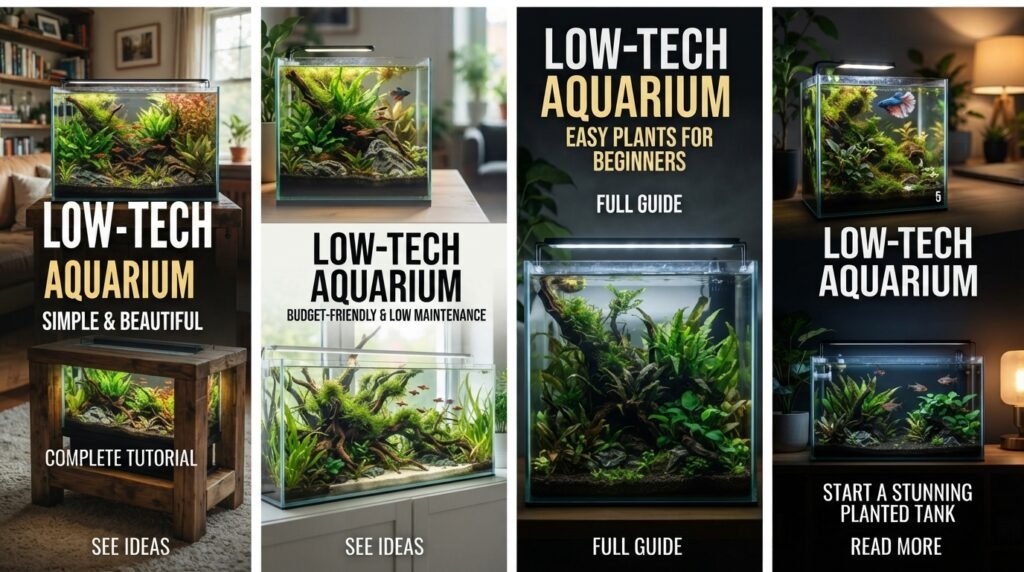
A low-tech planted aquarium offers many advantages.
Benefits include:
- Beginner-friendly
- Lower setup costs
- Reduced maintenance
- Slower algae growth
- Healthy environment for fish
- Lower electricity consumption
- Long-lasting aquarium stability
Many hobbyists enjoy low-tech aquariums because they are forgiving and easy to manage.
Choosing the Right Aquarium
Almost any aquarium can become a low-tech planted tank.
Popular aquarium sizes include:
- 10-gallon aquarium
- 20-gallon long aquarium
- 29-gallon aquarium
- 40-gallon breeder aquarium
- Rimless planted aquarium
Larger aquariums usually maintain more stable water conditions.
Essential Equipment
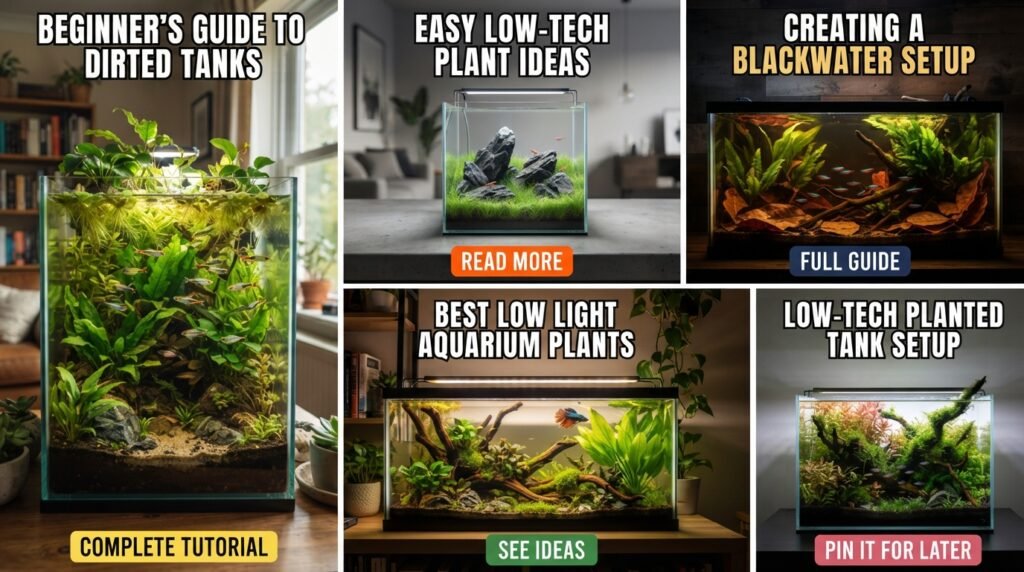
A successful low-tech aquarium requires only a few basic items.
Equipment includes:
- Glass aquarium
- Reliable filter
- Full-spectrum LED light
- Aquarium heater (if required)
- Thermometer
- Water conditioner
- Water testing kit
Expensive CO₂ systems are generally unnecessary for this type of aquarium.
Best Substrate
The substrate depends on the plants you want to grow.
Popular choices include:
- Nutrient-rich aquasoil
- Fine gravel
- Aquarium sand
- Sand with root tabs
- Planted aquarium substrate
Root-feeding plants benefit from nutrient-rich substrates or root tabs.
Best Low Tech Aquarium Plants
Choose hardy plants that grow well without added CO₂.
Excellent beginner plants include:
- Java Fern
- Anubias
- Java Moss
- Cryptocoryne
- Vallisneria
- Amazon Sword
- Water Wisteria
- Bacopa
- Hornwort
- Bucephalandra
These plants tolerate a wide range of conditions and grow well under moderate lighting.
Best Fish for a Low Tech Aquarium
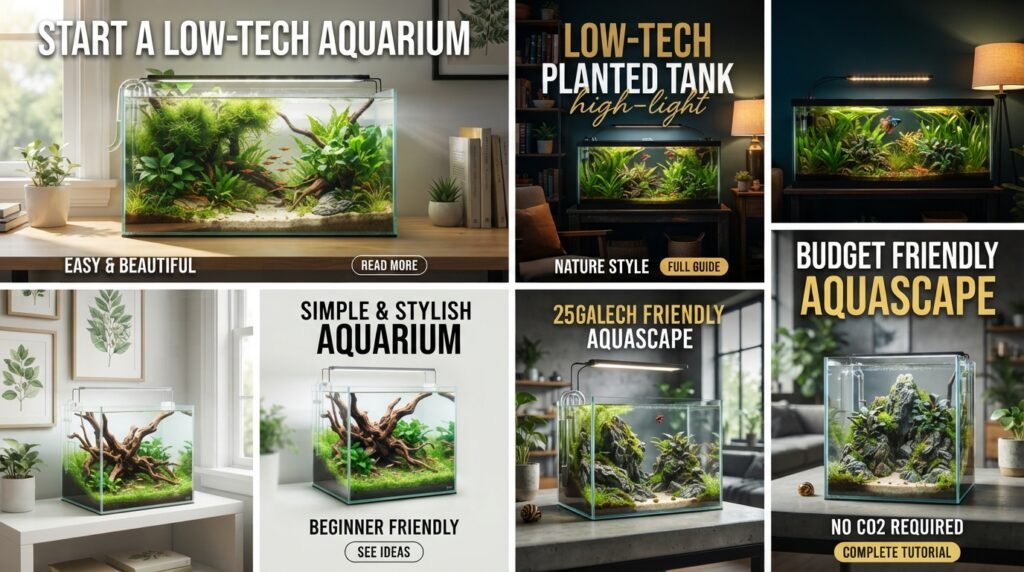
Peaceful community fish work especially well.
Popular choices include:
- Guppies
- Neon Tetras
- Ember Tetras
- Harlequin Rasboras
- Corydoras Catfish
- Honey Gouramis
- Endler’s Livebearers
- White Cloud Mountain Minnows
These species appreciate planted environments and are suitable for many community aquariums.
Shrimp and Snails
Many aquarists add invertebrates to improve the aquarium ecosystem.
Popular choices include:
- Cherry Shrimp
- Amano Shrimp
- Nerite Snails
- Mystery Snails
They help consume algae and leftover food, although they should not replace regular maintenance.
Aquascaping Ideas
Nature Style
Use driftwood, rocks, and lush plants to create a natural river-inspired layout.
Minimalist Aquascape
Feature one large piece of driftwood with a small selection of hardy plants.
Jungle Aquarium
Allow plants to grow densely for a rich, tropical appearance.
Stone Garden
Arrange natural rocks with low-growing plants for a clean, elegant design.
Lighting
Moderate lighting is ideal for low-tech aquariums.
Recommended lighting schedule:
- 6–8 hours daily
- Full-spectrum LED lighting
- Automatic timer
- Moderate brightness
Avoid excessive lighting to reduce algae growth.
Fertilization
Most low-tech aquariums benefit from occasional fertilization.
Common options include:
- Liquid fertilizer
- Root tabs for heavy root feeders
- Trace element supplements
Follow the manufacturer’s dosing recommendations and avoid over-fertilizing.
Water Parameters
Maintain stable water conditions for healthy fish and plants.
| Parameter | Recommended Range |
|---|---|
| Temperature | 72–78°F (22–26°C) |
| pH | 6.5–7.5 |
| Ammonia | 0 ppm |
| Nitrite | 0 ppm |
| Nitrate | Below 20 ppm |
Adjust water conditions if your chosen fish or plants require different parameters.
Maintenance Tips
Perform Weekly Water Changes
Replace 20–30% of the water every week.
Trim Plants
Prune overgrown plants to maintain the desired layout.
Clean the Glass
Remove algae with an aquarium-safe scraper or magnetic cleaner.
Service the Filter
Rinse filter media in removed aquarium water to preserve beneficial bacteria.
Test Water Regularly
Monitor ammonia, nitrite, nitrate, pH, and temperature to ensure a stable environment.
Common Mistakes to Avoid
Choosing Demanding Plants
Some carpeting plants and red stem plants require CO₂ and stronger lighting.
Too Much Light
Excessive lighting often causes algae problems.
Overstocking Fish
Too many fish increase waste and reduce water quality.
Skipping Water Changes
Routine maintenance remains essential even in low-tech aquariums.
Overusing Fertilizer
Adding more fertilizer than plants can use may encourage algae growth.
Low Tech Aquarium Design Ideas
Blackwater Aquarium
Use driftwood, leaf litter, and subdued lighting to recreate a tropical forest stream.
Green Nature Aquarium
Combine rocks, driftwood, and hardy green plants for a timeless natural look.
Nano Planted Aquarium
A compact planted aquarium with mosses, Anubias, and shrimp creates a beautiful desktop display.
Community Aquarium
Blend colorful schooling fish with live plants and open swimming areas for a balanced, lively setup.
Benefits of a Low Tech Aquarium
A low-tech aquarium provides:
- Simple setup
- Affordable equipment
- Easy plant care
- Healthy fish habitat
- Beautiful natural appearance
- Long-term stability
- Beginner-friendly maintenance
It is one of the best choices for anyone who wants a planted aquarium without the complexity of advanced systems.
Conclusion
A low tech aquarium is an excellent choice for aquarists who value simplicity, natural beauty, and easy maintenance. By selecting hardy plants, providing moderate lighting, and maintaining stable water conditions, you can create a thriving planted aquarium without using a CO₂ system.
Whether you prefer a lush jungle aquascape, a minimalist layout, or a peaceful community aquarium, a low-tech setup offers years of enjoyment with relatively little effort.
Frequently Asked Questions
What is a low-tech aquarium?
A low-tech aquarium is a planted tank that operates without pressurized CO₂ and typically uses moderate lighting, hardy plants, and simple equipment.
Do I need CO₂ for a low-tech aquarium?
No. Many popular aquatic plants grow successfully without added CO₂ when provided with suitable lighting and nutrients.
What are the best plants for a low-tech aquarium?
Java Fern, Anubias, Java Moss, Cryptocoryne, Vallisneria, Amazon Sword, Bacopa, and Bucephalandra are excellent beginner-friendly choices.
Can I keep fish in a low-tech planted aquarium?
Yes. Peaceful community fish such as guppies, tetras, rasboras, corydoras, and honey gouramis thrive in low-tech planted aquariums.
How often should I fertilize a low-tech aquarium?
Many low-tech tanks benefit from light fertilization using liquid fertilizers or root tabs, depending on the plants being grown.
How much maintenance does a low-tech aquarium require?
Weekly water changes, occasional plant trimming, filter maintenance, and regular water testing are usually enough to keep a low-tech aquarium healthy and attractive.