
 By admin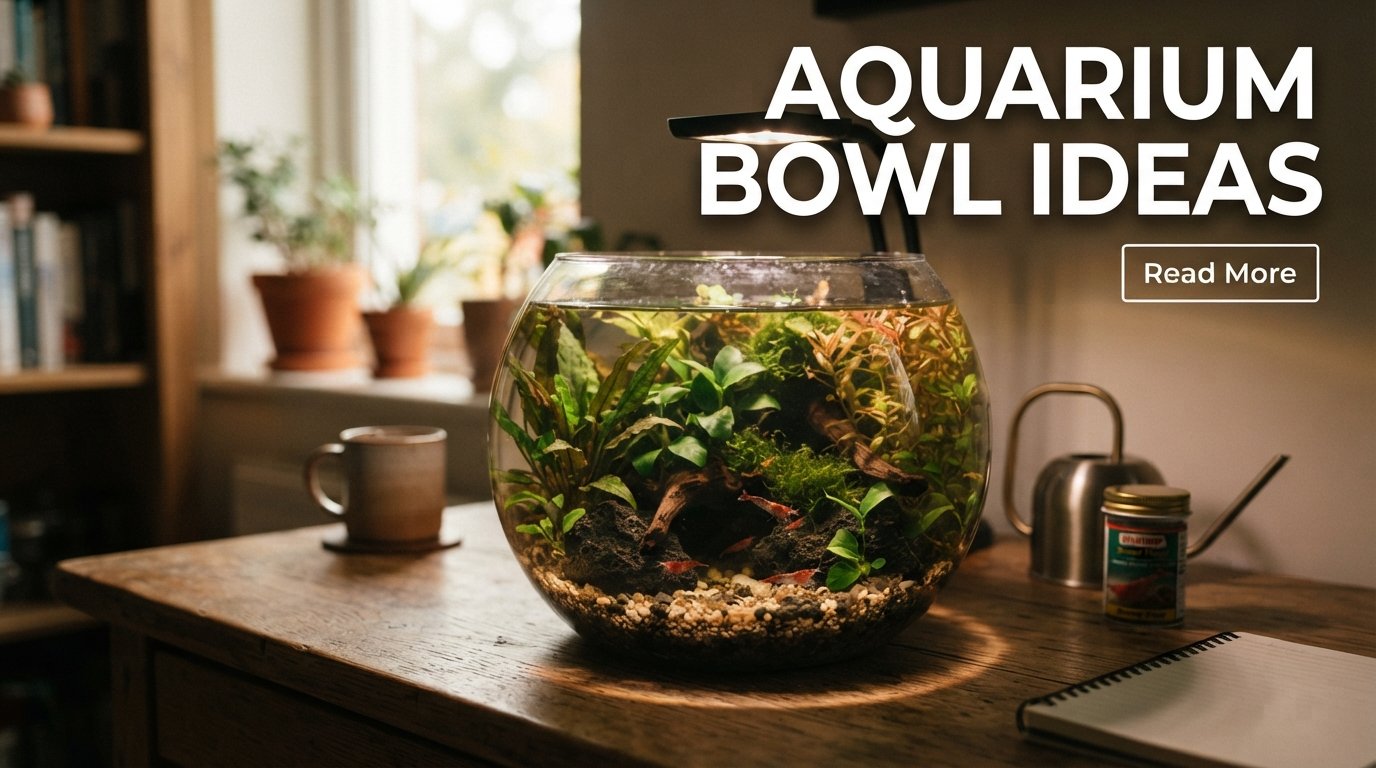
An aquarium bowl can be a beautiful small aquatic display, especially when it is designed around plants, shrimp, or other appropriate inhabitants. Bowl-shaped aquariums come in many styles, from simple minimalist plant bowls to colorful nano aquascapes.
One important consideration is that traditional fish bowls are often unsuitable for fish because they provide limited swimming space, filtration, and stable water conditions. A properly equipped aquarium is generally a better choice for fish.
1. Minimalist Aquarium Bowl
Keep the design simple with:
- Fine natural substrate
- A few smooth stones
- One small piece of driftwood
- Moss or small aquatic plants
Leaving plenty of open water makes the bowl look clean and spacious.
2. Planted Aquarium Bowl
A planted bowl can become a miniature underwater garden.
Try:
- Java Moss
- Anubias
- Bucephalandra
- Cryptocoryne
- Small foreground plants
Choose plants based on the available light and the bowl’s dimensions.
3. Shrimp Aquarium Bowl
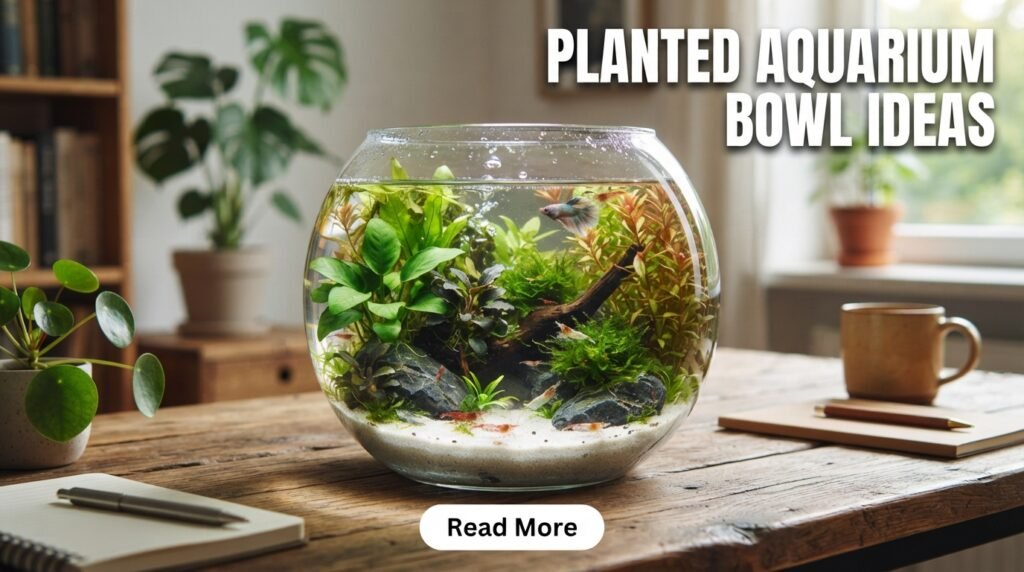
A shrimp-focused bowl can be fascinating because shrimp constantly explore the plants and hardscape.
A simple layout could include:
Dark substrate + moss + small rocks + driftwood + Cherry Shrimp
Use gentle filtration and make sure the container is large enough to maintain stable water conditions.
4. Betta Bowl Alternative
Although bettas are sometimes kept in bowls, a proper aquarium is a much better option.
A filtered aquarium with a heater, cover, plants, and adequate swimming space provides a safer environment than a small decorative bowl.
You can still use a bowl-shaped aquarium if it is appropriately sized and equipped.
5. Moss Aquarium Bowl
Moss is excellent for creating a miniature underwater forest.
Attach aquarium moss to:
- Small rocks
- Driftwood
- Aquarium-safe decorations
Over time, the moss can spread across the hardscape and create a lush appearance.
6. Zen Aquarium Bowl
Create a calm Japanese-inspired design with:
- Fine sand
- Smooth stones
- Minimal plants
- Small driftwood
- Open negative space
Avoid overcrowding the bowl.
7. Desert-Style Aquarium Bowl
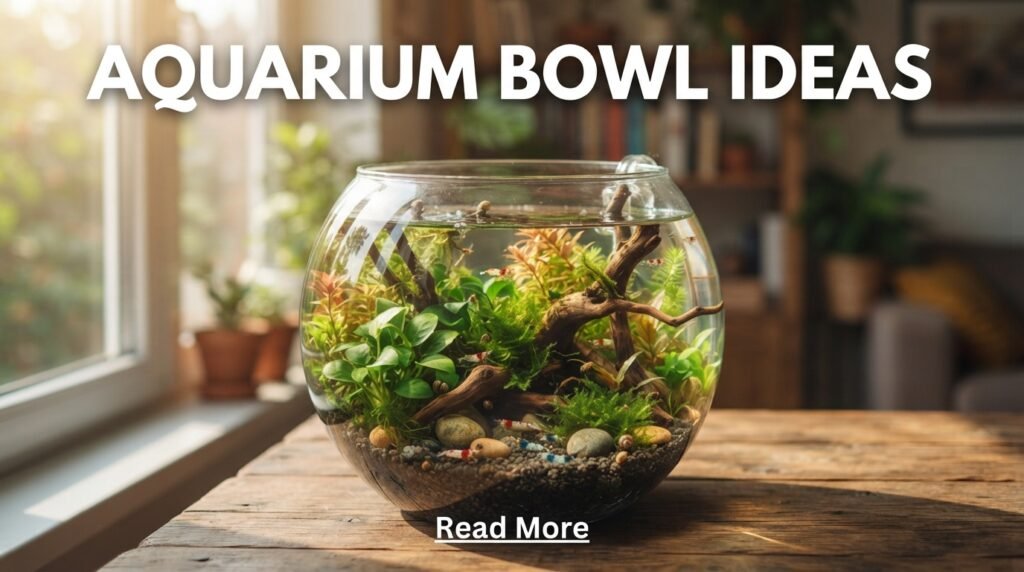
Use pale sand-colored substrate and carefully arranged rocks to create an underwater desert appearance.
Add only a few hardy plants to maintain the minimalist style.
8. Forest Aquarium Bowl
Use branching driftwood as the centerpiece.
Add moss around the wood and small plants near its base.
This creates the appearance of a miniature underwater forest.
9. Nano Aquascape Bowl
A small bowl can be designed like a traditional aquascape.
Use the basic composition:
Foreground → Midground → Background
Place smaller elements toward the rear to create a sense of depth.
10. Floating Plant Bowl
Floating plants can create a beautiful natural surface.
Suitable floating plants depend on the aquarium conditions, but examples include:
- Amazon Frogbit
- Salvinia
- Red Root Floaters
Avoid allowing floating plants to completely block light from reaching submerged plants.
Aquarium Bowl Ideas by Style
| Style | Main Features |
|---|---|
| Minimalist | Few stones + open space |
| Shrimp Bowl | Moss + shrimp + wood |
| Zen | Sand + rocks |
| Forest | Driftwood + moss |
| Planted | Dense aquatic plants |
| Nano Aquascape | Layered hardscape |
| Blackwater | Wood + botanicals |
| Floating Garden | Floating plants |
Aquarium Bowl With Rocks
Rocks can become the main focal point.
Try creating a small mountain-like formation using aquarium-safe stones.
Always test unfamiliar rocks and make sure they won’t introduce harmful substances or significantly alter water chemistry unless that effect is intentional and appropriate.
Aquarium Bowl With Driftwood
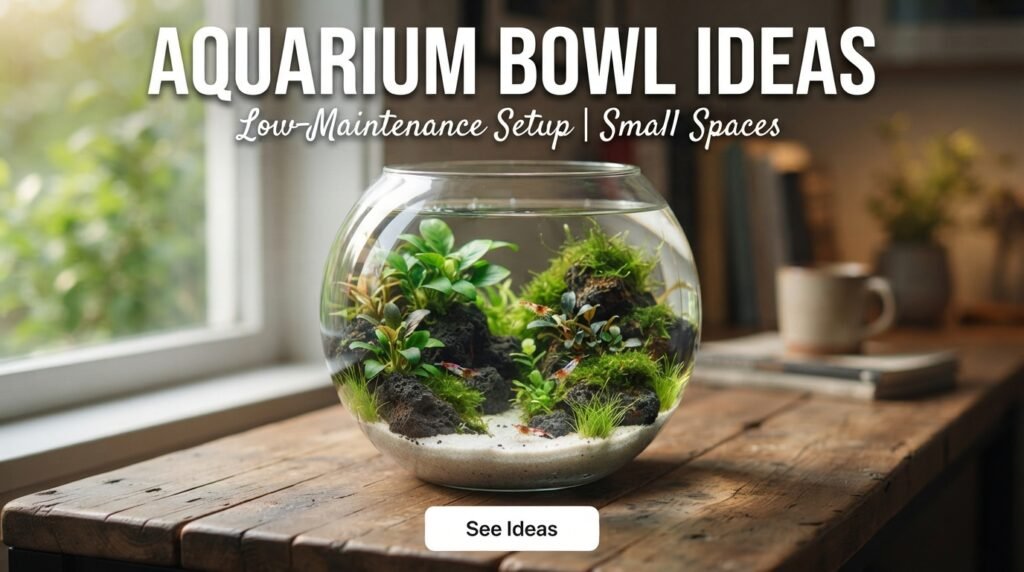
A small piece of driftwood can make a bowl look much more natural.
Choose a piece that fits the scale of the container and leave enough space for plants and aquatic inhabitants.
Some driftwood releases tannins, which can tint the water brown.
Aquarium Bowl With Shrimp and Plants
This is one of the most attractive combinations for a small aquatic display.
A mature planted setup can provide shrimp with:
- Biofilm
- Grazing surfaces
- Hiding places
- Shelter
- Natural cover
A sponge filter can provide gentle circulation and biological filtration.
Aquarium Bowl Lighting
Plants need appropriate lighting, but more light is not always better.
Use a consistent lighting schedule and avoid excessive illumination, which can encourage algae.
For a decorative bowl without demanding plants, moderate lighting is often sufficient.
Aquarium Bowl Substrate
Common choices include:
Sand
Creates a clean, natural appearance.
Gravel
Provides texture and is easy to maintain.
Aquasoil
Useful for planted setups and can provide nutrients for certain plants.
Choose the substrate according to the plants and inhabitants rather than appearance alone.
How to Make an Aquarium Bowl Look Bigger
Use visual perspective.
Place:
- Larger stones toward the front
- Smaller stones toward the back
- Short plants in front
- Taller plants behind
- An open pathway through the center
A dark background can also increase contrast and make plants and shrimp stand out.
Common Aquarium Bowl Problems
Cloudy Water
Can result from new substrate, bacterial blooms, or excessive disturbance.
Algae
Often related to excessive light and nutrient availability.
Temperature Fluctuations
Small containers can change temperature quickly because they contain little water.
Poor Oxygenation
Small stagnant containers can have limited gas exchange, especially when heavily stocked.
Water Quality Instability
Smaller volumes generally change chemistry faster than larger aquariums.
Are Aquarium Bowls Good for Fish?
Traditional small fish bowls are generally not ideal for fish.
They often lack:
- Adequate filtration
- Stable temperature
- Sufficient swimming space
- Effective biological filtration
- Reliable oxygen exchange
For fish, choose a properly sized aquarium with filtration and other necessary equipment.
A bowl can instead be used as a decorative planted display or, when appropriately sized and equipped, for suitable small aquatic animals.
Best Aquarium Bowl Setup for Beginners
A simple beginner-friendly approach is a planted bowl with no fish.
Use:
- Appropriate substrate
- Easy aquatic plants
- Small rocks
- Driftwood
- Suitable lighting
Once established, it can become a low-maintenance miniature aquatic garden.
Conclusion
Aquarium bowl ideas range from minimalist Zen landscapes to lush planted displays and shrimp-focused nano ecosystems. The best designs use a simple composition, appropriate plants, and carefully selected hardscape rather than filling the bowl with decorations.
For a small bowl, a planted or shrimp-focused setup is often more practical than keeping fish. If you want fish, choose a properly sized, filtered aquarium instead of a traditional small bowl.
Frequently Asked Questions
Can I keep fish in an aquarium bowl?
Small traditional bowls are generally unsuitable for fish. A properly sized and filtered aquarium provides a much more stable environment.
What can I put in an aquarium bowl?
You can use aquarium-safe substrate, rocks, driftwood, aquatic plants, and appropriate livestock depending on the bowl’s size and equipment.
Can shrimp live in an aquarium bowl?
Shrimp require stable water conditions, so a properly equipped and appropriately sized aquarium is preferable. A larger bowl with filtration can potentially be adapted for suitable shrimp, but stability and water quality are essential.
What plants are good for an aquarium bowl?
Easy plants such as Anubias, Java Moss, Bucephalandra, and some Cryptocoryne species can work well depending on the setup.
Does an aquarium bowl need a filter?
If it contains aquatic animals, biological filtration is strongly recommended. A small sponge filter is often a gentle option.
How do I make a bowl aquarium look natural?
Use natural substrate, a few carefully positioned rocks or driftwood pieces, live plants, and plenty of open space. Avoid overcrowding the design.