
 By admin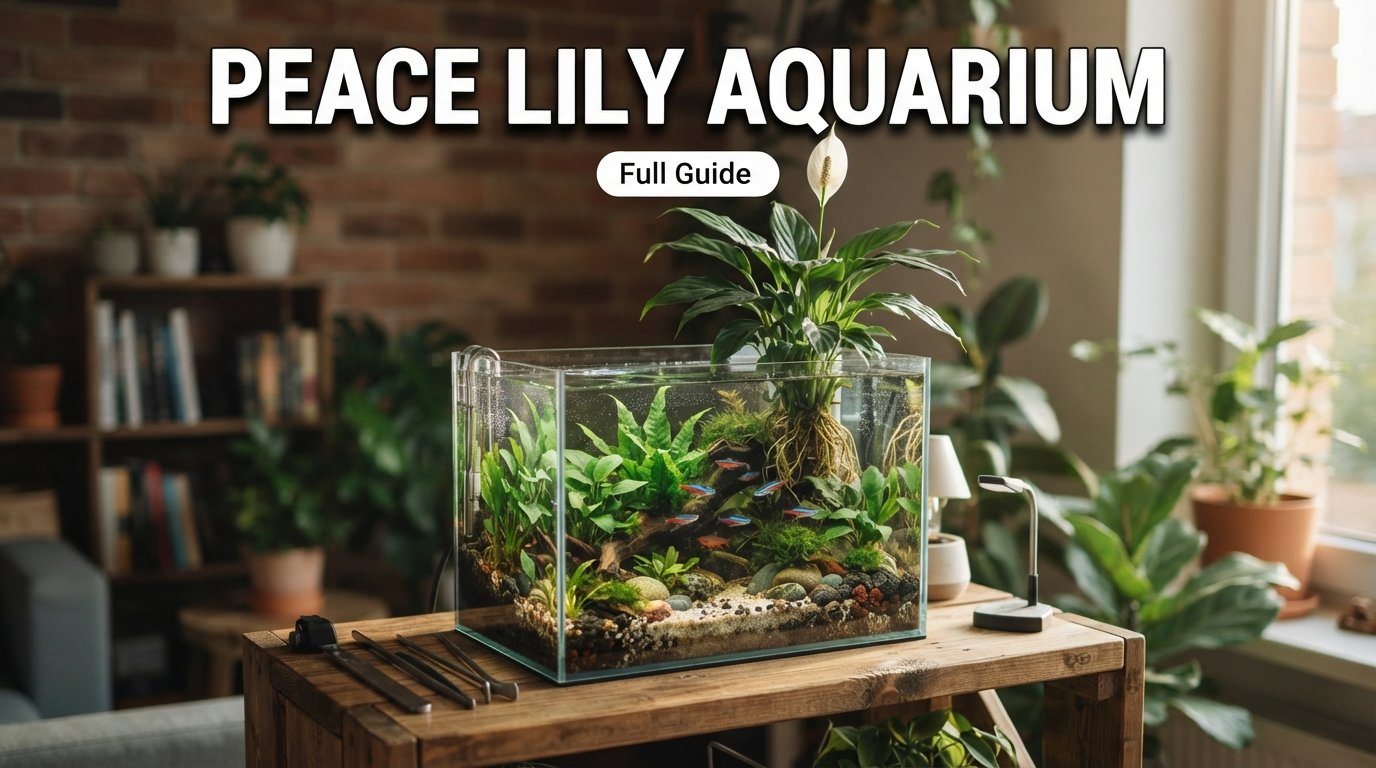
A peace lily aquarium is a beautiful way to combine the elegant appearance of peace lily plants with a freshwater aquarium. Peace lilies are popular houseplants because of their dark green leaves, attractive white flowers, and ability to grow in moist conditions. Their roots can also be grown with their roots in aquarium water, creating a unique display that combines terrestrial foliage with an underwater environment.
However, there is an important distinction between growing a peace lily with its roots in an aquarium and completely submerging the plant. Peace lilies are not true aquatic plants. Their leaves and crown generally need to remain above the water, while the roots can be adapted to grow in water.
When set up correctly, a peace lily aquarium can create a natural-looking display. The plant can grow above the tank while its roots extend into the water, creating a living connection between the aquarium and the surrounding room.
What Is a Peace Lily Aquarium?
A peace lily aquarium is a freshwater aquarium that incorporates a peace lily into its design. Usually, the plant is positioned so that its roots are in the water while the leaves remain above the surface.
This type of setup is sometimes called an emergent plant arrangement because the plant grows partly above the water.
The result can look like a small indoor wetland. Fish swim beneath the surface while the peace lily provides foliage above the aquarium.
This design can be especially attractive in planted aquariums, natural aquascapes, and simple home aquarium setups.
Can Peace Lilies Grow in an Aquarium?
Yes, peace lilies can grow with their roots in water under suitable conditions, but they should not normally be completely submerged.
The roots can adapt to living in water, while the leaves remain exposed to air.
The crown of the plant, where the leaves emerge, should generally remain above the waterline. Completely submerging the plant can cause tissue to deteriorate and eventually lead to plant failure.
A properly positioned peace lily can therefore become an attractive emergent feature of an aquarium.
Peace Lily Aquarium Benefits
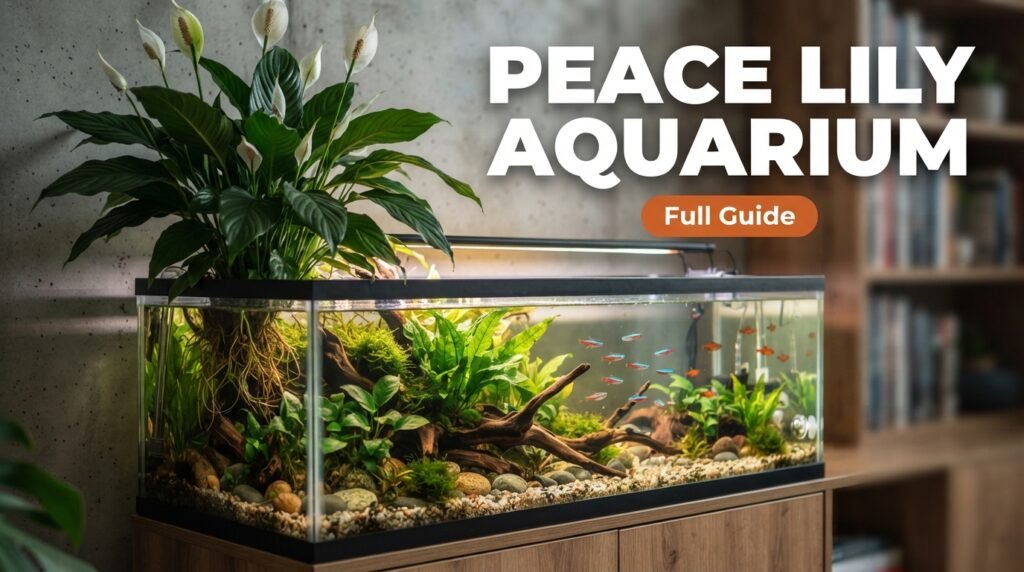
There are several reasons aquarists may be interested in growing a peace lily above an aquarium.
Attractive Appearance
The large green leaves create a strong contrast with water, rocks, driftwood, and fish.
Natural Look
Peace lilies can make an aquarium resemble a small tropical wetland.
Root Display
The roots can create an interesting underwater feature, particularly when viewed through clear aquarium glass.
Space Saving
Because most of the plant grows above the aquarium, it can add greenery without taking up much underwater space.
Decorative Feature
The plant can become part of the aquarium’s overall interior design.
Peace Lily Aquarium Setup
Creating a peace lily aquarium does not require a complicated arrangement.
Start with a healthy peace lily. Remove the plant carefully from its existing growing medium and clean excess soil from the roots.
It is important to remove soil thoroughly because introducing large amounts of soil into aquarium water can cause cloudiness and potentially introduce unwanted contaminants.
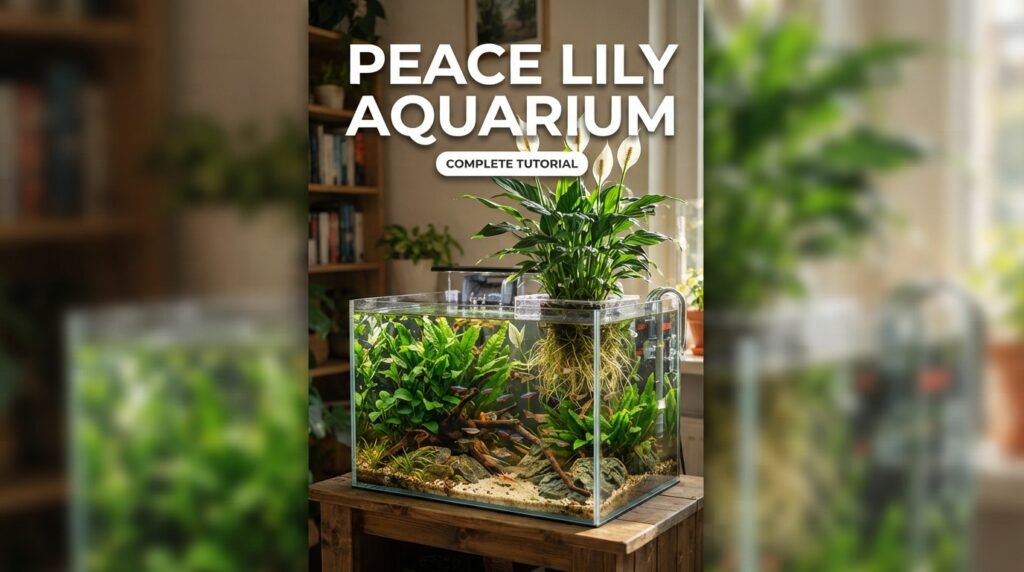
Place the plant so that its roots can reach the water while the crown and leaves remain above the surface.
The plant should be securely supported so that it does not fall completely into the aquarium.
Peace Lily Aquarium Setup Table
| Feature | Recommendation |
|---|---|
| Plant Position | Roots in water, leaves above |
| Water Type | Freshwater |
| Crown | Keep above water |
| Lighting | Moderate suitable aquarium or plant lighting |
| Root Condition | Clean and healthy |
| Support | Secure plant holder or aquarium edge |
| Water Quality | Stable and clean |
| Fish Compatibility | Peaceful freshwater species |
| Maintenance | Regular pruning and root inspection |
How to Prepare a Peace Lily for Aquarium Use
If your peace lily has been growing in soil, preparation is important.
Gently remove the plant from its pot and rinse the roots with clean water. Remove as much soil as possible without aggressively damaging the roots.
Do not immediately place a heavily soil-covered root system into an aquarium.
After cleaning, inspect the roots. Remove dead or rotting sections with clean tools if necessary.
The plant can then be positioned above the aquarium so the roots contact the water.
Some aquarists prefer to gradually transition plants into water rather than moving them suddenly from soil to a fully aquatic environment.
Keep the Peace Lily Crown Above Water
One of the most important rules of a peace lily aquarium is keeping the crown above the waterline.
The crown is the central area where the leaves emerge from the plant.
If this area remains submerged for too long, it may become soft and begin to rot.
The roots are much better adapted to water than the leaves and crown.
For this reason, the ideal arrangement resembles a plant growing at the edge of a pond or wetland rather than a completely underwater plant.
Peace Lily Roots in Aquarium Water
Peace lily roots can provide an interesting visual feature in an aquarium.
They may extend through the water and create a natural root structure.
Fish can sometimes swim around the roots, although species that aggressively dig or eat roots may cause problems.
Do not allow the roots to completely fill the aquarium. Excessive root growth can interfere with filtration, swimming space, or maintenance.
Trim the roots carefully when necessary.
Can Peace Lily Improve Aquarium Water?
Aquatic and emergent plants can absorb nutrients from water as they grow.
A peace lily may take up some dissolved nutrients through its roots, particularly nitrogen compounds produced as fish waste and organic material break down.
However, a peace lily should not be treated as a replacement for aquarium filtration or water changes.
Filtration, biological cycling, appropriate stocking, and regular maintenance remain essential.
Think of the plant as an additional part of the aquarium ecosystem rather than a complete water purification system.
Peace Lily Aquarium and Nitrate
Plants can consume nitrate as a nutrient.
In a suitable aquarium environment, an actively growing peace lily may absorb some available nutrients.
However, the amount of nutrient removal depends on plant size, growth rate, water conditions, lighting, nutrient availability, and other factors.
Regular water testing is still important.
Never assume that the presence of a plant means the aquarium does not require water changes.
Lighting Requirements
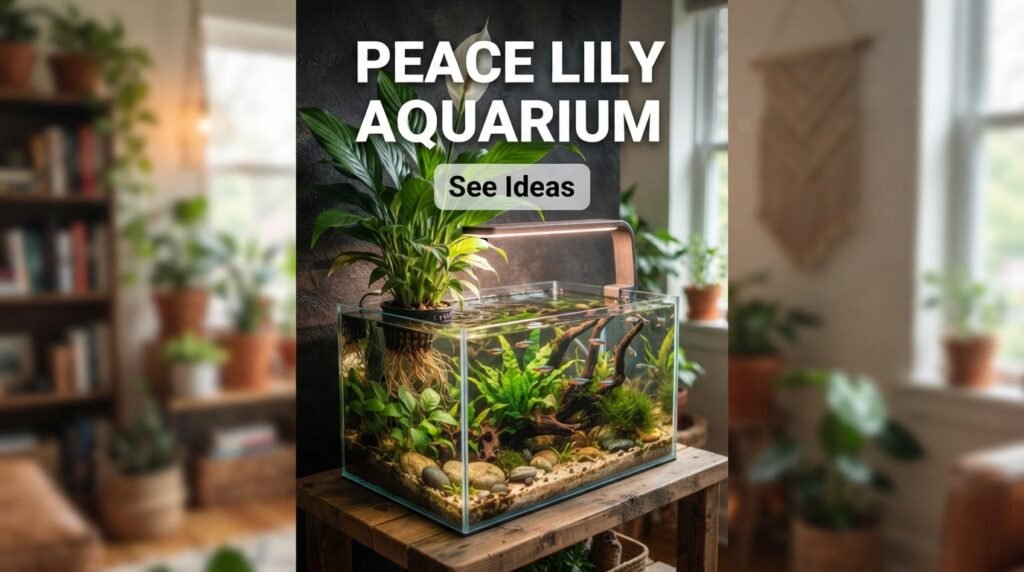
Peace lilies generally prefer bright but indirect light when grown as houseplants.
Aquarium lighting can contribute to plant growth, but the intensity and spectrum vary significantly between aquarium lights.
If the aquarium contains aquatic plants, the lighting should also meet their requirements.
Watch the peace lily for signs of insufficient or excessive light.
Long, weak growth can indicate inadequate lighting, while leaf damage may occur if conditions are too intense or stressful.
Temperature for Peace Lily Aquarium
Peace lilies generally prefer warm conditions.
This makes many tropical freshwater aquarium environments potentially suitable, provided the water temperature is compatible with the fish and other aquarium inhabitants.
Avoid sudden temperature changes.
The aquarium should be maintained according to the requirements of the fish first. The peace lily should be selected and positioned within that environment rather than forcing fish to live at an unsuitable temperature.
Best Aquarium for a Peace Lily
A peace lily can be incorporated into many freshwater aquarium styles.
Planted Aquarium
A planted aquarium provides a natural environment where the peace lily can complement underwater plants.
Community Aquarium
Peaceful community fish can create an attractive display beneath the peace lily.
Paludarium
A paludarium may be an especially natural setting because it combines land and water. The peace lily can grow in the humid above-water section while aquatic plants occupy the submerged area.
Natural Aquarium
Rocks, driftwood, moss, and the peace lily can be combined to create a wetland-inspired environment.
Peace Lily Aquarium With Betta Fish
A peace lily is sometimes associated with betta fish setups because bettas can live in warm freshwater environments and may enjoy planted surroundings.
However, the plant itself does not make a suitable replacement for a properly equipped aquarium.
A betta still requires appropriate water volume, filtration, heating where needed, water quality, and regular maintenance.
Do not rely on a peace lily alone to maintain water quality.
Peace Lily Aquarium With Guppies
Guppies can also be kept in a freshwater aquarium containing a peace lily.
A group of guppies swimming around the roots can create a colorful natural display.
Because guppies are active livebearers, make sure the aquarium has sufficient swimming space and appropriate filtration.
The peace lily should be treated as a decorative and potentially nutrient-absorbing emergent plant rather than the primary filtration system.
Peace Lily Aquarium With Shrimp
Shrimp can make an interesting addition to a planted aquarium containing peace lily roots.
Small shrimp may explore the root surfaces and surrounding decorations.
However, compatibility depends on the shrimp species and fish population.
A peaceful, planted environment can provide hiding places for shrimp, especially when combined with moss, wood, and other aquatic plants.
Peace Lily Aquarium With Snails
Aquarium snails can coexist with peace lilies when water conditions are appropriate.
Snails may help consume algae and leftover organic material, depending on the species.
They generally will not solve every algae problem, so aquarium maintenance remains necessary.
Peace Lily Aquarium Design Ideas
There are several attractive ways to incorporate a peace lily.
Single Peace Lily
Use one plant positioned on one side of the aquarium. This creates an asymmetrical and natural composition.
Peace Lily Corner
Place the plant in a rear corner and allow the leaves to extend outward.
Multiple Peace Lilies
Several plants can create a dense tropical appearance, but avoid overcrowding the aquarium.
Peace Lily and Driftwood
Combine exposed roots with driftwood to create a natural wetland appearance.
Peace Lily and Rocks
Large rocks can create a transition between the underwater environment and the above-water plant.
Peace Lily Paludarium
Create a land-and-water environment where the peace lily becomes part of the terrestrial section.
How to Support a Peace Lily Above an Aquarium
The plant must be supported securely.
Depending on the aquarium design, you can use an appropriate plant holder, aquarium rim support, floating plant platform, or custom structure.
The support should prevent the plant from falling into the aquarium.
Avoid unstable arrangements that could damage the glass or cause the plant to become completely submerged.
Root Trimming
Peace lily roots can grow significantly when they have continuous access to water.
If roots become excessive, carefully trim them with clean equipment.
Do not remove too much of the healthy root system at once.
A gradual approach is generally better because the plant needs sufficient roots to absorb water and nutrients.
Common Problems
A peace lily aquarium can experience several problems if the plant is positioned incorrectly.
Yellow Leaves
Yellowing leaves can have many causes, including nutrient issues, lighting problems, environmental stress, or natural aging.
Root Rot
Poorly maintained roots or a submerged crown can contribute to rotting.
Melting Leaves
Leaves may deteriorate if the plant experiences an unsuitable environment or is completely submerged.
Algae
Aquarium lighting and nutrient levels can influence algae growth. The presence of a peace lily does not guarantee algae control.
Fish Damage
Some fish may investigate or nibble on roots.
Peace Lily Aquarium Maintenance
Maintenance is relatively straightforward when the plant is properly positioned.
Regularly inspect the leaves and roots.
Remove dead leaves before they decay into the aquarium.
Trim excessive roots when needed.
Check water parameters according to the needs of the aquarium inhabitants.
Clean the aquarium and perform appropriate water changes.
Keep the plant supported and make sure the crown remains above water.
Is Peace Lily Safe for Fish?
Peace lilies are not considered appropriate as fully submerged aquarium plants.
The primary concern is not simply whether a plant is poisonous. The bigger issue is whether the plant is biologically suitable for continuous underwater growth.
Peace lilies are terrestrial plants and should therefore be used in an emergent arrangement rather than completely underwater.
If fish are known to chew plant roots, monitor them closely.
Peace Lily vs Aquatic Aquarium Plants
Peace lilies and true aquatic plants serve different roles.
Aquatic plants are adapted to grow underwater for extended periods. Peace lilies are terrestrial plants that can adapt to having their roots in water while their foliage remains above the surface.
This difference makes peace lilies particularly useful for paludariums and emergent aquarium designs.
Some excellent true aquatic plants can be used alongside peace lilies to create a more complete underwater ecosystem.
Peace Lily Aquarium for Beginners
A peace lily aquarium can be an interesting project for beginners, but basic aquarium care should come first.
New aquarists should learn about:
- Aquarium cycling
- Water parameters
- Filtration
- Fish compatibility
- Feeding
- Water changes
- Temperature
- Lighting
- Plant care
Once these fundamentals are understood, adding an emergent peace lily can be a simple way to make the aquarium more attractive.
Final Thoughts
A peace lily aquarium can create a beautiful connection between houseplants and aquatic environments. With its large green leaves and attractive white flowers, a peace lily can add a tropical appearance to a freshwater aquarium while its roots grow through the water.
The most important point is to remember that a peace lily is not a true submerged aquatic plant. Its roots can grow in water, but the leaves and crown should remain above the surface.
With proper support, suitable lighting, clean roots, healthy water conditions, and regular maintenance, a peace lily can become an attractive feature in a freshwater aquarium or paludarium.
Whether combined with guppies, bettas, shrimp, aquatic plants, driftwood, or rocks, the plant can help create a unique natural display that brings the appearance of a small tropical wetland into your home.
Frequently Asked Questions About Peace Lily Aquarium
Can a peace lily live in an aquarium?
Yes. A peace lily can grow with its roots in aquarium water while its leaves and crown remain above the water.
Can I completely submerge a peace lily?
No. Peace lilies are terrestrial plants and are not designed for permanent full submersion. The leaves and crown should remain above the water.
Can peace lily roots grow underwater?
Yes. Peace lily roots can adapt to growing in water and can develop a noticeable root system in an aquarium.
Does a peace lily clean aquarium water?
A peace lily may absorb some nutrients from aquarium water, but it should not replace filtration, biological cycling, or regular water changes.
Can I keep a peace lily with guppies?
Yes. Guppies can live in a freshwater aquarium containing a properly positioned peace lily when the overall aquarium conditions are suitable.
Can a peace lily grow with betta fish?
Yes. A peace lily can be used as an emergent plant in a properly maintained betta aquarium, but it should not replace the filtration, heating, water quality management, and space the betta needs.
Is peace lily good for a paludarium?
Yes. A paludarium can be an excellent environment for a peace lily because it provides both a humid above-water area and a water section.
How do I put a peace lily in an aquarium?
Clean the roots thoroughly if the plant was previously grown in soil, position the roots in the water, and secure the plant so the crown and leaves remain above the waterline.
Why is my peace lily turning yellow in an aquarium?
Yellow leaves can result from environmental stress, lighting issues, nutrient problems, natural leaf aging, or unsuitable growing conditions. Inspect both the roots and above-water growth.
How often should I trim peace lily roots?
There is no fixed schedule. Trim them when they become excessively long, interfere with aquarium equipment, or take up too much swimming or maintenance space.
Can peace lily grow without soil in an aquarium?
Yes. A peace lily can grow hydroponically with its roots in water when the plant is properly supported and receives appropriate light and nutrients.
Is a peace lily better for an aquarium or paludarium?
A paludarium is often a particularly natural choice because it allows the peace lily to grow above water while true aquatic plants occupy the submerged section.