
 By admin
An aquarium portrait is a creative way to capture the beauty, personality, and atmosphere of an aquarium through photography, artwork, or digital design. An aquarium can be much more than a glass container filled with water and fish. With colorful fish, aquatic plants, rocks, driftwood, bubbles, and carefully planned lighting, it can become an inspiring subject for a unique portrait.
The idea of an aquarium portrait can refer to several styles. It may be a close-up photograph of a fish, a detailed picture of an entire aquarium, a painted interpretation of an underwater scene, or a digital artwork inspired by aquatic life. Each approach can create a different mood, from peaceful and natural to colorful and dramatic.
Whether you want to photograph your home aquarium, create wall art, make a portrait of a favorite fish, or design an artistic aquarium scene, understanding composition, lighting, background, and subject placement can help you achieve better results.
What Is an Aquarium Portrait?
An aquarium portrait is an image or artwork that focuses on an aquarium, fish, aquatic plants, or an underwater scene.
Unlike a standard aquarium photograph, a portrait-style image usually has a stronger visual focus. Instead of simply documenting the entire tank, the goal is often to emphasize a particular fish, plant arrangement, decoration, or underwater composition.
For example, a portrait may show a single betta fish swimming among plants, a colorful school of fish moving through a planted aquarium, or a close-up view of an aquascape.
The portrait can be created using a camera, smartphone, painting materials, digital illustration software, or other artistic methods.
Why Aquarium Portraits Are Popular
Aquariums naturally contain many elements that work well in visual art.
Water creates reflections and movement. Fish provide color and personality. Plants add texture and depth, while rocks and driftwood create structure.
An aquarium portrait can also preserve a particular aquascape before plants grow, decorations change, or fish become older.
Some people create portraits simply because they enjoy aquarium photography, while others use them as home decoration, social media content, artwork, or personal memories.
Types of Aquarium Portraits
There are several different approaches to creating an aquarium portrait.
| Portrait Style | Main Subject | Visual Effect |
|---|---|---|
| Fish Portrait | One fish | Personal and detailed |
| Full Aquarium | Entire tank | Natural and scenic |
| Aquascape Portrait | Plants and hardscape | Artistic |
| Close-Up | Fish or plant details | Dramatic |
| Black Background | Fish against darkness | High contrast |
| Artistic Illustration | Digital or painted scene | Creative |
| Macro Portrait | Fine details | Highly detailed |
| Minimalist | Simple composition | Modern |
Single Fish Aquarium Portrait
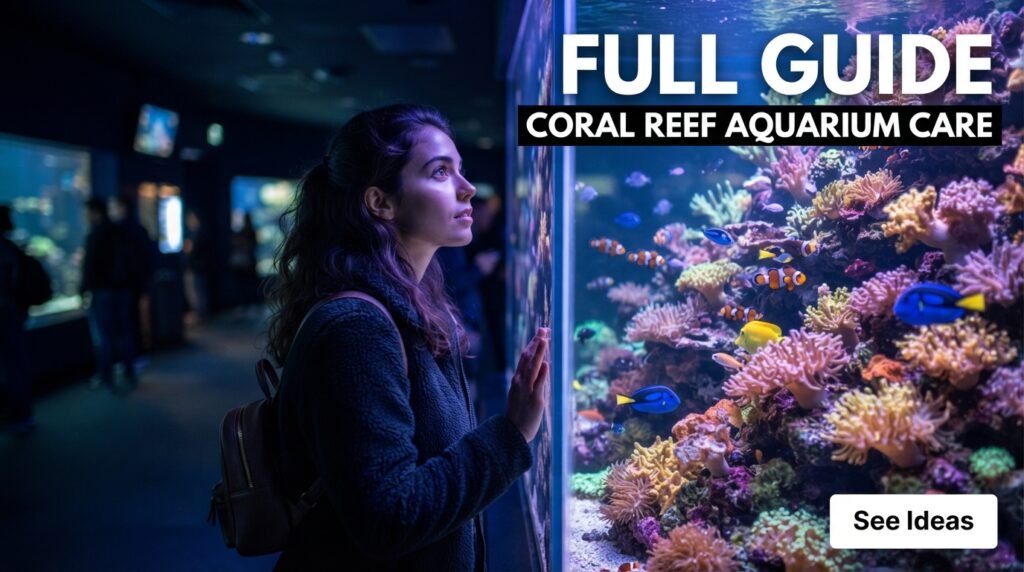
One of the most popular approaches is focusing on a single fish.
A single-fish portrait allows you to emphasize its colors, shape, fins, eyes, and natural behavior.
Betta fish, angelfish, discus, guppies, goldfish, and many other species can make interesting portrait subjects.
The background should not overpower the fish. A clean area of plants or darker water can help the subject stand out.
Guppy Aquarium Portrait
Guppies are especially interesting subjects because of their small size, colorful tails, and active swimming behavior.
A guppy aquarium portrait can capture a male guppy displaying its tail or swimming through aquatic plants.
Because guppies move quickly, photographing them may require patience. Instead of trying to force the fish into a specific position, observe the aquarium and wait for a natural moment.
A planted background can provide contrast against bright guppy colors.
Betta Aquarium Portrait
Betta fish are excellent subjects for aquarium portraits because of their flowing fins and strong colors.
A betta portrait can focus on the fish from the side, front, or slightly angled perspective.
Dark backgrounds often emphasize bright betta colors, while natural planted environments create a softer appearance.
Avoid disturbing the fish simply to get a photograph. A calm environment usually produces more natural behavior.
Aquarium Portrait Photography
Photography is one of the easiest ways to create an aquarium portrait.
A camera or modern smartphone can produce excellent results when the aquarium is clean and the lighting is controlled.
Before taking photographs, clean the outside of the glass and remove visible algae or fingerprints.
Turn off unnecessary room lights if they create reflections on the aquarium glass.
Managing Reflections
Reflections are one of the biggest challenges when photographing an aquarium.
Room lights, windows, furniture, and the photographer can appear on the glass.
To reduce reflections, photograph the aquarium from a position where external light sources are not directly reflected toward the camera.
A dark room can sometimes help because there are fewer bright objects reflected in the glass.
Aquarium Lighting for Portraits
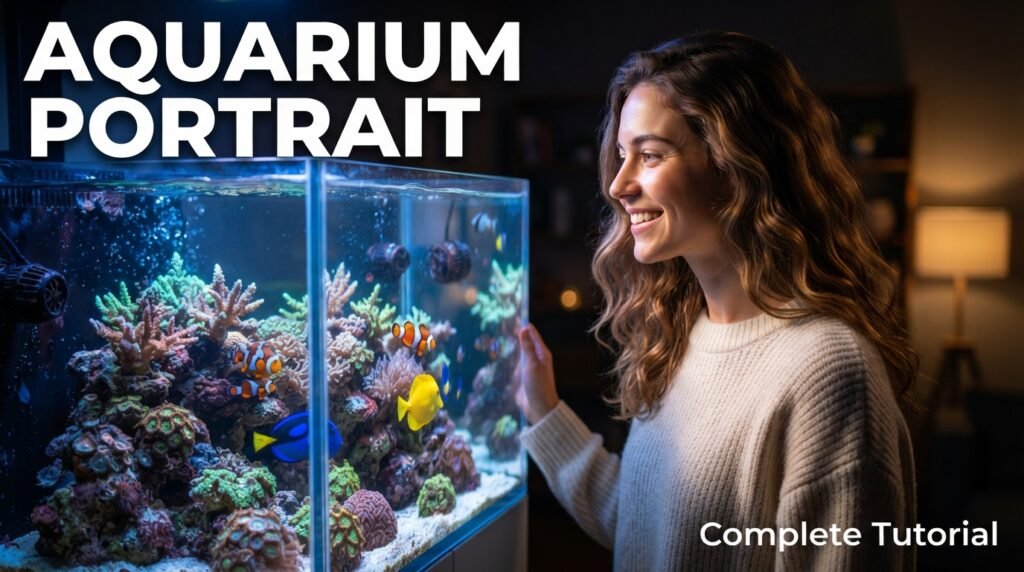
Lighting can completely change the appearance of an aquarium portrait.
Strong lighting can reveal fish colors and plant details, while softer lighting can create a calm atmosphere.
For planted aquariums, lighting should still be appropriate for the plants. Do not change the aquarium’s normal lighting routine simply for photography.
If using additional photography lighting, avoid creating excessive heat or stressing the fish.
Best Background for an Aquarium Portrait
The background should support the subject.
A dark background can make colorful fish stand out. A green planted background can create a natural underwater feeling.
A simple background is often more effective than one filled with too many decorations.
For a single-fish portrait, leave some open water around the fish. This creates visual breathing room and helps direct attention toward the subject.
Aquarium Portrait Composition
Composition is one of the most important elements of a successful portrait.
Instead of placing the subject directly in the center every time, experiment with positioning it slightly to one side.
Leave space in front of a swimming fish. If the fish is facing left, for example, some open space on the left side of the image can make the composition feel more natural.
Use plants, rocks, and driftwood as framing elements.
Close-Up Aquarium Portrait
A close-up portrait focuses on small details.
For fish, this might include the eye, scales, fins, or distinctive markings.
For plants, it could show leaves, textures, bubbles, or delicate structures.
Close-up images work particularly well when the aquarium water is clear and the glass is clean.
Full Aquarium Portrait
A full aquarium portrait shows the entire tank and its overall design.
This style is useful when you want to document an aquascape.
Make sure the aquarium glass is clean and the lighting is balanced. Try to photograph the tank straight-on to avoid unwanted distortion.
A full-tank portrait should show the relationship between plants, fish, hardscape, and open swimming areas.
Aquascape Portrait
An aquascape portrait treats the aquarium almost like a landscape photograph.
The goal is to capture the composition of rocks, driftwood, plants, substrate, and water.
Natural aquascapes can resemble underwater forests, rivers, mountains, or miniature ecosystems.
Think about depth when composing the image. Foreground, middle-ground, and background elements can make a tank appear larger and more three-dimensional.
Aquarium Portrait With Plants
Aquatic plants are excellent visual elements.
Tall plants can create a background, while smaller plants can form the foreground.
Moss and carpeting plants can add texture, and floating plants can create interesting shadows.
For a portrait, avoid allowing plants to completely hide the fish unless the goal is specifically to create a dense jungle-style composition.
Aquarium Portrait With Driftwood
Driftwood can create strong natural shapes within an aquarium.
A large piece of driftwood can act as the central structure of the portrait.
Fish swimming around or underneath the wood can add movement and scale.
When photographing driftwood, look for interesting branches and curves that naturally guide the viewer’s eye toward the fish.
Aquarium Portrait With Rocks
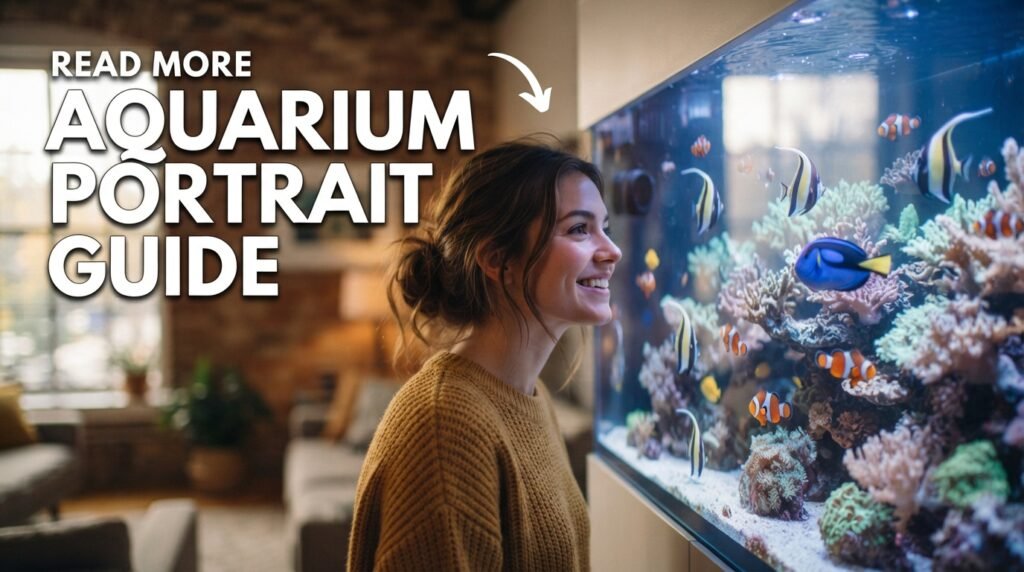
Rocks can provide contrast and structure.
Light-colored rocks can stand out against dark substrate, while darker stones can blend into a natural aquascape.
Use groups of rocks rather than placing every rock separately. A carefully arranged rock formation can create a stronger composition.
Artistic Aquarium Portrait
An aquarium portrait does not have to be a photograph.
Artists can create aquarium portraits using traditional painting, watercolor, pencil, acrylic, oil paint, or digital illustration.
An artistic portrait can exaggerate colors, simplify the aquarium layout, or create an imaginative underwater environment.
This allows the artist to combine real aquarium elements with fantasy.
Digital Aquarium Portrait
Digital artwork provides even more flexibility.
A digital aquarium portrait can feature unusual fish colors, fantasy plants, glowing underwater landscapes, futuristic aquariums, or imaginary aquatic environments.
It can also be created from a photograph and transformed into an artistic style.
For a realistic result, preserve natural fish anatomy, water reflections, and believable underwater lighting.
Aquarium Portrait for Home Decor
Aquarium portraits can be used as decorative artwork even if you do not own a large aquarium.
A large print of an underwater scene can work well in a living room, bedroom, office, hallway, or study.
Choose an image that complements the room’s existing colors.
A minimalist aquarium portrait can work well in modern interiors, while a colorful tropical fish portrait can add energy to a neutral space.
Aquarium Portrait Wall Art
A collection of aquarium portraits can create a themed wall.
For example, you could display several portraits featuring different fish species, aquatic plants, or aquascapes.
Keep the presentation consistent by using similar frame styles or image dimensions.
A single large aquarium portrait can also serve as a focal point above a desk, sofa, or cabinet.
How to Take Better Aquarium Portraits
Before photographing your aquarium, clean the glass and remove unnecessary objects from the surrounding area.
Allow the fish to behave naturally.
Use the aquarium’s existing lighting whenever possible and avoid excessive flashes.
Take many photographs rather than expecting the first image to be perfect.
Fish move quickly, so multiple attempts increase the chance of capturing an excellent moment.
Smartphone Aquarium Portrait Tips
Modern smartphones can capture impressive aquarium photographs.
Hold the phone close to the glass without touching it.
Tap the screen to focus on the fish rather than the glass.
Avoid using flash because it can create strong reflections.
Experiment with different angles and wait for the fish to move into a clean area.
A small amount of editing can improve brightness and contrast, but avoid making the image look unnatural.
Camera Settings for Aquarium Photography
A camera with manual controls can provide greater flexibility.
A faster shutter speed can help freeze moving fish.
A suitable aperture can separate the fish from the background while maintaining enough detail.
Higher ISO settings can help in darker aquariums, although excessive ISO can introduce image noise.
The ideal settings depend on the aquarium lighting, fish movement, lens, and desired style.
Aquarium Portrait for Social Media
Aquarium portraits can be excellent content for social media because they are visually engaging.
Close-up fish portraits, planted aquascapes, unusual aquarium designs, and before-and-after aquascaping images can all attract attention.
Vertical images can work particularly well for mobile-focused platforms.
When photographing fish, make sure the image remains sharp and the subject is clearly visible.
Common Aquarium Portrait Mistakes
Several simple mistakes can reduce image quality.
Dirty Glass
Fingerprints, algae, and water spots can become very visible in photographs.
Too Much Reflection
Bright windows and room lights can appear on the aquarium glass.
Blurry Fish
Slow shutter speeds can make moving fish appear blurry.
Overcrowded Composition
Too many decorations can distract from the main subject.
Excessive Editing
Over-saturated colors can make fish and plants look unrealistic.
Poor Focus
The camera may focus on the glass rather than the fish.
How to Create a Professional Aquarium Portrait
Start by choosing one clear subject.
If photographing a fish, wait until it enters an uncluttered part of the aquarium.
If photographing the whole tank, clean the glass and arrange the lighting carefully.
Use natural lines created by plants, rocks, and driftwood to guide the viewer’s eye.
Take photographs from several angles and select the strongest composition afterward.
The best aquarium portraits often look simple because the photographer has carefully removed visual distractions.
Aquarium Portrait Ideas
Here are some creative concepts to try:
- Single guppy close-up
- Betta fish portrait
- Angelfish side profile
- Fish swimming through plants
- Schooling fish portrait
- Macro aquatic plant portrait
- Black-background fish portrait
- Full planted aquarium
- Driftwood aquascape
- Rock-focused aquascape
- Fish reflection portrait
- Underwater jungle scene
- Minimalist aquarium portrait
- Colorful tropical aquarium
- Blackwater aquarium scene
Final Thoughts
An aquarium portrait can capture much more than the appearance of a fish tank. It can preserve the personality of a favorite fish, document an aquascape, create unique artwork, or become an attractive piece of home decoration.
The key is to focus on composition, lighting, clarity, and a strong subject. Whether you use a smartphone, professional camera, painting materials, or digital tools, an aquarium provides endless creative possibilities.
A successful portrait does not necessarily require an expensive camera or a huge aquarium. A clean tank, healthy fish, thoughtful composition, and patience can be enough to create an image that feels professional and memorable.
Frequently Asked Questions About Aquarium Portrait
What is an aquarium portrait?
An aquarium portrait is a photograph, painting, or digital artwork that focuses on an aquarium, fish, aquatic plants, or an underwater scene.
Can I take an aquarium portrait with a smartphone?
Yes. Modern smartphones can produce excellent aquarium portraits when reflections are controlled and the subject is properly focused.
What fish are best for aquarium portraits?
Colorful or distinctive fish such as guppies, bettas, angelfish, discus, and goldfish can make excellent portrait subjects.
How do I avoid reflections when photographing an aquarium?
Reduce surrounding light, avoid photographing directly toward windows, and position yourself so bright objects are not reflected in the aquarium glass.
Should I use flash for aquarium photography?
Flash is usually best avoided because it can create strong reflections on the glass and may disturb fish.
How can I photograph a moving fish without blur?
Using a faster shutter speed can help freeze fish movement. Good aquarium lighting also makes it easier to use faster camera settings.
Can aquarium portraits be used as wall art?
Yes. Aquarium portraits can be printed and framed as decorative artwork for living rooms, bedrooms, offices, and other spaces.
What makes a good fish portrait?
A good fish portrait usually has a sharp subject, clean glass, attractive lighting, minimal distractions, and enough surrounding space to create a balanced composition.
Can I create an aquarium portrait digitally?
Yes. Digital artwork can recreate a real aquarium or create an imaginative underwater scene with fish, plants, rocks, and lighting effects.
Are aquarium portraits good for social media?
Yes. Fish and aquascape photography can be visually engaging, especially when the image is sharp, well-lit, and focused on a clear subject.