
 By admin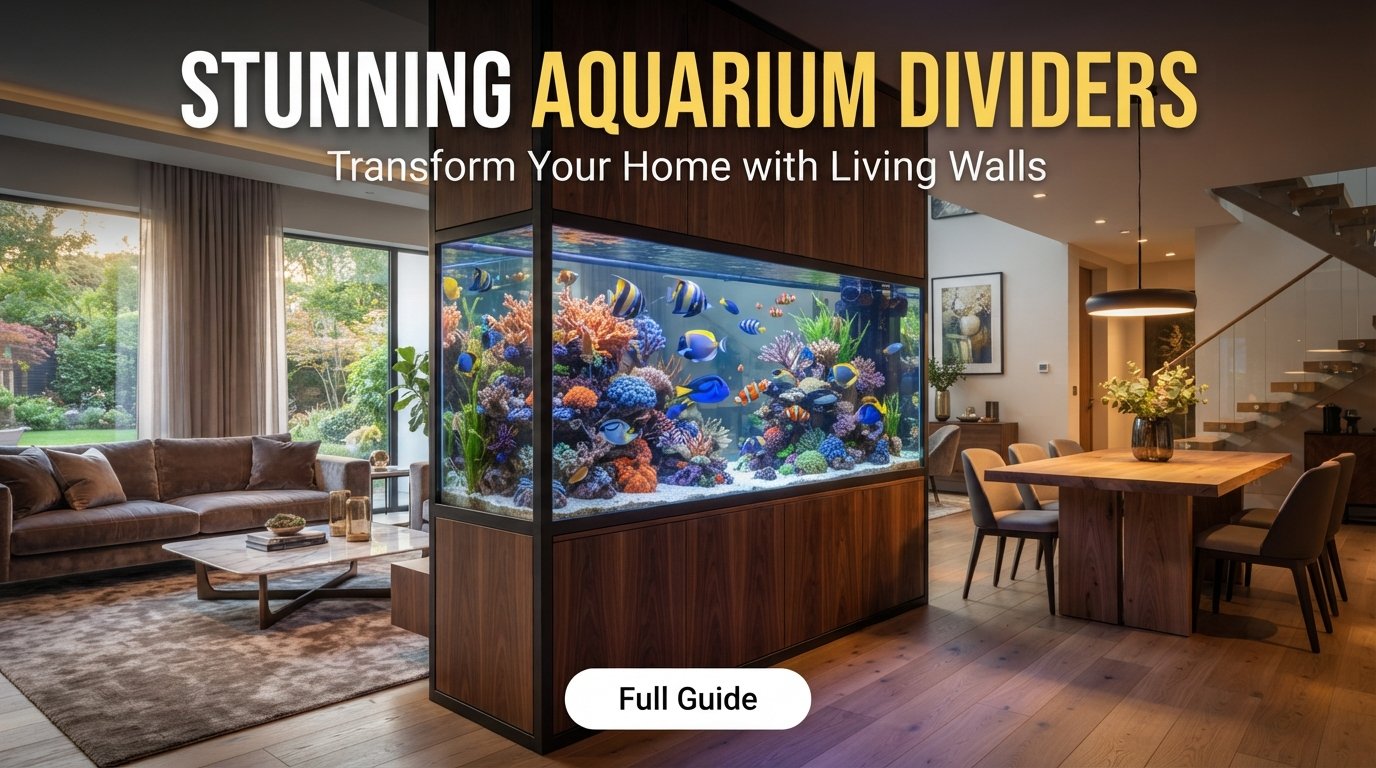
A partition with aquarium is a creative interior design solution that combines the practical purpose of dividing a room with the beauty of an underwater display. Instead of using a solid wall, curtain, bookshelf, or traditional divider, an aquarium can create a visually open separation between two spaces while allowing light and views to pass through.
Aquarium partitions are especially popular in modern homes because they can turn an ordinary room divider into a living focal point. A well-designed aquarium can separate a living room from a dining area, divide a bedroom from a study space, create privacy between an entrance and lounge, or separate areas in an office or commercial space.
The best partition with aquarium designs balance three things: attractive appearance, structural safety, and the needs of the aquatic animals. The aquarium should not simply look beautiful from the front. It should also be practical to maintain and provide a healthy environment for fish and plants.
What Is a Partition With Aquarium?
A partition with aquarium is a room-dividing structure that incorporates a fish tank into its design. The aquarium can be positioned in the center of a custom wall, placed inside a cabinet-style divider, or designed as a freestanding transparent partition.
Unlike a traditional partition, an aquarium divider provides separation without completely closing off the space. Because glass or acrylic allows people to see through the tank, both sides of the room can remain visually connected.
The design can range from a simple rectangular aquarium mounted into a partition wall to a large custom-built aquarium that extends from the floor almost to the ceiling.
Why Choose an Aquarium as a Room Partition?
A conventional partition mainly separates spaces. An aquarium partition can perform several functions at the same time.
It can:
- Divide an open-plan room
- Add visual interest
- Create a natural focal point
- Improve the appearance of modern interiors
- Provide a relaxing underwater view
- Separate spaces without making them feel closed
- Incorporate lighting into the room design
- Add greenery through aquatic plants
For homeowners who want something different from ordinary room dividers, an aquarium can provide a distinctive architectural feature.
Popular Partition With Aquarium Ideas
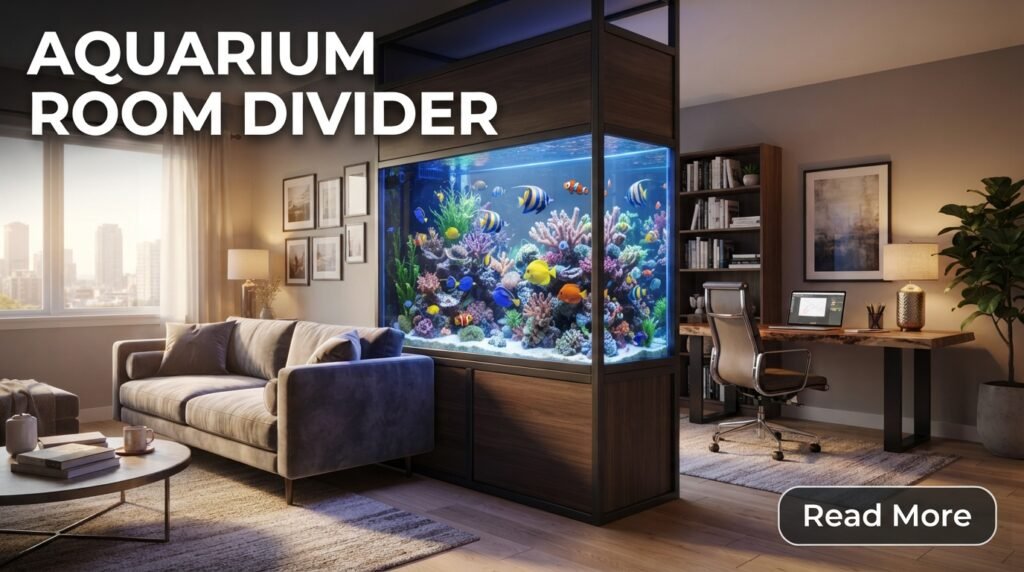
There are many ways to incorporate an aquarium into a partition. The ideal option depends on the room layout and the desired level of privacy.
1. Double-Sided Aquarium Partition
A double-sided aquarium is one of the most attractive designs.
The aquarium is designed so that it can be viewed from both rooms. For example, it could separate a living room and dining room while providing a beautiful underwater view from each side.
This design works particularly well in open-plan homes.
2. Floor-to-Ceiling Aquarium Partition
A floor-to-ceiling aquarium can create a dramatic architectural effect.
The tank extends vertically through much of the room, making the aquarium appear like a living wall. Tall aquatic plants can emphasize the height and create a natural underwater forest effect.
Because of the large water volume and structural weight, professional planning is particularly important for this type of installation.
3. Half-Wall Aquarium Divider
A half-wall aquarium is a more subtle alternative.
The lower portion can contain storage or cabinetry while the aquarium occupies the upper section. This design provides some physical separation without completely blocking the view between spaces.
It can work well between a kitchen and dining room or between a living room and entryway.
4. Aquarium Room Divider With Cabinet
An aquarium can be combined with built-in storage to create a multifunctional partition.
The lower cabinets can hide filtration equipment and provide storage, while the aquarium becomes the visual centerpiece.
This is especially useful in smaller homes where every part of the room needs to serve a practical purpose.
5. Modern Glass Aquarium Partition
For minimalist interiors, a simple glass aquarium with a clean cabinet can provide an elegant solution.
Avoiding excessive decorations allows the aquarium to blend with modern furniture and architecture.
A simple planted aquascape can be particularly effective because the natural greenery adds softness to an otherwise minimalist room.
Partition With Aquarium Design Styles
| Design | Appearance | Best Use |
|---|---|---|
| Double-Sided | Visible from both rooms | Open-plan homes |
| Floor-to-Ceiling | Dramatic and luxurious | Large rooms |
| Half-Wall | Subtle separation | Dining areas |
| Cabinet Partition | Practical and functional | Small homes |
| Minimalist Glass | Clean and modern | Contemporary interiors |
| Planted Divider | Natural and relaxing | Living spaces |
| Built-In Wall | Architectural | Luxury interiors |
| Freestanding | Flexible placement | Apartments and offices |
Partition Between Living Room and Dining Room
One of the most popular uses for an aquarium partition is separating a living room from a dining room.
Open-plan layouts can sometimes feel too large or lack visual definition. A partition with aquarium can establish a clear boundary without making either area feel completely isolated.
A medium or large planted aquarium can create a natural transition between the two spaces.
For a sophisticated appearance, coordinate the aquarium cabinet with the colors and materials used in the surrounding furniture.
Aquarium Partition Between Kitchen and Dining Area
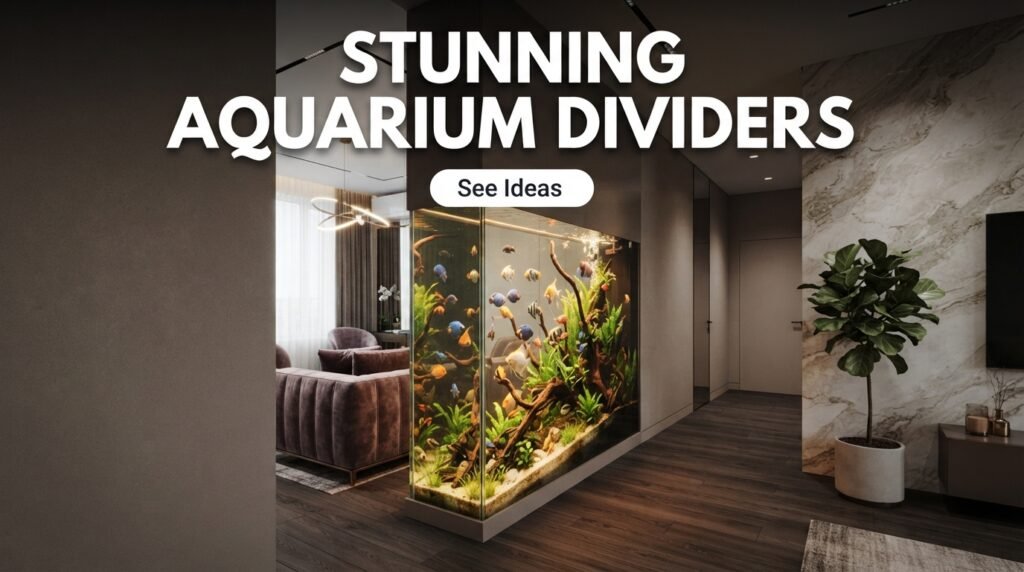
An aquarium can also be used between a kitchen and dining space.
This approach can visually separate the cooking area while maintaining an open connection.
However, placement is important. The aquarium should be protected from excessive heat, cooking fumes, splashes, and grease. Easy access to the aquarium’s maintenance area is also important.
A sealed and properly planned design can help protect the aquarium from the kitchen environment.
Aquarium Partition for a Bedroom
A partition with aquarium can be used to separate a bedroom from a dressing area, home office, or sitting area.
A smaller aquarium can provide a calming feature without dominating the room.
For bedrooms, consider quieter filtration equipment because excessive pump or filter noise can disturb sleep.
Soft aquarium lighting can also create an attractive evening atmosphere, although lighting schedules should be designed around the needs of the aquarium inhabitants rather than simply room decoration.
Aquarium Partition for an Office
Aquarium partitions are also suitable for offices.
A large aquarium can separate a reception area from a waiting space or divide an open-plan office into functional zones.
A planted aquarium can provide a natural visual feature while maintaining the professional appearance of the workplace.
For offices, automated equipment and a reliable maintenance schedule can make long-term care easier.
Freestanding Aquarium Partition
A freestanding aquarium does not need to be permanently built into a wall.
It can be installed as a standalone divider between two areas. This provides more flexibility because the layout can potentially be changed later.
A freestanding design can also be useful for renters or businesses that do not want major structural modifications.
However, the stand must be specifically designed to support the fully filled aquarium.
Built-In Aquarium Partition
A built-in aquarium can look more integrated than a freestanding tank.
The surrounding cabinetry can conceal filters, pumps, electrical equipment, and plumbing while creating a seamless appearance.
Before construction, plan access panels carefully. A beautiful built-in aquarium can become difficult to maintain if equipment is installed without enough access.
Choosing the Right Aquarium Size
The aquarium size should match the room and the intended fish.
A larger tank provides more opportunities for aquascaping, but it also requires more structural support and maintenance.
Consider:
- Tank length
- Tank height
- Tank depth
- Total water volume
- Fish requirements
- Filtration requirements
- Maintenance access
- Floor capacity
- Available electrical connections
Do not choose a tank simply because the largest possible aquarium looks impressive. The aquarium should remain practical for long-term care.
Structural Safety
Structural support is one of the most important considerations when installing a partition with aquarium.
Water weighs approximately one kilogram per liter. A 500-liter aquarium therefore contains roughly 500 kilograms of water before accounting for the weight of the tank, stand, substrate, rocks, decorations, and equipment.
Large aquarium partitions can therefore place substantial loads on the floor.
For major installations, especially floor-to-ceiling or built-in designs, consult a qualified structural professional before construction.
Choosing Glass or Acrylic
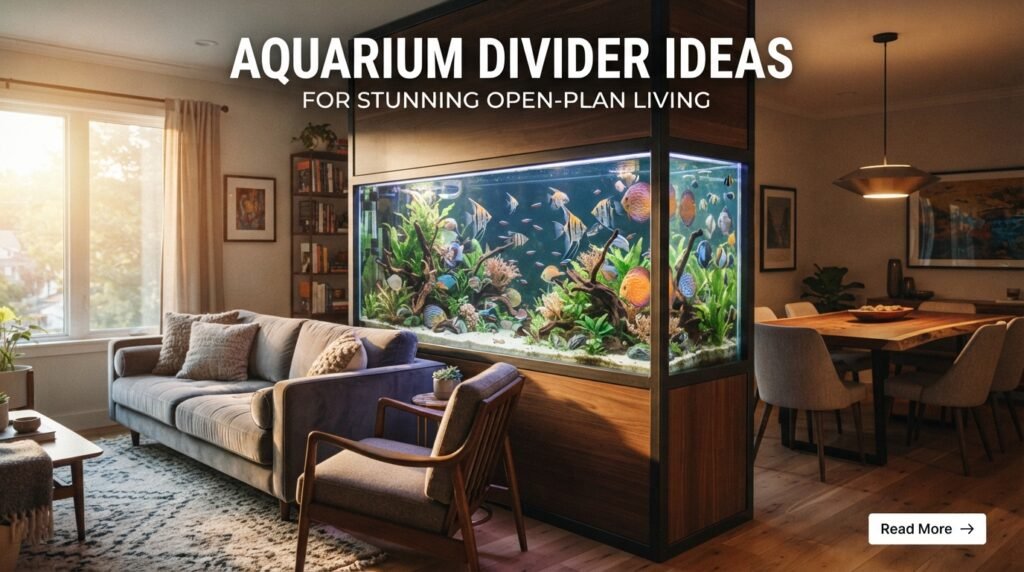
Large aquarium partitions can use either glass or acrylic depending on the design.
Glass is known for its clarity and resistance to scratching. Acrylic is lighter and can be useful for certain large custom shapes.
The appropriate material depends on the tank dimensions, thickness requirements, construction method, support system, and professional fabrication.
For a custom aquarium partition, use a reputable aquarium builder rather than attempting to construct a large structural tank without appropriate expertise.
Freshwater Aquarium Partition
Freshwater is often an excellent choice for a home aquarium divider.
A freshwater planted aquarium can include:
- Anubias
- Java fern
- Java moss
- Vallisneria
- Amazon sword
- Cryptocoryne
- Stem plants
The exact plants should be selected according to the aquarium’s lighting, substrate, water conditions, and maintenance routine.
A planted freshwater aquarium can create the appearance of a miniature underwater garden between two rooms.
Marine Aquarium Partition
A marine aquarium can provide a spectacular display.
A saltwater partition may feature colorful marine fish, live rock, corals, and carefully designed lighting.
However, marine aquariums can require more specialized equipment and water-quality management.
A reef aquarium partition should therefore be planned around the long-term needs of the animals rather than only the desired visual effect.
Best Fish for Aquarium Partitions
The fish should be selected according to the aquarium’s dimensions and environment.
For freshwater partitions, suitable choices may include peaceful community fish, schooling fish, certain tetras, rasboras, gouramis, angelfish in appropriately sized aquariums, and other compatible species.
The aquarium’s height should not be used as a substitute for swimming length. Fish that need substantial horizontal swimming space require an appropriately long tank.
Avoid choosing fish based solely on how attractive they look as juveniles. Always consider their adult size and behavior.
Creating Privacy With an Aquarium
One advantage of an aquarium partition is that it can provide partial visual separation without creating a solid wall.
Dense plants can create additional privacy.
Tall plants placed toward the back of the aquarium can obscure direct views while still allowing light to pass through.
Hardscape elements such as driftwood and rocks can also create visual barriers.
This makes a planted aquarium particularly useful when the goal is to divide spaces while maintaining an open atmosphere.
Lighting Ideas
Aquarium lighting can become part of the overall interior design.
A planted aquarium requires lighting suitable for plant growth, while a marine reef system may require specialized lighting.
For the room itself, avoid excessively bright aquarium lighting if it creates glare on nearby screens or windows.
A controlled lighting schedule can make the aquarium attractive during the day and evening while maintaining a consistent environment for the fish and plants.
Filtration and Equipment Placement
A partition aquarium should be designed with equipment access in mind.
The filter, heater, pumps, tubing, and electrical components need to be accessible for inspection and maintenance.
Cabinet-style partitions are particularly useful because equipment can be hidden below the aquarium.
However, hiding equipment should never mean making it impossible to reach.
A good design makes maintenance easy while keeping the visible portion of the aquarium clean and attractive.
Maintenance Access
Maintenance access is sometimes overlooked when people focus on the appearance of a partition aquarium.
You should be able to:
- Reach the aquarium’s interior
- Clean the glass
- Trim plants
- Remove debris
- Maintain filters
- Check equipment
- Perform water changes
- Inspect fish
If the aquarium is extremely tall, additional tools may be necessary for reaching the bottom.
A beautiful aquarium that is difficult to maintain can quickly become frustrating.
Aquarium Partition for Small Spaces
A small apartment does not necessarily need a huge aquarium.
A compact aquarium can be incorporated into a partial divider between the living room and dining area.
Use a simple design with a clean cabinet and carefully selected plants.
Keeping the layout visually uncluttered can make the room feel larger rather than smaller.
Luxury Partition With Aquarium
For luxury interiors, a custom aquarium can be combined with stone, wood, glass, metal, or modern cabinetry.
A large planted aquarium with integrated lighting can become a major architectural feature.
Some luxury designs use an almost frameless appearance so that the water appears to extend directly through the wall.
The surrounding materials should complement the aquarium rather than compete with it.
Common Mistakes to Avoid
Several mistakes can reduce the practicality of an aquarium partition.
Poor Structural Planning
Never install a very large aquarium without considering the weight and floor structure.
Limited Maintenance Access
Make sure filters and other equipment can be easily reached.
Wrong Fish Selection
Choose fish based on their adult requirements, not just their appearance.
Too Many Decorations
Overcrowding can make the aquarium look messy and reduce swimming space.
Excessive Lighting
More light is not always better. Lighting should match the biological requirements of plants and animals.
Poor Location
Avoid areas exposed to excessive heat, direct sunlight, frequent physical contact, or other environmental problems.
How to Design the Perfect Partition With Aquarium
Start by deciding what the partition needs to accomplish.
If you mainly want visual separation, a smaller aquarium may be sufficient. If the aquarium is intended to become the main architectural feature, a larger built-in design may be appropriate.
Next, determine the aquarium’s dimensions and livestock requirements.
Then plan filtration, lighting, electrical connections, maintenance access, structural support, and cabinetry before construction begins.
Finally, choose the aquascape and decorative materials that match the surrounding interior.
Final Thoughts
A partition with aquarium is one of the most creative ways to divide an interior space. It combines architecture, furniture, and an underwater environment into a single feature.
From a simple freestanding divider to a dramatic floor-to-ceiling aquarium wall, there are options for almost every type of interior. Planted freshwater aquariums are particularly effective because they add natural greenery while creating visual separation.
The most important part of the project is balancing design with practicality. Structural safety, fish compatibility, filtration, lighting, maintenance access, and long-term care should all be considered before installation.
When properly planned, an aquarium partition can transform an ordinary open-plan room into a visually impressive and relaxing space.
Frequently Asked Questions About Partition With Aquarium
What is a partition with aquarium?
A partition with aquarium is a room divider that incorporates a fish tank into its structure. It can separate two spaces while allowing people to see through or around the aquarium.
Can an aquarium be used as a room divider?
Yes. Aquariums are commonly designed as room dividers between living rooms, dining rooms, offices, entrances, and other spaces.
Is a double-sided aquarium a good room divider?
Yes. A double-sided aquarium allows people in both rooms to enjoy the underwater display and maintains a visual connection between the spaces.
Can I build an aquarium into a wall?
Yes. A custom aquarium can be incorporated into a wall or architectural partition. Structural support and maintenance access should be planned before installation.
What size aquarium is best for a room partition?
The best size depends on the room, available floor space, structural capacity, fish species, and desired design. There is no single ideal size for every room.
Can an aquarium partition provide privacy?
Yes. Dense aquatic plants, driftwood, and carefully positioned decorations can reduce visibility while still allowing light through the aquarium.
Is a planted aquarium good for a room divider?
Yes. A planted aquarium can provide natural greenery and make a partition feel more organic and relaxing.
Is an aquarium partition difficult to maintain?
It can be more challenging than a normal aquarium because access may be restricted by the surrounding structure. Designing adequate maintenance access from the beginning makes care much easier.
Can I use a marine aquarium as a partition?
Yes. A marine aquarium can make a spectacular divider, but saltwater systems may require more specialized equipment and maintenance.
Is an aquarium partition safe?
It can be safe when properly designed and installed. Large aquariums are extremely heavy, so structural support, secure construction, electrical safety, and professional installation are important.
Can an aquarium partition work in a small apartment?
Yes. A compact aquarium divider can separate areas without making the room feel completely closed. A simple design is usually more practical for smaller spaces.
What is the best place for an aquarium room divider?
The best location is one that provides adequate structural support, convenient access to electrical and water facilities, protection from excessive sunlight and heat, and enough space for maintenance.