
 By admin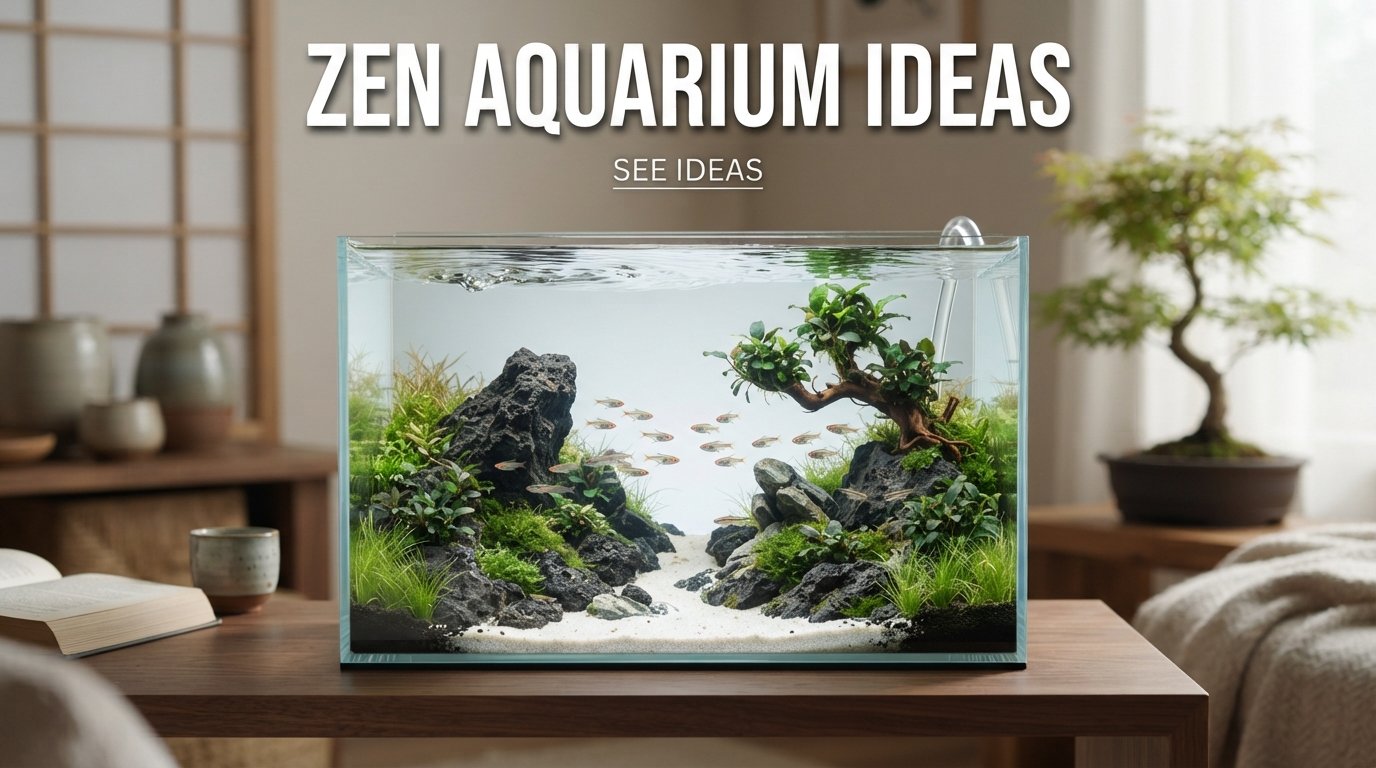
Zen aquarium ideas are perfect for anyone who wants to create a peaceful, natural-looking aquarium that brings a sense of calm into a room. A Zen aquarium usually focuses on simplicity, balance, natural materials, soft colors, and carefully arranged plants, rocks, and driftwood. Instead of filling the tank with too many decorations, the goal is to create an uncluttered underwater environment that feels relaxing and harmonious.
A well-designed Zen aquarium can become a beautiful focal point in a living room, bedroom, office, or meditation space. You can create this style in a small nano aquarium or a large planted tank. The most important elements are thoughtful composition, natural textures, suitable plants, gentle lighting, and enough open space for the fish to move naturally.
What Is a Zen Aquarium?
A Zen aquarium is an aquarium design inspired by the principles of simplicity, balance, nature, and tranquility. It often uses natural stones, driftwood, aquatic plants, sand, and subtle lighting rather than artificial decorations.
Zen aquarium designs are closely related to minimalist aquascaping. However, a Zen-style aquarium does not necessarily have to follow one strict aquascaping method. You can adapt the concept to different aquarium sizes, fish species, and plant combinations.
The main idea is to avoid visual clutter. Every element should have a purpose and contribute to the overall sense of harmony.
Key Elements of a Zen Aquarium
Creating a peaceful aquarium becomes easier when you understand the basic elements that define the style.
| Element | Zen Aquarium Approach |
|---|---|
| Substrate | Natural sand or subtle-colored gravel |
| Rocks | Simple natural stones with balanced placement |
| Wood | Minimal driftwood with organic shapes |
| Plants | Green, natural-looking aquatic plants |
| Lighting | Soft and comfortable illumination |
| Decorations | Minimal and natural |
| Fish | Peaceful species with gentle movement |
| Layout | Open, balanced, and uncluttered |
The combination of these elements creates an aquarium that feels natural rather than overly decorated.
1. Minimalist Zen Aquarium
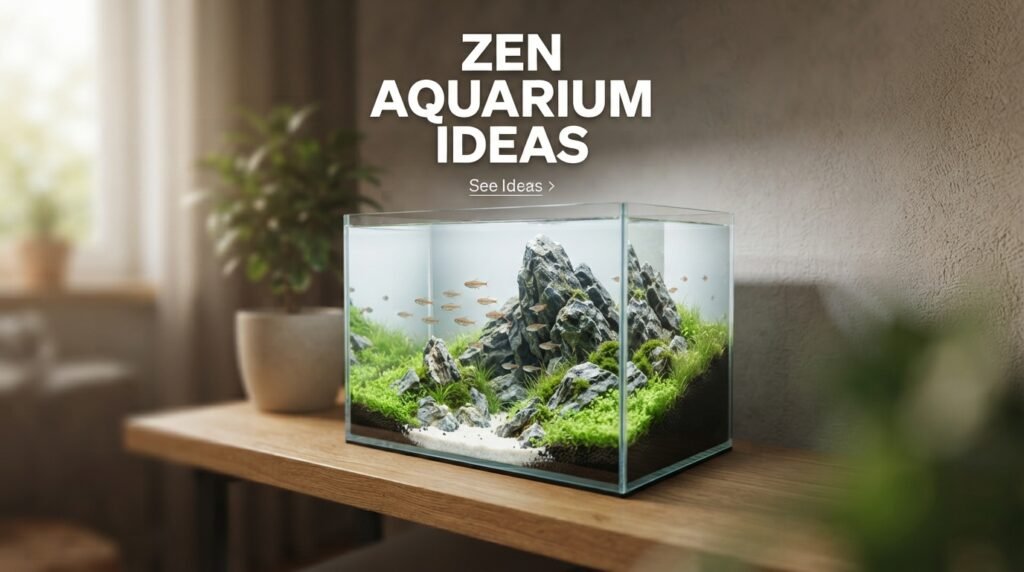
One of the easiest Zen aquarium ideas is a minimalist layout. Start with a simple substrate and use only a few carefully selected rocks or pieces of driftwood.
Leave a significant amount of open space in the aquarium. This empty area is important because it prevents the tank from looking crowded.
A small group of peaceful fish can move through the open area while plants and rocks create structure around them.
This approach works particularly well for modern homes where the aquarium needs to complement a clean interior design.
2. Zen Rock Aquarium
Rocks can become the main visual feature of a Zen aquarium. Choose natural-looking stones with similar colors and textures.
Instead of placing rocks randomly, create a balanced composition. A larger stone can act as the focal point, while smaller stones gradually lead the eye toward the surrounding area.
Avoid using too many different types of rocks. A consistent stone style usually produces a more peaceful appearance.
3. Zen Aquarium With Sand
Natural sand is another excellent choice for a Zen-inspired aquarium. Light-colored sand can create a bright and peaceful appearance, while darker sand can produce a more dramatic and intimate environment.
Sand also provides a strong contrast against green aquatic plants and darker stones.
For a simple design, use a relatively open sandy foreground and place plants and rocks toward the back and sides of the aquarium.
4. Zen Planted Aquarium
Plants are an important part of many Zen aquarium ideas because they introduce natural color and movement.
Rather than filling the entire tank with plants, select a few varieties and arrange them carefully. Plants with simple shapes often work particularly well.
Good options can include:
- Anubias
- Java fern
- Cryptocoryne
- Java moss
- Vallisneria
- Bucephalandra
- Dwarf sagittaria
- Amazon sword
Choose plants according to your aquarium’s lighting, water conditions, and maintenance requirements.
5. Zen Aquarium With Driftwood
Driftwood can give a Zen aquarium a natural forest-like appearance. A single curved piece can become the central feature of the entire layout.
Position the wood so that it creates a sense of movement without dominating the aquarium.
Small plants or moss can be attached around the wood to make it appear more established and natural.
The best Zen layouts usually avoid using too many pieces of wood. One strong piece can often be more effective than several unrelated pieces.
6. Japanese-Inspired Zen Aquarium
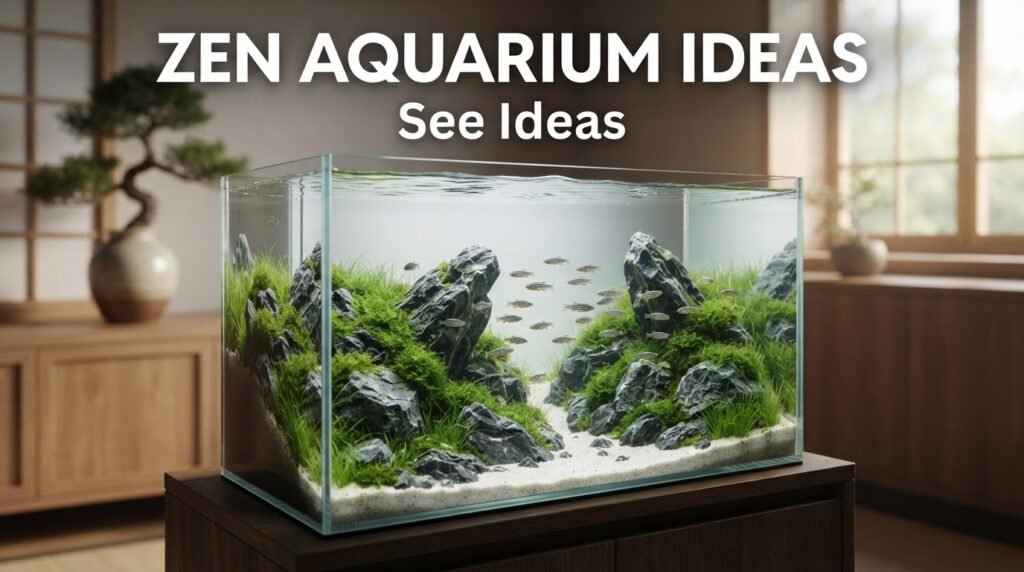
Japanese-inspired aquarium designs are a natural match for the Zen concept. These layouts often emphasize simplicity, asymmetry, natural materials, and carefully planned negative space.
You can create this style using:
- Natural stones
- Fine sand
- Small aquatic plants
- Driftwood
- Open swimming areas
- Soft lighting
Avoid making everything perfectly symmetrical. Natural landscapes rarely have perfect symmetry, and a slightly asymmetrical arrangement can create a more organic appearance.
7. Iwagumi-Inspired Zen Aquarium
An Iwagumi-inspired aquarium can create an especially clean and peaceful Zen appearance.
The design generally centers around a group of carefully arranged stones. One dominant stone acts as the main focal point, while supporting stones create balance.
Low-growing plants can be used to create a simple green carpet around the rocks.
This style can work beautifully in nano aquariums because the limited number of elements makes the tank easier to keep visually organized.
8. Zen Nano Aquarium
You do not need a large aquarium to create a Zen environment. A small nano tank can be transformed into a peaceful miniature landscape.
For a small aquarium, choose just a few elements:
- One main stone
- A small piece of wood
- A few aquatic plants
- Fine substrate
- A small number of suitable inhabitants
The smaller the aquarium, the more important it becomes to avoid overcrowding.
9. Zen Betta Aquarium
A betta aquarium can also have a Zen-inspired design. Bettas often look beautiful against simple natural backgrounds and green plants.
Use smooth substrate, a small piece of driftwood, and plants that provide resting areas.
Avoid sharp decorations and leave enough open swimming space.
A peaceful, uncluttered environment can also make it easier to observe the betta’s natural behavior.
10. Zen Guppy Aquarium
Guppies can bring gentle movement and bright colors to a Zen aquarium.
Because guppies are active swimmers, provide open swimming areas while placing plants around the sides and back.
A simple combination of green plants, natural stones, and a neutral substrate can provide an attractive background for colorful guppies.
Avoid adding too many brightly colored artificial decorations because they can compete with the natural colors of the fish.
11. Zen Shrimp Aquarium
Shrimp tanks are particularly suitable for minimalist Zen designs.
Small freshwater shrimp can move across rocks, plants, wood, and substrate, creating subtle activity throughout the aquarium.
A shrimp-focused Zen aquarium can use moss, small stones, driftwood, and low-growing plants.
Because shrimp are small, even a compact aquarium can provide an interesting natural landscape.
12. Zen Aquarium With Moss
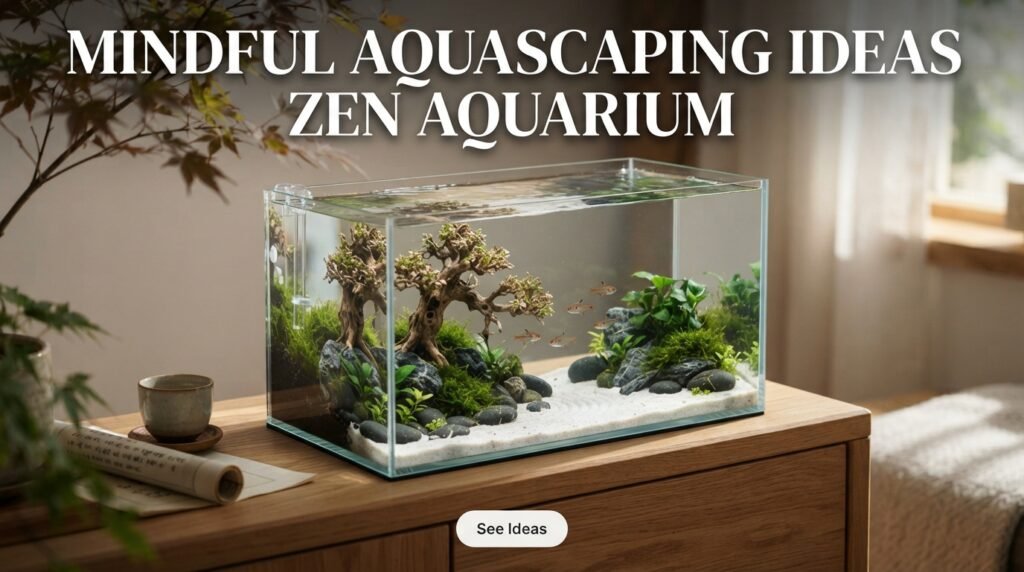
Moss is useful for creating a soft, established appearance.
Java moss and other suitable aquarium mosses can be attached to rocks or driftwood. Over time, they can create a natural green texture.
Moss can also soften the appearance of hardscape materials, making the aquarium look more like a miniature underwater landscape.
13. Forest-Style Zen Aquarium
A forest-inspired Zen aquarium uses driftwood and plants to create the feeling of a miniature underwater forest.
Place several branches or one larger piece of wood toward the rear of the aquarium. Add plants and moss around the base.
Leave some open space toward the front so the composition does not become too dense.
This style works particularly well with natural brown wood, green plants, and darker substrate.
14. Zen Blackwater Aquarium
A blackwater aquarium can provide a very different interpretation of Zen design.
Dark water, natural wood, leaves, and subdued lighting can create an intimate and peaceful environment.
Blackwater setups require careful attention to water parameters and suitable livestock. They should be planned according to the needs of the fish rather than simply trying to create dark-colored water.
15. Zen Aquarium for a Bedroom
A small Zen aquarium can work beautifully in a bedroom.
Choose a quiet filtration system and avoid excessively bright lighting. A simple planted layout can create a calming visual element without making the room feel busy.
A compact aquarium on a stable stand or cabinet can become a peaceful part of the room’s overall design.
16. Zen Aquarium for a Living Room
A larger Zen aquarium can serve as a natural centerpiece in a living room.
For a modern interior, consider a clean rectangular aquarium with neutral-colored substrate and carefully arranged natural hardscape.
The aquarium should complement the room rather than compete with furniture, artwork, or lighting.
17. Zen Aquarium With White Sand
White or very light sand can create a bright, clean appearance.
Combine it with darker rocks and green plants for contrast. The result can resemble a miniature natural landscape.
However, light-colored substrate may show waste and algae more easily, so regular maintenance is important.
18. Dark Zen Aquarium
Zen aquariums do not have to be bright. A darker design can create a relaxing and sophisticated atmosphere.
Use dark substrate, dark stones, natural wood, and green plants. Gentle lighting can highlight the main features without illuminating the entire tank intensely.
This design can work especially well in modern interiors.
19. Zen Aquarium With Floating Plants
Floating plants can add a soft natural appearance to the surface of the aquarium.
They can also create shaded areas that some fish prefer.
Do not allow floating plants to completely cover the surface. Maintain enough open water for proper gas exchange and adequate lighting for submerged plants.
20. Zen Aquarium With Open Space
One of the most important Zen aquarium ideas is simply leaving room.
Many beginners believe that a beautiful aquarium needs to be filled with decorations. In reality, empty space can make a layout more attractive.
Open areas allow fish to swim naturally and make the main hardscape elements easier to appreciate.
Think of empty space as part of the design rather than wasted aquarium space.
Choosing Fish for a Zen Aquarium
Fish should complement the peaceful appearance of the aquarium.
Depending on the tank size and water conditions, suitable peaceful species may include certain small tetras, rasboras, guppies, small livebearers, and other community-friendly fish.
Do not choose fish based only on appearance. Consider their adult size, swimming behavior, social requirements, compatibility, and minimum aquarium requirements.
A peaceful-looking aquarium should also be a healthy environment for its inhabitants.
Choosing the Right Lighting
Lighting can dramatically change the atmosphere of a Zen aquarium.
Soft, balanced lighting usually works better than extremely bright lighting for a calm aesthetic. However, planted aquariums still need appropriate light for healthy plant growth.
A timer can help maintain a consistent day and night schedule.
Avoid leaving aquarium lights on for excessive periods because this can encourage algae growth.
Choosing a Zen Aquarium Background
A simple background can make the aquarium appear more cohesive.
Black, dark gray, white, or natural-colored backgrounds can all work depending on the layout.
A dark background can make green plants and colorful fish stand out, while a lighter background can create a brighter and more open appearance.
How to Arrange a Zen Aquarium
Start by choosing the focal point. This could be a large rock, a curved piece of driftwood, or an interesting group of plants.
Next, place supporting elements around it.
Avoid creating a straight line of rocks across the tank. Instead, use different heights and natural angles.
Keep the foreground relatively open and place taller plants toward the back.
Finally, step away from the aquarium and look at the composition from a distance. Small adjustments can make a significant difference.
Simple Zen Aquarium Setup Process
Creating a Zen aquarium does not have to be complicated.
First, clean the aquarium and prepare the equipment. Add the substrate and create a gentle slope from front to back.
Next, place the largest hardscape element. Add smaller rocks or wood pieces around it.
Plant the aquarium carefully, placing taller plants toward the rear and shorter plants toward the foreground.
Fill the aquarium slowly to avoid disturbing the substrate.
Install the filter, heater if necessary, and lighting system.
Allow the aquarium to establish its biological cycle before adding fish or other livestock.
Zen Aquarium Maintenance
A peaceful aquarium still requires regular care.
Basic maintenance can include:
- Regular water changes
- Removing excess algae
- Trimming aquatic plants
- Cleaning aquarium equipment
- Checking water parameters
- Removing dead leaves
- Monitoring fish behavior
- Feeding fish appropriately
The goal is not simply to make the aquarium look beautiful. Long-term stability and healthy livestock are more important than appearance.
Common Mistakes With Zen Aquarium Design
One common mistake is adding too many decorations.
Another is using several unrelated colors and materials. A Zen aquarium generally looks better when the number of visual elements is limited.
Overcrowding the aquarium with fish can also destroy the peaceful appearance and create unnecessary stress for the livestock.
Poor plant selection is another issue. Choose plants that match your lighting and maintenance ability.
Finally, do not sacrifice fish welfare for aesthetics. Every design decision should support a suitable environment for the animals living in the aquarium.
Zen Aquarium Ideas for Different Tank Sizes
| Tank Size | Zen Design Approach |
|---|---|
| 5 gallon | Small stone, moss, and simple plants |
| 10 gallon | Nano aquascape with rocks and low plants |
| 20 gallon | Balanced planted landscape |
| 29 gallon | Larger hardscape and community fish |
| 40 gallon | Natural forest or river-inspired layout |
| 55 gallon | Large-scale planted Zen landscape |
The available space changes the scale of your design, but the same principles of simplicity and balance can be applied to almost any aquarium.
Final Thoughts
Zen aquarium ideas are about more than adding attractive decorations to a fish tank. They are about creating a balanced underwater environment where natural materials, plants, fish, light, and open space work together.
You can create a Zen aquarium with rocks and sand, a planted aquascape with driftwood, a minimalist nano tank, or a larger natural community aquarium. The best design is one that fits your space, your maintenance ability, and the needs of your aquatic life.
Start with fewer elements rather than more. Choose a clear focal point, use natural textures, maintain open swimming space, and allow the aquarium to develop naturally over time. With thoughtful planning, even a simple aquarium can become a peaceful and beautiful part of your home.
Frequently Asked Questions About Zen Aquarium Ideas
What is a Zen aquarium?
A Zen aquarium is a peaceful aquarium design based on simplicity, balance, natural materials, and minimal decoration. It commonly uses rocks, driftwood, aquatic plants, sand, and open space.
How do I make my aquarium look Zen?
Use a limited number of natural materials, choose a simple color palette, create a clear focal point, and leave open space. Avoid overcrowding the aquarium with decorations or fish.
What plants are good for a Zen aquarium?
Anubias, Java fern, Cryptocoryne, Java moss, Bucephalandra, Vallisneria, and dwarf sagittaria can work well depending on the aquarium’s conditions.
Can a small aquarium have a Zen design?
Yes. Nano aquariums can be excellent for Zen designs because their small size encourages a minimalist approach. A few rocks, plants, and a simple substrate can create an attractive miniature landscape.
What substrate is best for a Zen aquarium?
Natural sand, neutral-colored gravel, and aquarium soil can all work. The best option depends on the plants, livestock, and overall design you want to create.
Are Zen aquariums difficult to maintain?
They can be relatively easy to maintain when the design uses suitable plants and livestock. However, all aquariums require regular water changes, cleaning, monitoring, and appropriate care.
What fish look good in a Zen aquarium?
Peaceful community fish and small schooling species can complement a Zen aquarium. Guppies, rasboras, certain tetras, and other compatible species can work depending on the aquarium size and conditions.
Can I create a Zen aquarium without live plants?
Yes. However, live plants can add a particularly natural appearance. If you choose artificial plants, select realistic-looking designs and avoid overcrowding the tank.
What colors work best for a Zen aquarium?
Natural colors such as green, brown, gray, black, white, and muted earth tones usually create a calm appearance.
Should a Zen aquarium have decorations?
It can, but decorations should be used selectively. Natural rocks, driftwood, plants, and substrate are usually more suitable for the Zen aesthetic than numerous artificial ornaments.
Can a Zen aquarium be placed in a bedroom?
Yes, provided the aquarium is properly supported and maintained. A quiet filter and moderate lighting can make a small aquarium suitable for a bedroom environment.
What is the most important rule for Zen aquarium design?
Keep the design balanced and uncluttered. Use only the elements necessary to create a natural landscape and leave enough open space for the aquarium to breathe visually.