
 By admin
An aquarium for home is more than just a decorative feature—it is a living ecosystem that brings beauty, tranquility, and a touch of nature into your living space. Whether you’re looking for a small desktop fish tank, a modern planted aquarium, or a large statement piece for your living room, the right home aquarium can transform any room into a relaxing and inviting environment.
This comprehensive guide covers everything you need to know about choosing the perfect aquarium for your home, including tank sizes, design ideas, fish selection, equipment, maintenance, and decorating tips.
Why Choose an Aquarium for Your Home?
Home aquariums offer both aesthetic and practical benefits.
Advantages include:
- Creates a relaxing atmosphere
- Enhances home décor
- Adds natural beauty
- Provides an educational hobby
- Encourages creativity through aquascaping
- Offers a peaceful viewing experience
- Suitable for homes of all sizes
A well-maintained aquarium can become the centerpiece of your living room, bedroom, office, or dining area.
Choosing the Right Aquarium Size
Select a tank size based on your available space and experience level.
Small Aquarium (5–20 Gallons)
Best for:
- Bedrooms
- Home offices
- Apartments
- Betta fish
- Shrimp
- Nano fish
Small aquariums fit easily on desks or shelves but require consistent maintenance because water conditions change more quickly.
Medium Aquarium (20–55 Gallons)
Ideal for:
- Family rooms
- Living rooms
- Community fish
- Planted aquariums
This size offers a good balance between space and ease of maintenance.
Large Aquarium (75 Gallons and Above)
Perfect for:
- Spacious living rooms
- Open-concept homes
- Large aquascapes
- Discus or angelfish
- Reef or freshwater displays
Larger aquariums provide greater water stability and more design flexibility.
Best Locations for a Home Aquarium
Choose a location that is both practical and visually appealing.
Popular placement ideas include:
- Living room
- Home office
- Dining room
- Hallway
- Bedroom
- Entryway
Avoid placing the aquarium:
- In direct sunlight
- Near heating or cooling vents
- Next to speakers that produce strong vibrations
- On furniture not designed to support its weight
Always use an aquarium stand rated for the size and weight of your tank.
Popular Aquarium Styles
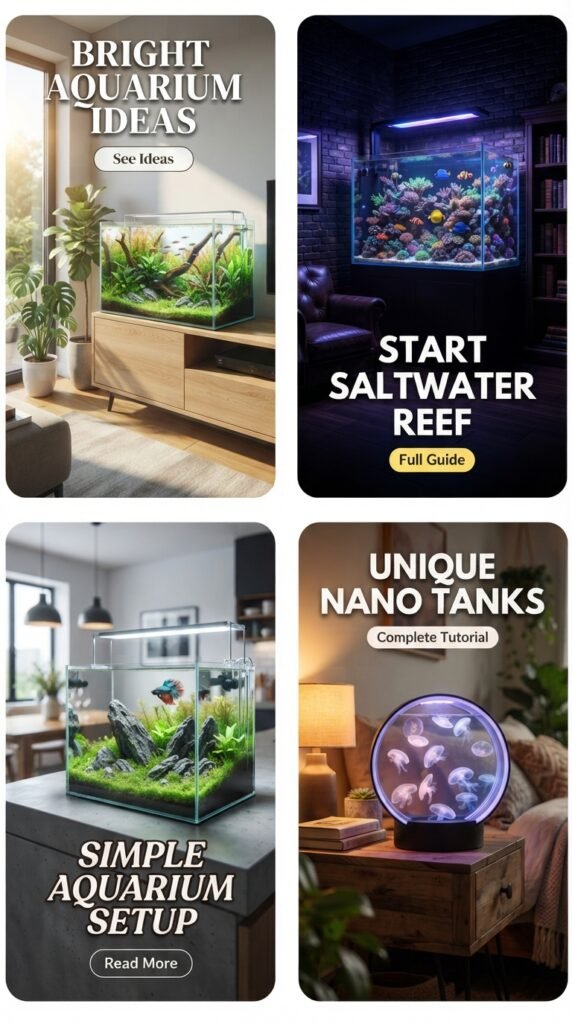
Planted Aquarium
A planted aquarium features lush aquatic plants and natural decorations.
Benefits include:
- Natural appearance
- Improved water quality
- Shelter for fish
- Beautiful aquascaping
Community Aquarium
Keep several peaceful fish species together in a balanced environment.
Minimalist Aquarium
Use simple décor, open swimming space, and a clean layout for a modern look.
Nature Aquarium
Inspired by rivers and forests, this style combines driftwood, rocks, and live plants.
Fish-Only Aquarium
Focus on colorful fish with decorative hardscape and minimal planting.
Essential Aquarium Equipment
Every home aquarium needs reliable equipment.
Filter
A quality filter removes debris and supports beneficial bacteria.
Common options include:
- Hang-on-back filters
- Canister filters
- Internal filters
- Sponge filters
Choose a filter appropriate for your aquarium size.
Heater
Most tropical freshwater fish require stable temperatures.
Typical range:
- 72–78°F (22–26°C), depending on the species
Thermometer
Monitor water temperature daily.
LED Lighting
LED lighting provides:
- Bright illumination
- Low power consumption
- Long lifespan
- Support for live plants
Use a timer to maintain a consistent lighting schedule.
Choosing the Right Substrate
The substrate forms the foundation of your aquarium.
Gravel
Suitable for:
- Community aquariums
- Beginner setups
- Decorative tanks
Sand
Ideal for:
- Corydoras
- Loaches
- Natural aquascapes
Aquasoil
Best for:
- Planted aquariums
- Root-feeding plants
- Advanced aquascaping
Select a substrate that matches your aquarium’s design and livestock.
Decorating Your Home Aquarium
Natural decorations create a timeless appearance.
Popular choices include:
- Driftwood
- River stones
- Aquarium-safe rocks
- Ceramic caves
- Coconut shelters
- Natural backgrounds
Arrange decorations to provide both shelter and open swimming areas.
Best Live Plants
Live plants improve water quality while adding beauty.
Easy-to-grow plants include:
- Java Fern
- Anubias
- Amazon Sword
- Vallisneria
- Cryptocoryne
- Java Moss
- Water Wisteria
- Hornwort
Place taller plants in the background and shorter species in the foreground.
Best Freshwater Fish for Home Aquariums
Many peaceful fish are well suited to home aquariums.
Popular choices include:
- Neon Tetras
- Guppies
- Platies
- Mollies
- Harlequin Rasboras
- Corydoras Catfish
- Pearl Gouramis
- Cherry Barbs
- Zebra Danios
- Bristlenose Plecos
Research compatibility before combining different species.
Shrimp and Snails
Aquarium invertebrates help maintain a healthy ecosystem.
Recommended species include:
- Cherry Shrimp
- Amano Shrimp
- Nerite Snails
- Mystery Snails
They assist with algae control and consume leftover food.
Home Aquarium Design Ideas
Modern Living Room Aquarium
Use a rimless tank with black cabinetry and minimalist decorations.
Natural Aquascape
Combine driftwood, rocks, and dense greenery for a peaceful river-inspired layout.
Family Aquarium
Create a colorful community tank with easy-care fish and hardy plants.
Corner Aquarium
Make efficient use of unused room corners.
Room Divider Aquarium
Use a large aquarium to separate living areas while maintaining an open feel.
Water Parameters
General freshwater community guidelines include:
- Temperature: 72–78°F (22–26°C)
- pH: 6.5–7.5 for many community fish
- Ammonia: 0 ppm
- Nitrite: 0 ppm
- Nitrate: Below 20 ppm
Adjust water conditions according to the needs of your fish.
Weekly Maintenance
Routine care keeps your aquarium healthy and attractive.
Water Changes
Replace 20–30% of the water each week.
Clean the Glass
Use an aquarium-safe algae scraper.
Vacuum the Substrate
Remove waste during water changes.
Service the Filter
Clean filter media using old aquarium water to preserve beneficial bacteria.
Test Water
Monitor ammonia, nitrite, nitrate, pH, and temperature regularly.
Common Mistakes to Avoid
Overstocking Fish
Too many fish reduce water quality and increase stress.
Overfeeding
Feed only what your fish can eat within a few minutes.
Skipping the Nitrogen Cycle
Always cycle the aquarium before adding fish.
Mixing Incompatible Species
Research fish behavior and water requirements before stocking.
Ignoring Regular Maintenance
Consistent maintenance is the key to long-term success.
Benefits of an Aquarium for Home
A home aquarium offers many lasting advantages.
- Enhances interior décor
- Creates a calming environment
- Encourages appreciation for nature
- Provides educational opportunities
- Offers endless aquascaping possibilities
- Suitable for families and individuals alike
With proper care, a home aquarium becomes a beautiful living centerpiece.
Conclusion
An aquarium for home is a rewarding addition that combines natural beauty, relaxation, and creative design. Whether you choose a compact desktop tank, a lush planted aquarium, or a large community display, careful planning and regular maintenance will help you build a healthy aquatic environment.
By selecting the right tank size, quality equipment, compatible fish, and attractive decorations, you can create a home aquarium that enhances your living space and provides years of enjoyment.
Frequently Asked Questions
What is the best aquarium size for a home?
A 20- to 55-gallon aquarium is often ideal for many homes because it offers stable water conditions while fitting comfortably in most living spaces.
Which fish are best for a home aquarium?
Popular beginner-friendly choices include guppies, neon tetras, platies, mollies, harlequin rasboras, corydoras catfish, pearl gouramis, and zebra danios.
Can I keep live plants in a home aquarium?
Yes. Easy-care plants such as Java Fern, Anubias, Amazon Sword, Vallisneria, and Java Moss thrive in many freshwater home aquariums.
How often should I clean my aquarium?
Most freshwater aquariums benefit from weekly maintenance, including a 20–30% water change, substrate cleaning, glass cleaning, and water testing.
Where should I place my home aquarium?
Choose a sturdy stand in a location away from direct sunlight, heating vents, and heavy foot traffic, while ensuring convenient access to electricity and maintenance.
Is a home aquarium suitable for beginners?
Yes. Starting with a medium-sized freshwater aquarium, hardy fish, and reliable equipment is an excellent way for beginners to enjoy the aquarium hobby successfully.