
 By admin
There is something undeniably mesmerizing about a healthy, thriving freshwater aquarium. But while a tank with artificial decor can look neat, nothing compares to the vibrant beauty and dynamic ecosystem of a planted aquarium.
Choosing live freshwater aquarium plants isn’t just about aesthetics. It is about creating a self-sustaining, natural habitat where your fish can truly thrive.
Whether you are a complete beginner looking for hard-to-kill greenery or an experienced aquascaper aiming to build a high-tech underwater jungle, this comprehensive guide will cover everything you need to know about selecting, planting, and maintaining freshwater aquarium plants.
Why Choose Live Freshwater Aquarium Plants?
If you are on the fence about swapping out your plastic decorations for real greenery, consider the massive biological benefits live plants bring to your aquatic environment:
- Natural Filtration: Plants act as natural water purifiers. They absorb harmful toxins, including ammonia, nitrites, and nitrates, which are produced by fish waste and uneaten food.
- Algae Control: Live plants compete with algae for the same nutrients and light. A tank packed with healthy plants will naturally starve out annoying algae blooms.
- Oxygenation: Through photosynthesis, plants absorb the carbon dioxide ($CO_2$) exhaled by your fish and release vital oxygen back into the water.
- Shelter and Security: Live plants mimic a fish’s natural habitat. They provide hiding spots for timid species, reduce stress, and offer crucial safety for fry (baby fish) and shrimp.
- Foraging Grounds: Many fish and invertebrates love to graze on the microscopic organisms (biofilm) that naturally grow on plant leaves.
Understanding Plant Categories: Background, Midground, and Foreground
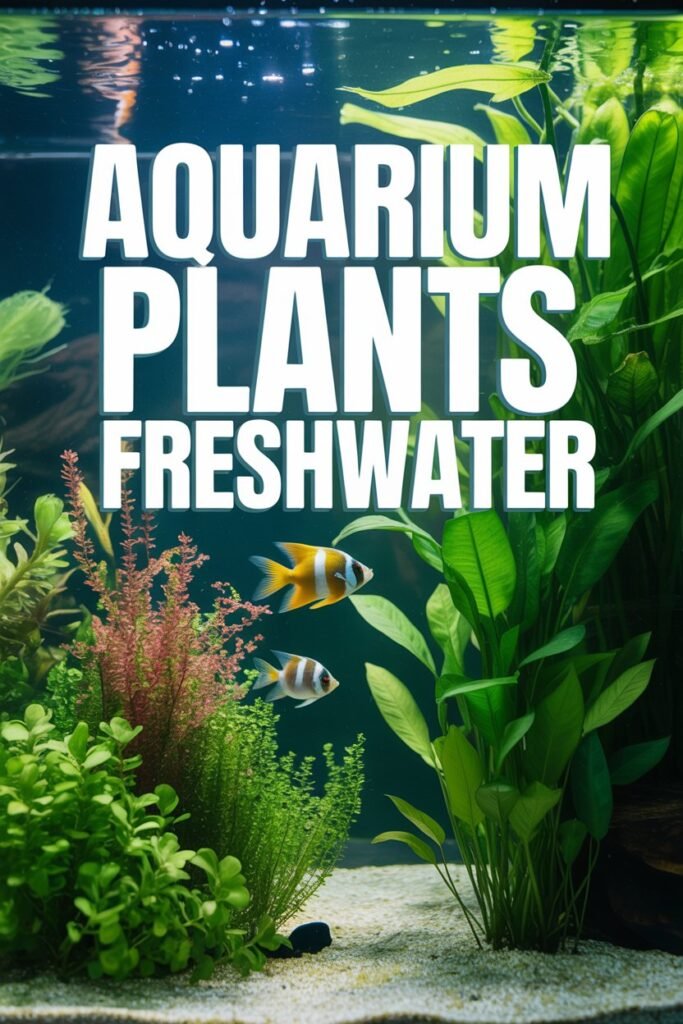
When designing your aquascape, think of your tank as a three-dimensional canvas. To create depth and visual interest, aquarium plants are generally categorized by where they should be placed in the tank.
+-------------------------------------------------------+
|                      BACKGROUND                       |
|           (Tall stems, giant leaves, val)            |
+-------------------------------------------------------+
|                      MIDGROUND                        |
|          (Crypts, ferns, medium bushes, wood)         |
+-------------------------------------------------------+
|                      FOREGROUND                       |
|          (Carpeting plants, mosses, mini crypts)      |
+-------------------------------------------------------+
1. Foreground Plants (The Carpet)
These are short, low-growing plants placed at the front of the tank. They are often used to create a “green carpet” effect over the substrate.
2. Midground Plants (The Transition)
Growing anywhere from 4 to 10 inches tall, midground plants bridge the gap between your short foreground and tall background. They are perfect for framing rocks, driftwood, or central focal points.
3. Background Plants (The Canvas)
These are the giants of the aquarium. Background plants grow tall and rapidly, making them excellent for hiding equipment like heaters, intake tubes, and filters while creating a lush green backdrop.
Top 10 Best Freshwater Aquarium Plants for Beginners
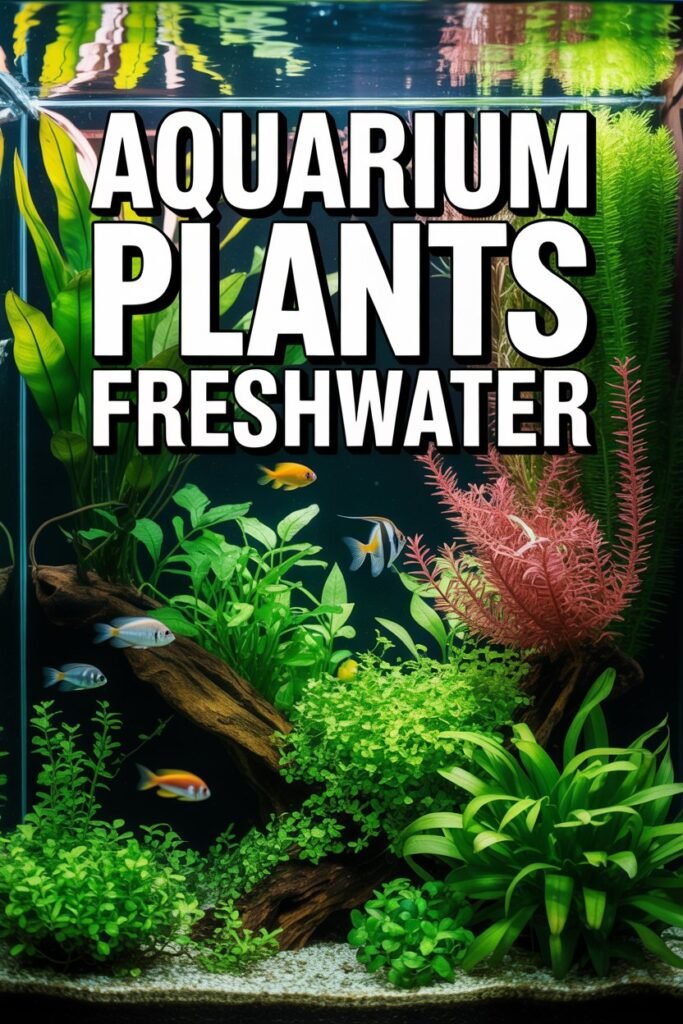
If you are new to the hobby, you want plants that are hardy, adaptable, and forgiving of beginner mistakes. Here are ten of the best low-maintenance options that don’t require expensive lighting or complex $CO_2$ systems.
1. Anubias (Anubias barteri / nana)
- Placement: Foreground / Midground
- Care Level: Exceptionally Easy
- Lighting: Low to Moderate
- Planting Tip: Do not bury the rhizome (the thick green horizontal stem) in the substrate, or the plant will rot. Instead, tie or glue it to rocks or driftwood using fishing line or cyanoacrylate super glue.
2. Java Fern (Microsorum pteropus)
- Placement: Midground / Background
- Care Level: Easy
- Lighting: Low
- Planting Tip: Like Anubias, Java Fern features a rhizome that must remain exposed to the water column. It is incredibly hardy and can survive in almost any water condition.
3. Amazon Sword (Echinodorus grisebachii)
- Placement: Background
- Care Level: Easy to Moderate
- Lighting: Moderate
- Planting Tip: Amazon Swords are heavy root feeders. They need a deep substrate and benefit immensely from root tabs (fertilizer tablets buried near the roots). They grow massive, so give them plenty of space!
4. Java Moss (Taxiphyllum barbieri)
- Placement: Anywhere (Foreground/Attached to hardscape)
- Care Level: Super Easy
- Lighting: Low to High
- Planting Tip: Java Moss is virtually indestructible. You can let it float, attach it to mesh to create a moss wall, or tie it to wood to create miniature underwater trees. It is a favorite for shrimp breeders.
5. Vallisneria (Vallisneria spiralis / americana)
- Placement: Background
- Care Level: Easy
- Lighting: Moderate
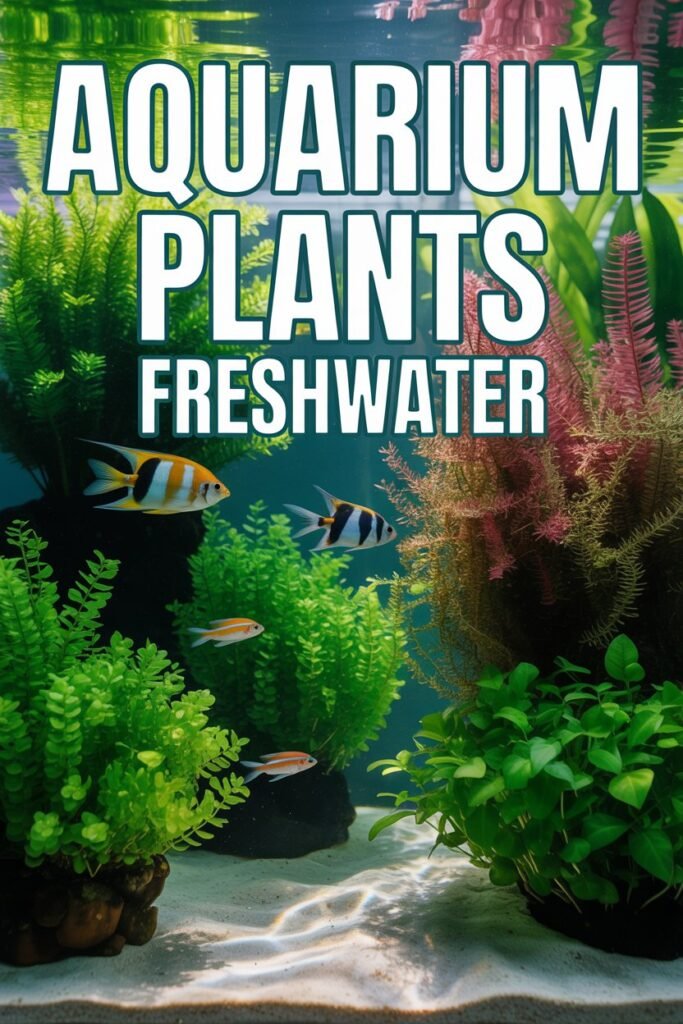
- Planting Tip: Often called “Val,” this plant looks like tall underwater grass. It propagates rapidly by sending out runners across the substrate, quickly creating a dense, beautiful curtain of green.
6. Cryptocoryne Wendtii (Crypts)
- Placement: Midground
- Care Level: Easy
- Lighting: Low to Moderate
- Planting Tip: Crypts are famous for “crypt melt.” When introduced to a new tank, their leaves may turn to mush and die off. Do not panic! This is normal. Leave the roots in place, and they will soon adapt and grow back stronger.
7. Hornwort (Ceratophyllum demersum)
- Placement: Background or Floating
- Care Level: Extremely Easy
- Lighting: Low to Moderate
- Planting Tip: Hornwort doesn’t grow true roots. You can either anchor the stems into the substrate or let it float freely at the surface. It grows incredibly fast and is an absolute powerhouse at absorbing nitrates.
8. Water Wisteria (Hygrophila difformis)
- Placement: Background
- Care Level: Easy
- Lighting: Moderate
- Planting Tip: Water Wisteria features beautiful, lace-like leaves. It can adapt its leaf shape depending on the lighting conditions. If you want a dense bush, simply trim the tops and replant them into the substrate.
9. Dwarf Sagittaria (Sagittaria subulata)
- Placement: Foreground
- Care Level: Easy
- Lighting: Moderate
- Planting Tip: This is one of the easiest carpeting plants for beginners. Under decent light, it will carpet the bottom of your tank, looking much like a backyard lawn.
10. Bacopa Caroliniana
- Placement: Midground / Background
- Care Level: Easy
- Lighting: Moderate
- Planting Tip: A classic stem plant that grows straight upward. When trimmed, it releases a subtle, pleasant lemon scent. It turns a beautiful reddish-bronze color under higher lighting conditions.
The Three Pillars of Plant Growth: Light, Substrate, and Nutrients
To keep your aquarium plants healthy, vibrant, and free of decay, you need to balance three core elements: light, substrate, and nutrients (including $CO_2$). Think of this as a triangle; if one side is lacking, the whole structure collapses, usually resulting in a massive algae breakout.
       [LIGHTING]
         /   \
        /     \
       /       \
[SUBSTRATE] --- [NUTRIENTS & CO2]
1. Aquarium Lighting
Plants require light for photosynthesis. However, the stock light that came with your cheap aquarium kit might not cut it.
- Low-Light Plants: (Anubias, Java Fern, Mosses) Require 8–10 hours of standard low-intensity LED light.
- Medium-to-High Light Plants: (Stem plants, carpets) Require specialized full-spectrum LED aquarium lights that emit wavelengths optimized for plant growth (specifically red and blue spectrums).
- The Golden Rule: Keep your lights on a consistent timer for 6 to 8 hours a day. Leaving lights on too long is the number one cause of algae.
2. Substrate Options
Where your plants sit matters immensely for their root health.
- Inert Gravel/Sand: Contains zero nutrients. If you use standard aquarium sand or gravel, you must add root tabs to feed root-heavy plants like Swords and Crypts.
- Active Aquarium Soil (Aqua-soil): Baked clay pellets loaded with nutrients that lower pH slightly and provide the perfect environment for root development. This is highly recommended for carpeting and demanding plants.
3. Nutrients and $CO_2$
Plants need macro and micro-nutrients to grow. These can be supplied via:
- Liquid Fertilizers: Added directly to the water column. Perfect for column feeders like Anubias, Java Fern, and floating plants.
- Root Tabs: Shoved deep into the substrate next to heavy root-feeders every 3–4 months.
- Carbon Dioxide ($CO_2$): While low-tech plants get enough $CO_2$ from atmospheric exchange and fish respiration, high-tech setups utilize pressurized $CO_2$ systems to supercharge plant growth and achieve those dense, flawless carpets seen in professional aquascapes.
Step-by-Step Guide: How to Plant Your Aquarium
Ready to get your hands wet? Follow these simple steps to ensure your new plants take root successfully.
- Quarantine and Inspect: Before putting new plants in your tank, rinse them thoroughly. Check for unwanted hitchhikers like pest snails, duckweed, or algae. (An optional 1:20 bleach-to-water dip for 90 seconds, followed by a thorough rinse in conditioned water, can sanitize plants).
- Prepare the Plant: Remove plants from their plastic pots and gently peel away the rockwool wrapping the roots. Trim exceptionally long roots down to about an inch to stimulate new, healthy growth.
- Wet the Substrate: It is much easier to plant in a damp substrate than a fully flooded tank. Fill your aquarium with just enough water to wet the soil or sand.
- Use Aquascaping Tweezers: Grab the plant by the roots with a pair of long aquascaping tweezers and push it deep into the substrate at an angle. Pull the tweezers out slowly while gently holding the substrate down with your other hand.
- Secure Epiphyte Plants: For plants like Anubias and Java Fern, use a tiny dab of super glue gel to attach them directly to your rocks or driftwood.
- Fill the Tank Safely: Place a plastic bag or a small plate over the substrate before pouring in the rest of the water. This prevents the rushing water from stirring up your soil and uprooting your freshly planted greenery.
Troubleshooting Common Aquarium Plant Problems
Even with the best intentions, you might run into issues. Here is a quick reference chart to diagnose and fix ailing plants:
| Symptoms | Likely Cause | Solution |
| Yellowing leaves, holes in leaves | Potassium or Iron deficiency | Add a comprehensive liquid fertilizer regularly. |
| Old leaves turning yellow and dying | Nitrogen deficiency | Increase fish feeding slightly or add nitrogen-rich fertilizers. |
| Plants growing tall, stringy, and pale | Lack of sufficient light | Upgrade your lighting or increase photoperiod to 8 hours. |
| Leaves turning to mush right after planting | Transition shock (“Melting”) | Wait it out. Clean up dead debris; new leaves will emerge soon. |
| Heavy green or black algae on leaves | Imbalance of light and nutrients | Lower light hours, do a water change, and manually scrub away algae. |
Conclusion: Start Small and Watch It Grow
Diving into the world of freshwater aquarium plants is one of the most rewarding steps you can take in the fish-keeping hobby. By starting with hardy, low-maintenance species like Anubias, Java Fern, and Amazon Swords, you can minimize mistakes while building a breathtaking, biologically sound environment for your aquatic pets.