
 By admin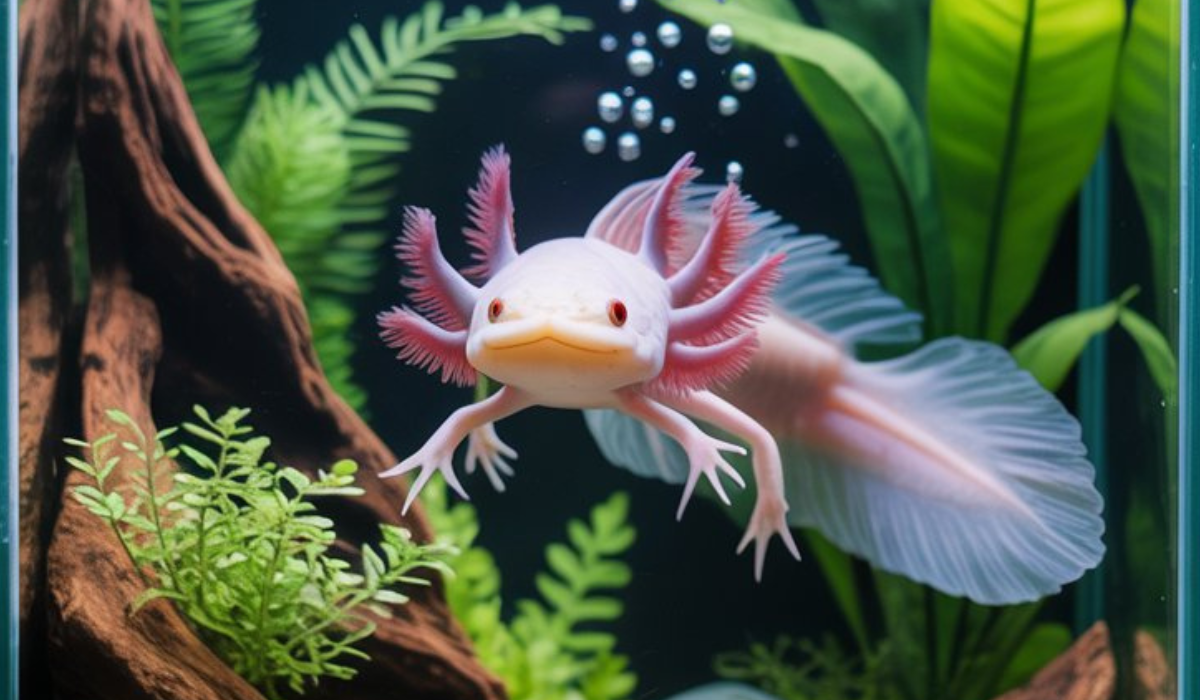
With their permanent smiles, fluffy external gills, and quirky personalities, axolotls (Ambystoma mexicanum) have taken the aquarium world by storm. However, keeping these unique Mexican salamanders is entirely different from keeping tropical fish.
Axolotls are coldwater, bottom-dwelling amphibians. They have incredibly sensitive, scaleless skin, lack eyelids, and possess a chaotic feeding habit: they eat by snapping their mouths open and vacuuming in anything that fits—including gravel, small decorations, and tank mates.
When it comes to designing an axolotl tank, your layout must prioritize safety, low light, and cool temperatures above all else. But safety doesn’t have to mean boring.
This complete guide explores four creative, axolotl-safe tank themes and details the non-negotiable design rules you must follow to build a thriving underwater home for your aquatic companion.
The Core Blueprint: Minimum Tank Requirements
Before diving into aesthetics, you must ensure your canvas is the right size. Axolotls produce a massive amount of waste (bioload) and grow quite large, often reaching 10 to 12 inches in length.
- Tank Size: A 29-gallon or 40-gallon Breeder tank is highly recommended for a single adult axolotl.
- Footprint Over Height: Axolotls walk along the bottom of the tank; they rarely swim to the top. When choosing a tank, always prioritize floor space (length and width) over vertical height. A long, shallow tank is infinitely better than a tall, narrow one.
4 Creative and Safe Axolotl Tank Ideas
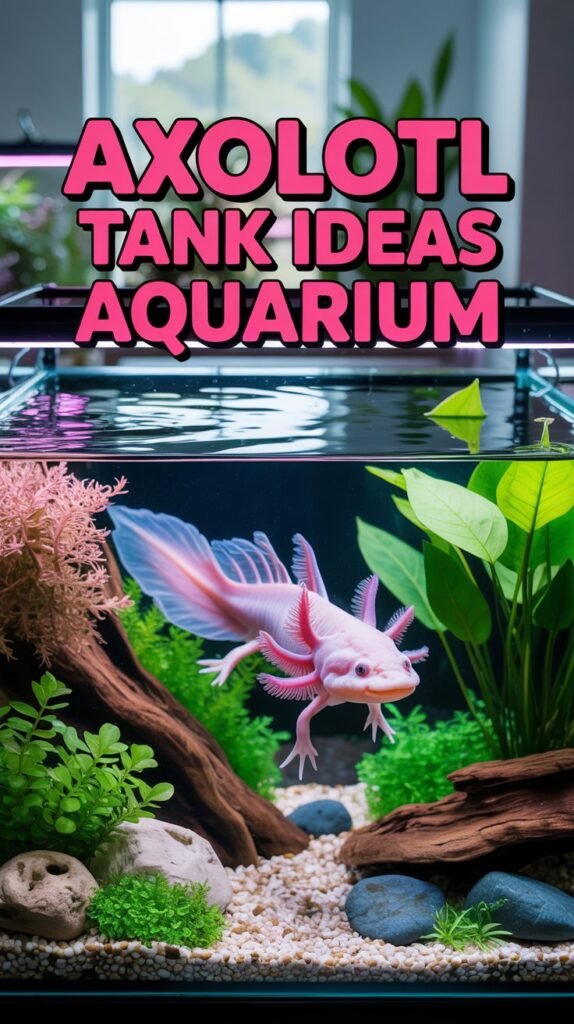
1. The Modern Bare-Bottom “Zen” Oasis
Because axolotls are notorious for swallowing aquarium gravel—which leads to fatal intestinal blockages (impaction)—a completely bare glass bottom is the safest option. This theme leans into that safety feature, turning it into a sleek, minimalist masterpiece.
+-------------------------------------------------------+
|  [Pothos Roots]      [Low-Light LED]       [Clip Fan] |
|     \                                                 |
|      \   ______                               _____   |
|         /      \                             /     \  |
|        | Slate  |      ______               | Slate | |
|        | Cave   |     /      \              | Cave  | |
|_________\______/_____| Slate  |_____________\______/__|
|=======================\______/========================|
|                  SLATE TILES / BARE GLASS             |
+-------------------------------------------------------+
- The Foundation: Bare glass, or smooth, oversized slate tiles laid flat across the bottom. If you use tiles, sand the edges down completely so there are no sharp corners.
- The Hardscape: Large, completely smooth river stones and custom caves made by stacking flat slate pieces sealed together with aquarium-safe silicone.
- The Greenery: Since there is no soil, utilize floating plants like Amazon Frogbit or use fishing line to tie low-light plants like Anubias and Java Fern directly to the rocks or slate.
- Why it works: It offers a clean, geometric aesthetic and makes vacuuming up waste and uneaten food incredibly effortless.
2. The Ancient Aztec Jungle
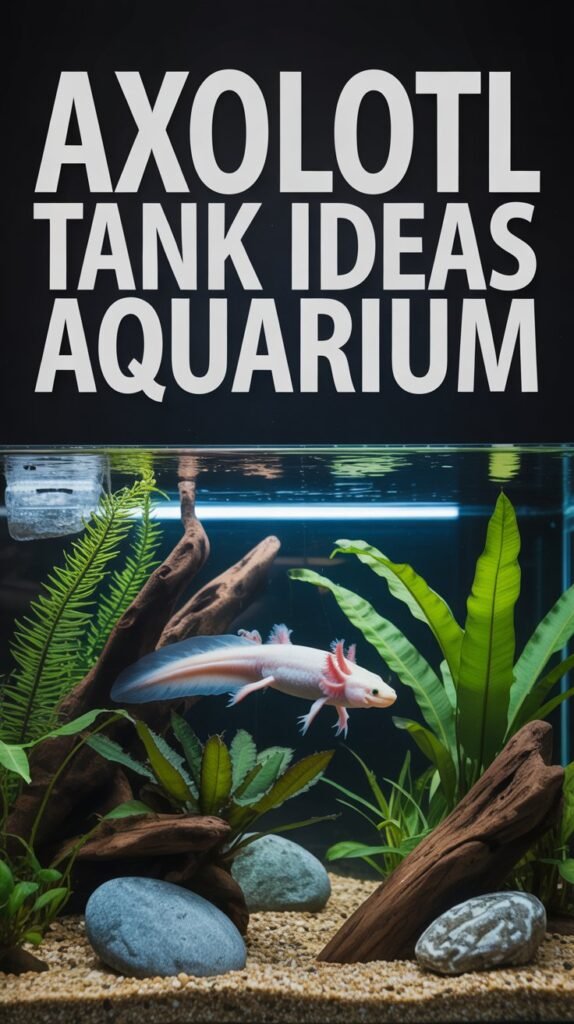
Pay homage to the axolotl’s native heritage. Axolotls originate from Lake Xochimilco near Mexico City. This theme recreates a lush, ancient underwater ruin using axolotl-safe fine sand.
- The Foundation: A very thin layer (less than 1 inch) of ultra-fine, soft aquarium sand (such as CaribSea Super Naturals).
- Crucial Note: Only use sand for adult axolotls over 5–6 inches long. Juveniles are clumsy hunters and should be kept on bare bottoms to avoid consuming sand.
- The Hardscape: Natural terracotta pots laid on their sides and half-buried in the sand to mimic ancient subterranean chambers. You can also use large, smooth pieces of Malaysian driftwood to create natural arches.
- The Greenery: Secure Java Moss to the terracotta pots using thread; over time, the moss will carpet the clay, creating an weathered, ancient look. Plant Amazon Swords or Crypts directly into the sand, placing a root fertilizer tab underneath them.
3. The Coldwater Floating Forest
Axolotls do not have eyelids and are highly sensitive to bright aquarium lighting. This design focuses on creating a dimly lit, cozy sanctuary using a heavy upper canopy of plants.
- The Foundation: Bare glass or fine black sand.
- The Hardscape: Vertical, gnarled pieces of smooth Mopani wood that rise from the bottom of the tank up toward the surface.
- The Greenery: Grow trailing house plants like Pothos, Philodendron, or Peace Lilies hydroponically out of the top of the tank. Let their extensive root systems hang down into the water column. Combine this with thick layers of floating Salvinia or Water Lettuce.
- Why it works: The dense root systems and floating plants block out harsh light, making your axolotl feel perfectly secure. Furthermore, the hanging roots act as a massive biological filter, aggressively sucking harmful nitrates out of the water.
4. The PVC “Industrial” Playground
If you are on a budget or want a quirky, high-visibility setup that provides your axolotl with maximum structural enrichment, an industrial tunnel theme is a fantastic choice.
- The Foundation: Large, smooth ceramic floor tiles or bare glass.
- The Hardscape: Clean, white PVC plumbing pipes and elbows (3-inch to 4-inch diameter). Connect them to create a modular, winding maze of underwater tunnels that your axolotl can walk through. You can sand down the shiny exterior of the pipes and glue moss to them to make them look more organic.
- The Greenery: Scatter hardy Marimo Moss Balls across the floor like underwater green tumbleweeds, and use silk artificial plants (never hard plastic plants, which can scratch their skin).
The Non-Negotiable Rules of Axolotl Tank Design
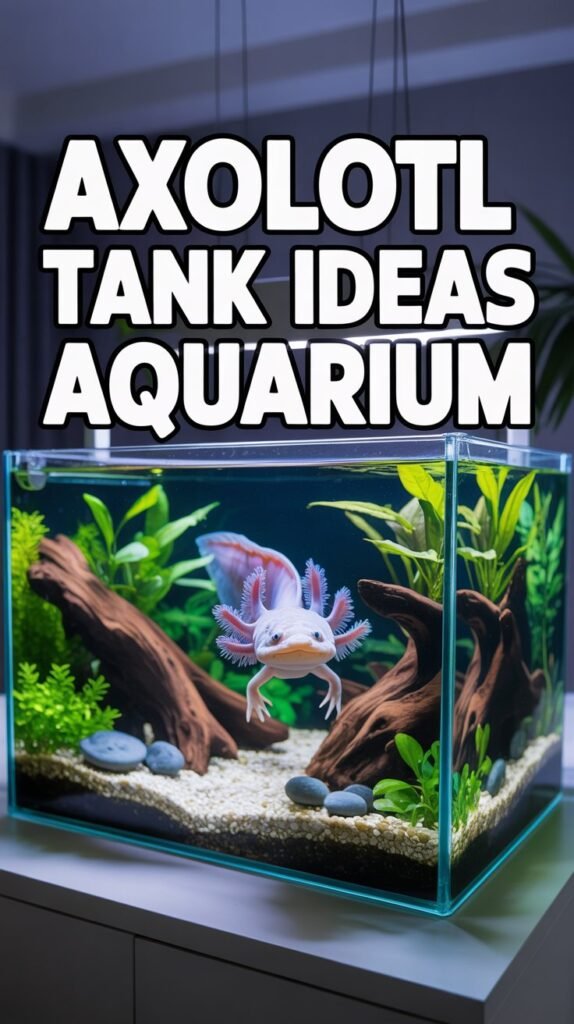
No matter which aesthetic theme you choose, you must adhere to these strict biological parameters to keep your axolotl alive and healthy.
1. The Substrate Trap (Gravel Kills)
Axolotls are vacuum feeders. When they see a worm, they open their mouths wide and suck in the prey along with the surrounding water and substrate.
- Never use standard aquarium gravel, pebbles, or small glass gems. If a rock is smaller than the axolotl’s head, they will swallow it. It will get stuck in their intestines (impaction), which is a leading cause of death in captivity.
- Safe Substrates: Completely bare glass, smooth ceramic/slate tiles, or ultra-fine sand (for adults only).
2. The Two-Cave Minimum
Axolotls are nocturnal and naturally seek out dark, enclosed spaces during the day. Your tank design must feature at least two hides that are large enough for your axolotl to fit its entire body inside, completely out of the line of sight. If they cannot escape the light, they will become chronically stressed, which compromises their immune system.
3. Ditch the Heater, Buy a Chiller
While most aquarium hobbies revolve around keeping water warm, axolotl keeping is all about keeping it cold. Axolotls require water temperatures between 60∘F and 64∘F (15∘C to 18∘C).
- Temperatures consistently above 68∘F (20∘C) will cause extreme heat stress, leading to fungal infections, loss of appetite, and eventually death.
- Design Tip: Leave space in your tank stand for an aquarium chiller. If a chiller is out of your budget, you must install a clip-on aquarium cooling fan over a mesh lid to lower the temperature via evaporation. Never use a glass aquarium top, as it traps heat.
   [COOLING FANS] ---> (Blows air across surface)
  ~~~~~~~~~~~~~~~~~~~  <-- Open Mesh Lid (No Glass!)
  |   AXOLOTL TANK  |
  |   (60°F-64°F)   |  <-- Kept cold naturally or via chiller
  +-----------------+
4. High Filtration, Zero Current
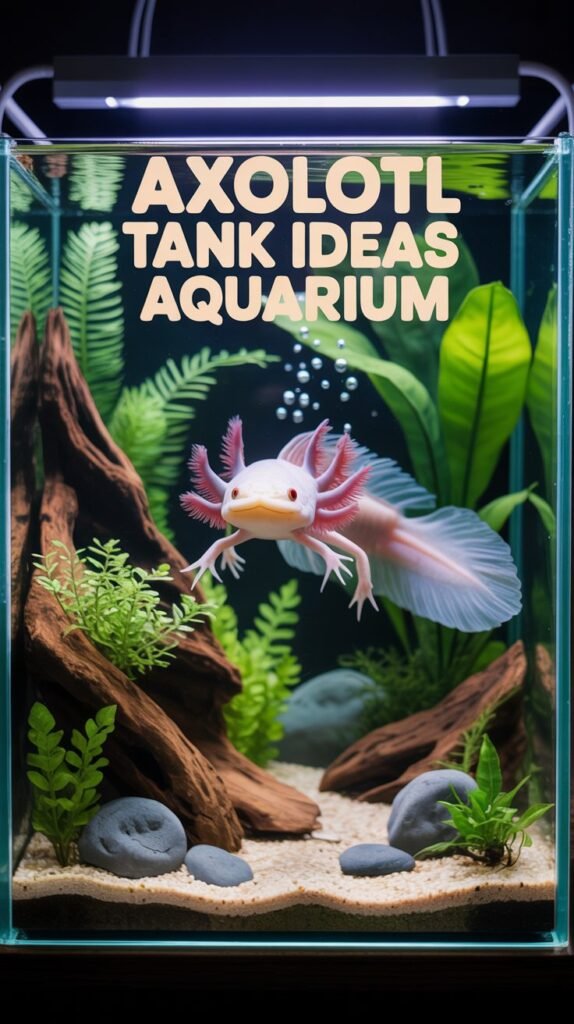
Because axolotls are large carnivores that eat pellets, nightcrawlers, and bloodworms, they produce a tremendous amount of ammonia. You need a powerful filter to keep the water clean. However, axolotls naturally live in stagnant lakes and despise water currents. Strong water movement from a filter output will cause them immense stress, causing their gills to curl forward and making them sick.
- The Solution: Use large Sponge Filters powered by an air pump, as they provide excellent biological filtration with zero directional current. If you use a canister or hang-on-back filter, you must use a spray bar or a plastic baffle to break up and disperse the rushing water.
5. No Sharp Edges
Axolotls do not have protective scales; their skin is incredibly soft, thin, and delicate. Before placing any rock, piece of driftwood, or artificial decoration into the tank, perform the Pantyhose Test. Run a pair of nylon pantyhose over the item—if the object snags or tears the fabric, it is too sharp and will tear your axolotl’s skin.
Summary: Designing with Intention
| Design Style | Substrate | Best For | Main Advantage |
|---|---|---|---|
| Modern Zen | Bare Glass / Slate Tile | Beginners & Juveniles | Easiest tank to clean and maintain. |
| Aztec Ruins | Fine Aquarium Sand | Adult Axolotls | Highly naturalistic and historically accurate. |
| Floating Forest | Bare Glass or Sand | Light-Sensitive Areas | Superior nitrate control and low-light shade. |
| Industrial Maze | Ceramic Tiles | Budget-Conscious | High enrichment and interactive tunnels. |
Export to SheetsBy understanding the unique biology of the axolotl, you can easily design a striking, conversational aquascape that keeps your smiling aquatic monster safe, cold, and stress-free for years to come.