
 By admin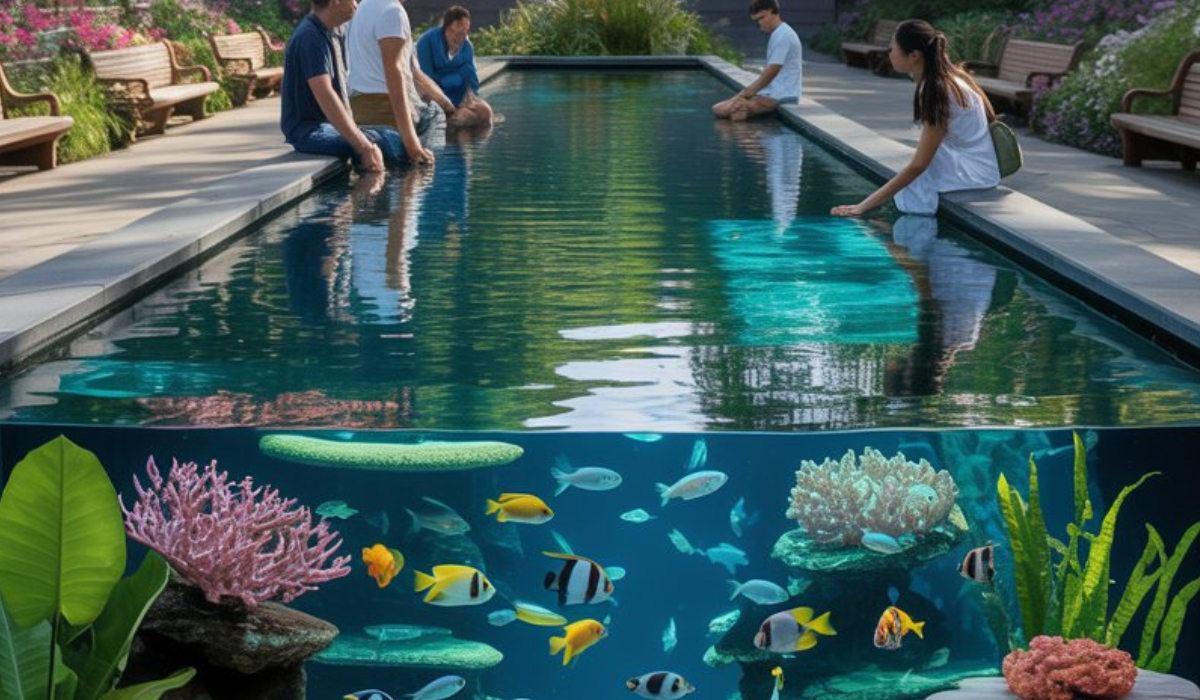
For decades, the aquarium hobby has been confined to our living rooms, offices, and dens. But a growing movement of fish keepers is breaking down those four walls and taking their tanks outside.
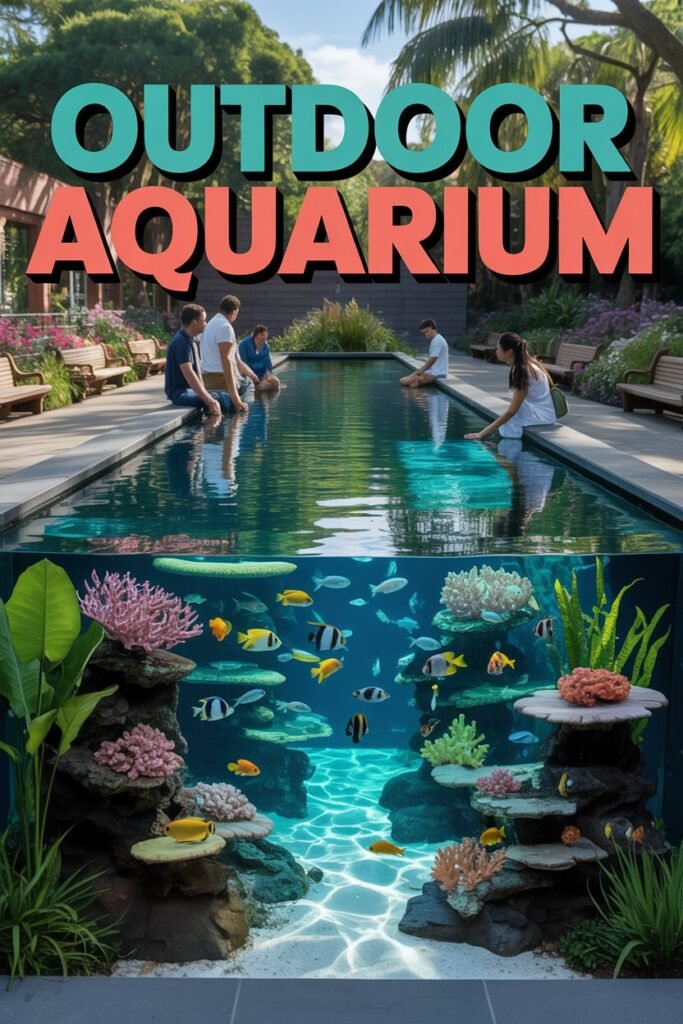
An outdoor aquarium bridges the gap between a traditional indoor fish tank and a backyard garden pond. It offers the crystal-clear, eye-level viewing experience of an indoor aquarium, bathed in the breathtaking, vibrant spectrum of natural sunlight.
However, moving an aquarium outdoors isn’t as simple as plugging in a tank on your back deck. Mother Nature introduces variables that indoor aquarists never have to face—namely intense weather shifts, predatory wildlife, and explosive algae growth.
This comprehensive guide will walk you through everything you need to know to successfully build, stock, and maintain a stunning outdoor aquarium.
The Benefits of Taking Your Tank Outside
Why move an aquarium outdoors? Beyond the sheer unique beauty of the setup, there are incredible biological benefits for your aquatic life:
- Unmatched Fish Coloration: No artificial LED light can replicate the depth and spectrum of natural sunlight. Under the sun, the iridescence of your fish will pop in ways you’ve never seen indoors.
- Explosive Plant Growth: Aquarium plants grow at an accelerated rate when exposed to natural light, allowing you to create dense, jungle-like aquascapes in a fraction of the time.
- Natural Food Sources: Outdoor tanks naturally attract insects, cultivate healthy biofilm, and grow nutritious green algae. This provides your fish with a constant stream of live, nutrient-rich food.
- Free Mosquito Control: If you struggle with mosquitoes in your yard, an outdoor tank stocked with livebearers or minnows acts as a highly effective mosquito trap. They will voraciously consume any larvae that hatch on the water’s surface.
1. Choosing the Perfect Location: Shade is Your Best Friend
Location is the single most critical factor in the success of an outdoor aquarium. Indoors, you control the climate; outdoors, placement determines the climate.
Avoid Direct Sunlight
The number one mistake beginners make is placing their tank in full sun. Direct sunlight will rapidly overheat the water during the day, causing lethal temperature spikes for your fish. Furthermore, excessive light will turn your beautiful tank into a thick, unmanageable soup of green algae within days.
Aim for Bright, Ambient Shade
Your tank should be placed where it receives indirect, ambient light. Excellent locations include:
- Under a covered patio, porch, or veranda.
- Beneath a pergola or awning.
- In the deep, consistent shade of a large backyard tree.
Ideally, the aquarium should receive no more than one to two hours of direct morning sun, when the air is still cool, and remain shaded for the rest of the day.
[PATIO OVERHANG / CANOPY]
      |
      v
  +-------+   <-- Protected from direct mid-day sun & rain runoff
  | TANK  |
  +-------+
===================== [CONCRETE PATIO / DECK]
Structural Stability and Power Access
Water is incredibly heavy, weighing roughly $8.3\text{ lbs}$ per gallon ($1\text{ kg}$ per liter). When you factor in the weight of a glass tank, rocks, and substrate, a 40-gallon tank can easily weigh over $400\text{ lbs}$. Ensure your tank stand sits on a perfectly level, solid surface like a concrete patio, brick pavers, or a reinforced deck—never on shifting garden dirt or grass.
Additionally, you will need access to a weather-proof, outdoor GFCI (Ground Fault Circuit Interrupter) electrical outlet to safely power your equipment.
2. Selecting the Right Aquarium Gear
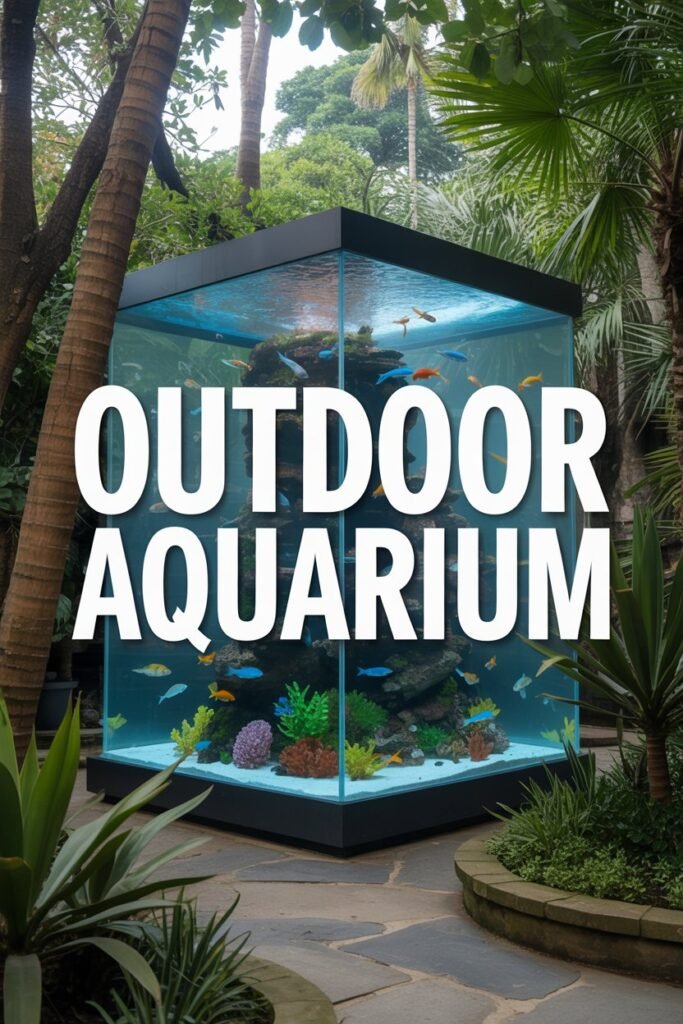
An outdoor environment requires durable hardware that can withstand temperature swings and moisture.
Glass vs. Acrylic vs. Stock Tanks
- Glass Aquariums: Excellent for scratch resistance and clarity. However, over several years, direct exposure to outdoor UV rays can degrade standard aquarium silicone. Using a dark vinyl background on the back and sides of the glass helps protect the silicone and reduces excess light.
- Acrylic Aquariums: Acrylic provides superior insulation against temperature fluctuations and is highly impact-resistant. However, it scratches easily during maintenance and can yellow over time if exposed to UV rays.
- Structural Stock Tanks: Heavy-duty plastic stock tanks (often used for livestock) are incredibly insulated and virtually indestructible. Many modern aquarists use these as a base, cutting a viewing window into the front pane using thick polycarbonate or glass sealed with industrial pond sealant.
Filtration and Flow
You need robust filtration outdoors to handle falling debris, leaves, and dust.
- Sponge Filters: Powered by an air pump, these are excellent for smaller, low-bioload setups. They are highly reliable and won’t trap small fry or shrimp.
- Canister Filters: For larger setups, a canister filter hidden away inside a weatherproof stand provides excellent mechanical and biological filtration.
- Heavy Aeration: Warm water holds significantly less oxygen than cold water. Always run an extra air stone or powerhead to keep the water surface agitating vigorously, ensuring high oxygen exchange during hot summer days.
3. Controlling Algae and Managing the Weather
Winning the Algae War
With natural sunlight, algae growth is inevitable—but it can be managed. The goal is to create a balance where your plants outcompete the algae.
- The UV Sterilizer (The Secret Weapon): A UV sterilizer is highly recommended for an outdoor tank. It passes water through a chamber exposed to ultraviolet light, instantly destroying free-floating single-celled algae. This completely eliminates “green water” and keeps your tank crystal clear.
- Heavy Plant Biome: Pack your tank with fast-growing plants. They will aggressively absorb the nitrates and phosphates that algae rely on to grow.
Managing Seasonal Temperature Swings
How you manage the weather depends entirely on your local climate:
- Summer Heat: If water temperatures approach $85^\circ\text{F}$ ($29^\circ\text{C}$), turn off your aquarium lights (if you use them), maximize surface aeration, and consider throwing a canvas shade sail over the area. In extreme emergencies, you can float frozen water bottles in the tank to drop the temperature.
- Winter Cold: If you live in an area that experiences freezing winters, you have two options:
- The Seasonal Approach: Treat the tank as a seasonal feature. Bring your fish and sensitive plants indoors to a temporary winter tank when temperatures drop below $60^\circ\text{F}$ ($15^\circ\text{C}$).
- The Heated Approach: If you keep cold-tolerant fish, install a heavy-duty, shatterproof titanium heater to ensure the water stays above freezing.
4. Best Fish and Plants for an Outdoor Aquarium
Not all fish are suited for life outdoors. You need hardy species that can handle fluctuating temperatures and look spectacular from both a side-view and a top-down perspective.
The Best Outdoor Fish
- Medaka Ricefish: Bred for centuries in Japan to be kept in outdoor patio bowls. They are incredibly hardy, can tolerate water temperatures ranging from $40^\circ\text{F}$ to $90^\circ\text{F}$ ($4^\circ\text{C}$ to $32^\circ\text{C}$), and feature bright orange, white, or shimmering scales that look stunning from above.
- White Cloud Mountain Minnows: A fantastic, budget-friendly choice. These sub-tropical fish actually prefer cooler water and display vibrant, glowing red tails under natural sunlight.
- Guppies and Mollies: Excellent for summer-only setups. They breed rapidly outdoors and keep the tank entirely free of mosquito larvae. They must be brought inside before late autumn.
- Paradise Fish: A stunningly colorful labyrinth fish. Because they can breathe atmospheric air from the surface, they are highly resilient in outdoor setups where oxygen levels might dip on hot nights.
- Fancy Goldfish: Ideal for larger tanks (55+ gallons). Their bright colors make them easy to spot, and they can comfortably live outdoors year-round in many climates.
The Best Outdoor Plants
To combat algae and create a beautiful aesthetic, use a mix of submerged and emergent plants:
- Floating Plants (Water Lettuce, Amazon Frogbit, Salvinia): These are mandatory for outdoor tanks. They float on the surface, absorbing massive amounts of nutrients while acting as a natural umbrella that shades the water below.
- Hardy Stem Plants (Hornwort, Anacharis): These rootless or easily rooted plants grow at breakneck speed outdoors, creating a dense jungle for fish to hide in.
- Emergent Plants (Pothos, Peace Lilies, Taro): You can place these plants so their roots are submerged inside the aquarium water while their leaves grow up and out into the open air, creating a seamless bridge between your tank and your garden.
5. Protecting Your Tank from Wildlife and Rain
Moving an aquarium outdoors places it directly into the local food chain. Raccoons, stray cats, birds of prey (like herons), and even large predatory insects (like dragonfly nymphs) will view your aquarium as a premium buffet.
Install a Heavy Mesh Cover
A flimsy plastic lid will not stop a raccoon. Craft a custom lid using a rigid wooden or aluminum frame wrapped in hardware cloth (galvanized steel mesh). Weigh the lid down with heavy bricks or secure it with latches. This allows light and fresh air to enter while keeping paws and beaks out.
Create Abundant Hiding Spots
Design your aquascape with safety in mind. Pile up heavy rocks to form intricate caves, add hollow driftwood branches, or drop in clean terracotta pots. If a bird or cat approaches the glass, your fish must have immediate, subterranean places to dive out of sight.
Beware of Toxic Rain Runoff
Never place your outdoor aquarium directly under the drip-line of your roof or a gutter. Heavy rainfall washing off a roof can carry toxic asphalt shingle residue, bird droppings, chemical fertilizers, and concentrated debris straight into your aquatic ecosystem, which can wipe out a tank overnight.
Summary: The Outdoor Aquarium Checklist
Before you get started, review this quick setup checklist:
- [ ] Location: Shaded patio or under a tree (Max 1-2 hours of direct morning sun).
- [ ] Foundation: Completely level, solid concrete or reinforced deck.
- [ ] Power: Weatherproof outdoor GFCI outlet.
- [ ] Filtration: Robust sponge or canister filter with high surface agitation.
- [ ] Algae Control: Inline UV sterilizer and plenty of floating plants.
- [ ] Security: Heavy-duty steel mesh lid to deter local predators.
- [ ] Livestock: Temperature-resilient fish like Medaka Ricefish, Minnows, or Goldfish.
Conclusion
An outdoor aquarium is a dynamic, living piece of garden art. It challenges your traditional understanding of fish keeping and rewards you with a thriving, self-sustaining ecosystem that showcases the true, brilliant beauty of your fish under the open sky. By prioritizing shade, securing the tank against predators, and packing it with nutrient-hungry plants, you can enjoy a flawless, sunlit underwater world right on your backyard patio.