
 By admin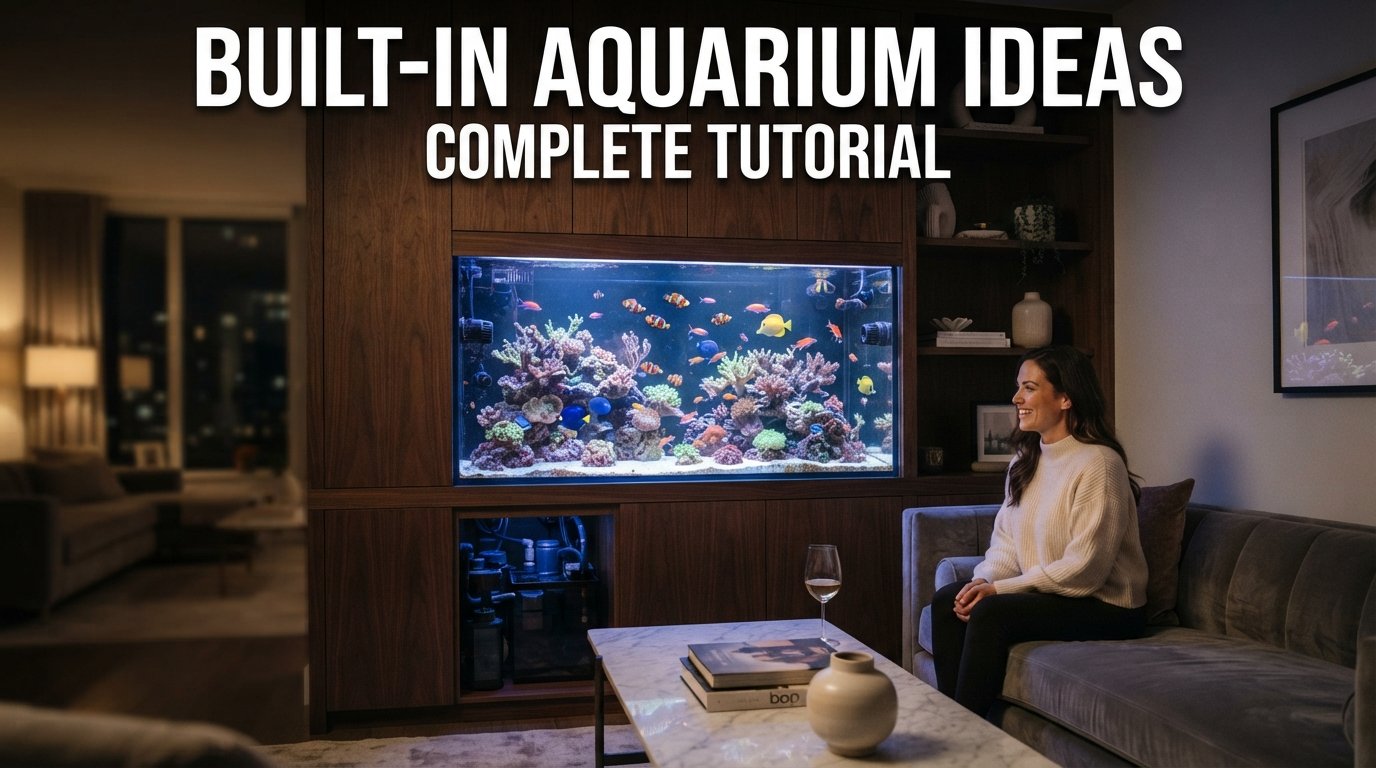
A built-in aquarium in the wall can turn an ordinary wall into a spectacular living feature. Instead of placing a fish tank on a cabinet, a wall aquarium is integrated directly into the architecture, creating the appearance of a large underwater window.
This design can work beautifully in living rooms, bedrooms, hallways, offices, restaurants, and modern homes. However, because a filled aquarium can weigh hundreds or even thousands of kilograms, structural planning is essential.
What Is a Built-In Wall Aquarium?
A built-in aquarium is a tank installed within a specially designed opening in a wall. Usually, only the front viewing panel is visible from the room, while the filtration and maintenance equipment is concealed behind or beside the tank.
A typical setup includes:
- Aquarium tank
- Structural support
- Glass or acrylic viewing panel
- Filtration system
- Lighting
- Heater or chiller when required
- Plumbing
- Maintenance access
- Waterproofing
The result can look more like part of the house than a traditional aquarium.
1. Living Room Built-In Aquarium
The living room is one of the best locations for a dramatic wall aquarium.
A long rectangular aquarium can become the main focal point behind a sofa or on a feature wall.
For a modern appearance, combine:
Frameless viewing panel + minimalist wall + planted aquascape + concealed equipment
2. Aquarium Between Two Rooms
One of the most impressive designs is an aquarium that can be viewed from both sides.
For example, it can separate:
- Living room and dining room
- Kitchen and living room
- Hallway and lounge
- Bedroom and bathroom
This creates a living architectural divider.
The structure must be specifically engineered for a double-sided aquarium, including safe access to both sides and appropriate support.
3. Built-In Aquarium Feature Wall
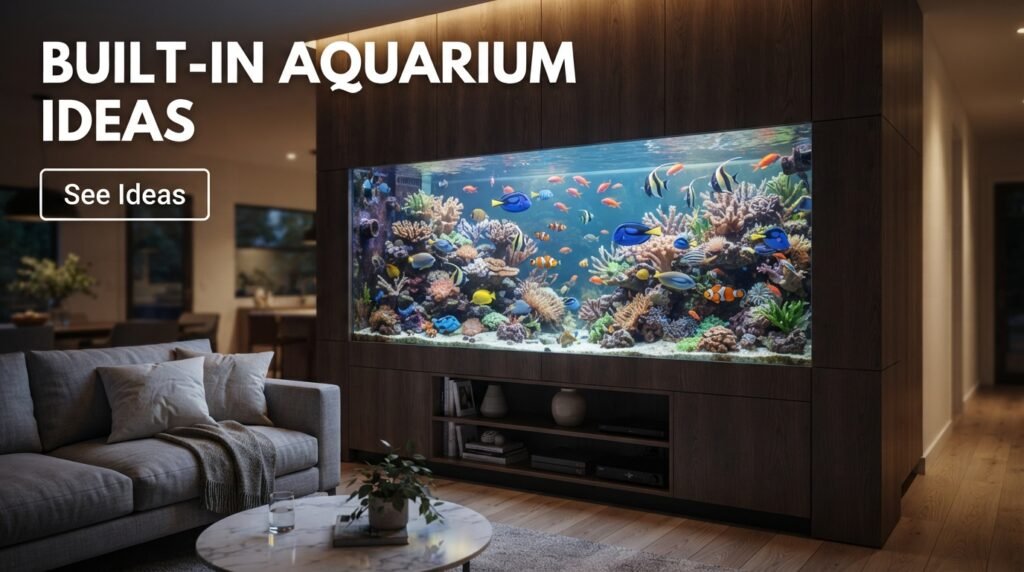
Instead of making the aquarium the only feature, create an entire wall around it.
You can combine the tank with:
- Wooden panels
- Stone-effect surfaces
- LED accent lighting
- Shelving
- Storage cabinets
- Decorative wall panels
This can make the aquarium feel completely integrated into the interior.
4. Minimalist In-Wall Aquarium
For a clean modern home, keep the aquarium frame almost invisible.
Use:
- Frameless appearance
- Neutral wall colors
- Dark substrate
- Simple rocks
- Green aquatic plants
- Concealed filtration
The aquarium itself becomes the artwork.
5. Large Built-In Aquarium
A large wall aquarium can create a dramatic underwater scene.
Consider a long horizontal design with:
- Schooling fish
- Large driftwood
- Natural rock formations
- Tall background plants
- Open swimming areas
Large aquariums require professional engineering because water pressure and structural loads increase significantly with size.
6. Bedroom Wall Aquarium
A smaller built-in aquarium can be installed as a feature behind or beside the bed.
A dark background and subtle lighting can create a peaceful atmosphere.
Avoid excessive nighttime lighting because fish require a consistent day/night cycle.
7. Hallway Aquarium
A narrow wall aquarium can transform a plain hallway.
A long, relatively shallow display can create the appearance of an underwater window without taking up much room.
Make sure there is still enough space for safe access and maintenance.
8. Staircase Aquarium
The wall underneath or beside a staircase can sometimes be used for an aquarium.
This can create a dramatic transition between floors.
However, the available space should be checked carefully for:
- Structural support
- Plumbing
- Equipment access
- Electrical access
- Maintenance clearance
9. TV Wall With Built-In Aquarium
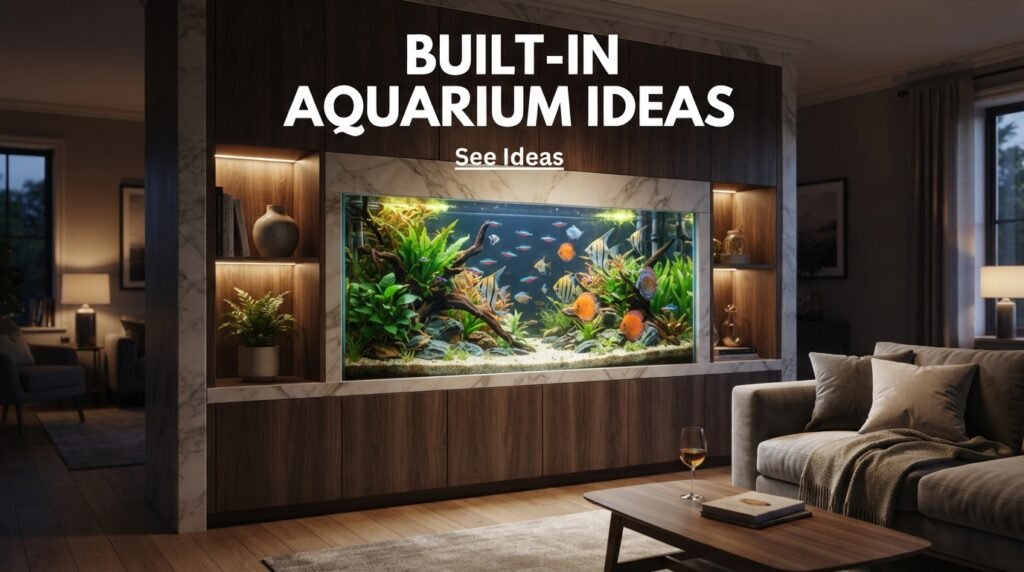
An aquarium can be incorporated into a media wall.
One arrangement is:
Storage → Aquarium → TV → Storage
Another is to place the aquarium vertically beside the television.
Avoid positioning the aquarium where splashing or leaks could expose electrical equipment.
10. Kitchen and Dining Aquarium
A wall aquarium between the kitchen and dining area can become a beautiful visual divider.
Choose a design that is easy to access because kitchen environments can produce heat, humidity, grease, and airborne particles.
11. Built-In Reef Aquarium
For saltwater enthusiasts, an in-wall reef aquarium can create a spectacular coral display.
The visible section can contain:
- Corals
- Marine fish
- Live rock
- Invertebrates
Behind the wall, the equipment area can contain the filtration and water-management equipment.
Reef systems generally require more specialized equipment and maintenance than simple freshwater aquariums.
12. Built-In Planted Aquarium
A freshwater planted aquarium is one of the most attractive choices for a wall installation.
A natural aquascape could include:
- Driftwood
- Rocks
- Java Fern
- Anubias
- Cryptocoryne
- Moss
- Schooling fish
The plants can make the aquarium resemble a living underwater landscape.
13. Double-Sided Wall Aquarium
A double-sided aquarium is ideal when you want to see the fish from two rooms.
For example:
Living Room ↔ Aquarium ↔ Dining Room
This can create an impressive architectural feature while allowing both rooms to share the same display.
14. Corner Built-In Aquarium
A corner installation can create an unusual viewing angle.
Use a custom-shaped tank if appropriate, or integrate a rectangular aquarium into the corner with carefully designed cabinetry.
15. Luxury In-Wall Aquarium
A luxury installation can combine the aquarium with custom interior architecture.
Features may include:
- Floor-to-ceiling viewing area
- Custom cabinetry
- Concealed equipment room
- Automated lighting
- Large aquascape
- Integrated wall lighting
The design should prioritize access to every component that needs regular maintenance.
Built-In Aquarium Wall Materials
| Material | Common Use |
|---|---|
| Glass | Viewing panel/tank |
| Acrylic | Large or custom viewing panels |
| Wood | Cabinetry |
| Stone | Feature wall |
| Tile | Surrounding wall |
| Metal | Structural support |
| Drywall | Decorative finishing |
Not every material is suitable for direct contact with aquarium water. Submerged materials should always be specifically aquarium-safe.
How to Plan a Built-In Aquarium

Step 1: Choose the Aquarium Size
Determine the tank dimensions based on the livestock and available wall space.
Step 2: Check the Structure
Have the wall and floor assessed by an appropriately qualified professional.
A filled aquarium is extremely heavy.
Step 3: Plan the Equipment Room
Create accessible space for:
- Filters
- Sump
- Pumps
- Heater
- Electrical equipment
- Water-testing supplies
Step 4: Plan Plumbing
Large built-in aquariums often benefit from carefully planned plumbing.
Make sure valves and connections remain accessible.
Step 5: Plan Electrical Safety
Electrical outlets and equipment should be positioned safely away from water and installed according to applicable electrical requirements.
Step 6: Install Waterproofing
The surrounding structure needs appropriate protection against leaks and condensation.
Step 7: Install the Aquarium
Large or custom tanks should be installed by experienced professionals.
Step 8: Finish the Wall
Complete the surrounding cabinetry, panels, stone, or other decorative materials.
Step 9: Cycle the Aquarium
Establish biological filtration before introducing fish.
Built-In Aquarium Maintenance Access
One of the biggest mistakes in wall aquarium design is forgetting maintenance access.
You should be able to reach:
- Filter media
- Pumps
- Heater
- Plumbing
- Lighting
- Glass-cleaning areas
A beautiful aquarium that cannot be maintained easily can quickly become a problem.
Design hidden doors or an accessible equipment room behind the aquarium.
How Much Space Does a Wall Aquarium Need?
There is no single required depth.
The space depends on:
- Aquarium dimensions
- Fish species
- Filtration
- Plumbing
- Lighting
- Maintenance requirements
- Wall construction
Don’t design the wall opening so tightly that there is no room to work around the aquarium.
Built-In Aquarium Lighting
Lighting should be designed before the wall is finished.
For planted aquariums, select lighting based on plant requirements.
For reef aquariums, specialized reef lighting is generally required.
You can also install separate architectural lighting around the aquarium to highlight the wall.
Best Fish for a Built-In Aquarium
The fish should be chosen according to the aquarium’s actual size and environment.
Possible freshwater choices include suitable:
- Tetras
- Rasboras
- Guppies
- Angelfish
- Gouramis
- Corydoras
Larger aquariums can accommodate larger species, but compatibility and adult size must always be considered.
Built-In Aquarium Ideas by Room
| Room | Design Idea |
|---|---|
| Living room | Large feature wall |
| Bedroom | Small peaceful display |
| Hallway | Long narrow aquarium |
| Dining room | Double-sided divider |
| Office | Minimalist planted tank |
| Staircase | Architectural aquarium |
| Media room | Aquarium TV wall |
| Entryway | Statement aquarium |
Advantages of a Built-In Aquarium
Saves Floor Space
The aquarium becomes part of the wall rather than occupying a separate area of the room.
Looks Custom
A well-designed installation can appear like a permanent architectural feature.
Hides Equipment
Filtration and other equipment can be concealed behind the wall.
Creates a Focal Point
A large aquarium can become the centerpiece of a room.
Disadvantages of a Built-In Aquarium
Installation Cost
Custom construction can be significantly more expensive than a standard aquarium.
Difficult to Relocate
Once integrated into a wall, moving the aquarium is complicated.
Maintenance Planning
Access must be designed carefully.
Structural Requirements
The building must safely support the aquarium and its water load.
Leak Risk
Water damage can affect surrounding construction if waterproofing and plumbing are poorly designed.
Common Wall Aquarium Mistakes
No Equipment Access
Never completely seal the aquarium into the wall.
Ignoring Structural Load
Water alone weighs approximately 1 kilogram per liter.
Poor Waterproofing
A small leak can cause significant building damage.
Too Little Space
Leave sufficient room for maintenance and equipment.
Choosing Fish Too Late
The aquarium dimensions should be compatible with the fish before construction begins.
How to Make a Built-In Aquarium Look Expensive
Focus on clean integration rather than adding lots of decoration.
Try:
- Frameless glass
- Hidden equipment
- Custom cabinetry
- Carefully planned aquascaping
- Integrated lighting
- Neutral wall materials
- A simple, balanced layout
A clean aquarium with healthy plants and well-maintained glass can look far more luxurious than an overly decorated tank.
Conclusion
A built-in aquarium in the wall can completely transform a home’s interior. It can function as a living piece of artwork, an architectural divider, or the centerpiece of a feature wall.
The most important part is planning the structure and maintenance access before construction begins. The aquarium should be designed around the needs of the fish and plants, while the surrounding wall should be designed around the aquarium.
For a modern home, a large frameless planted aquarium integrated into a neutral feature wall, with concealed filtration and carefully designed lighting, can create an impressive underwater window effect.
Frequently Asked Questions
Is a built-in aquarium expensive?
It can be more expensive than a standard aquarium because construction, structural support, plumbing, cabinetry, waterproofing, and installation may all be required.
Can an aquarium be built into any wall?
No. The wall, floor, plumbing, electrical system, and available maintenance space must all be suitable. A qualified professional should assess the structure before installation.
How much does a built-in aquarium weigh?
Water weighs approximately 1 kg per liter, and the total weight also includes the tank, stand or support structure, substrate, rocks, wood, and equipment.
Can I build a wall aquarium myself?
Small projects may be possible for experienced DIY builders, but large or structural installations should be professionally designed and installed.
How do you maintain an in-wall aquarium?
The design should include an accessible equipment area and sufficient room to clean glass, service filters, maintain plumbing, trim plants, and perform water changes.
Is glass or acrylic better for a wall aquarium?
Both can work. Glass is highly scratch-resistant and optically clear, while acrylic is lighter, more impact-resistant, and easier to fabricate into some custom shapes. The best material depends on the tank design and professional engineering requirements.