
 By admin
A homemade aquarium is a rewarding DIY project that allows you to create a custom fish tank tailored to your space, budget, and style. Whether you’re designing a small desktop aquarium, a planted freshwater tank, or a large custom display, building your own aquarium gives you complete control over its size, appearance, and features.
This guide explains how to build a homemade aquarium safely, choose the right materials, decorate it, and maintain a healthy environment for your fish and aquatic plants.
Why Build a Homemade Aquarium?
Building your own aquarium offers several advantages.
Benefits include:
- Custom sizes and shapes
- Lower cost than some custom-built aquariums
- Complete creative freedom
- Ideal for unique spaces
- Fun and educational DIY project
- Personalized aquascaping opportunities
- Satisfaction of creating your own aquarium
With careful planning and quality materials, a homemade aquarium can last for many years.
Choosing the Right Aquarium Size
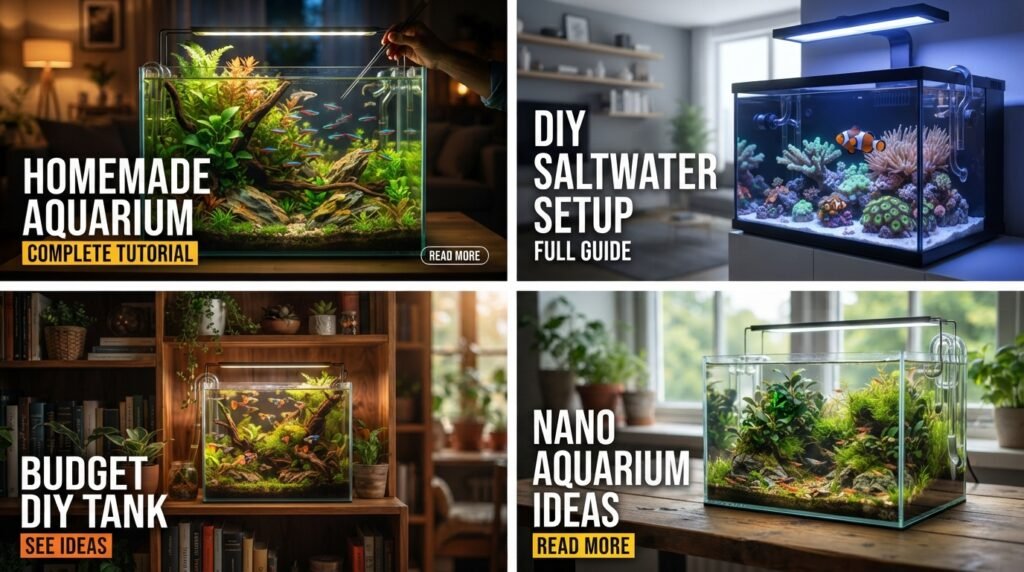
Select a size that fits both your available space and the fish you plan to keep.
Popular options include:
- 5-gallon nano aquarium
- 10-gallon beginner aquarium
- 20-gallon planted aquarium
- 40-gallon community tank
- 75-gallon display aquarium
- Custom-built large aquarium
Larger aquariums generally provide more stable water conditions.
Materials You’ll Need
Gather all materials before starting the project.
Essential supplies include:
- Glass panels or acrylic sheets
- Aquarium-safe silicone sealant
- Measuring tape
- Glass cutter (if cutting glass yourself)
- Masking tape
- Spirit level
- Utility knife
- Sandpaper or glass edge finishing tool
- Protective gloves
- Aquarium stand
Use only aquarium-safe silicone that does not contain mould inhibitors or anti-fungal additives.
Choosing Glass or Acrylic
Glass Aquarium
Advantages:
- Excellent scratch resistance
- Crystal-clear appearance
- Long-lasting durability
- Lower material cost
Disadvantages:
- Heavier
- Can crack if impacted
Acrylic Aquarium
Advantages:
- Lightweight
- Strong and impact-resistant
- Easier to shape into custom designs
Disadvantages:
- Scratches more easily
- Usually more expensive
Choose the material that best suits your project and experience.
Step-by-Step DIY Aquarium
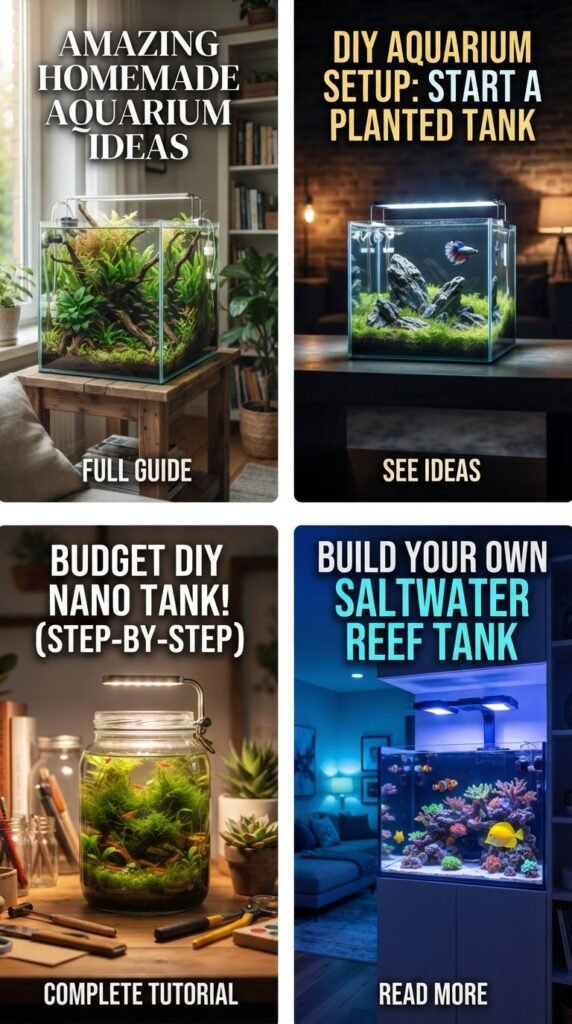
Step 1: Measure and Plan
Determine the aquarium’s:
- Length
- Width
- Height
- Glass thickness
- Equipment placement
Accurate measurements are essential for a watertight aquarium.
Step 2: Prepare the Panels
Clean all glass or acrylic panels thoroughly to remove dust and grease.
Smooth any rough edges before assembly.
Step 3: Assemble the Aquarium
Use masking tape to hold the panels in position.
Apply a continuous bead of aquarium-safe silicone along every joint.
Press the panels together carefully and remove excess silicone with a suitable tool.
Step 4: Allow the Silicone to Cure
Leave the aquarium undisturbed for the full curing time recommended by the silicone manufacturer.
Do not rush this step.
Step 5: Leak Test
Place the aquarium outdoors or in another safe area.
Fill it with water and leave it for 24–48 hours.
Check every seam for leaks before bringing it indoors.
Essential Equipment
Once the aquarium is complete, install:
- Quality filter
- LED aquarium light
- Heater (if required)
- Thermometer
- Water conditioner
- Water testing kit
Select equipment appropriate for your aquarium size and livestock.
Decorating Your Homemade Aquarium
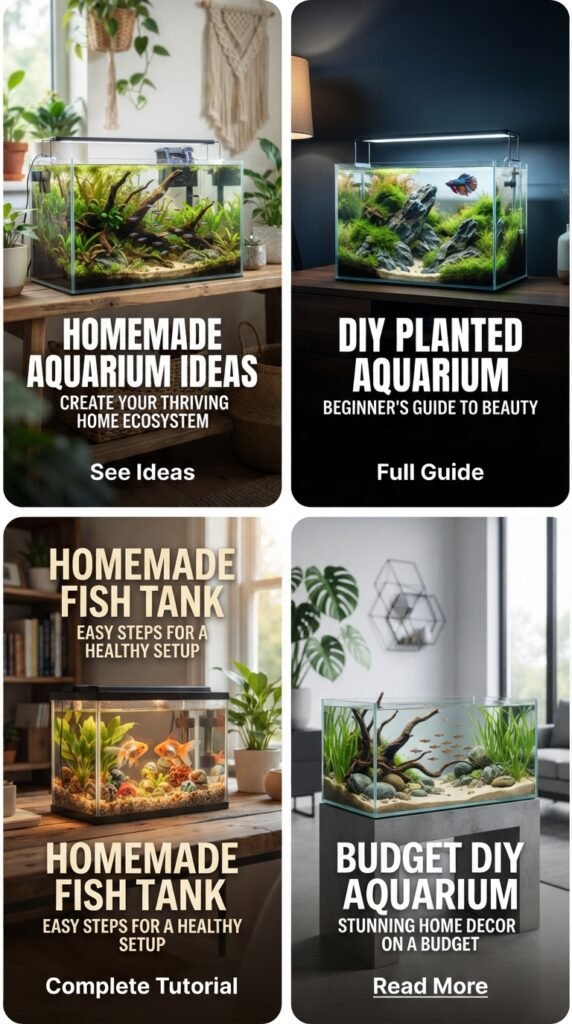
Create an attractive underwater landscape with:
- Natural rocks
- Aquarium-safe driftwood
- Fine sand
- Natural gravel
- Live aquatic plants
- Smooth decorative stones
Leave open swimming space while creating visual depth.
Best Plants
Live plants improve water quality and create a natural appearance.
Excellent beginner plants include:
- Java Fern
- Anubias
- Amazon Sword
- Java Moss
- Cryptocoryne
- Vallisneria
- Bucephalandra
Choose plants that match your lighting and maintenance preferences.
Suitable Fish
Select fish based on the size of your aquarium.
Popular freshwater choices include:
- Guppies
- Neon Tetras
- Harlequin Rasboras
- Corydoras Catfish
- Honey Gouramis
- Cherry Shrimp
- Amano Shrimp
Research compatibility and adult size before stocking the aquarium.
Lighting
Proper lighting supports plant growth and enhances fish colours.
Recommended features:
- Full-spectrum LED lighting
- Adjustable brightness
- Automatic timer
- 6–8 hours of lighting each day
Avoid excessive lighting to reduce algae growth.
Water Parameters
Maintain stable water conditions for healthy fish.
| Parameter | Recommended Range |
|---|---|
| Temperature | 72–80°F (22–27°C), depending on species |
| pH | 6.5–7.8 |
| Ammonia | 0 ppm |
| Nitrite | 0 ppm |
| Nitrate | Below 20–40 ppm |
Adjust these values according to the needs of your livestock.
Maintenance Tips
Cycle the Aquarium
Complete the nitrogen cycle before introducing fish.
Perform Weekly Water Changes
Replace 20–30% of the water every week.
Clean the Glass
Remove algae using an aquarium-safe scraper or magnetic cleaner.
Service the Filter
Clean filter media in removed aquarium water to preserve beneficial bacteria.
Test Water Regularly
Monitor water quality to keep the aquarium stable.
Common Mistakes to Avoid
Using the Wrong Silicone
Only aquarium-safe silicone should be used.
Choosing Glass That Is Too Thin
Use glass thickness appropriate for the aquarium’s dimensions.
Skipping the Leak Test
Always test the aquarium before adding substrate, decorations, or livestock.
Overcrowding
Stock the aquarium gradually and avoid keeping too many fish.
Ignoring Water Quality
Stable water conditions are essential for long-term success.
Homemade Aquarium Design Ideas
Nature Aquarium
Combine driftwood, rocks, and lush plants for a natural river-inspired layout.
Minimalist Aquarium
Use one focal piece of driftwood with open swimming space and a few hardy plants.
Blackwater Aquarium
Decorate with dark substrate, branches, leaf litter, and subdued lighting to mimic tropical forest streams.
Rocky Aquascape
Arrange stacked rocks to create caves and dramatic underwater landscapes.
Benefits of a Homemade Aquarium
A homemade aquarium offers:
- Complete customization
- Attractive home décor
- Creative DIY experience
- Lower cost for custom sizes
- Flexibility in design
- A rewarding long-term hobby
With careful construction and proper maintenance, it can become a beautiful centrepiece in any home.
Conclusion
A homemade aquarium is an excellent project for anyone who enjoys DIY craftsmanship and aquarium keeping. By using quality materials, aquarium-safe silicone, suitable equipment, and thoughtful aquascaping, you can create a durable and attractive fish tank that provides a healthy environment for aquatic life.
Take your time during construction, perform a thorough leak test, and establish the aquarium’s biological cycle before adding fish. These steps will help ensure your homemade aquarium remains safe, beautiful, and enjoyable for years to come.
Frequently Asked Questions
Can I build an aquarium at home?
Yes. With proper planning, suitable materials, and aquarium-safe silicone, many hobbyists successfully build their own aquariums.
What type of silicone should I use?
Use only silicone specifically labelled as aquarium-safe and free from anti-mould or anti-fungal additives.
Is glass better than acrylic?
Glass is more resistant to scratches and often costs less, while acrylic is lighter, more impact-resistant, and easier to shape.
How long should I wait before filling a homemade aquarium?
Allow the silicone to cure for the full time recommended by the manufacturer, then perform a 24–48 hour leak test before setting up the aquarium.
Can I keep fish immediately after building the aquarium?
No. After confirming there are no leaks, you should set up the aquarium and complete the nitrogen cycle before introducing fish.
How long can a homemade aquarium last?
A well-built aquarium made with quality materials and maintained properly can last for many years.