
 By admin
A moss ball aquarium DIY project is one of the easiest and most enjoyable ways to create a miniature aquatic ecosystem. Moss balls, often called Marimo moss balls, are actually a rare form of green algae that naturally grows into soft, velvety spheres. They require minimal care, improve water quality, and add a unique natural touch to small aquariums, jars, and desktop displays.
Whether you’re looking for a relaxing home decoration, a beginner-friendly aquarium, or a fun weekend project, this guide will show you how to build and maintain a beautiful moss ball aquarium.
Why Make a Moss Ball Aquarium?
A DIY moss ball aquarium offers many benefits.
Advantages include:
- Beginner-friendly setup
- Low maintenance
- Affordable to build
- Compact and space-saving
- Attractive natural appearance
- Suitable for desks, shelves, and offices
- Easy to customize
A well-designed moss ball aquarium can remain beautiful with only simple routine care.
What You’ll Need
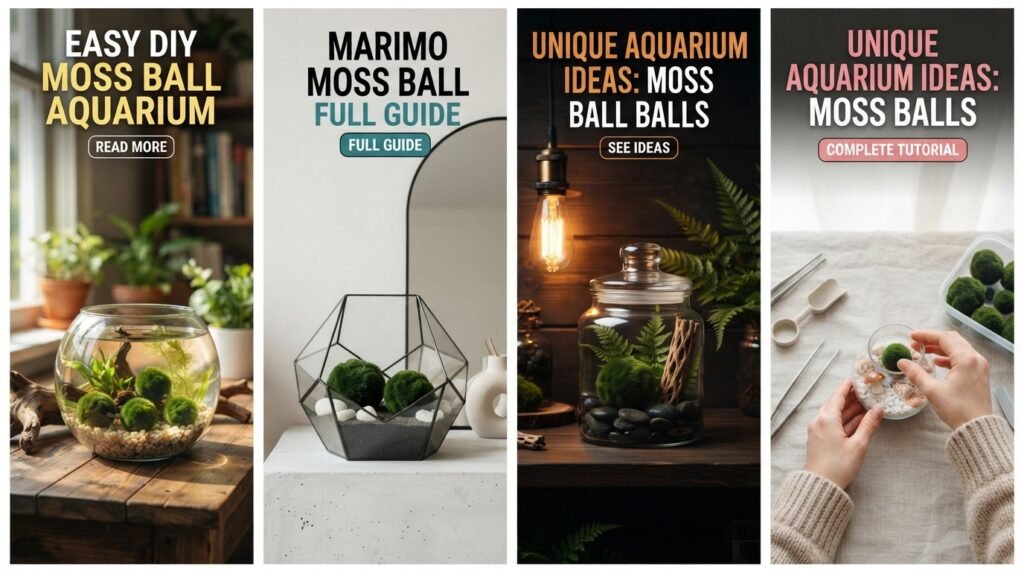
Gather the following supplies before starting:
- Glass aquarium or clear glass container
- Healthy marimo moss balls
- Aquarium-safe gravel or sand
- Decorative pebbles
- Small aquarium rocks
- Driftwood (optional)
- Freshwater
- Water conditioner
- Small LED aquarium light
- Tweezers for arranging decorations
Avoid using soap or household cleaners on any aquarium materials.
Choosing the Right Container
Several container styles work well.
Popular choices include:
- Nano aquarium
- Small cube aquarium
- Glass bowl
- Cylindrical glass vase
- Desktop aquarium
A container with a wide opening makes maintenance much easier.
Selecting the Substrate
The substrate forms the foundation of your design.
Good options include:
- White aquarium sand
- Black aquarium sand
- Fine gravel
- Natural river gravel
- Smooth decorative stones
Choose colours that complement the deep green colour of the moss balls.
Step-by-Step DIY Setup
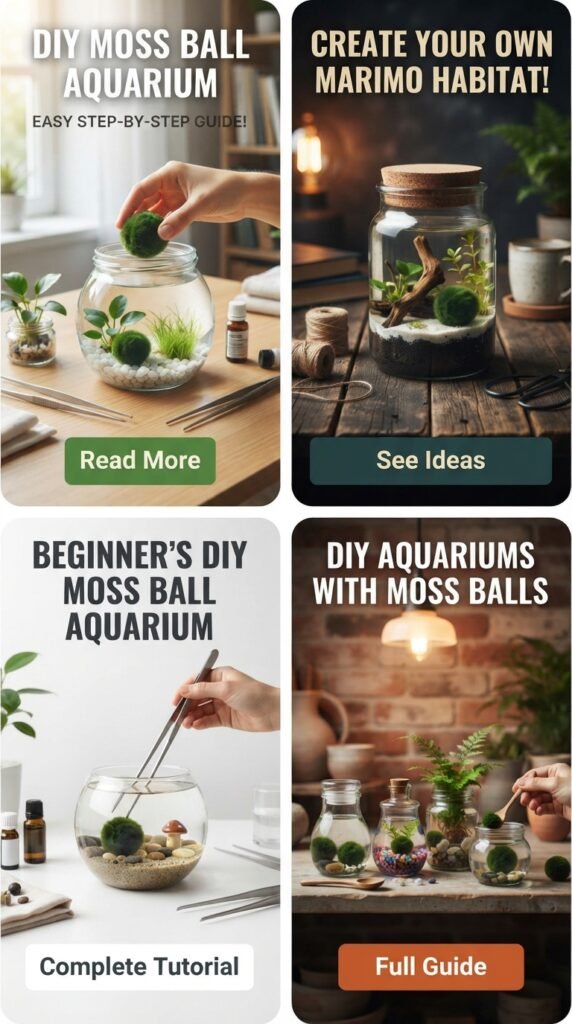
Step 1: Clean the Aquarium
Rinse the aquarium, substrate, and decorations using clean water only.
Never use soap or chemical cleaners.
Step 2: Add the Substrate
Spread approximately 1–2 inches (2.5–5 cm) of gravel or sand across the bottom.
Create gentle slopes for a more natural appearance.
Step 3: Arrange Decorations
Place rocks and driftwood before adding the moss balls.
Leave open areas so the aquarium doesn’t appear crowded.
Step 4: Position the Moss Balls
Arrange the moss balls in different sizes to create visual interest.
Leave space around each ball for water circulation.
Step 5: Fill with Water
Slowly pour conditioned freshwater into the aquarium to avoid disturbing the substrate.
Step 6: Add Lighting
Place the aquarium under soft, indirect light or use a low-intensity LED aquarium light.
Avoid direct sunlight, which can encourage algae growth and overheat the water.
Creative Moss Ball Aquarium Ideas
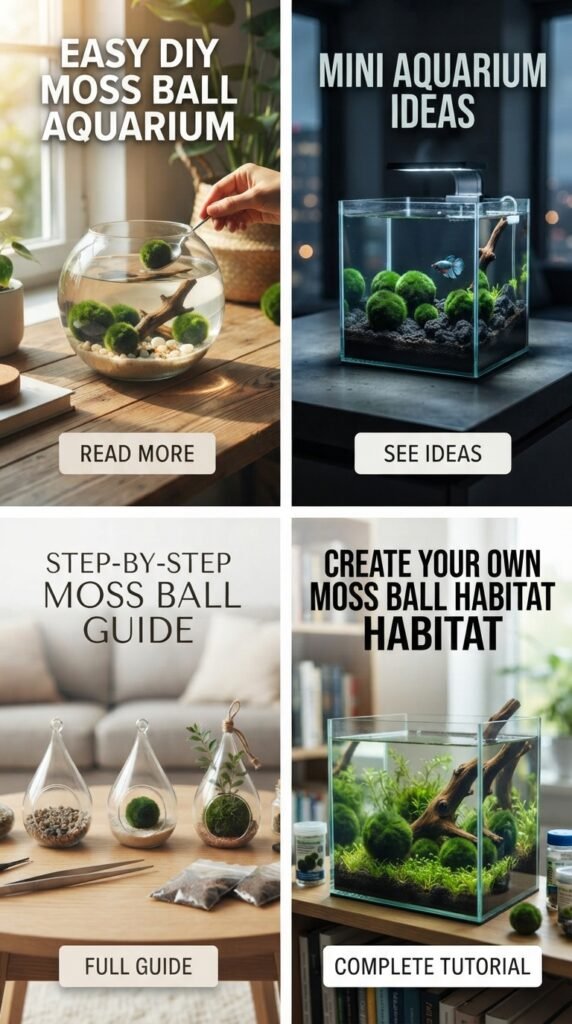
Zen Garden
Combine white sand, smooth stones, and several moss balls for a peaceful minimalist display.
Forest Theme
Add driftwood and dark rocks to resemble a miniature underwater forest.
Riverbed Design
Use rounded pebbles and scattered moss balls to recreate a natural stream.
Modern Minimalist
Use a rimless glass aquarium with black gravel and a few carefully placed moss balls.
Can You Add Fish?
Small aquariums should not be overcrowded.
Suitable inhabitants for appropriately sized tanks include:
- Cherry shrimp
- Amano shrimp
- Nerite snails
- Small freshwater snails
If you plan to keep fish, choose a properly sized aquarium with suitable filtration and heating where required. Very small jars and bowls are decorative displays rather than suitable homes for most fish.
Lighting Requirements
Moss balls prefer gentle lighting.
Recommended conditions:
- Low to moderate LED lighting
- 6–8 hours of light daily
- Bright, indirect natural light
Too much light may encourage unwanted algae growth.
Water Conditions
Healthy moss balls grow best in cool, clean freshwater.
| Parameter | Recommended Range |
|---|---|
| Temperature | 68–77°F (20–25°C) |
| pH | 6.5–8.0 |
| Ammonia | 0 ppm |
| Nitrite | 0 ppm |
| Nitrate | Below 20 ppm |
Regular water changes help maintain good water quality.
Maintenance Tips
Change Water Regularly
Replace 20–30% of the water every one to two weeks.
Rotate the Moss Balls
Turn them gently every week so all sides receive light and maintain their round shape.
Rinse Occasionally
During water changes, gently squeeze the moss balls in old aquarium water to remove trapped debris.
Keep the Glass Clean
Wipe away algae using an aquarium-safe sponge or magnetic cleaner.
Monitor Water Temperature
Keep the aquarium away from radiators, heating vents, and direct sunlight.
Common Mistakes to Avoid
Too Much Sunlight
Direct sunlight encourages algae and can damage moss balls.
Overcrowding
Leave open space to maintain a clean, balanced appearance.
Using Untreated Tap Water
Always use a water conditioner to remove chlorine and chloramine before adding water.
Neglecting Water Changes
Even a simple moss ball aquarium benefits from routine maintenance.
Keeping Fish in Tiny Containers
Very small bowls or jars are generally unsuitable for fish because they cannot provide stable water quality or adequate swimming space.
Decorating Tips
Enhance the display with:
- Smooth river stones
- Small pieces of driftwood
- Lava rocks
- Glass pebbles
- Natural gravel
Keep decorations simple so the moss balls remain the main focal point.
Benefits of a DIY Moss Ball Aquarium
A moss ball aquarium provides:
- A relaxing desktop display
- Easy maintenance
- Natural biological interest
- Attractive minimalist design
- Excellent beginner project
- Endless decoration possibilities
Its simplicity makes it one of the easiest aquatic displays to enjoy.
Conclusion
A moss ball aquarium DIY project is an enjoyable way to create a beautiful, low-maintenance aquatic display. With a clear glass container, natural stones, quality substrate, and healthy moss balls, you can design a miniature underwater landscape that brings a touch of nature into your home or office.
By providing gentle lighting, regular water changes, and occasional cleaning, your moss ball aquarium can remain healthy and attractive for years.
Frequently Asked Questions
What are moss balls?
Marimo moss balls are spherical colonies of green algae that naturally form into soft, velvety balls in certain freshwater lakes.
Do moss balls need a filter?
Not necessarily. In decorative setups without animals, they can thrive without a filter if you perform regular water changes. If the aquarium houses shrimp, snails, or fish, filtration may be beneficial or necessary depending on the setup.
Can moss balls live with shrimp?
Yes. Cherry shrimp and Amano shrimp are excellent companions and often graze on biofilm around the moss balls.
How often should I change the water?
Replace about 20–30% of the water every one to two weeks, depending on the size of the aquarium and whether it contains aquatic animals.
Why is my moss ball turning brown?
Brown patches can result from poor water quality, excessive heat, or too much direct sunlight. Improving water conditions and reducing light intensity often helps.
Can I keep fish in a moss ball bowl?
Most fish require larger, properly filtered aquariums with stable water conditions. Small bowls are generally better suited for decorative moss ball displays or, in some cases, small invertebrates such as shrimp or snails.