
 By admin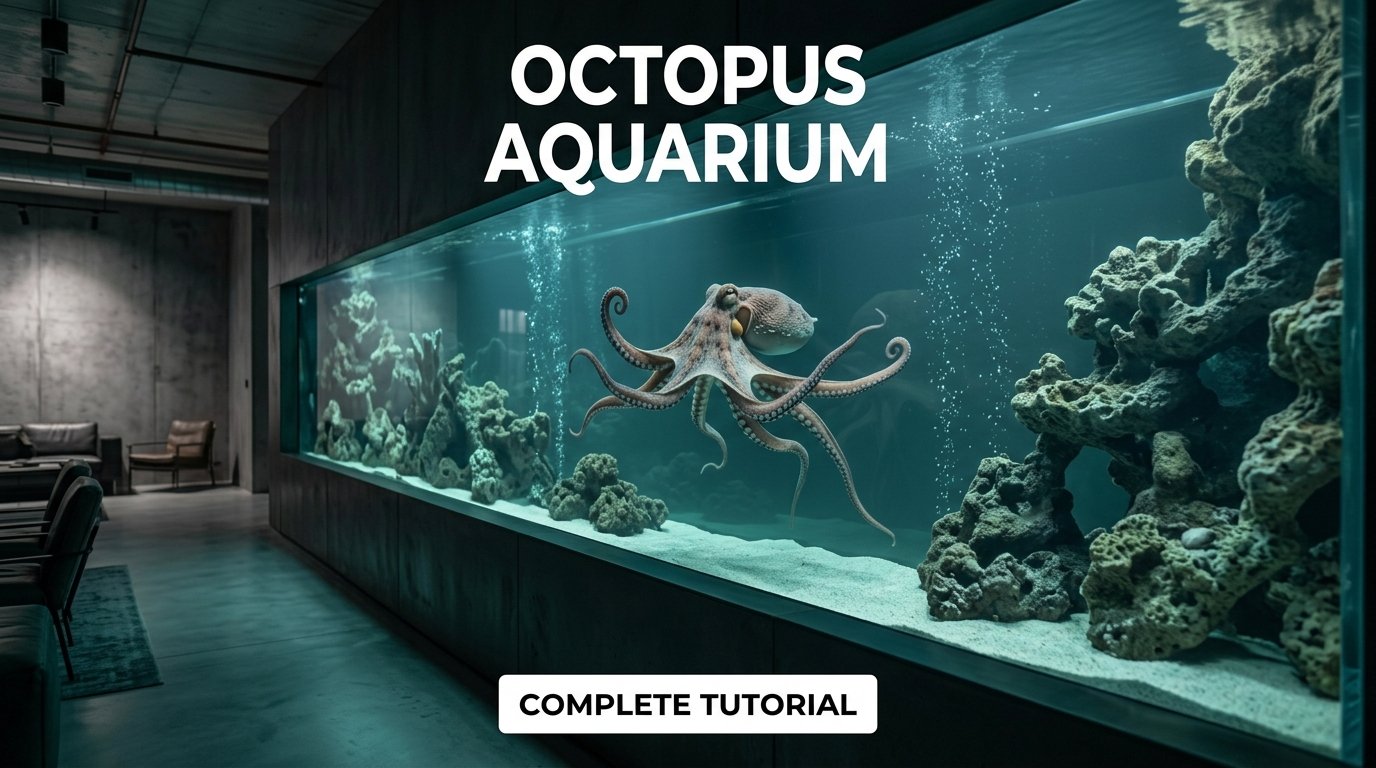
An octopus aquarium is one of the most fascinating and rewarding marine aquarium setups for experienced aquarists. Octopuses are highly intelligent, curious, and skilled escape artists, making them unlike any other aquarium inhabitant. Their ability to solve puzzles, change color, camouflage, and interact with their environment makes them a captivating addition to a dedicated saltwater aquarium.
However, keeping an octopus requires careful planning, specialized equipment, and a commitment to maintaining excellent water quality. Unlike typical reef or fish-only aquariums, an octopus aquarium must be designed specifically to meet the unique needs of these remarkable cephalopods.
This guide covers everything you need to know about building, decorating, and maintaining a successful octopus aquarium.
What Is an Octopus Aquarium?
An octopus aquarium is a saltwater aquarium designed exclusively for housing one octopus. Because octopuses are intelligent, territorial, and often solitary, they are usually kept alone rather than in a community aquarium.
A proper octopus tank includes:
- Secure escape-proof lid
- High-quality marine filtration
- Stable water conditions
- Multiple hiding places
- Gentle to moderate water flow
- Enrichment items for exploration
The primary goal is to create a safe, stimulating environment that closely resembles the octopus’s natural habitat.
Why Keep an Octopus?
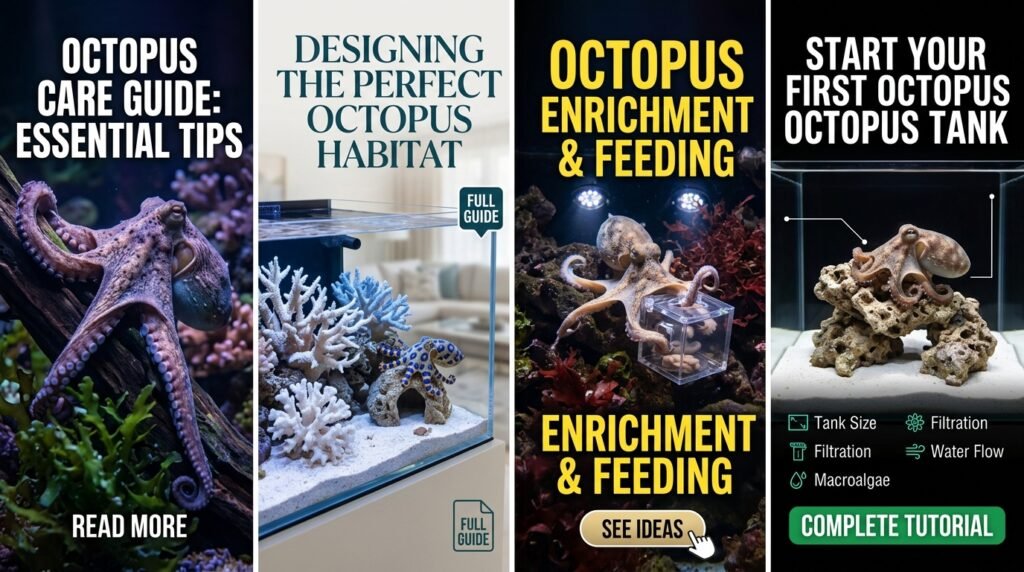
Many marine hobbyists are fascinated by octopuses because of their extraordinary behavior.
Incredible Intelligence
Octopuses can solve simple puzzles, recognize routines, and explore objects with remarkable curiosity.
Color-Changing Ability
They can rapidly change color and texture to blend into their surroundings.
Unique Personality
Each octopus develops individual behaviors and preferences.
Interactive Behavior
Some become accustomed to their caretakers and may interact during feeding.
Fascinating Hunting Skills
Watching an octopus stalk and capture prey is unlike observing any other aquarium animal.
Choosing the Right Aquarium Size
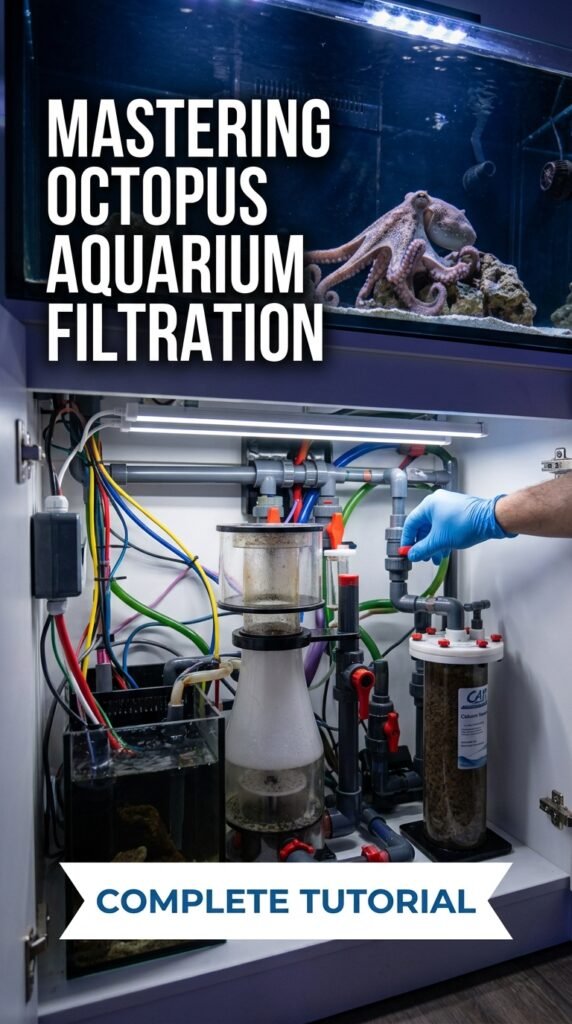
Tank size depends on the species.
Small Octopus Species
A minimum of 30 to 40 gallons is recommended.
Medium Species
A 50 to 75-gallon aquarium provides more stability and enrichment opportunities.
Large Species
Some species require 100 gallons or more.
Always research the specific requirements of the species before purchasing.
Escape-Proof Aquarium Design
Octopuses are famous for escaping through surprisingly small openings.
Secure Lid
Use a tightly fitting lid with no gaps.
Seal Openings
Cover filter openings, plumbing gaps, and cable entry points.
Weighted Covers
Many keepers use additional weights or locking mechanisms to prevent escapes.
Even a small opening can be enough for an octopus to leave the aquarium.
Saltwater Equipment
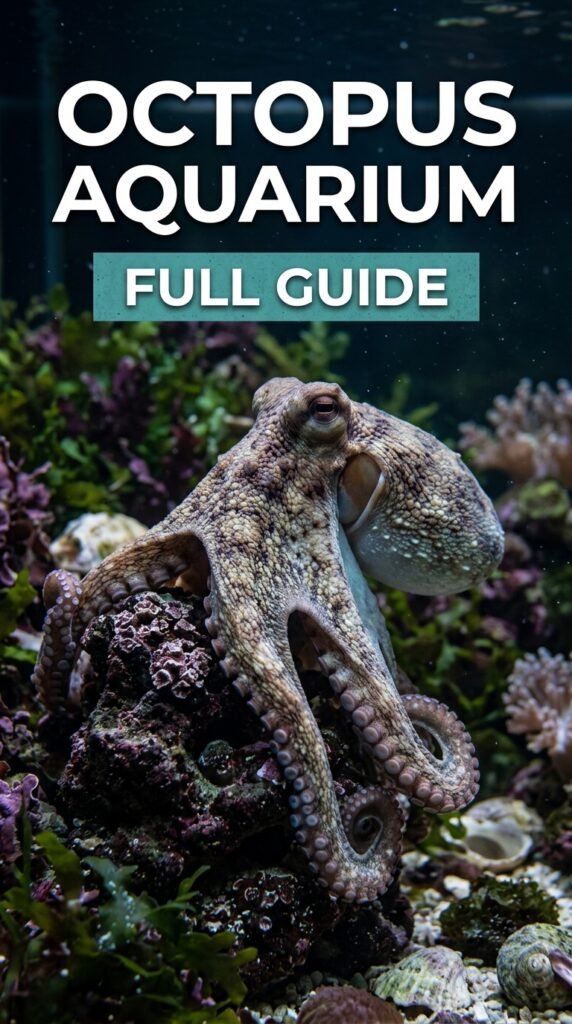
Reliable equipment is essential.
Marine Filter
A high-capacity biological filter keeps water clean.
Protein Skimmer
Removes organic waste and improves water quality.
Heater
Maintains stable temperatures suitable for the chosen species.
Thermometer
Allows continuous temperature monitoring.
Marine Lighting
Moderate lighting is generally sufficient unless keeping macroalgae.
Water Parameters
Stable water conditions are critical.
Recommended ranges include:
- Temperature: 72–78°F (22–26°C), depending on the species
- Salinity: 1.024–1.026 specific gravity
- pH: 8.1–8.4
- Ammonia: 0 ppm
- Nitrite: 0 ppm
- Nitrate: As low as possible
Regular testing helps maintain a healthy environment.
Best Substrate
Natural substrates work best.
Popular options include:
- Fine marine sand
- Crushed coral (used sparingly)
- Mixed sand and shell substrate
Sand allows the aquarium to resemble coastal habitats.
Aquarium Decorations
Decorations should provide shelter and enrichment.
Live Rock
One of the most important components of an octopus aquarium.
Benefits include:
- Biological filtration
- Hiding places
- Natural appearance
Rock Caves
Octopuses spend much of their time inside dens.
PVC Hides
Simple PVC pipes can serve as secure shelters.
Ceramic Caves
Provide additional hiding locations.
Arrange decorations securely to prevent collapses.
Enrichment Ideas
Octopuses require mental stimulation.
Examples include:
- Empty shells
- Coconut shells
- Floating toys designed for marine aquariums
- Rearrangeable rocks
- Puzzle feeders
Changing enrichment periodically keeps the octopus engaged.
Best Foods
Octopuses are carnivores.
Common foods include:
- Shrimp
- Crabs
- Clams
- Mussels
- Marine snails
- Frozen marine seafood
Offer a varied diet to support good health.
Tank Mates
Most octopuses should be kept alone.
Reasons include:
- They may hunt fish and crustaceans.
- Tank mates can injure the octopus.
- Competition causes stress.
A species-only aquarium is generally the safest choice.
Lighting
Octopuses often prefer subdued lighting.
Consider:
- LED aquarium lights
- Adjustable brightness
- Natural day-night cycle
Provide shaded areas where the octopus can retreat.
Maintenance Routine
Consistent care is essential.
Weekly Water Changes
Replace 10% to 20% of the water.
Test Water Quality
Monitor salinity, pH, ammonia, nitrite, and nitrate.
Clean Equipment
Maintain filters and protein skimmers regularly.
Inspect the Lid
Check that all escape points remain secure.
Observe Behavior
Healthy octopuses are alert, curious, and responsive.
Common Mistakes
Using an Open Aquarium
Even small gaps can result in escapes.
Poor Water Quality
Marine invertebrates are sensitive to unstable conditions.
Inadequate Hiding Places
A lack of shelters can cause stress.
Unstable Decorations
Loose rocks can shift and injure the animal.
Keeping Multiple Octopuses
Most species are solitary and should not share an aquarium.
Aquarium Design Ideas
Rocky Reef Layout
Features:
- Live rock
- Sand substrate
- Multiple caves
Coastal Lagoon Theme
Uses scattered rocks and open sandy areas.
Natural Cave System
Creates several interconnected hiding places.
Minimalist Marine Aquarium
Focuses on stable water quality with simple décor