
 By admin
Keeping a turtle in an aquarium is a rewarding experience, but turtles have different needs than fish. They require spacious swimming areas, powerful filtration, a dry basking platform, proper lighting, and clean water to stay healthy. Whether you’re caring for a baby turtle or an adult aquatic turtle, a well-designed aquarium provides a comfortable habitat that encourages natural behaviors and supports long-term health.
This guide covers everything you need to know about setting up, decorating, and maintaining a turtle aquarium.
Can Turtles Live in an Aquarium?
Yes, many aquatic and semi-aquatic turtles can thrive in aquariums when their environmental needs are met. Species commonly kept in aquariums include:
- Red-Eared Slider
- Painted Turtle
- Map Turtle
- Musk Turtle
- Mud Turtle
- Diamondback Terrapin (requires brackish water and specialized care)
Always research the specific needs of your turtle species before setting up its habitat.
Why Choose an Aquarium for a Turtle?
A properly designed aquarium offers several benefits.
Advantages include:
- Safe indoor habitat
- Easy observation
- Controlled temperature
- Cleaner environment
- Attractive home display
- Protection from predators
- Easier maintenance than outdoor habitats in many climates
A spacious aquarium allows turtles to swim, explore, and bask comfortably.
Choosing the Right Aquarium Size
Turtles grow much larger than many new owners expect.
General recommendations include:
- 40-gallon aquarium for small juvenile turtles
- 75-gallon aquarium for medium-sized turtles
- 100–125 gallons or larger for many adult aquatic turtles
- Larger custom aquariums for multiple turtles
A common guideline is to provide at least 10 gallons of water for every inch of the turtle’s shell length, though more space is always beneficial.
Essential Equipment
A healthy turtle aquarium requires quality equipment.
Basic essentials include:
- Large glass aquarium
- Powerful filtration system
- Water heater (for tropical species)
- UVB lighting
- Heat lamp
- Basking platform
- Aquarium thermometer
- Water testing kit
These items help maintain proper water quality and support healthy shell growth.
Creating the Perfect Turtle Habitat
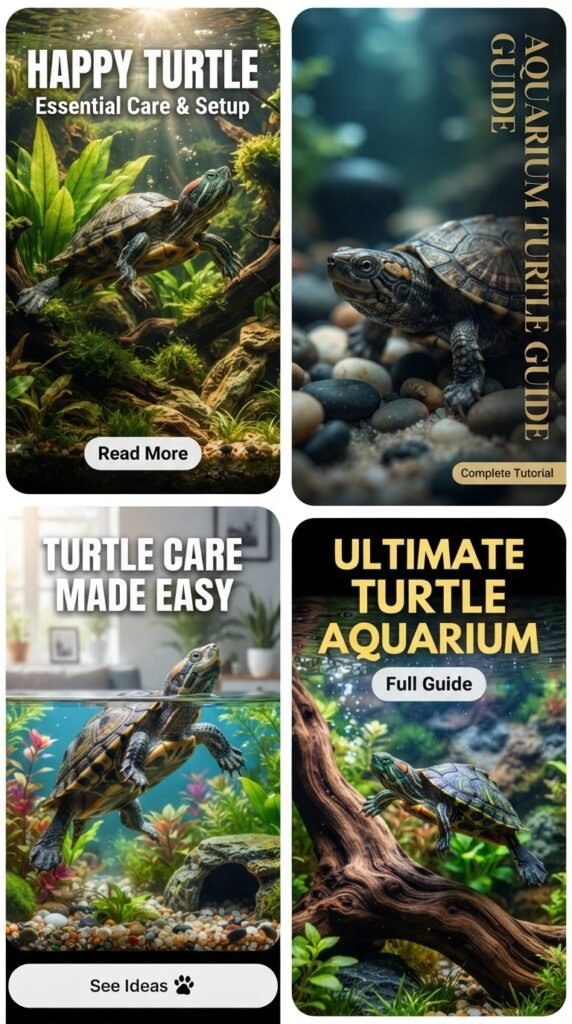
A turtle aquarium should include both water and a dry basking area.
Important features include:
- Deep swimming area
- Stable basking platform
- Easy access ramp
- Open swimming space
- Secure lid if needed
- Strong water circulation
The basking platform should allow the turtle to completely dry its shell.
Best Substrate
Many turtle keepers prefer a bare-bottom aquarium because it is easier to clean.
If you prefer substrate, choose:
- Large smooth river stones
- Large rounded pebbles
- Bare glass bottom
Avoid small gravel that could be swallowed.
Safe Decorations
Decorations should be sturdy and safe.
Popular options include:
- Large driftwood
- Smooth rocks
- Turtle-safe caves
- Floating docks
- Artificial plants
- Large ceramic ornaments
Leave plenty of open swimming space.
Can You Keep Live Plants?
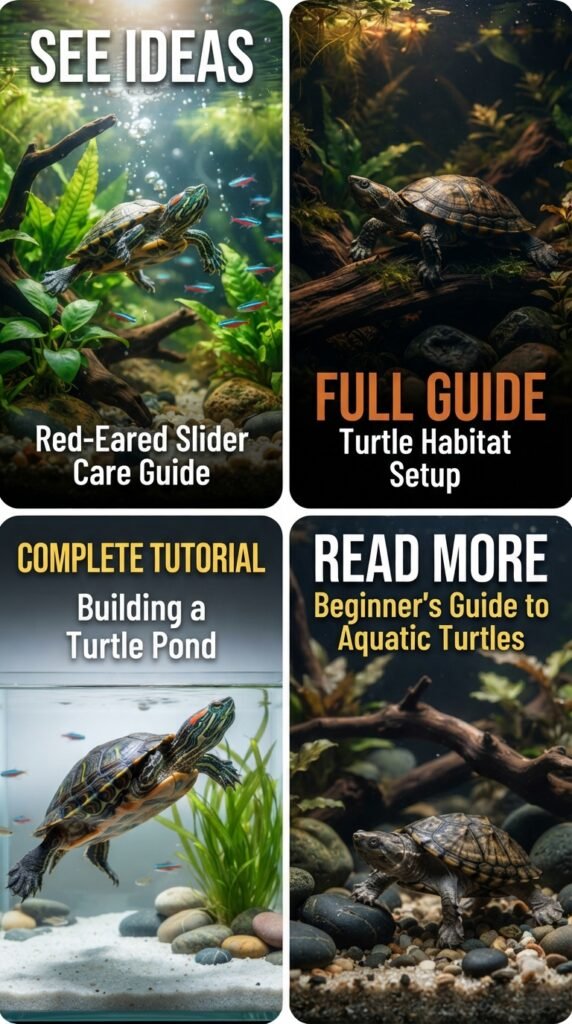
Some turtles eat or uproot live plants, but hardy species may survive.
Good choices include:
- Anubias
- Java Fern
- Hornwort
- Water Lettuce
- Duckweed
Floating plants are often more successful because they are easy to replace if eaten.
Lighting Requirements
Proper lighting is essential for turtle health.
Your setup should include:
- UVB light for shell and bone health
- Basking heat lamp
- LED light for viewing (optional)
- 10–12 hours of light each day
Replace UVB bulbs according to the manufacturer’s recommendations, even if they still produce visible light.
Water Temperature
Different turtle species require different temperatures.
General recommendations include:
| Area | Recommended Range |
|---|---|
| Water Temperature | 72–78°F (22–26°C) for many aquatic species |
| Basking Area | 88–95°F (31–35°C) |
Always confirm the ideal temperatures for your specific turtle species.
Feeding Your Turtle
A balanced diet is important for healthy growth.
Suitable foods include:
- Commercial aquatic turtle pellets
- Leafy greens
- Aquatic plants
- Earthworms
- Crickets
- Mealworms (occasionally)
- Small feeder insects
The exact diet depends on the turtle’s species and age. Many aquatic turtles become more herbivorous as they mature.
Can Turtles Live with Fish?
Some turtles may eat fish, while others ignore them.
If you plan to keep fish with a turtle:
- Choose fast-swimming species
- Provide hiding places
- Expect that fish may eventually become food
- Avoid overcrowding
For most keepers, housing turtles separately is the safest option.
Maintenance Tips
Perform Regular Water Changes
Replace 25–30% of the water each week.
Clean the Filter
Turtles produce a lot of waste, so clean filter media regularly using aquarium water.
Remove Uneaten Food
Leftover food quickly pollutes the water.
Clean the Glass
Use an aquarium-safe algae scraper to remove buildup.
Test Water Quality
Monitor ammonia, nitrite, nitrate, and water temperature regularly.
Common Mistakes to Avoid
Using a Small Aquarium
Turtles need much more space than many beginners expect.
Skipping UVB Lighting
Without UVB, turtles can develop serious shell and bone problems.
Weak Filtration
Turtles create heavy waste loads and require powerful filtration.
No Basking Area
Aquatic turtles must have a dry place where they can warm up and completely dry their shells.
Poor Water Quality
Dirty water can contribute to shell, skin, and eye problems.
Turtle Aquarium Design Ideas
Natural River Theme
Use driftwood, smooth rocks, and open swimming space to mimic a river habitat.
Minimalist Aquarium
Keep decorations simple with a large basking dock and uncluttered layout.
Jungle Style
Add hardy plants around the basking area while maintaining open water.
Modern Display
A rimless aquarium with hidden equipment creates a sleek, contemporary appearance.
Benefits of Keeping a Turtle in an Aquarium
A properly designed aquarium provides:
- Safe swimming space
- Easy observation
- Attractive home décor
- Controlled environmental conditions
- Healthy basking opportunities
- Long-term habitat for aquatic turtles
With good care, many aquatic turtles can live for several decades.
Conclusion
Keeping a turtle in an aquarium requires thoughtful planning, but the reward is a healthy and fascinating pet. By providing a spacious aquarium, strong filtration, UVB lighting, a warm basking area, and a balanced diet, you can create an environment where your turtle thrives.
Choose equipment designed for turtles, maintain excellent water quality, and tailor the habitat to your turtle’s specific species for the best long-term results.
Frequently Asked Questions
Can turtles live in a fish aquarium?
Yes, provided the aquarium is large enough and modified with a basking platform, UVB lighting, and suitable filtration to meet a turtle’s needs.
What size aquarium does a turtle need?
Many aquatic turtles require at least a 75-gallon aquarium as adults, although the exact size depends on the species and the turtle’s adult shell length.
Do turtles need a basking area?
Yes. Aquatic turtles need a dry platform where they can leave the water, warm themselves under a heat lamp, and dry their shells completely.
Can turtles live with fish?
Sometimes, but many turtles will chase or eat fish. Fish should not be considered permanent companions unless you understand and accept the risks.
Do turtles need a heater?
Many tropical and subtropical aquatic turtle species benefit from a water heater, while some species kept in naturally cooler indoor environments may have different temperature requirements.
How often should I clean a turtle aquarium?
Perform weekly partial water changes, remove leftover food daily, clean the filter regularly, and monitor water quality to keep the habitat healthy.