
 By admin
A fish tail, also known as the caudal fin, is one of the most important parts of a fish’s body. It plays a key role in movement, balance, and speed in water. Different fish species have different tail shapes, and each type serves a specific purpose.
In this complete guide, you’ll learn everything about fish tails, including their structure, types, and functions.
What Is a Fish Tail
The fish tail is the fin located at the rear end of a fish’s body. It is primarily responsible for propulsion, helping the fish move forward in water.
The tail works by pushing water backward, allowing the fish to swim efficiently.
Functions of a Fish Tail
The tail is essential for several reasons.
It helps fish swim forward
It controls speed and direction
It maintains balance and stability
It assists in quick movements and escapes
Without a properly functioning tail, a fish would struggle to survive.
Types of Fish Tails

Fish tails come in different shapes, each adapted to a specific lifestyle.
Forked Tail
A forked tail is split into two lobes.
This type is found in fast-swimming fish and allows quick movement through water.
Rounded Tail
Rounded tails are curved and provide better control.
Fish with this tail type are usually slower but more maneuverable.
Fan-Shaped Tail
Fan-shaped tails are wide and spread out.
They are common in ornamental fish like Goldfish, giving them a graceful appearance.
Lunate Tail
A lunate (crescent-shaped) tail is designed for speed.
It is found in powerful swimmers like tuna.
Truncate Tail
This tail has a straight edge and provides a balance between speed and control.
Pointed Tail
Pointed tails are narrow and help in steady swimming.
Tail Shapes in Aquarium Fish
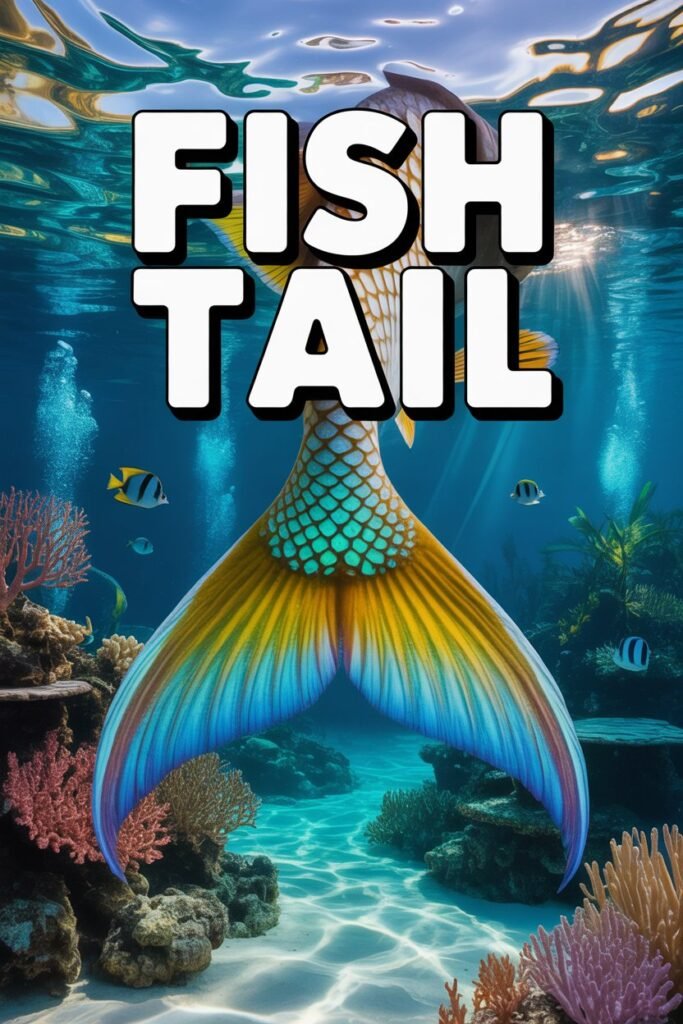
In aquarium fish, tail shape is often bred for beauty.
For example, the Betta fish has many tail varieties such as:
- Veiltail
- Crowntail
- Halfmoon
These tails are not just functional but also highly decorative.
How Fish Use Their Tails
Fish move their tails side to side to push water backward. The stronger the movement, the faster the fish swims.
Different species use their tails differently depending on their environment and lifestyle.
Tail Damage and Care
Fish tails can sometimes get damaged due to:
Poor water quality
Aggressive tank mates
Sharp decorations
Infections
To keep fish tails healthy:
Maintain clean water
Avoid overcrowding
Use smooth décor
Monitor fish behavior
Healthy fins are a sign of a healthy fish.
Why Tail Shape Matters

The shape of a fish’s tail is directly linked to how it lives.
Fast swimmers have streamlined tails
Slow fish have broader tails for control
Decorative fish have elaborate tails for visual appeal
Understanding tail types helps you better care for your fish.
Interesting Facts About Fish Tails
Some fish can regenerate damaged fins
Tail shape can indicate a fish’s swimming style
Ornamental fish are bred for unique tail designs
Different species use tails in unique ways
Conclusion
The fish tail is much more than just a body part—it is essential for movement, balance, and survival. From speed-focused lunate tails to decorative fan-shaped fins, each type has its own purpose.
By understanding fish tails, you can better appreciate the diversity of aquatic life and provide better care for your aquarium fish.
FAQs
What is a fish tail called?
It is called the caudal fin.
Why is the fish tail important?
It helps with movement, speed, and balance.
Can fish regrow their tails?
Yes, many fish can regrow damaged fins.
What causes tail damage in fish?
Poor water quality, aggression, or sharp objects.
Which fish has the most beautiful tail?
Betta fish are known for their colorful and flowing tails.