
 By admin
A shrimp jar aquarium is a small aquatic setup designed to keep freshwater shrimp in a compact environment. These tiny aquariums can be beautiful additions to desks, shelves, bedrooms, and offices. With the right plants, substrate, water conditions, and low stocking levels, a shrimp jar can become a miniature underwater ecosystem.
However, a decorative jar is not automatically suitable for shrimp. Shrimp still require stable water quality, adequate oxygen, appropriate temperature, and enough biological filtration. A properly planned setup is much safer than simply placing shrimp in a container of water.
What Is a Shrimp Jar Aquarium?
A shrimp jar aquarium is a small aquarium-style setup that houses freshwater shrimp, usually dwarf shrimp such as Neocaridina varieties.
A good shrimp jar can contain:
- Live aquatic plants
- Natural substrate
- Small pieces of driftwood
- Moss
- Smooth stones
- Beneficial microorganisms
- Freshwater shrimp
The goal is to create a stable miniature habitat rather than simply a decorative container.
Best Shrimp for a Small Aquarium
Neocaridina shrimp are among the most popular choices for beginners because they are colorful, adaptable, and relatively easy to care for.
Popular varieties include:
- Red Cherry Shrimp
- Blue Dream Shrimp
- Yellow Shrimp
- Orange Sakura Shrimp
- Green Jade Shrimp
- Black Rose Shrimp
Avoid choosing shrimp based only on color. Water parameters, temperature, and tank stability are more important.
Choosing the Right Jar
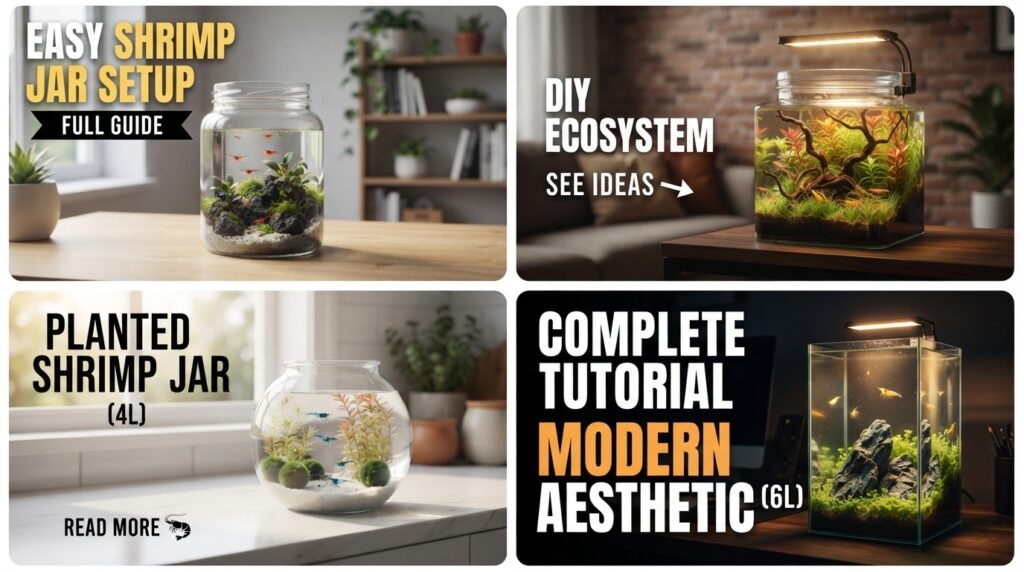
A larger container is generally easier to keep stable than a tiny jar.
When choosing a container, look for:
- Wide opening
- Adequate water volume
- Stable base
- Food-safe aquarium-compatible material
- Enough space for plants
- Easy access for maintenance
A small aquarium or purpose-built desktop tank is often safer and easier to manage than a very small decorative jar.
Substrate Ideas
Substrate provides a surface for beneficial microorganisms and helps anchor plants.
Good options include:
- Fine aquarium gravel
- Shrimp-specific substrate
- Aquasoil
- Natural sand
Avoid painted or unknown decorative materials that may affect water chemistry.
Best Plants for a Shrimp Jar
Plants are one of the most important parts of a shrimp setup.
Good choices include:
Java Moss
Java Moss provides excellent grazing surfaces and hiding places for shrimp.
Anubias
Anubias grows slowly and tolerates relatively low light.
Java Fern
Java Fern is another hardy plant suitable for simple setups.
Bucephalandra
Bucephalandra stays relatively compact and provides attractive leaves for a nano aquarium.
Floating Plants
Suitable floating plants can provide shade and help absorb excess nutrients.
Why Moss Is Important
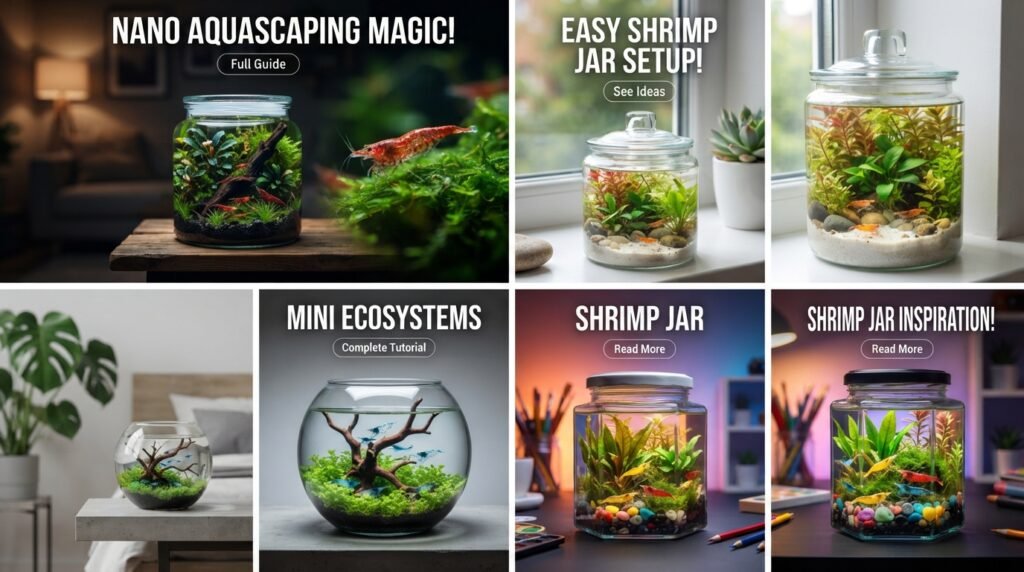
Shrimp constantly graze on biofilm that develops on surfaces throughout an aquarium.
Moss provides:
- Large grazing areas
- Baby shrimp shelter
- Natural texture
- Additional surface area for microorganisms
A mature, planted setup can be especially beneficial for shrimp.
Adding Driftwood
A small piece of aquarium-safe driftwood can create a natural focal point.
Driftwood can:
- Provide additional grazing surfaces
- Support biofilm growth
- Create hiding areas
- Give the jar a natural appearance
Choose pieces that are appropriately sized and prepared for aquarium use.
Adding Rocks
Small smooth rocks can create structure without taking up too much space.
Good choices include:
- Lava rock
- Dragon stone
- Smooth river stones
- Slate pieces suitable for aquariums
Avoid sharp edges that could injure shrimp.
Filtration
A filter is important for maintaining water quality, especially in small systems.
For shrimp, gentle filtration is preferred.
Suitable options include:
- Small sponge filter
- Air-driven nano filter
- Low-flow filtration system
A sponge filter is particularly useful because it provides biological filtration while reducing the risk of shrimp being pulled into the intake.
Aeration
Small containers can experience oxygen shortages, especially when heavily planted or kept warm.
Gentle aeration can improve gas exchange and water movement.
Avoid creating extremely strong currents that make it difficult for shrimp to move around.
Cycling the Shrimp Aquarium
Never rush the setup.
Before adding shrimp, allow the aquarium to establish its nitrogen cycle. The biological filter should be capable of processing ammonia and nitrite.
Test the water and confirm:
- Ammonia: 0 ppm
- Nitrite: 0 ppm
- Nitrate: preferably low
- Stable temperature
- Stable pH appropriate for the shrimp
A mature aquarium is generally safer than a newly established container.
Water Parameters
Neocaridina shrimp generally do well in stable, moderately mineralized freshwater.
| Parameter | General Target |
|---|---|
| Temperature | Around 68–78°F (20–26°C) |
| pH | Around 6.5–8.0 |
| Ammonia | 0 ppm |
| Nitrite | 0 ppm |
| Nitrate | Low |
Exact requirements vary by shrimp variety and water source. Stability is often more important than chasing a specific number.
Feeding Shrimp
Shrimp naturally graze on algae, biofilm, and microorganisms.
Supplement their diet with small amounts of:
- Shrimp pellets
- Algae-based foods
- Blanched vegetables
- Specialized shrimp foods
Feed lightly because excess food can quickly pollute a small volume of water.
Remove uneaten food when necessary.
Lighting
Shrimp jars generally do not require intense lighting.
A simple aquarium LED can provide enough light for low-maintenance plants.
A timer can help maintain a consistent schedule and prevent excessive algae growth.
How to Maintain a Shrimp Jar
Perform Small Water Changes
Small, regular water changes are safer than large sudden changes.
Monitor Water Parameters
Test ammonia, nitrite, nitrate, pH, and other relevant parameters regularly.
Remove Dead Plant Material
Trim unhealthy leaves and remove decaying material.
Clean the Glass
Use a small aquarium-safe algae scraper or cleaning pad.
Avoid Sudden Changes
Shrimp are sensitive to rapid changes in temperature and water chemistry.
Common Mistakes
Using a Tiny Unfiltered Jar
Very small volumes can experience rapid changes in water quality.
Adding Shrimp Immediately
A new setup needs time to establish beneficial bacteria.
Overfeeding
Excess food can cause ammonia and other water-quality problems.
Overcrowding
Keep stocking conservative, especially in small aquariums.
Large Water Changes
Sudden changes in temperature or chemistry can stress shrimp.
Using Tap Water Without Testing
Tap water can contain chlorine, chloramine, or unsuitable mineral levels. Treat water appropriately and understand its chemistry before adding it.
Shrimp Jar Design Ideas
Forest Floor
Use dark substrate, moss, small rocks, and driftwood to create a miniature forest scene.
Minimalist Shrimp Jar
Use a simple substrate with a single piece of wood and a few plants.
Moss Garden
Cover a small hardscape feature with moss and allow shrimp to graze across it.
Crystal-Clear Nano Landscape
Use pale substrate, small stones, and compact plants for a bright modern appearance.
Can Shrimp Live Without a Filter?
Some experienced aquarists maintain mature planted systems without conventional filters, but this is more difficult in a small jar because oxygen and water quality can change quickly.
For beginners, a gentle sponge filter or another appropriately sized filtration system is usually the safer option.
Can Shrimp Live Without a Heater?
Neocaridina shrimp can tolerate a relatively broad temperature range, but the suitability depends on the room temperature and seasonal changes.
If the room remains within a safe, stable range, additional heating may not be necessary. Avoid rapid temperature fluctuations.
Benefits of a Shrimp Aquarium
A well-designed shrimp aquarium provides:
- Beautiful natural colors
- Fascinating animal behavior
- Compact aquarium design
- Low bioload
- Interesting planted landscapes
- A relaxing desktop display
Shrimp are especially enjoyable because they constantly explore surfaces and graze throughout the aquarium.
Conclusion
A shrimp jar aquarium can create a beautiful miniature underwater world, but its small size means water quality must be managed carefully. The best setup combines an adequately sized container, mature biological filtration, live plants, moss, appropriate water parameters, gentle circulation, and conservative feeding.
For beginners, choosing a small aquarium rather than an extremely tiny jar can make maintaining stable conditions much easier. With patience and proper care, a planted shrimp setup can become a colorful and fascinating addition to your home.
Frequently Asked Questions
Can shrimp live in a jar aquarium?
Shrimp can potentially live in a properly established small aquarium, but very small jars are difficult to keep stable. A larger nano aquarium with filtration is generally a better choice.
How many shrimp can I keep in a small aquarium?
Stocking depends on water volume, filtration, plant growth, and maintenance. Start conservatively and allow the colony to grow gradually rather than adding a large number at once.
Do shrimp need a filter?
A filter is strongly recommended for most beginner setups. A small sponge filter provides gentle circulation and biological filtration.
What plants are best for shrimp?
Java Moss, Java Fern, Anubias, Bucephalandra, and suitable floating plants are excellent choices.
Do shrimp need a heater?
Not always. If room temperatures remain stable and appropriate for the shrimp variety, a heater may not be necessary. Avoid sudden temperature changes.
How often should I feed shrimp?
Feed small amounts and adjust based on how quickly the food is consumed. Shrimp should have access to natural biofilm, but supplemental feeding should be limited to avoid polluting the water.
Are shrimp good for beginners?
Neocaridina shrimp can be beginner-friendly when kept in a mature, stable aquarium. Their small size makes water-quality stability particularly important.