
 By admin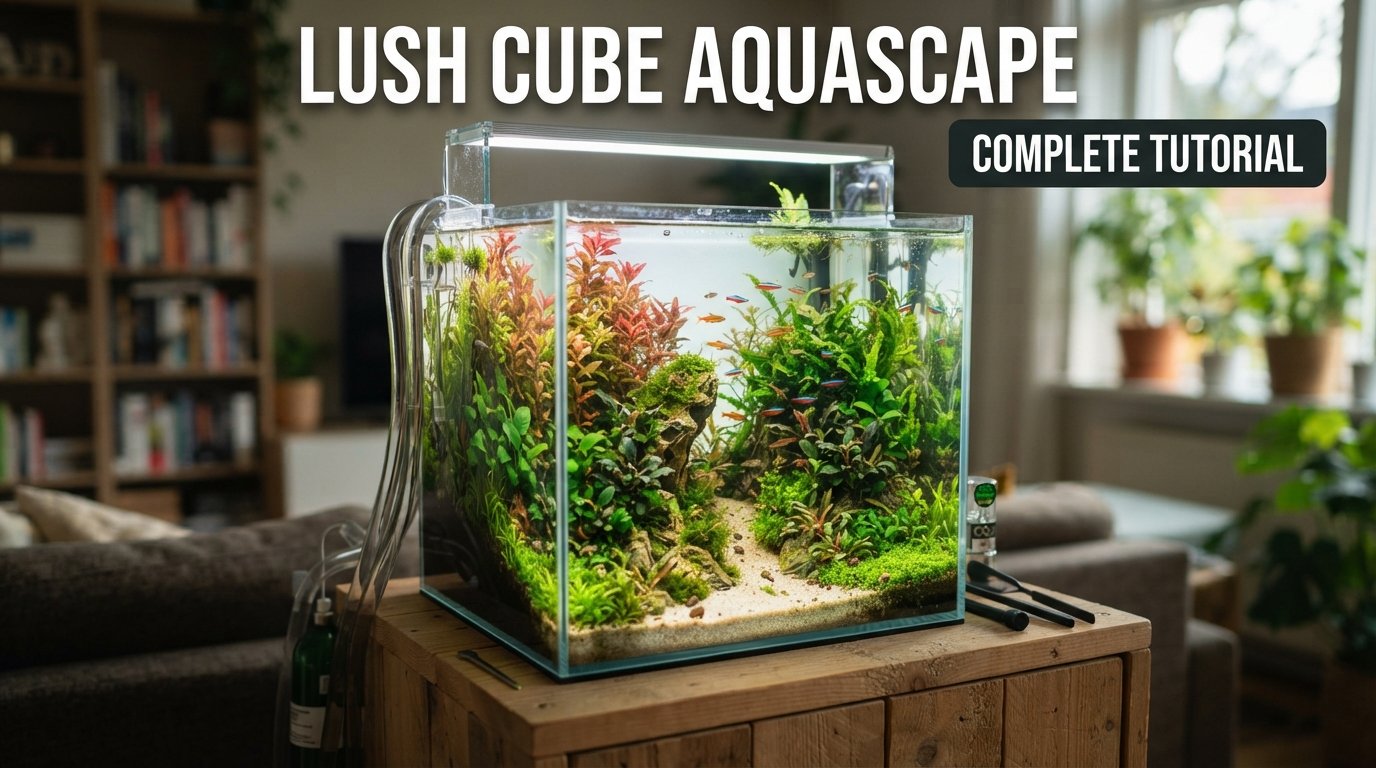
A cube aquarium aquascape is a stylish way to create a compact underwater landscape with strong visual depth. Unlike long rectangular aquariums, cube tanks provide almost equal height, width, and depth, making them especially suitable for dramatic rocks, vertical driftwood, planted layouts, and minimalist aquascapes.
Because cube aquariums have limited horizontal swimming space, choosing the right fish, plants, and hardscape is important. A well-designed cube can look like a miniature underwater mountain, forest, river, or garden.
What Is a Cube Aquarium?
A cube aquarium is a tank with dimensions that are approximately equal in length, width, and height.
Common cube aquarium sizes include:
- 5 gallon
- 10 gallon
- 15 gallon
- 20 gallon
- 25 gallon
- 30 gallon
- Larger custom cubes
The exact dimensions vary by manufacturer.
The extra depth of a cube compared with a narrow rectangular tank gives aquascapers more room to create layers and perspective.
Why Choose a Cube Aquarium Aquascape?
Cube tanks have several advantages for aquascaping.
Excellent Depth
The front-to-back depth gives you more space to position rocks, wood, and plants.
Strong Focal Point
A carefully positioned central rock or piece of driftwood can become the centerpiece.
Compact Footprint
A cube can provide considerable visual volume without requiring a very long piece of furniture.
360-Degree Potential
Some cube aquariums can be designed so that the aquascape looks attractive from multiple viewing angles.
Best Cube Aquarium Aquascape Ideas
1. Mountain Aquascape
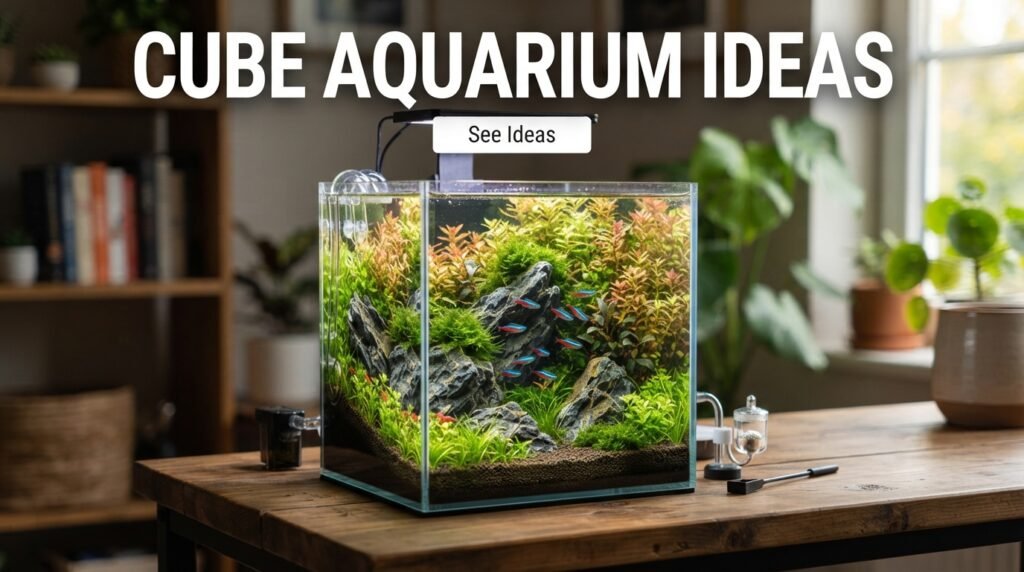
Create an underwater mountain using several rocks of different sizes.
Start with the largest rock as the focal point and use smaller stones around it to create a natural transition.
Add low-growing plants around the base.
2. Iwagumi Cube Aquascape
An Iwagumi design uses carefully arranged stones as the main visual feature.
A typical layout includes:
- One dominant stone
- Supporting stones
- Small foreground plants
- Open negative space
This minimalist style works particularly well in cube aquariums.
3. Jungle Cube Aquarium
Create a dense underwater forest using tall plants and branching driftwood.
Use shorter plants toward the front and taller plants toward the back.
Although the tank is cube-shaped, this arrangement creates the illusion of greater depth.
4. Driftwood Cube Aquascape
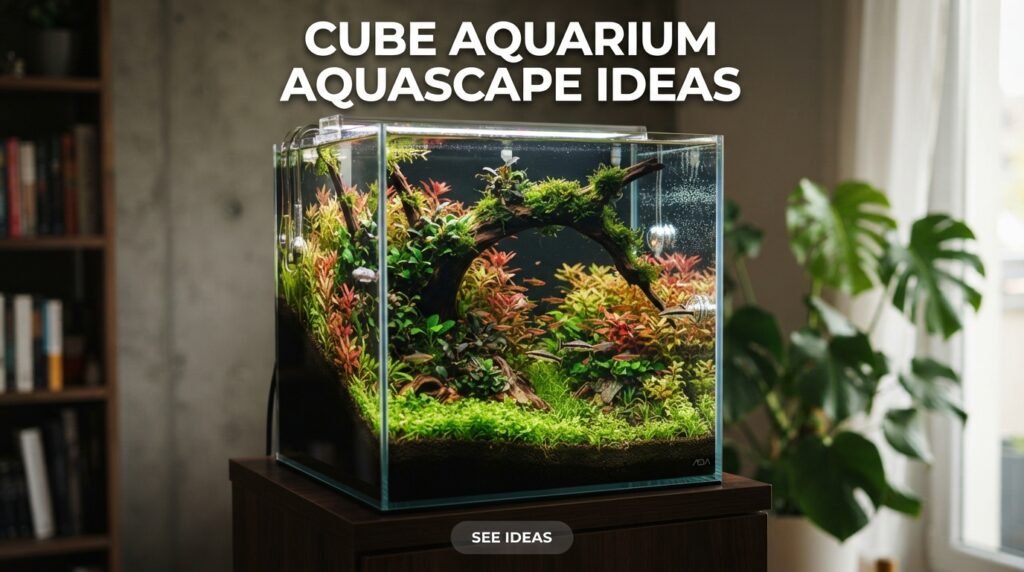
A large branching piece of driftwood can create a dramatic focal point.
Position the wood diagonally or vertically rather than placing it directly in the center.
Attach moss or suitable epiphytes to the branches for a natural appearance.
5. Island Aquascape
Create a central island of rocks and plants surrounded by open substrate.
This design leaves negative space around the focal point and works especially well in minimalist cube tanks.
6. Valley Aquascape
Use two groups of rocks on opposite sides and create an open path between them.
A narrow sand path can lead toward the back of the aquarium, creating a strong sense of perspective.
7. Forest Aquascape
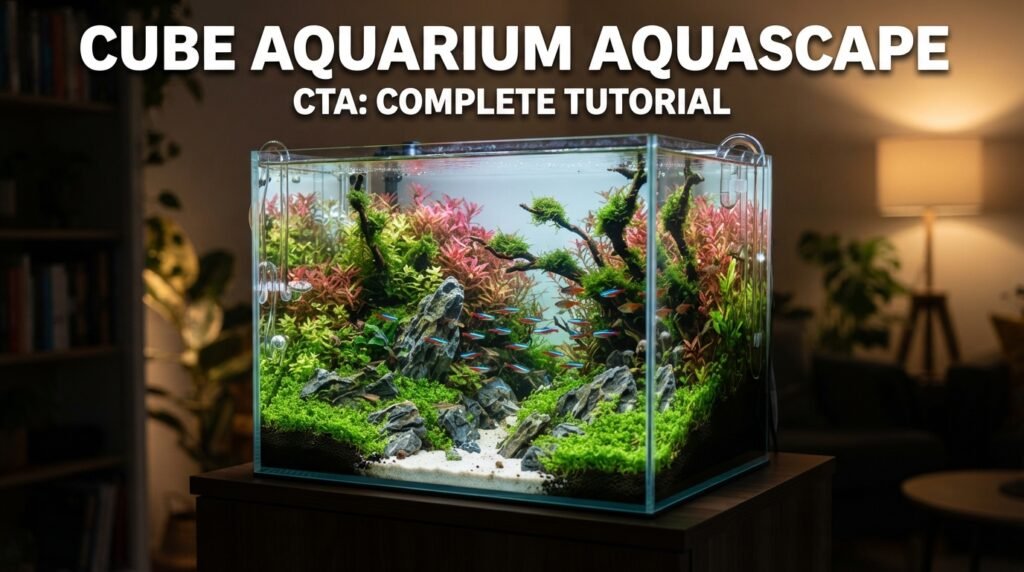
Branching wood can be arranged vertically to resemble underwater tree trunks.
Add moss and small plants to create a miniature underwater forest.
8. Waterfall Aquascape
A cube aquarium can be designed to resemble an underwater waterfall.
Use pale sand, rocks, and carpeting plants to create the appearance of water flowing through a rocky landscape.
9. Minimalist Cube Aquascape
Sometimes less is better.
Use:
- One main rock
- A few supporting stones
- One plant species
- Simple substrate
- Open space
This creates a clean and modern appearance.
Cube Aquarium Hardscape Ideas
Hardscape is especially important in a cube aquascape because the three-dimensional shape allows you to build vertically.
Popular materials include:
- Seiryu-style stone
- Lava rock
- Dragon stone
- River stones
- Slate
- Spider wood
- Manzanita-style driftwood
Only use materials that are aquarium-safe and appropriate for your water chemistry and livestock.
How to Arrange Rocks in a Cube Aquarium
Avoid placing all the rocks at the same height.
Instead:
- Choose one dominant rock.
- Add smaller supporting stones.
- Create a slope.
- Leave open areas.
- Partially bury the rock bases.
- Add plants around transitions.
This makes the hardscape appear more natural.
Best Plants for Cube Aquarium Aquascapes
Foreground Plants
Good choices can include:
- Monte Carlo
- Dwarf Hairgrass
- Marsilea
- Cryptocoryne parva
Midground Plants
Consider:
- Anubias
- Bucephalandra
- Cryptocoryne
- Smaller Java Fern varieties
Background Plants
Depending on the aquarium height and lighting:
- Vallisneria
- Rotala
- Ludwigia
- Hygrophila
- Limnophila
Plant selection should match the available lighting, nutrients, CO2 level, and maintenance routine.
Low-Tech Cube Aquarium Aquascape
A cube does not have to be a high-tech planted tank.
For a low-tech setup, use hardy plants such as:
- Anubias
- Java Fern
- Cryptocoryne
- Java Moss
- Bucephalandra
Use moderate lighting and avoid overloading the aquarium with demanding plants.
High-Tech Cube Aquascape
A high-tech cube can support more demanding plants and dense carpeting.
It may include:
- Strong aquarium lighting
- Pressurized CO2
- Nutrient-rich substrate
- Regular fertilization
- Careful water circulation
High-tech aquascapes can look spectacular but require more maintenance and consistency.
Cube Aquarium With Driftwood
Driftwood is particularly effective in cube tanks because it can use the aquarium’s vertical space.
Try positioning a branch so it rises from the substrate toward the upper corner.
This creates a strong diagonal line and makes the tank appear larger.
Cube Aquarium With Moss
Moss is excellent for creating miniature forests.
Suitable aquarium mosses can be attached to:
- Driftwood
- Rocks
- Mesh
- Aquarium-safe structures
Trim moss regularly to maintain a clean shape.
Cube Aquarium With Shrimp
A planted cube aquarium can be an excellent display for freshwater shrimp when the aquarium is appropriately established.
A shrimp-focused aquascape can include:
- Moss
- Small plants
- Driftwood
- Rocks
- Leaf litter
- Biofilm-producing surfaces
Avoid fish that are likely to prey on shrimp if maintaining a shrimp colony is the priority.
Cube Aquarium With Betta
A suitably sized cube aquarium can be designed for a betta, provided its dimensions, filtration, temperature, and swimming conditions are appropriate.
Use:
- Gentle flow
- Broad-leaved plants
- Hiding areas
- Open swimming space
Avoid creating a tank packed so densely with hardscape that the fish cannot move comfortably.
Cube Aquarium Fish Ideas
The best livestock depends heavily on the tank’s actual volume.
Potential choices for appropriately sized freshwater systems can include:
- Small rasboras
- Small tetras
- Shrimp
- Snails
- A single suitable centerpiece fish
Very small cube aquariums are often better suited to shrimp and snails than to schooling fish.
Always check the adult requirements of the species before stocking.
Cube Aquarium Substrate
Substrate provides both a practical growing medium and a major visual element.
Options include:
Aquarium Soil
Useful for many planted aquariums and particularly popular in planted aquascaping.
Sand
Excellent for minimalist designs and creates a clean contrast with dark rocks.
Gravel
Available in many colors and textures.
For a natural aquascape, neutral colors usually work well.
Cube Aquarium Lighting
Lighting should be selected according to the plants you want to grow.
A simple low-tech aquarium can use moderate lighting, while carpeting plants and demanding species may require stronger light.
Avoid excessive lighting without sufficient plant growth and CO2 management because it can encourage algae.
Filtration for Cube Aquariums
Choose filtration based on the tank’s actual volume and livestock.
Options include:
- Sponge filter
- Hang-on-back filter
- Internal filter
- Small canister filter
For shrimp tanks, protect filter intakes with an appropriate sponge or pre-filter to prevent shrimp from being drawn into the filter.
Water Flow
Cube aquariums can develop dead spots because of their three-dimensional shape and dense hardscape.
Position the filter outlet so water circulates around:
- The front
- Behind the hardscape
- Around plants
- Across the surface
Avoid excessive current for livestock that prefers gentle water movement.
Cube Aquarium Aquascaping Layouts
| Layout | Main Feature | Best For |
|---|---|---|
| Iwagumi | Rocks | Minimalist design |
| Jungle | Dense plants | Natural appearance |
| Island | Central focal point | Modern aquascapes |
| Valley | Sand path | Strong perspective |
| Forest | Branching wood | Moss and plants |
| Mountain | Large rocks | Dramatic layouts |
| Minimalist | Open space | Small cubes |
| Shrimp Garden | Moss and plants | Shrimp tanks |
How to Make a Cube Aquarium Look Bigger
Use perspective to create depth.
Use Smaller Elements Toward the Back
Smaller rocks and plants can make the background appear farther away.
Create a Path
A sand path that narrows toward the rear creates visual depth.
Keep the Foreground Open
Too much hardscape at the front can make the aquarium look crowded.
Use Height
Tall driftwood and background plants take advantage of the cube’s vertical space.
Create Negative Space
Empty areas are just as important as decorated areas.
Cube Aquarium Maintenance
Regular maintenance includes:
- Water testing
- Water changes
- Glass cleaning
- Plant trimming
- Removing dead leaves
- Filter maintenance
- Algae control
- Checking equipment
Cube aquariums may require frequent trimming because plants can quickly fill the limited space.
Common Cube Aquascaping Mistakes
Putting the Main Rock in the Exact Center
A slightly off-center focal point often looks more natural.
Using Too Much Hardscape
The aquarium can quickly become crowded.
Choosing Plants That Grow Too Large
Large plants can overwhelm a small cube.
Ignoring Vertical Space
A cube provides significant height, so use it intentionally.
Overlighting
Excessive light can cause algae problems.
Overstocking Fish
The tank’s shape does not increase its actual water volume.
Conclusion
A cube aquarium aquascape provides a unique opportunity to create a three-dimensional underwater landscape. Its depth and height make it particularly suitable for rock formations, branching driftwood, miniature forests, Iwagumi designs, islands, valleys, and planted layouts.
The best cube aquascapes usually have one clear focal point, carefully arranged hardscape, appropriate plants, and enough negative space to prevent the aquarium from looking crowded.
Whether you prefer a minimalist shrimp cube, a lush planted jungle, or a dramatic mountain landscape, thoughtful proportions and proper livestock selection will make the aquarium both attractive and healthy.
Frequently Asked Questions
What is the best aquascape for a cube aquarium?
Iwagumi, island, mountain, forest, and jungle-style aquascapes all work particularly well because cube tanks provide substantial vertical and front-to-back depth.
Are cube aquariums good for planted tanks?
Yes. Their depth and height can provide excellent opportunities for three-dimensional planted designs.
What plants are best for a cube aquarium?
Anubias, Java Fern, Bucephalandra, Cryptocoryne, mosses, and appropriately sized carpeting plants are popular choices.
Can I keep shrimp in a cube aquarium?
Yes, provided the aquarium is appropriately sized, established, filtered, and maintained for the shrimp species you choose.
Is a cube aquarium better than a rectangular aquarium?
Neither shape is universally better. Cube aquariums provide more visual depth, while rectangular tanks generally provide more horizontal swimming space.
How do I create depth in a cube aquascape?
Use a narrowing sand path, larger hardscape in the foreground, smaller elements toward the back, layered plants, and open negative space.
Does a cube aquarium need CO2?
No. A low-tech cube aquarium can be successfully planted with hardy species without injected CO2. CO2 becomes more useful when growing demanding plants or creating a dense high-tech aquascape.