
 By admin
A zoo aquarium combines the excitement of a zoo with the beauty of underwater ecosystems. These large aquatic exhibits can feature freshwater fish, tropical reef animals, sharks, rays, turtles, jellyfish, aquatic plants, and immersive underwater habitats.
Whether you are planning a real aquarium exhibit, looking for inspiration for a home aquarium, or creating a zoo-themed aquarium room, there are many ways to bring the concept to life.
What Is a Zoo Aquarium?
A zoo aquarium is an aquatic exhibit found within or alongside a zoo or wildlife attraction. Instead of focusing on one type of fish, it can contain multiple habitats designed around different aquatic environments.
A large zoo aquarium may include:
- Freshwater fish
- Tropical reef fish
- Sharks
- Rays
- Jellyfish
- Sea turtles
- Aquatic plants
- Corals
- Crustaceans
- Amphibians
- Aquatic reptiles
The best exhibits recreate natural environments rather than simply placing animals in large tanks.
Zoo Aquarium Ideas
1. Giant Ocean Aquarium
A huge ocean exhibit can become the centerpiece of a zoo aquarium.
The tank can include:
- Sharks
- Rays
- Large schooling fish
- Rock formations
- Artificial reef structures
- Open swimming areas
Large viewing windows allow visitors to observe animals from different angles.
2. Shark Aquarium
A shark exhibit is one of the most dramatic zoo aquarium concepts.
A large shark habitat needs substantial swimming space and carefully designed filtration and circulation.
An underwater viewing tunnel can allow visitors to see sharks swimming overhead.
3. Jellyfish Aquarium
Jellyfish displays create a completely different atmosphere.
Use specialized circular or kreisel-style aquarium systems where appropriate to keep jellyfish safely suspended in the water column.
Dark surroundings and controlled lighting can highlight their translucent bodies.
4. Tropical Reef Aquarium
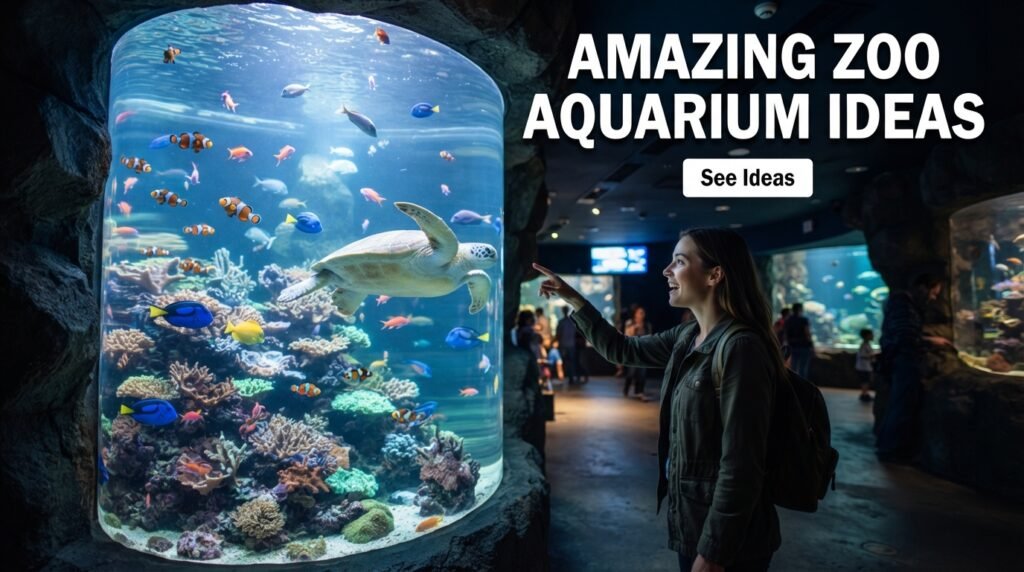
A tropical reef exhibit can contain colorful fish and corals.
Possible features include:
- Clownfish
- Angelfish
- Tangs
- Butterflyfish
- Corals
- Sea anemones
- Reef invertebrates
A large reef display can recreate the appearance of a coral ecosystem.
5. Freshwater River Aquarium
Not every zoo aquarium needs to represent the ocean.
A freshwater exhibit can recreate a tropical river environment using:
- Large driftwood
- River rocks
- Aquatic plants
- Sandy substrate
- Schooling fish
The habitat can be designed around a particular geographical region.
Amazon River Aquarium
An Amazon-themed exhibit can recreate the biodiversity of South American freshwater ecosystems.
Depending on the facility and educational goals, displays may feature fish such as:
- Discus
- Angelfish
- Tetras
- Corydoras
- Large catfish
- Other regionally appropriate species
Large driftwood pieces and dense vegetation can create a realistic rainforest-river environment.
African Lake Aquarium
A zoo aquarium can recreate famous African lake habitats.
For example, a cichlid exhibit can showcase the remarkable diversity of fish found in African Rift Lakes.
Use:
- Rocky structures
- Caves
- Open swimming areas
- Sandy substrate
Different species should be selected according to their specific environmental and behavioral requirements.
Zoo Aquarium Tunnel
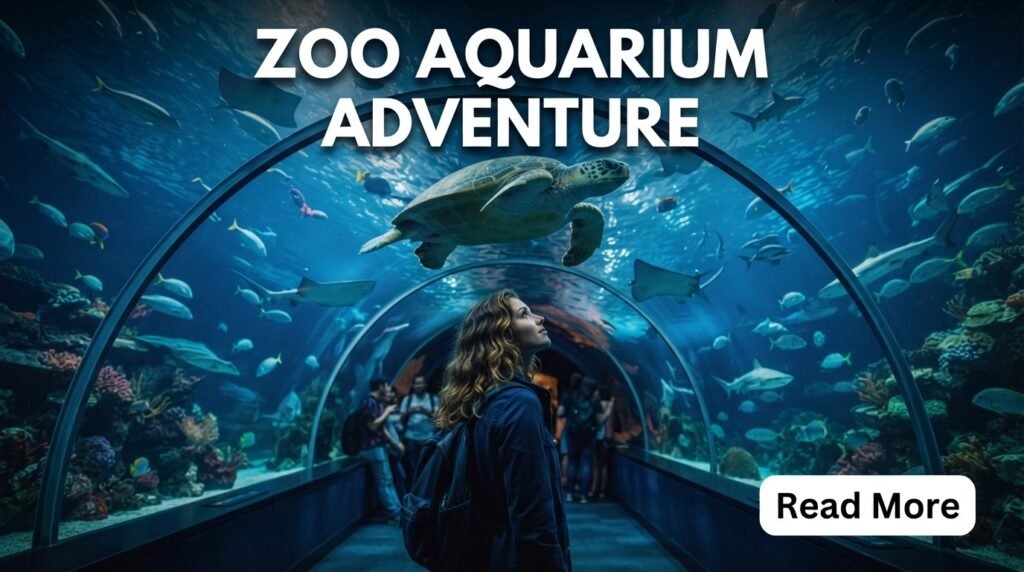
An aquarium tunnel provides an immersive visitor experience.
Instead of looking through a single flat viewing panel, visitors can walk through a tunnel surrounded by water.
Possible animals include:
- Sharks
- Rays
- Large schooling fish
- Turtles
- Reef fish
Tunnel aquariums require specialized structural engineering and acrylic or glass systems.
Zoo Aquarium Walkthrough
A walkthrough aquarium can be designed as a sequence of underwater habitats.
Visitors might move through:
- Freshwater river
- Tropical reef
- Jellyfish gallery
- Shark exhibit
- Coastal habitat
- Interactive education area
This format makes the aquarium feel like a journey through different aquatic ecosystems.
Zoo Aquarium Design
A successful zoo aquarium should combine animal welfare, visitor experience, education, and efficient maintenance.
Important design features include:
- Large viewing windows
- Hidden filtration areas
- Service corridors
- Quarantine facilities
- Water-treatment systems
- Safe visitor pathways
- Educational displays
- Appropriate lighting
- Emergency systems
The public viewing area represents only part of a professional aquarium.
Aquarium Exhibit Zones
Behind the scenes, professional aquatic facilities need space for animal care.
A large facility may require:
- Filtration rooms
- Water storage
- Quarantine tanks
- Food preparation areas
- Veterinary areas
- Equipment rooms
- Staff access
- Backup systems
This infrastructure is essential for maintaining healthy aquatic habitats.
Zoo Aquarium for Kids
Aquariums inside zoos can include interactive exhibits designed for children.
Ideas include:
- Touch pools where appropriate
- Interactive screens
- Fish identification stations
- Educational signs
- Underwater cameras
- Discovery tanks
- Animal-feeding demonstrations
Interactive exhibits should always prioritize animal welfare and safe visitor interaction.
Small Zoo Aquarium Ideas
A small zoo does not necessarily need a giant aquarium.
It could create several smaller themed displays.
For example:
| Exhibit | Theme |
|---|---|
| Tank 1 | Tropical freshwater |
| Tank 2 | African cichlids |
| Tank 3 | Coral reef |
| Tank 4 | Jellyfish |
| Tank 5 | Local freshwater species |
A collection of smaller, highly detailed habitats can provide a strong educational experience.
Zoo Aquarium Plants
Plants help create realistic freshwater environments.
Potential aquarium plants include:
- Anubias
- Java Fern
- Amazon Sword
- Vallisneria
- Cryptocoryne
- Java Moss
Marine exhibits can use appropriate macroalgae and artificial structures where suitable.
Plant selection should always match the habitat and animal requirements.
Zoo Aquarium Lighting
Lighting plays an important role in both animal care and visitor experience.
Different habitats can use different lighting environments:
- Bright tropical reef lighting
- Soft freshwater lighting
- Blue-toned jellyfish displays
- Dim nocturnal habitats
- Natural daylight simulation
Lighting schedules should be designed around the needs of the animals rather than aesthetics alone.
Zoo Aquarium Water Filtration
Large aquarium exhibits require sophisticated water-treatment systems.
Depending on the habitat, systems may include:
- Mechanical filtration
- Biological filtration
- Protein skimming
- UV treatment
- Ozone systems
- Water pumps
- Temperature control
- Automated monitoring
Large marine exhibits can require extremely powerful circulation and filtration infrastructure.
Water Quality Monitoring
Professional aquariums continuously monitor important water parameters.
These may include:
- Temperature
- Salinity
- pH
- Ammonia
- Nitrite
- Nitrate
- Dissolved oxygen
- Alkalinity
Automated monitoring can alert staff when parameters move outside desired ranges.
Zoo Aquarium Animal Care
Animal welfare should be the foundation of every aquarium exhibit.
Staff may monitor:
- Feeding
- Behavior
- Growth
- Water quality
- Injuries
- Social interactions
- Breeding
- Environmental enrichment
Aquatic animals should be housed according to their biological and behavioral requirements.
Aquarium Enrichment
Aquatic animals can benefit from appropriate environmental enrichment.
Depending on the species, enrichment can include:
- Changing feeding methods
- New environmental features
- Appropriate hiding spaces
- Different swimming routes
- Natural habitat structures
Enrichment should be designed by experienced animal-care professionals.
Zoo Aquarium Education
Education is one of the most important advantages of public aquarium exhibits.
Displays can explain:
- Marine conservation
- Coral reefs
- Ocean pollution
- Freshwater ecosystems
- Endangered species
- Sustainable fishing
- Climate impacts
- Aquatic biodiversity
Interactive information can help visitors understand why aquatic ecosystems need protection.
Zoo Aquarium Conservation
Modern aquariums can contribute to conservation through:
- Breeding programs
- Research
- Rescue and rehabilitation
- Public education
- Habitat restoration initiatives
- Species conservation programs
The exact conservation role varies between facilities.
Zoo Aquarium Interior Design
The surrounding architecture can dramatically affect the visitor experience.
Popular concepts include:
Ocean Cave
Dark walls, rock textures, and blue lighting create the feeling of entering an underwater cave.
Tropical Rainforest
Use plants, wood, water sounds, and freshwater exhibits to create a rainforest atmosphere.
Modern Aquarium
Use clean architectural lines, glass, neutral materials, and minimal decoration.
Natural Habitat
Use realistic rocks, vegetation, and environmental sounds to recreate a specific ecosystem.
Zoo Aquarium Maintenance
Large aquatic exhibits require continuous maintenance.
Routine work can include:
- Water testing
- Filter cleaning
- Glass cleaning
- Animal feeding
- Equipment inspection
- Plant maintenance
- Water changes
- Plumbing checks
- Quarantine management
Large systems often use automated equipment to reduce manual workload and maintain stable conditions.
Zoo Aquarium vs Home Aquarium
| Feature | Zoo Aquarium | Home Aquarium |
|---|---|---|
| Scale | Often very large | Usually smaller |
| Filtration | Commercial systems | Household systems |
| Animal Variety | Often extensive | Limited by tank |
| Staff | Professional teams | Individual hobbyist |
| Maintenance | Continuous | Regular hobby maintenance |
| Education | Major purpose | Usually personal |
| Conservation | May be included | Usually not primary |
How to Create a Zoo Aquarium at Home
You cannot realistically recreate the scale of a major public aquarium in an ordinary room, but you can use the same design principles.
Choose a theme such as:
- Tropical reef
- Amazon rainforest
- African lake
- Jellyfish-inspired display
- Coral garden
- Underwater forest
Then create the aquarium around that single theme.
Best Zoo Aquarium Theme
The best theme depends on the purpose of the exhibit.
For visual impact, reef and shark habitats can be spectacular.
For education, regional freshwater ecosystems can show visitors how different species interact.
For a relaxing environment, planted freshwater displays and jellyfish exhibits can create a calmer atmosphere.
Conclusion
A zoo aquarium can be much more than a collection of fish tanks. The most impressive facilities combine realistic habitats, immersive architecture, advanced filtration, educational displays, and responsible animal care.
From giant shark tanks and underwater tunnels to tropical rainforest exhibits and colorful reef displays, there are countless ways to design an aquatic attraction.
For anyone planning a zoo aquarium concept, the priority should always be the animals’ welfare and the long-term sustainability of the system. A beautiful exhibit is most successful when it also provides a healthy environment and teaches visitors about the aquatic world.
Frequently Asked Questions
What is a zoo aquarium?
A zoo aquarium is an aquatic exhibit within a zoo or similar wildlife facility that displays fish and other aquatic animals in themed habitats.
What animals can be found in a zoo aquarium?
Depending on the facility, exhibits may contain freshwater fish, marine fish, sharks, rays, jellyfish, turtles, amphibians, corals, and aquatic invertebrates.
What is the most popular zoo aquarium exhibit?
Large shark and reef exhibits are popular because they provide dramatic visual experiences, while jellyfish displays are also popular for their unique appearance.
How does a zoo aquarium maintain water quality?
Professional facilities use sophisticated filtration, biological treatment, circulation, temperature control, water testing, and automated monitoring.
Can a zoo aquarium have plants?
Yes. Freshwater exhibits can contain aquatic plants, while marine systems can use appropriate algae, corals, and habitat structures.
Are zoo aquariums good for education?
Yes. Aquariums can teach visitors about aquatic ecosystems, biodiversity, conservation, pollution, and responsible environmental stewardship.
Can I build a zoo-style aquarium at home?
You can recreate the visual style of a zoo aquarium on a smaller scale, but large public exhibits require specialized engineering, filtration, animal-care facilities, and professional staff.