
 By admin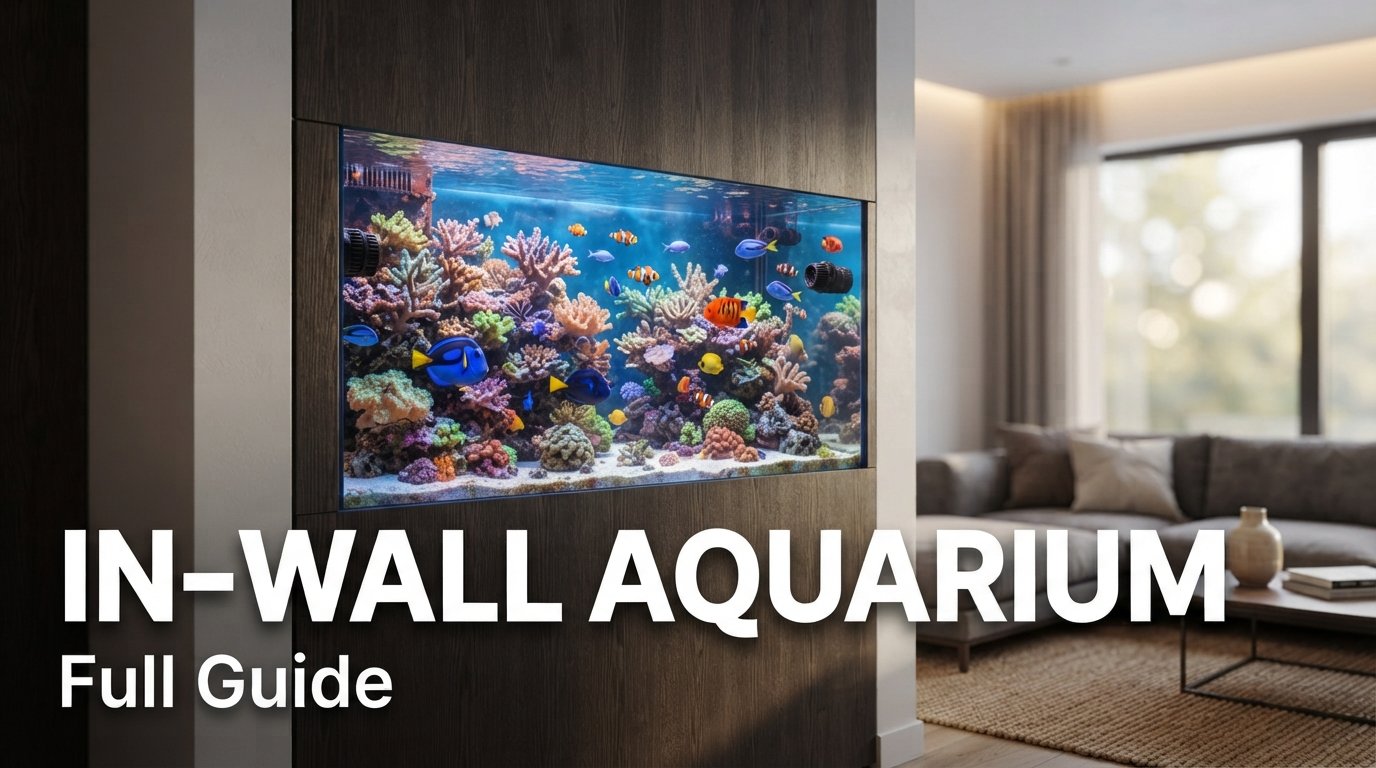
An in-wall aquarium is a fish tank installed directly into a wall so that the aquarium appears to be part of the room’s architecture. Instead of seeing the entire tank and stand, you mainly see the front glass or acrylic viewing panel, creating the appearance of a living underwater picture.
In-wall aquariums are popular in living rooms, bedrooms, offices, restaurants, hallways, and modern interior designs. They can range from a small recessed aquarium to a massive custom installation covering an entire wall.
What Is an In-Wall Aquarium?
An in-wall aquarium is built into a specially prepared opening in a wall.
A typical installation has:
- Aquarium tank
- Structural support
- Front viewing panel
- Wall framing
- Waterproofing
- Filtration system
- Plumbing
- Electrical connections
- Maintenance access
The aquarium itself should not simply be placed inside an existing wall opening without proper structural planning.
In-Wall Aquarium Design Ideas
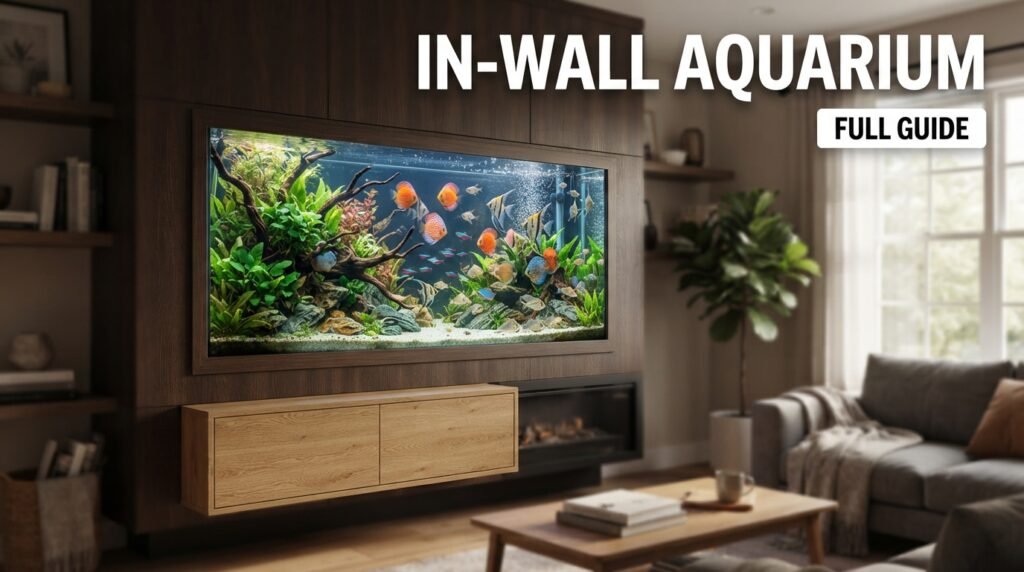
1. Living Room In-Wall Aquarium
A living room is one of the best locations for an in-wall aquarium.
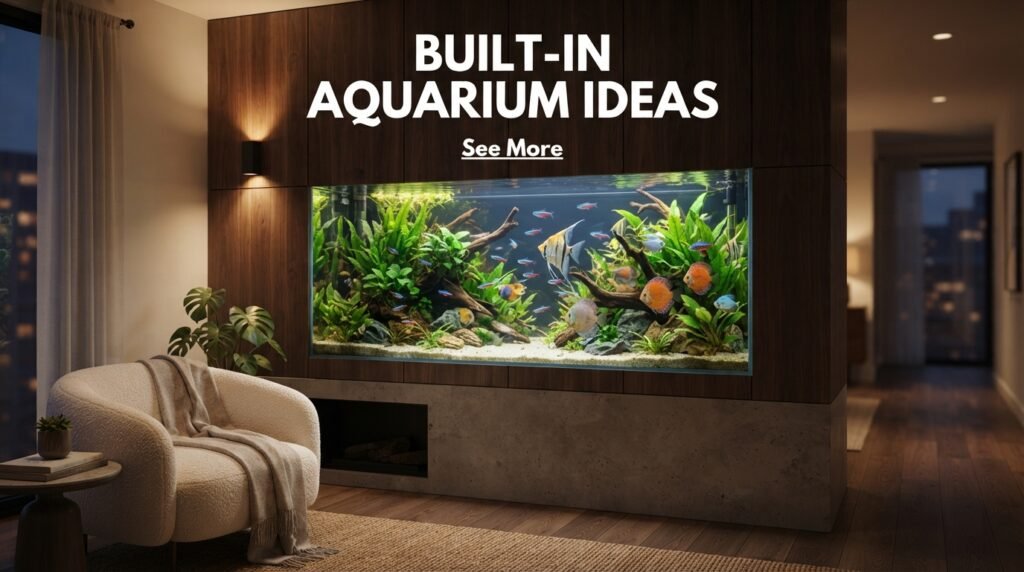
The aquarium can become the main focal point of the room while remaining visually clean because the filtration equipment and tank stand can be hidden behind the wall.
Pair it with:
- Wood wall panels
- Stone
- Marble-style finishes
- Neutral paint
- Built-in shelving
- Soft LED lighting
2. TV Wall With In-Wall Aquarium
An aquarium can be integrated into a television wall.
Popular layouts include:
TV | Aquarium
or
TV above aquarium
A large aquarium beside a wall-mounted television creates two strong focal points without requiring additional furniture.
Keep electrical equipment protected from moisture and leave sufficient access for aquarium maintenance.
3. Bedroom In-Wall Aquarium
A smaller aquarium can be incorporated into a bedroom wall.
Soft aquarium lighting can create a relaxing atmosphere, especially with:
- Planted aquascapes
- Gentle water movement
- Natural driftwood
- Subdued lighting
Avoid placing equipment where filter noise or pump vibration could disturb sleep.
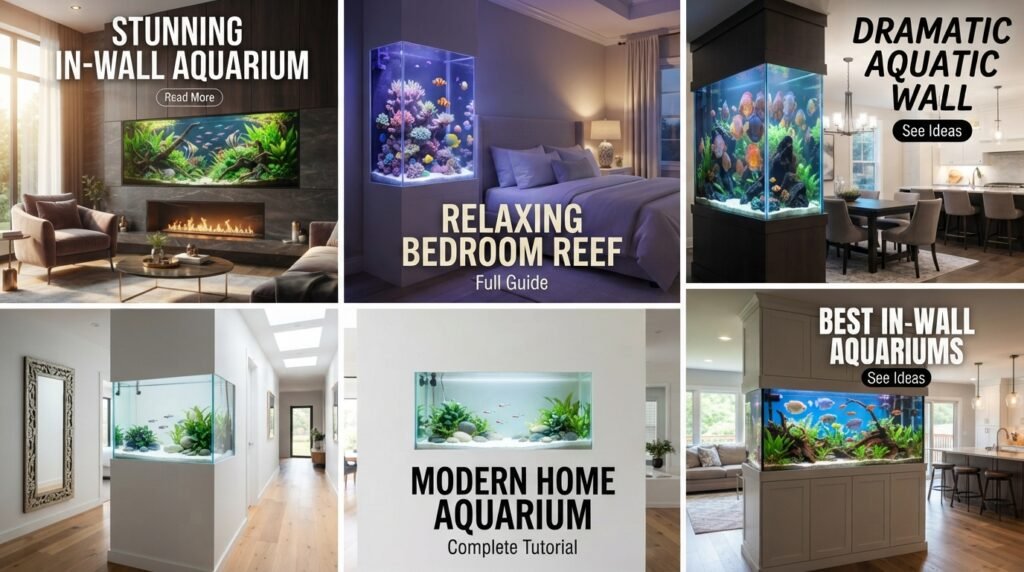
4. Double-Sided In-Wall Aquarium
A particularly impressive design is an aquarium that can be viewed from both sides.
It can separate:
- Living room and dining room
- Bedroom and hallway
- Office and lounge
- Kitchen and living room
This turns the aquarium into both a fish tank and an architectural room divider.
5. Hallway Aquarium
A narrow wall aquarium can create an unexpected visual feature in a hallway.
Use a relatively shallow design with a simple aquascape so the aquarium does not interfere with movement around the room.
6. Kitchen In-Wall Aquarium
A kitchen aquarium can be incorporated into a wall or breakfast area.
However, keep the aquarium away from:
- Cooking heat
- Grease
- Direct splashing
- Steam
- Appliances
The filtration and maintenance area should remain accessible.
7. Office In-Wall Aquarium
A planted aquarium can make an office feel more natural.
A simple aquascape with green plants and a few peaceful fish can provide a visually interesting background without taking up floor space.
Large In-Wall Aquarium
Large in-wall aquariums create an impressive architectural effect.
A large installation might contain:
- Schooling fish
- Large planted areas
- Driftwood
- Rock formations
- Reef structures
- Larger compatible fish
The larger the tank becomes, the more important structural engineering, filtration, plumbing, and maintenance access become.
Floor-to-Ceiling In-Wall Aquarium
A floor-to-ceiling aquarium can create the appearance of an underwater window extending vertically through the room.
This design works particularly well in modern interiors with high ceilings.
Tall plants, vertical driftwood, and rock formations can emphasize the aquarium’s height.
In-Wall Reef Aquarium
An in-wall reef aquarium can be a spectacular feature.
A marine installation may include:
- Reef fish
- Corals
- Live rock or suitable biological media
- Anemones
- Marine invertebrates
Reef systems require specialized lighting, circulation, filtration, and careful water chemistry management.
In-Wall Freshwater Aquarium
Freshwater aquariums are often easier to integrate into residential designs.
Possible styles include:
- Planted aquarium
- Community aquarium
- Shrimp aquarium
- Cichlid aquarium
- Blackwater aquarium
- Nature-style aquascape
A planted freshwater aquarium is especially attractive when viewed as a living wall feature.
In-Wall Aquarium With Aquascape
The aquascape should be designed around the viewing window.
A good layout can include:
Foreground
Short plants or open sand.
Midground
Rocks, smaller plants, and low driftwood.
Background
Tall plants or larger branches.
This creates depth and makes the aquarium appear larger.
In-Wall Aquarium With Driftwood
Large driftwood can become the primary focal point.
Place the wood slightly off-center and allow branches to extend upward.
Moss and epiphytic plants can make the structure look like an underwater tree.
In-Wall Aquarium With Rocks
Rock-based aquascapes work particularly well with modern interiors.
Possible designs include:
- Mountain landscape
- Iwagumi
- Rocky river
- Cichlid habitat
- Minimalist stone garden
Use aquarium-safe materials and position heavy rocks securely.
In-Wall Aquarium Lighting
Lighting should be installed so it illuminates the aquarium without creating excessive glare in the room.
Possible options include:
- Recessed aquarium lights
- LED aquarium fixtures
- Hidden accent lighting
- Adjustable planted-tank lights
If the aquarium is located opposite a window, direct sunlight can increase algae growth and temperature fluctuations.
How to Hide Aquarium Equipment
One of the biggest advantages of an in-wall aquarium is the ability to hide equipment.
A service room or cabinet behind the aquarium can contain:
- Filter
- Sump
- Heater
- Protein skimmer
- CO2 equipment
- Water storage
- Pumps
- Electrical equipment
The equipment should be hidden but not permanently inaccessible.
In-Wall Aquarium Maintenance Access
This is one of the most important parts of the design.
You should be able to reach:
- Filter media
- Pumps
- Heater
- Plumbing
- Lighting
- Glass-cleaning areas
- Water-change connections
A beautiful aquarium can become difficult to maintain if the installation leaves no room to work behind the tank.
In-Wall Aquarium Installation
The installation process generally involves several stages.
Step 1: Select the Location
Consider:
- Wall construction
- Floor strength
- Electrical access
- Plumbing
- Viewing angle
- Maintenance access
Step 2: Determine Aquarium Dimensions
Choose the tank size based on the available space and livestock requirements.
Step 3: Plan Structural Support
A filled aquarium can weigh hundreds or thousands of kilograms.
The supporting structure must be designed for the complete loaded weight.
Step 4: Build the Frame
The opening should be constructed around the aquarium rather than trying to force an existing structure to support it.
Step 5: Install Plumbing and Electrical Systems
Plan filtration, drains, returns, heaters, lighting, and electrical outlets before closing the wall.
Step 6: Install the Aquarium
The tank should be properly supported and leveled.
Step 7: Finish the Wall
Trim, stone, wood, tile, or other materials can be installed around the viewing panel.
Step 8: Cycle the Aquarium
The aquarium should be properly cycled before fish are introduced.
Structural Considerations
Water is extremely heavy.
One liter of water weighs approximately 1 kilogram.
A 500-liter aquarium therefore contains approximately 500 kilograms of water before adding the tank, substrate, rocks, equipment, and stand.
For this reason, large in-wall aquariums should be planned with qualified professionals familiar with structural loads and aquarium installation.
In-Wall Aquarium Waterproofing
Waterproofing is extremely important because leaks inside a wall can cause serious structural damage.
Consider:
- Proper plumbing connections
- Leak detection
- Drainage
- Moisture-resistant construction
- Access panels
- Overflow protection
A dedicated drain or emergency overflow can provide additional protection in large installations.
In-Wall Aquarium Cost
The total cost depends heavily on the aquarium size and complexity.
Major cost factors include:
- Tank construction
- Wall modification
- Structural work
- Filtration
- Plumbing
- Lighting
- Aquascaping
- Livestock
- Cabinetry
- Electrical work
- Professional installation
A small freshwater installation can be relatively straightforward, while a large reef aquarium built into a structural wall can become a major renovation project.
In-Wall Aquarium vs Freestanding Aquarium
| Feature | In-Wall Aquarium | Freestanding Aquarium |
|---|---|---|
| Appearance | Architectural | Furniture-style |
| Floor Space | Minimal visible footprint | Requires stand space |
| Equipment | Can be hidden | Usually visible |
| Installation | More complex | Easier |
| Maintenance Access | Must be planned | Usually easier |
| Structural Work | Often required | Usually minimal |
| Customization | Very high | Moderate |
Advantages of an In-Wall Aquarium
Saves Visible Floor Space
Most of the tank is recessed into the wall.
Modern Appearance
It can look like a living piece of artwork.
Hidden Equipment
Filtration and plumbing can be placed behind the wall.
Custom Design
The viewing window can be designed around the room.
Strong Visual Impact
Even a relatively simple aquarium can become a major architectural feature.
Disadvantages of an In-Wall Aquarium
Difficult Installation
Wall modifications may be required.
Maintenance Planning
Access must be designed before installation.
Structural Requirements
Large tanks require substantial support.
Leak Risk
A plumbing failure can cause damage inside the wall.
Less Flexibility
Moving the aquarium later is much harder than moving a freestanding tank.
Common In-Wall Aquarium Mistakes
Not Planning Maintenance Access
Never permanently seal the equipment behind the wall.
Underestimating Weight
Calculate the complete filled aquarium weight.
Poor Plumbing Design
Use appropriate plumbing and plan emergency overflow protection.
Installing Too Close to Electrical Equipment
Keep electrical components appropriately protected from water.
Making the Viewing Opening Too Small
The opening should provide an attractive view while allowing enough access for cleaning and maintenance.
Ignoring Ventilation
The equipment room can become warm and humid, so adequate ventilation may be required.
Best Fish for an In-Wall Aquarium
The best fish depend on the aquarium size and water type.
Freshwater options can include:
- Guppies
- Tetras
- Rasboras
- Gouramis
- Angelfish
- Corydoras
- Appropriate cichlids
Marine systems can include:
- Clownfish
- Gobies
- Tangs in appropriately sized systems
- Wrasses
- Reef-safe community fish
Always select fish according to their adult size, behavior, water requirements, and compatibility.
How to Make an In-Wall Aquarium Look Expensive
A premium appearance usually comes from simplicity.
Use:
- Frameless viewing glass where appropriate
- Clean wall lines
- Concealed equipment
- High-quality cabinetry
- Natural hardscape
- Carefully selected plants
- Controlled lighting
Avoid filling the aquarium with too many artificial decorations.
Conclusion
An in-wall aquarium can transform an ordinary wall into a living underwater display. Whether you choose a small planted aquarium for a bedroom, a dramatic TV-wall aquarium, a double-sided room divider, or a massive reef installation, the design can become a defining feature of the interior.
The most important part is planning. Structural support, waterproofing, plumbing, electrical safety, filtration, and maintenance access should all be considered before construction begins.
With the right design, an in-wall aquarium can combine architecture and aquascaping into one beautiful feature that feels like a permanent underwater window.
Frequently Asked Questions
Can an aquarium be built into any wall?
Not necessarily. Wall construction, structural support, plumbing, electrical systems, and the aquarium’s total weight must be evaluated before installation.
Is an in-wall aquarium better than a regular aquarium?
It depends on your priorities. An in-wall aquarium provides a cleaner architectural appearance and hides equipment, but it is considerably more difficult to install and modify.
How do I access an in-wall aquarium filter?
The aquarium should be designed with a service area behind or beside the tank where the filter, plumbing, pumps, and other equipment can be accessed.
Can I put an in-wall aquarium in a bedroom?
Yes, provided the installation is structurally and electrically safe. Choose quiet pumps and filtration if noise could affect sleep.
Can an in-wall aquarium leak?
Any aquarium can potentially leak. Proper tank construction, plumbing, overflow protection, leak detection, and professional installation can reduce the risk.
How much does a large in-wall aquarium weigh?
Water alone weighs approximately 1 kilogram per liter. The complete weight will be much higher after adding the tank, stand or structural support, substrate, rocks, and equipment.
Can I build an in-wall aquarium myself?
Small projects may be possible for experienced DIY builders, but structural modifications and large aquariums should be handled with qualified professionals to ensure the installation is safe.
What is the best aquascape for an in-wall aquarium?
Planted nature-style aquascapes, minimalist rock layouts, jungle aquariums, and reef displays can all work well. The best choice depends on the aquarium’s size, depth, lighting, and livestock.