
 By admin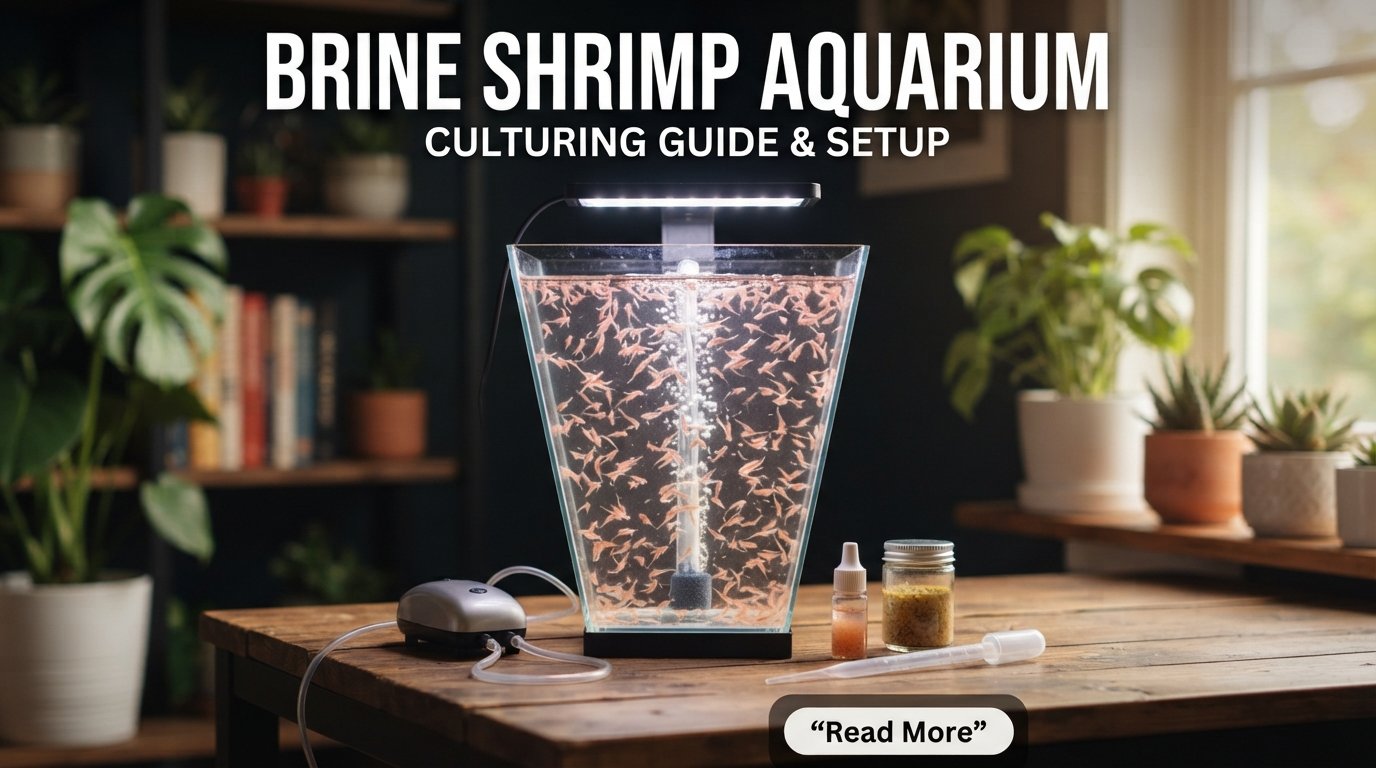
A brine shrimp aquarium can be a fascinating addition to an aquatic hobby, especially for people interested in unusual aquatic creatures, live food cultures, and small saltwater ecosystems. Brine shrimp, commonly known as Artemia, are tiny crustaceans that are well known among aquarium keepers because their eggs can remain dormant for long periods and hatch when placed in suitable saltwater conditions.
Brine shrimp are different from the fish and freshwater plants commonly kept in home aquariums. They require saltwater, appropriate temperature, oxygenation, and food. A properly maintained setup can allow you to observe their life cycle from tiny newly hatched nauplii to adult brine shrimp.
A brine shrimp aquarium can also be used as a small educational ecosystem. Watching the shrimp swim, feed, grow, reproduce, and interact with their environment can make a simple aquarium surprisingly interesting.
What Are Brine Shrimp?
Brine shrimp are small aquatic crustaceans belonging to the genus Artemia. They naturally live in highly saline environments where many fish and other aquatic animals cannot survive.
Adult brine shrimp are generally small and have elongated bodies with multiple swimming appendages. Their swimming movements are easy to observe when they are kept in a clear container or aquarium.
One of the most interesting characteristics of Artemia is its ability to produce dormant eggs, commonly called cysts. These cysts can survive dry conditions for long periods and hatch when exposed to suitable saltwater, temperature, oxygen, and light.
This makes brine shrimp especially popular among aquarium hobbyists.
Can You Keep Brine Shrimp in an Aquarium?
Yes, brine shrimp can be kept in a dedicated saltwater aquarium or suitable container.
However, a brine shrimp aquarium is different from a normal freshwater fish tank. Brine shrimp require relatively salty water, good oxygenation, and appropriate food.
You should not simply add brine shrimp to a freshwater aquarium because they are adapted to saline environments.
A dedicated container is often enough for raising brine shrimp. You do not necessarily need a large aquarium.
Why Keep a Brine Shrimp Aquarium?
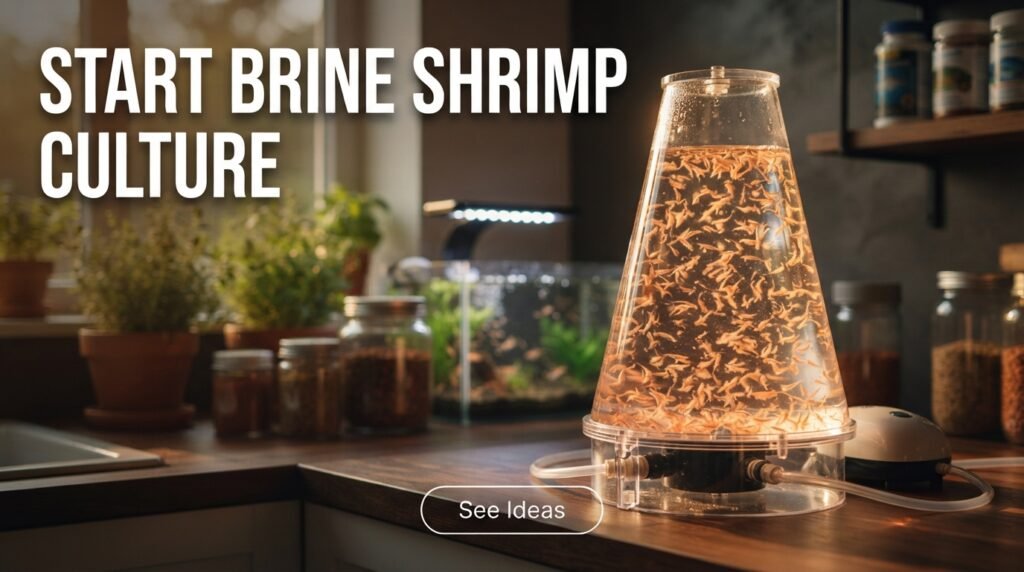
There are several reasons people choose to maintain brine shrimp.
Live Food Production
One of the most common reasons is producing live food for fish. Newly hatched brine shrimp are nutritious live food for many young fish.
Aquarium breeders often hatch Artemia eggs specifically to feed fry.
Educational Value
Brine shrimp are excellent for observing aquatic life cycles.
You can watch eggs hatch into tiny nauplii and gradually develop into larger shrimp.
Unique Aquarium Pets
Some people simply enjoy keeping brine shrimp as unusual aquatic animals.
Their behavior is simple but interesting, especially when kept in a clear container where their swimming can be observed easily.
Easy Reproduction
Under appropriate conditions, adult brine shrimp can reproduce. Depending on environmental conditions, Artemia may produce live young or dormant cysts.
Brine Shrimp Aquarium Setup
A brine shrimp aquarium does not have to be complicated.
A basic setup can include:
- Small aquarium or transparent container
- Saltwater
- Air pump
- Airline tubing
- Gentle aeration
- Aquarium heater if necessary
- Thermometer
- Light source
- Brine shrimp eggs
- Suitable food
- Small net or siphon for maintenance
Because brine shrimp are small, you generally do not need powerful filtration.
In fact, strong filtration can potentially remove or injure tiny shrimp.
What Size Aquarium Do Brine Shrimp Need?
Brine shrimp can be raised in relatively small containers.
A small aquarium can work well for a beginner who wants to observe a small colony. Larger containers can support larger populations when properly maintained.
The most important factor is not simply tank size but maintaining suitable water quality, oxygenation, salinity, temperature, and food levels.
A small setup can actually be easier to observe and manage when starting out.
Saltwater Requirements
Brine shrimp require saltwater rather than freshwater.
Aquarium salt or marine salt can be used depending on the intended setup. It is important to follow the instructions for the particular salt product rather than randomly adding large amounts of salt.
Salinity should be measured with an appropriate instrument such as a refractometer or hydrometer when accuracy is important.
Stable salinity is generally preferable to frequent large changes.
Brine Shrimp Aquarium Temperature
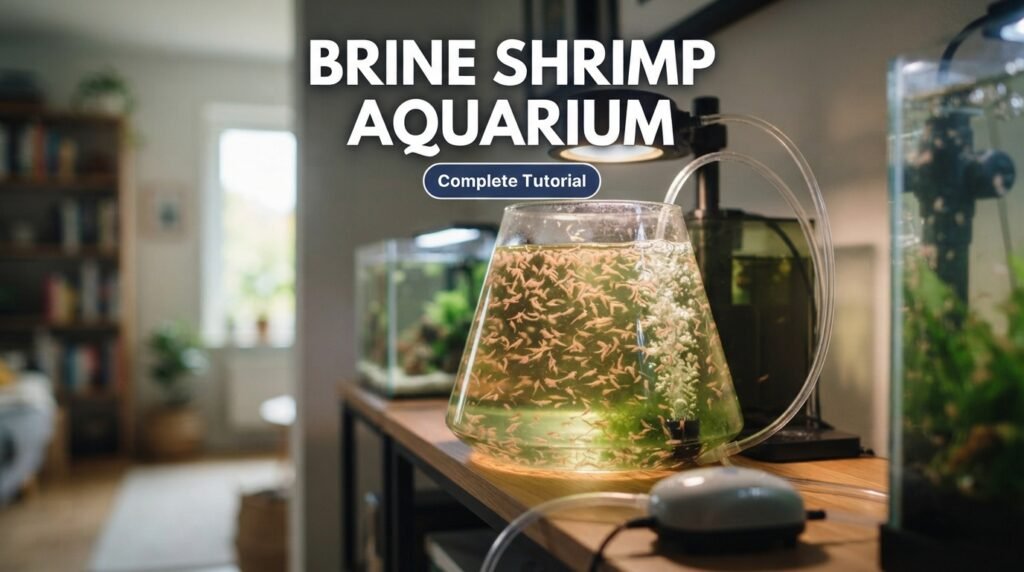
Temperature affects brine shrimp metabolism, growth, and reproduction.
Moderate warm temperatures are generally suitable for raising Artemia. Many hobbyists maintain cultures around the mid-20s Celsius, although the ideal temperature depends on the specific culture and goals.
A thermometer should be used to monitor the aquarium rather than relying on room temperature alone.
If the aquarium is kept in a cold room, a suitable aquarium heater may help maintain stability.
Aeration and Oxygen
Good oxygenation is important in a brine shrimp aquarium.
An air pump connected to an airline can provide gentle circulation and oxygen.
Strong currents are unnecessary. The goal is to keep the water oxygenated without creating excessive turbulence.
Gentle bubbling can also help keep food particles suspended, allowing brine shrimp to feed more effectively.
Lighting for Brine Shrimp
Brine shrimp do not require intense aquarium lighting.
A simple light source can make them easier to observe and may be useful during hatching.
However, leaving bright lights on continuously is unnecessary.
A normal day-and-night lighting schedule is generally sufficient for an observation aquarium.
How to Hatch Brine Shrimp
One of the most exciting parts of keeping Artemia is hatching their eggs.
Start with clean saltwater in a suitable container. Add the appropriate amount of brine shrimp cysts and provide gentle aeration.
Maintain suitable temperature and salinity.
After an appropriate incubation period, the cysts begin to hatch. Newly hatched brine shrimp are called nauplii.
The exact hatching time varies depending on temperature, salinity, oxygenation, egg quality, and other conditions.
Freshly hatched nauplii are extremely small and may appear as tiny moving dots in the water.
Brine Shrimp Life Cycle
The life cycle of brine shrimp is one of the most interesting aspects of keeping them.
The basic stages include:
| Life Stage | Description |
|---|---|
| Cyst | Dormant egg capable of surviving dry conditions |
| Nauplius | Newly hatched microscopic or tiny larval stage |
| Juvenile | Developing shrimp with increasing body size |
| Adult | Mature Artemia capable of reproduction |
The nauplii gradually develop additional body structures as they grow.
With appropriate conditions, they can eventually become adults.
What Do Brine Shrimp Eat?
Brine shrimp are filter feeders and can consume very small food particles suspended in the water.
Suitable foods can include specially prepared microscopic foods, yeast-based foods, microalgae, and other appropriate suspended feeds.
One of the biggest mistakes beginners make is overfeeding.
Because brine shrimp are tiny, they require very small quantities of food.
Adding excessive food can cause water quality problems and bacterial growth.
The water should not become heavily cloudy from uneaten food.
Feeding Brine Shrimp
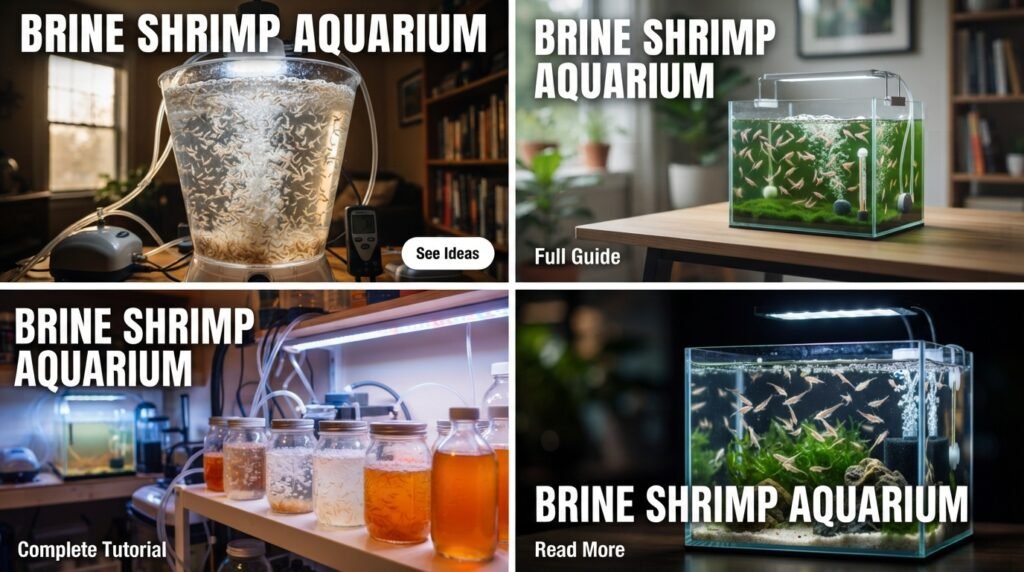
Feed small amounts rather than adding a large quantity at once.
The exact feeding schedule depends on the density of the culture, shrimp size, temperature, and food type.
Observe the water and shrimp.
If food remains suspended for a long time and the water becomes excessively cloudy, reduce feeding.
A healthy culture should have sufficient food without turning the water into a heavily polluted environment.
Do Brine Shrimp Need a Filter?
A traditional aquarium filter is not always necessary for a brine shrimp setup.
Gentle aeration can provide oxygen and water movement.
A strong filter may be unsuitable because tiny brine shrimp can be sucked into the intake.
If filtration is used, it should be designed to prevent shrimp from being drawn into the equipment.
For many small cultures, careful feeding and regular maintenance are more important than installing a powerful filter.
Water Changes in a Brine Shrimp Aquarium
Water changes can help control waste and maintain water quality.
However, because brine shrimp are sensitive to sudden environmental changes, water replacement should be performed carefully.
New saltwater should have suitable temperature and salinity before being added.
Avoid making sudden major changes unless there is a serious water-quality problem.
Small, controlled maintenance is generally easier on the culture.
Common Problems With Brine Shrimp Aquariums
Sudden Shrimp Deaths
A sudden die-off can result from poor water quality, insufficient oxygen, unsuitable salinity, temperature problems, contamination, or excessive feeding.
Check the basic environmental conditions first.
Cloudy Water
Cloudiness can be caused by excessive food, bacterial growth, suspended particles, or an imbalance in the culture.
Reduce feeding and review your maintenance routine.
Poor Hatching
If eggs do not hatch properly, check temperature, salinity, oxygenation, egg quality, and storage conditions.
Old or poorly stored cysts may have reduced hatch rates.
Bad Smell
A strong unpleasant odor can indicate decomposing organic matter and poor water quality.
Remove excess food and dead material and perform appropriate maintenance.
Slow Growth
Slow growth may occur when the shrimp do not receive enough suitable food, when temperatures are too low, or when water conditions are unsuitable.
Brine Shrimp Aquarium for Fish Fry
Brine shrimp are particularly important in fish breeding because newly hatched nauplii are commonly used as live food.
Their small size makes them suitable for many young fish.
When feeding fry, only provide an amount they can consume without causing excessive leftover food.
Live food can encourage feeding behavior because moving prey can be easier for young fish to recognize and chase.
Brine Shrimp and Guppy Fry
Brine shrimp can be useful for feeding young guppies.
Newly hatched Artemia are small enough for many fry to eat, depending on the size and development of the young fish.
A varied diet is generally preferable to relying on a single food source.
Guppy fry can benefit from appropriately sized foods that provide adequate nutrition while minimizing uneaten material in the aquarium.
Can Brine Shrimp Live With Fish?
Keeping brine shrimp together with fish is usually not a good idea if your goal is to maintain a brine shrimp colony.
Many fish will eat them.
Brine shrimp are better maintained in a dedicated culture or aquarium when you want them to reproduce.
If your goal is simply to feed fish, you can hatch and harvest the shrimp before offering them to the fish.
Brine Shrimp Aquarium Decorations
A brine shrimp aquarium usually does not require traditional decorations.
Plants, rocks, caves, and ornaments are not necessary for basic Artemia culture.
Keeping the container relatively simple makes maintenance easier and allows you to observe the shrimp.
A clear aquarium with gentle aeration and a clean appearance can be more useful than a heavily decorated setup.
Can You Put Plants With Brine Shrimp?
Plants are generally not essential for a brine shrimp setup.
Some aquatic organisms and algae can coexist with Artemia, but the high salinity used for brine shrimp may limit the number of conventional freshwater aquarium plants that can survive.
If you want a simple and reliable brine shrimp culture, focusing on water quality and feeding is usually more practical than attempting to create a heavily planted aquarium.
How Long Do Brine Shrimp Live?
The lifespan of brine shrimp depends on environmental conditions, temperature, food availability, salinity, and other factors.
Under suitable conditions, Artemia can live for several months.
In a culture with poor water quality or inadequate food, their lifespan can be considerably shorter.
How to Maintain a Healthy Brine Shrimp Culture
A successful brine shrimp aquarium depends on consistency.
Monitor salinity and temperature regularly. Provide gentle aeration and avoid overfeeding.
Remove dead material when practical and maintain clean water.
Do not introduce chemicals, medications, or contaminated equipment into the culture.
If you are maintaining brine shrimp as live food, consider keeping more than one culture. This provides backup if one culture crashes.
Brine Shrimp Aquarium Ideas
There are several ways to design a small brine shrimp setup.
Simple Observation Aquarium
Use a small transparent aquarium with clean saltwater, gentle aeration, and a basic light.
This setup is ideal for watching the shrimp grow.
Brine Shrimp Hatchery
A dedicated hatchery can be designed specifically for producing nauplii.
The focus is on aeration, hatching conditions, and easy harvesting rather than decoration.
Educational Brine Shrimp Aquarium
A small clear aquarium can be used as an educational project.
You can observe the different life stages and record growth over time.
Multiple Culture Setup
Experienced hobbyists can maintain several containers at different stages.
One container can hold newly hatched nauplii while another contains growing shrimp.
This approach provides a continuous supply of live food.
Tips for Beginners
If you are new to brine shrimp, start small.
Do not immediately create a very large culture. A small setup lets you learn how salinity, feeding, temperature, and aeration affect the shrimp.
Use clean equipment dedicated to the brine shrimp culture.
Measure salt accurately and avoid making sudden changes.
Most importantly, feed lightly. Overfeeding is one of the easiest ways to create water-quality problems.
Frequently Asked Questions About Brine Shrimp Aquarium
Can brine shrimp live in a normal aquarium?
Brine shrimp require saline water, so they are not suitable for a typical freshwater aquarium. A dedicated saltwater setup is more appropriate.
How big should a brine shrimp aquarium be?
Brine shrimp can be maintained in relatively small containers. The appropriate size depends on the number of shrimp and whether you are keeping them as pets or producing live food.
Do brine shrimp need an air pump?
Aeration is highly useful because it increases oxygen and keeps food particles suspended. Gentle bubbling is usually preferable to strong water movement.
How often should you feed brine shrimp?
Feeding frequency depends on culture density, food type, temperature, and growth stage. Small amounts should be provided while avoiding excessive leftover food.
Can brine shrimp live in freshwater?
No. Brine shrimp are adapted to saline environments and should be maintained in appropriately salted water.
How long does it take brine shrimp eggs to hatch?
Under suitable conditions, brine shrimp cysts can hatch within roughly a day or two, although the exact time varies with temperature, salinity, oxygenation, and egg quality.
Are brine shrimp good for fish?
Yes. Newly hatched brine shrimp are widely used as live food for many aquarium fish, especially young fish and fry.
Can guppy fry eat brine shrimp?
Yes. Appropriately sized newly hatched brine shrimp can be an excellent live food for guppy fry.
Do brine shrimp need a filter?
Not necessarily. Many small cultures can be maintained with gentle aeration and careful feeding instead of a conventional filter.
Why are my brine shrimp dying?
Possible causes include poor water quality, incorrect salinity, inadequate oxygen, unsuitable temperature, overfeeding, contamination, or insufficient food.
Can brine shrimp reproduce in an aquarium?
Yes. Adult Artemia can reproduce under suitable conditions. Depending on the environment, they can produce live young or dormant cysts.
Are brine shrimp easy to keep?
They can be relatively easy to maintain once their basic requirements are understood. Stable salinity, oxygenation, temperature, feeding, and water quality are the key factors.
Conclusion
A brine shrimp aquarium offers a unique way to explore aquatic life on a very small scale. Brine shrimp are fascinating because their life cycle begins with dormant cysts and progresses through tiny nauplii to mature swimming crustaceans.
They do not require an elaborate aquarium. A suitable saltwater environment, gentle aeration, appropriate temperature, careful feeding, and regular maintenance can provide the foundation for a healthy culture.
For aquarium keepers, brine shrimp can also serve an important practical purpose as live food. Their newly hatched nauplii are especially valuable for many fish fry.
Whether you want to raise Artemia as a small educational project, observe their unusual behavior, or produce live food for fish, a properly managed brine shrimp aquarium can be an interesting and rewarding addition to your aquarium hobby.