
 By admin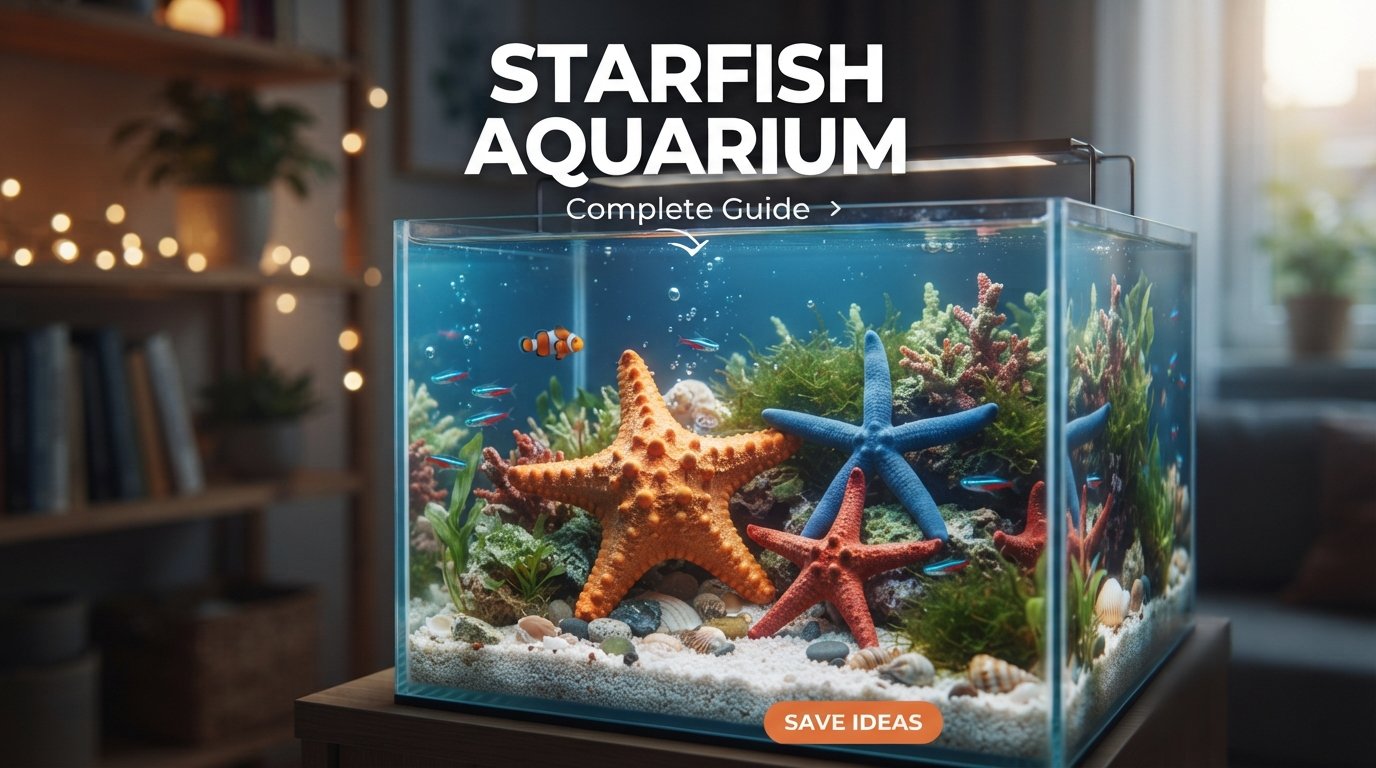
A starfish aquarium can create one of the most fascinating displays in a marine aquarium. Starfish, also called sea stars, have unusual body shapes, colorful appearances, and slow, graceful movements that make them interesting to observe. However, keeping a starfish successfully is very different from keeping common freshwater fish or beginner-friendly aquarium animals.
Starfish are marine animals that require stable saltwater conditions, appropriate salinity, suitable food, adequate space, and a mature aquarium environment. Many species are sensitive to sudden changes in water chemistry, so preparation is especially important before adding one to a tank.
If you are interested in creating a starfish aquarium, understanding the species, tank requirements, feeding habits, compatibility, and maintenance needs will help you make better decisions. This guide explains how to plan a healthy marine aquarium for starfish and what you should know before bringing one home.
What Is a Starfish?
Starfish are marine invertebrates belonging to the class Asteroidea. Although they are commonly called starfish, the name sea star is also widely used because these animals are not actually fish.
Most starfish have a central body surrounded by arms. Many species have five arms, but some species can have considerably more.
Their tube feet allow them to move across rocks, sand, and other surfaces. These small structures also play an important role in feeding and interacting with their environment.
Starfish live in oceans around the world, from shallow coastal environments to deeper marine habitats.
Can You Keep a Starfish in an Aquarium?
Yes, some starfish species can be kept in marine aquariums, but they are not suitable for every aquarium.
The biggest consideration is the maturity and stability of the marine system. A newly established aquarium may not provide enough natural food or stable conditions for a starfish.
Some species are relatively adaptable, while others are extremely difficult to maintain in captivity.
Before purchasing a starfish, it is important to identify the exact species and understand its adult size, diet, habitat, and compatibility requirements.
Best Starfish for Aquariums
Different sea stars have very different care requirements.
| Starfish Type | General Characteristics | Aquarium Considerations |
|---|---|---|
| Fromia Starfish | Colorful, attractive appearance | Requires mature marine aquarium |
| Linckia Starfish | Long arms and striking colors | Often challenging to keep |
| Sand-Sifting Starfish | Lives primarily on sandy substrates | Requires adequate mature sand bed |
| Chocolate Chip Starfish | Large and distinctive | Better suited to larger fish-only systems |
| Brittle Star | Long arms and central disk | Often adaptable depending on species |
| Serpent Star | Fast-moving arms | Species compatibility varies |
The common name alone is not enough to determine care requirements. Different species can have dramatically different diets and environmental needs.
Starfish Aquarium Size
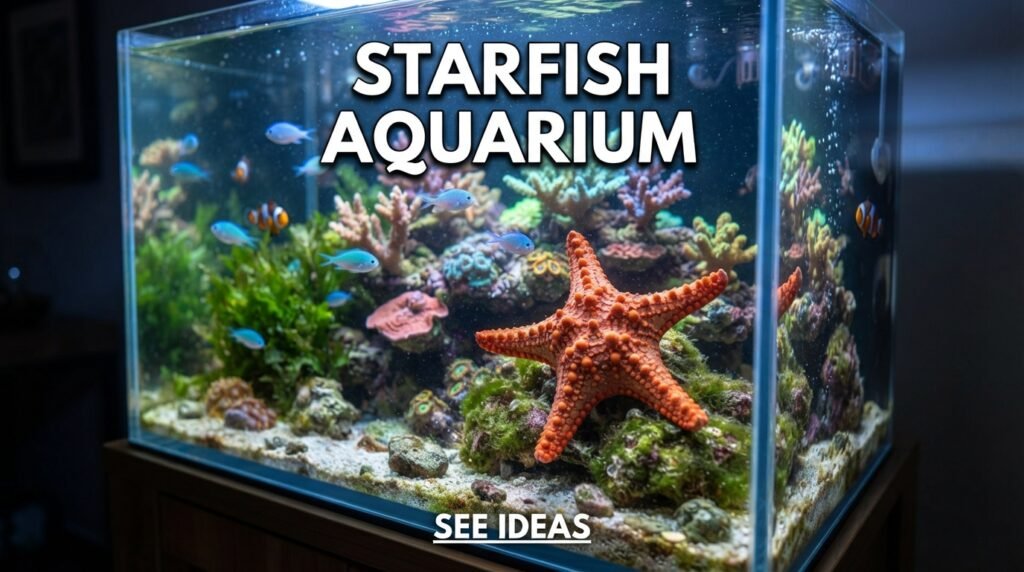
Tank size depends heavily on the species.
A small species may require less space than a large species, but marine aquariums should generally provide enough room for natural movement and feeding.
Larger starfish can become surprisingly big. A species that appears small in a store may eventually require considerably more space.
A larger aquarium also provides greater water volume, which can help reduce the impact of sudden changes in water chemistry.
For this reason, choosing the aquarium based on the adult size of the species is much better than choosing it based only on the animal’s size when purchased.
Why Mature Aquariums Are Important
A mature aquarium is particularly important for many starfish species.
A mature marine aquarium has established biological filtration and often contains natural algae, microorganisms, biofilm, and other food sources.
Many starfish spend their time moving across rocks, sand, and aquarium surfaces while searching for food.
A newly established tank may look clean and attractive but still lack the biological maturity required by a starfish.
This is one reason beginners should avoid rushing to add a sea star immediately after setting up a marine aquarium.
Water Parameters for a Starfish Aquarium
Stable water conditions are essential.
Important factors include:
- Salinity
- Temperature
- pH
- Alkalinity
- Ammonia
- Nitrite
- Nitrate
- Calcium and other marine minerals
The exact preferred parameters depend on the species and type of marine aquarium.
Rather than focusing only on a single number, aquarium keepers should aim for stable conditions appropriate for the species.
Sudden changes in salinity are especially concerning because many starfish can react badly to rapid changes in water chemistry.
Salinity and Starfish
Starfish require marine saltwater.
Salinity should be measured using an accurate refractometer or another suitable marine aquarium instrument.
When performing water changes, prepare replacement saltwater carefully and make sure its temperature and salinity are appropriate before adding it to the aquarium.
Never make major salinity changes simply because a test result is slightly different from your target. Gradual correction is usually safer than sudden adjustment.
Temperature Requirements
Most commonly kept tropical marine starfish require stable warm-water conditions.
A dependable aquarium heater and thermometer can help maintain a consistent temperature.
Avoid placing the aquarium near windows, heating vents, air-conditioning outlets, or other locations where temperature can fluctuate rapidly.
Marine invertebrates can be sensitive to sudden environmental changes, making stability especially important.
Aquarium Filtration
A good filtration system is essential for maintaining marine water quality.
A starfish aquarium may use a combination of mechanical filtration, biological filtration, protein skimming, and adequate water movement depending on the overall system.
The filtration system should support the entire aquarium rather than being designed solely around the starfish.
Because starfish can be sensitive to poor water quality, regular testing and maintenance are important.
Water Movement
Water movement helps distribute oxygen and nutrients throughout a marine aquarium.
However, the ideal flow depends on the species and habitat.
Some starfish naturally live on calmer surfaces, while other marine environments experience stronger currents.
Avoid creating a powerful flow that constantly pushes the animal around the aquarium.
Instead, create varied circulation with areas where the starfish can move naturally.
Substrate for Starfish
The correct substrate depends on the species.
Sand-sifting species may require a suitable mature sand bed where they can search for natural food.
Other species may spend more time climbing over rocks and aquarium surfaces.
Fine or medium marine sand can be useful for species that naturally live on sandy bottoms, but the depth and type should be selected according to the specific animal.
Live Rock and Starfish
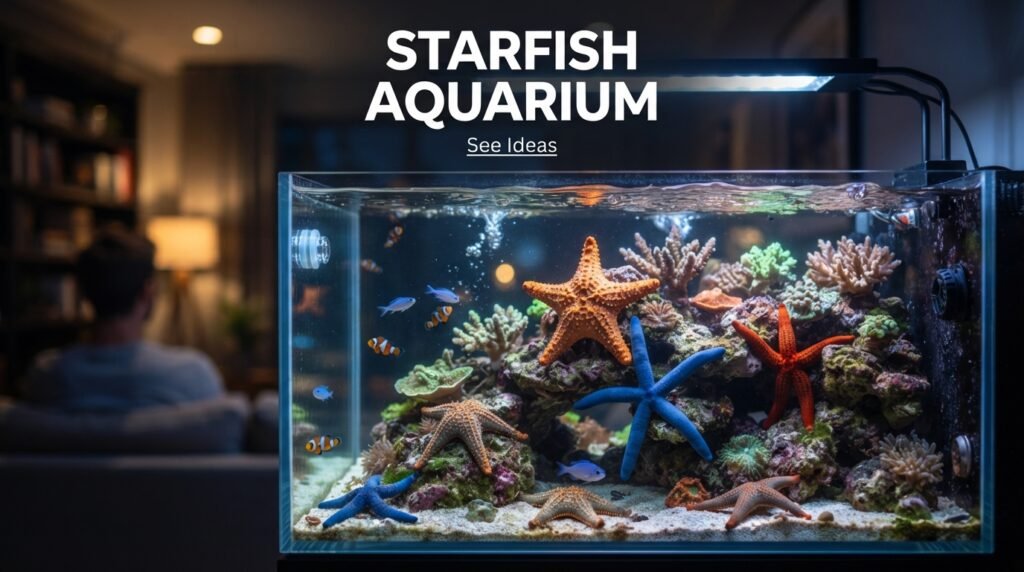
Live rock can provide important habitat and biological diversity in a marine aquarium.
It offers surfaces for algae, microorganisms, and biofilm to develop.
Many starfish naturally explore rocks while searching for food.
A well-arranged rock structure can therefore provide both shelter and natural grazing areas.
Make sure rocks are stable. A large starfish climbing over unstable rockwork can potentially cause structures to shift.
Feeding a Starfish
Feeding is one of the most important aspects of starfish care.
Different species eat different foods.
Some feed on algae and microorganisms, while others consume detritus, small organisms, or meaty foods. Some species may prey on other aquarium animals.
This is why identifying the exact species is critical.
Do not assume that every starfish can survive simply by eating algae growing inside the aquarium.
Some species have specialized diets that are difficult to provide consistently in captivity.
How Often Should You Feed a Starfish?
There is no single feeding schedule for every species.
Some starfish obtain a significant portion of their nutrition from natural food within a mature aquarium.
Others need supplemental feeding.
Observe the animal and research the feeding behavior of the exact species.
Overfeeding can pollute the aquarium, while underfeeding can gradually weaken the animal.
Target feeding may be useful for species that need supplemental food and can be reached safely with appropriate marine aquarium feeding tools.
Starfish and Algae
Some starfish species consume algae or microorganisms found on rocks and surfaces.
This can make them useful members of certain marine aquarium systems.
However, algae availability should not be assumed to be sufficient for every species.
If a starfish gradually loses weight or appears weak, inadequate nutrition may be one possible cause.
Starfish Aquarium Lighting
Lighting requirements depend on the overall aquarium rather than the starfish alone.
If the aquarium contains corals, the lighting must meet coral requirements. A fish-only marine aquarium may have different lighting needs.
Moderate lighting can support natural algae and microorganisms, depending on the system.
Avoid suddenly changing lighting intensity when introducing a starfish.
Starfish With Corals
Compatibility depends on the species.
Some starfish are generally considered reef compatible, while others may eat or disturb corals and other invertebrates.
If you have a reef aquarium, research the exact species before purchasing.
Never assume that a colorful starfish is automatically safe for every reef tank.
Starfish With Other Fish
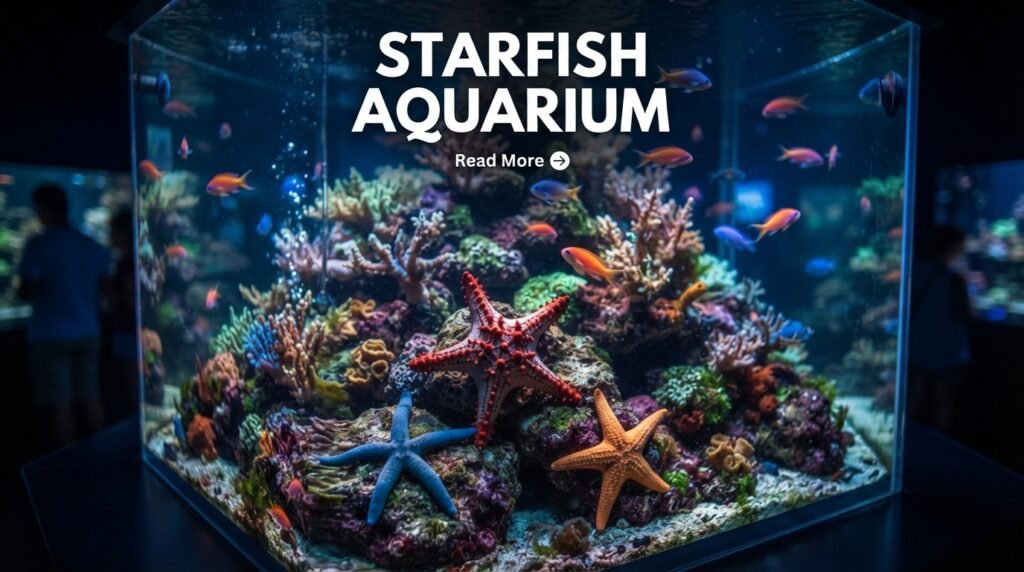
Many peaceful marine fish can coexist with appropriate starfish.
However, aggressive or predatory fish may attack, injure, or harass them.
Large fish may also view smaller starfish as potential food.
Tank mates should therefore be selected according to behavior, adult size, and habitat requirements.
Can Starfish Live With Shrimp?
Some starfish can coexist with ornamental shrimp, while others may prey on small invertebrates.
Species identification is extremely important.
If you have expensive shrimp, snails, crabs, or other ornamental invertebrates, research the compatibility of the specific starfish before adding it.
Starfish and Snails
Some sea stars may prey on snails or other bottom-dwelling invertebrates.
A species that appears peaceful may still be a predator in its natural environment.
If your aquarium contains a clean-up crew, check whether the starfish species is compatible with the animals already living in the tank.
Acclimating a Starfish
Acclimation is an important step when introducing a starfish to a marine aquarium.
Because starfish can be sensitive to changes in salinity and water chemistry, avoid rushing the process.
Follow an appropriate acclimation method based on the animal and the advice of a knowledgeable marine aquarium professional.
The goal is to gradually allow the animal to adjust to the aquarium environment.
Avoid exposing the starfish to unnecessary stress during transfer.
Never Expose a Starfish to Air
One commonly discussed concern with sea stars is exposure to air.
Many aquarists recommend keeping starfish submerged during transfer because trapped air or handling stress may cause problems.
Use a submerged container or another gentle transfer method whenever possible.
Avoid picking the animal up unnecessarily.
Common Starfish Aquarium Problems
Starfish Losing Arms
Arm damage can occur because of injury, poor water quality, aggression, or other stress.
Some species are capable of regenerating damaged arms, but recovery depends on the species and overall health.
Starfish Becoming Pale
Color changes can occur because of stress, poor health, environmental changes, or natural variation.
Check water parameters and review recent changes to the aquarium.
Starfish Not Moving
Starfish naturally move slowly and may remain still for periods of time.
However, prolonged inactivity combined with physical deterioration can indicate a problem.
Check water quality and observe the animal carefully.
Starfish Losing Tissue
Visible deterioration or tissue loss can be a serious warning sign.
Poor water quality, stress, disease, physical injury, and nutritional problems may all contribute.
Immediate attention to water quality and environmental conditions is important.
Starfish Turning Over
A healthy starfish may occasionally find itself upside down and can often right itself.
However, repeatedly struggling to turn over may indicate weakness or another problem.
How to Maintain a Starfish Aquarium
Regular maintenance is essential.
Test the water according to the needs of the marine system and perform appropriate water changes.
Clean aquarium equipment and monitor salinity regularly.
Avoid sudden changes to water chemistry.
Feed the starfish according to its species-specific requirements and remove uneaten food when appropriate.
Also inspect rockwork regularly to make sure it remains stable.
Starfish Aquarium Design Ideas
Natural Reef Aquarium
Create a mature marine environment with live rock, sand, appropriate marine organisms, and natural-looking structures.
This style can provide an attractive habitat for suitable starfish species.
Sandy Bottom Aquarium
For a sand-dwelling species, create a spacious sandy area with enough mature substrate to support its natural feeding behavior.
Rock-Focused Marine Aquarium
Species that spend significant time climbing can benefit from stable rock structures with plenty of surfaces to explore.
Minimal Marine Aquarium
A simple aquarium with carefully arranged rockwork and open swimming space can make the starfish the visual centerpiece.
Is a Starfish Aquarium Good for Beginners?
A starfish aquarium is usually not the easiest marine aquarium project for someone completely new to saltwater keeping.
Marine aquariums already require more careful management than many freshwater systems, and some starfish have specialized feeding and environmental requirements.
Beginners who want to keep a starfish should first become comfortable maintaining stable marine water parameters and should choose a species known to be appropriate for their specific setup.
Tips for a Healthy Starfish Aquarium
Choose the species before designing the aquarium.
Research the adult size and diet.
Use a mature marine aquarium.
Maintain stable salinity and temperature.
Avoid sudden changes in water chemistry.
Provide appropriate substrate and rockwork.
Choose compatible tank mates.
Feed according to the exact species.
Monitor the starfish for changes in behavior, color, body condition, or movement.
Most importantly, do not buy a starfish simply because it looks attractive in a store. Its long-term care requirements should always come first.
Frequently Asked Questions About Starfish Aquarium
Can you keep a starfish in a home aquarium?
Yes, some starfish species can be maintained in home marine aquariums when their specific requirements are met.
Are starfish easy to keep?
Some species can be easier than others, but many starfish are considered more challenging than common aquarium fish. Stable water conditions and appropriate nutrition are particularly important.
How big should a starfish aquarium be?
The appropriate tank size depends on the species and its adult size. Larger species require more space and a greater amount of mature habitat.
Do starfish need saltwater?
Yes. Starfish are marine animals and require appropriately prepared saltwater.
Can a starfish live in a freshwater aquarium?
No. Starfish are adapted to marine environments and cannot be kept in a normal freshwater aquarium.
What do starfish eat in an aquarium?
Their diets vary considerably. Depending on the species, they may consume algae, microorganisms, detritus, meaty foods, or other marine organisms.
Can starfish live with coral?
Some species can be compatible with reef aquariums, while others may consume or disturb corals. Always research the exact species.
Can starfish live with shrimp?
Some species may coexist with ornamental shrimp, while others may prey on them. Compatibility must be determined by species.
How long can starfish live in an aquarium?
Lifespan varies significantly by species and husbandry. A healthy, appropriately maintained animal can potentially live for years, but poor conditions can dramatically shorten its lifespan.
Why is my starfish not moving?
Starfish naturally move slowly and may remain still for periods. If inactivity is accompanied by tissue damage, discoloration, weakness, or other unusual symptoms, investigate water quality and environmental conditions.
Can starfish regrow an arm?
Some species can regenerate damaged or lost arms, although the process can take time and depends on the species and condition of the animal.
Can starfish be kept with fish?
Yes, some species can coexist with peaceful marine fish. Avoid aggressive or predatory tank mates that may attack or eat the starfish.
Conclusion
A starfish aquarium can be an impressive and rewarding marine setup, but these unusual animals require more consideration than their simple appearance might suggest. The most important factors include choosing an appropriate species, providing a mature aquarium, maintaining stable saltwater conditions, supplying the correct food, and selecting compatible tank mates.
A healthy starfish should be given enough space to move naturally and access to the type of habitat and food it would encounter in nature. With proper preparation and consistent aquarium maintenance, a suitable sea star can become one of the most interesting animals in a marine aquarium.
Before purchasing one, always research the exact species rather than relying only on the common name. This single step can make a major difference in creating a successful and sustainable starfish aquarium.