
 By admin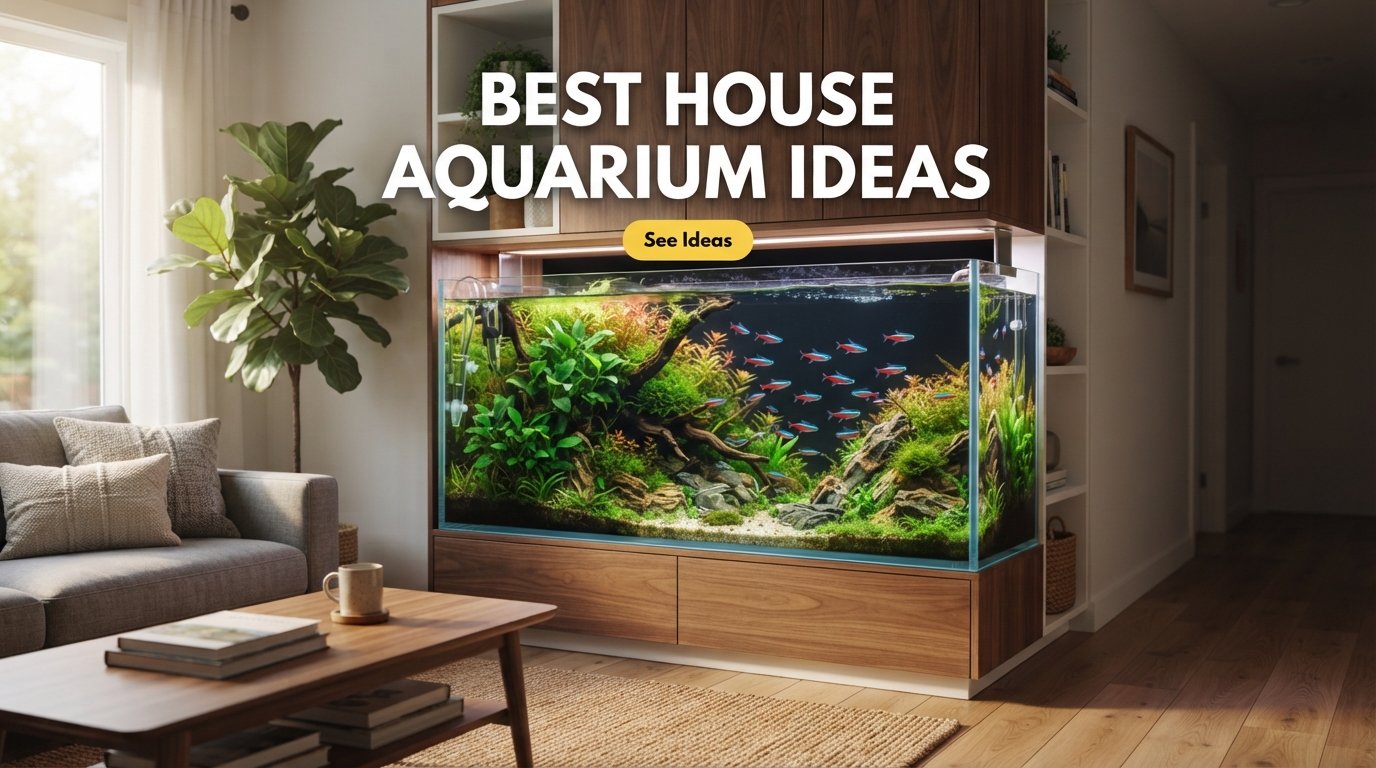
If you are looking for house aquarium ideas, there are many creative ways to bring the beauty of underwater life into your home. An aquarium can be much more than a glass tank placed on a stand. With the right design, it can become a major feature of a living room, bedroom, kitchen, hallway, home office, or even an outdoor space.
A well-designed house aquarium can add color, movement, and a natural atmosphere to a room. You can choose a simple freshwater aquarium with colorful fish, a planted aquascape filled with greenery, or a built-in aquarium that becomes part of the architecture. The best design depends on your available space, budget, maintenance preferences, and the type of fish you want to keep.
Whether you live in a small apartment or a large house, there is an aquarium idea that can fit your interior. The following ideas can help you create an attractive aquarium that looks intentional, complements your décor, and provides a healthy environment for your fish.
Why Add an Aquarium to Your House?
Aquariums have a unique ability to become natural focal points. The movement of fish and plants can attract attention without making a room feel crowded.
A thoughtfully positioned aquarium can also connect an interior space with nature. Green aquatic plants, natural rocks, driftwood, and colorful fish can create a relaxing visual experience.
An aquarium can also be used to divide areas within an open-plan house. Instead of using a solid wall, a carefully designed aquarium can provide separation while allowing light and visibility to pass between spaces.
The key is to treat the aquarium as part of the overall interior design rather than as an object added at the end.
Best House Aquarium Ideas
There are countless ways to incorporate an aquarium into a home. Here are some of the most practical and attractive concepts.
| Aquarium Idea | Best Location | Main Feature |
|---|---|---|
| Built-In Aquarium | Living room or wall | Architectural focal point |
| Wall-Mounted Aquarium | Small rooms | Saves floor space |
| Room Divider Aquarium | Open-plan spaces | Separates areas |
| Under-Stair Aquarium | Staircase area | Uses unusual space |
| Corner Aquarium | Living room or office | Makes use of corners |
| Kitchen Aquarium | Kitchen or dining area | Decorative feature |
| Bedroom Aquarium | Bedroom | Calm atmosphere |
| Planted Aquarium | Any room | Natural appearance |
| Tall Aquarium | Entryway or living room | Strong vertical design |
| Nano Aquarium | Desk or shelf | Small-space solution |
1. Built-In Wall Aquarium
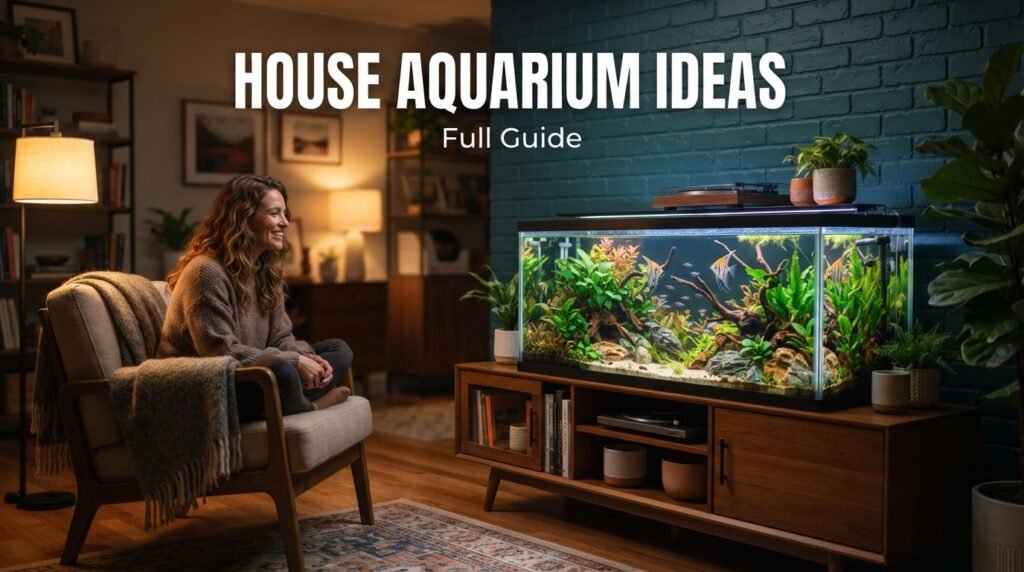
A built-in aquarium is one of the most impressive house aquarium ideas.
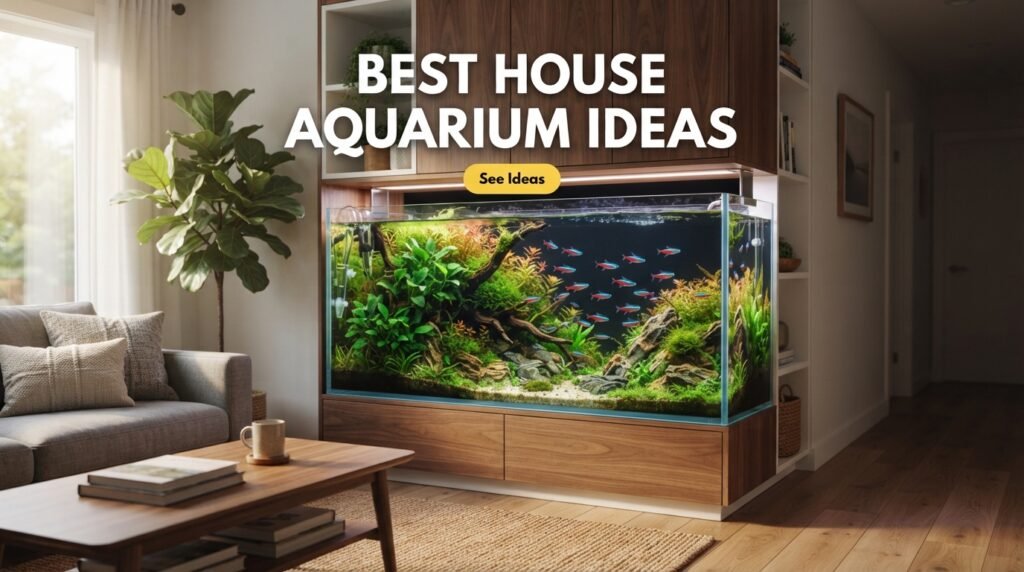
Instead of placing the aquarium in front of a wall, the tank is incorporated directly into the wall structure. The result can look like a large underwater window.
A built-in aquarium works especially well as a feature wall in a living room. It can also be designed between two rooms so that people can view it from both sides.
This type of aquarium requires careful structural planning. The wall, support structure, plumbing, electrical connections, and access for maintenance should all be considered before installation.
2. Living Room Aquarium
The living room is one of the most popular locations for a home aquarium.
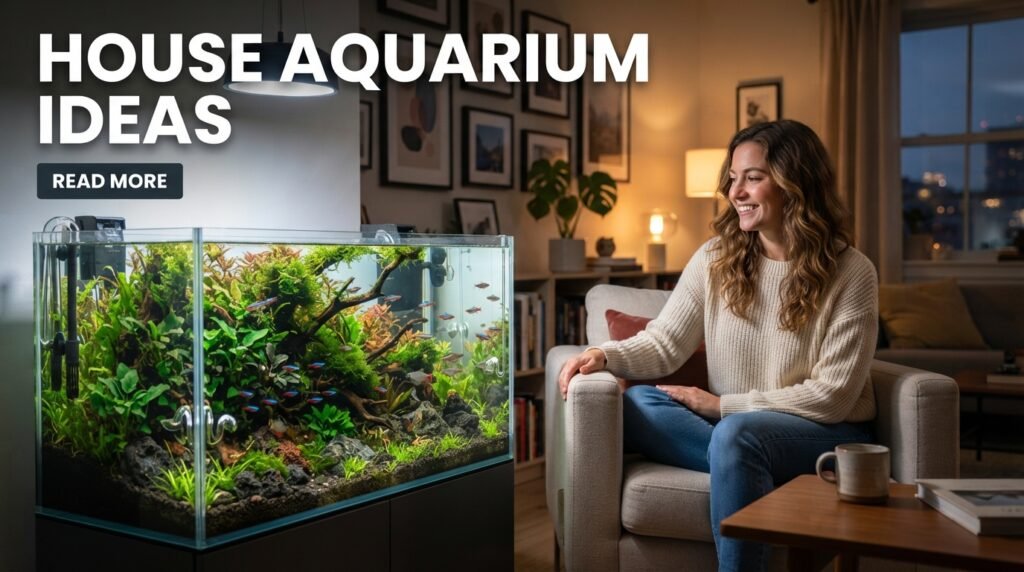
A medium or large aquarium can become the centerpiece of the room. Positioning it opposite the main seating area allows the fish and aquascape to remain visible without overwhelming the furniture.
A modern living room can benefit from a minimalist rimless aquarium, while a traditional interior may work better with a wooden aquarium cabinet.
Choose a design that complements the room instead of competing with it.
3. Aquarium as a Room Divider
A room-divider aquarium can be both decorative and functional.
For example, an aquarium can separate a living room from a dining area while keeping the space visually open.
A long aquarium is particularly effective because it provides a wide underwater view.
The aquarium should be designed so that all necessary maintenance equipment remains accessible. Both sides of the tank should also be considered if the aquarium is visible from multiple rooms.
4. Wall-Mounted Aquarium
Wall-mounted aquarium designs are useful when floor space is limited.
A shallow aquarium can be installed as a decorative feature on a suitable wall.
This design can work well in hallways, offices, bedrooms, and smaller living rooms.
However, wall-mounted aquariums require strong structural support because water is extremely heavy. The wall and mounting system must be capable of safely supporting the aquarium.
5. Corner Aquarium
Corners are often overlooked when planning interior design.
A corner aquarium can turn an unused area into an attractive feature.
You can use a triangular, curved, or conventional rectangular aquarium depending on the available space.
A planted corner aquarium with tall plants toward the back can create a natural focal point without taking over the room.
6. Under-Stair Aquarium
The space underneath a staircase can sometimes be transformed into a unique aquarium feature.
An aquarium installed under stairs can make an otherwise unused area visually interesting.
Because the space can be difficult to access, maintenance should be planned carefully. Leave sufficient room for feeding, water changes, equipment access, and cleaning.
Avoid creating a design that looks impressive but makes routine maintenance difficult.
7. Kitchen Aquarium
A small aquarium can add an unexpected decorative element to a kitchen or dining space.
A countertop aquarium, cabinet aquarium, or built-in design can work depending on the kitchen layout.
However, aquariums should be kept away from cooking splashes, grease, excessive heat, and areas where equipment or water could interfere with food preparation.
A dining area adjacent to the kitchen may be a better location if you want an aquarium near the kitchen without exposing it directly to cooking conditions.
8. Bedroom Aquarium
A small or medium aquarium can create a peaceful visual feature in a bedroom.
A planted aquarium with gentle lighting and slow-moving fish can complement a relaxing interior.
Avoid placing an aquarium where equipment noise will disturb sleep. Filters, air pumps, and other devices should be selected with noise levels in mind.
Also consider accessibility. You should be able to perform maintenance without moving large pieces of furniture.
9. Home Office Aquarium
A desk aquarium or compact aquarium can make a home office more visually interesting.
A small planted tank can provide a natural contrast to computers, desks, and other office equipment.
For a professional-looking office, consider a simple aquascape with limited decorations and a clean cabinet.
Avoid placing the aquarium directly beside electronics where accidental splashes could cause problems.
10. Staircase Aquarium
A larger aquarium can be incorporated into the staircase area as an architectural feature.
For example, a long aquarium can run alongside a staircase or become part of a wall beneath it.
This type of design can look spectacular, but it requires careful planning from the beginning of a renovation or construction project.
Access to plumbing, filtration, electrical connections, and the aquarium itself should be included in the design.
11. Long Aquarium Design
Long, shallow aquariums can provide an elegant appearance.
Instead of creating a very tall tank, a long aquarium emphasizes horizontal space.
This works particularly well in modern interiors and can be used as a room divider or feature wall.
Long aquariums can also provide plenty of swimming space for fish that prefer horizontal movement.
12. Tall Aquarium
A tall aquarium creates a dramatic vertical feature.
It can work particularly well in rooms with high ceilings or in an entryway.
Tall aquariums allow you to use vertical plants and create multiple visual levels.
However, maintenance can be more difficult because reaching the bottom of a very tall aquarium may require specialized tools.
13. Planted House Aquarium
A planted aquarium is one of the most natural-looking options.
Aquatic plants can create a miniature underwater landscape using different colors, textures, and heights.
A simple planted design might combine carpeting plants in the foreground, medium-height plants in the middle, and tall plants toward the back.
Driftwood and rocks can provide additional structure.
14. Minimalist Aquarium
If your house has a modern interior, a minimalist aquarium can be an excellent choice.
Use a clean glass tank, simple substrate, carefully selected plants, and limited decorations.
Avoid overcrowding the aquarium.
The goal is to create a calm composition where every element has a purpose.
Minimalist aquariums can work particularly well in modern living rooms, offices, and bedrooms.
15. Natural Aquarium Design
For a more organic appearance, create an aquarium inspired by nature.
Use natural-looking rocks, driftwood, aquatic plants, and a suitable substrate.
Instead of arranging everything symmetrically, create different heights and spaces.
A natural aquarium can make a room feel more connected to the outdoors.
16. Aquarium Cabinet Ideas
The aquarium cabinet is an important part of the overall design.
A cabinet should provide strong, stable support for the aquarium and enough storage for equipment and maintenance supplies.
For a modern house, a simple cabinet with clean lines can blend into the furniture.
Wooden cabinets can work well with traditional interiors.
The cabinet should also provide easy access to filters, tubing, electrical equipment, and other components.
17. Aquarium in an Entryway
An aquarium in the entrance of a house can create an immediate focal point.
A narrow aquarium can work particularly well when space is limited.
Choose peaceful fish and an attractive aquascape so the aquarium creates a welcoming atmosphere.
Avoid placing it where people frequently bump into the glass or where doors could accidentally strike the tank.
18. Small House Aquarium
You do not need a huge aquarium to enjoy fishkeeping.
A small aquarium can fit on a sturdy cabinet, desk, shelf designed to support its weight, or dedicated aquarium stand.
Nano aquariums are particularly useful for apartments and compact rooms.
However, smaller aquariums are not automatically easier to maintain. Water conditions can change quickly in small volumes, so regular maintenance remains important.
19. Aquarium With Natural Wood
Driftwood can make an aquarium look more natural and artistic.
A large piece of wood can become the central feature of the aquascape, surrounded by aquatic plants.
Choose aquarium-safe wood and prepare it appropriately before placing it into the tank.
The shape of the wood can also influence how fish move through the aquarium.
20. Aquarium With Rocks
Rock-based aquascapes are another excellent house aquarium idea.
You can create mountains, valleys, caves, or layered formations using suitable aquarium-safe rocks.
Use stable structures so rocks cannot collapse onto fish or damage the glass.
The rocks should complement the aquarium rather than filling every available space.
Choosing Fish for a House Aquarium
Fish selection should always be based on aquarium size, water requirements, behavior, and compatibility.
For smaller freshwater aquariums, appropriate species may include certain small schooling fish or other species suited to the available volume.
For larger tanks, you have more options.
Guppies, tetras, rasboras, danios, mollies, platies, corydoras, gouramis, and other freshwater species can be considered depending on the specific aquarium.
Avoid selecting fish simply because they look attractive. Research their adult size and care requirements first.
Aquarium Lighting as Interior Design
Aquarium lighting can influence the entire appearance of a room.
Modern LED aquarium lights can highlight fish, plants, rocks, and driftwood.
For a planted aquarium, lighting must also be suitable for the plants.
Avoid making the aquarium excessively bright compared with the rest of the room. A balanced lighting setup can make the aquarium look like an intentional part of the interior.
Safety Considerations
Safety should always come before appearance.
Water is heavy, so aquarium stands and supporting structures must be appropriately designed.
Large built-in aquariums should be professionally planned when they affect walls, floors, cabinetry, or structural elements.
Electrical equipment should be installed safely and kept protected from water.
The aquarium should also be positioned away from direct sunlight and extreme temperature fluctuations.
How to Choose the Best House Aquarium Idea
Before choosing a design, consider these questions:
- How much space is available?
- What fish do you want to keep?
- How much maintenance can you handle?
- Is the floor or wall strong enough?
- Where will filtration equipment go?
- How will water changes be performed?
- Is there a nearby electrical supply?
- Will sunlight affect the aquarium?
- Does the design match your interior?
- Can you easily access the tank for cleaning?
A beautiful aquarium that is difficult to maintain will eventually become a problem.
The best house aquarium combines attractive design with practical accessibility.
Common Mistakes to Avoid
One common mistake is choosing an aquarium that is too large for the available support.
Another is placing the aquarium in direct sunlight, which can contribute to excessive algae and temperature fluctuations.
Overcrowding the aquarium with too many fish or decorations is another frequent problem.
People also sometimes forget to plan for equipment. Filters, heaters, lights, tubing, and maintenance tools need space.
Finally, avoid choosing fish before understanding their adult size and care requirements.
Frequently Asked Questions About House Aquarium Ideas
What is the best place for an aquarium in a house?
Living rooms, dining areas, offices, hallways, and other stable indoor locations can work well. Choose a place away from direct sunlight, extreme temperatures, and heavy foot traffic.
Is an aquarium good for a living room?
Yes. A properly designed aquarium can become an attractive focal point and complement many living room styles.
Can I build an aquarium into a wall?
Yes, but built-in aquariums require careful structural and maintenance planning. Professional assistance may be appropriate for large installations.
Can an aquarium be used as a room divider?
Yes. Long aquariums can separate two areas while maintaining visual openness between them.
Is a small aquarium good for a small house?
Yes. Compact aquariums can fit into smaller homes, apartments, and offices. However, smaller tanks still require careful maintenance because water conditions can change quickly.
Can I put an aquarium in my bedroom?
Yes. A bedroom aquarium can create a relaxing atmosphere, provided the equipment is quiet and the tank is positioned safely.
Can I put an aquarium in the kitchen?
Yes, but it should be positioned away from cooking heat, grease, food preparation areas, and splashing.
What fish are best for a house aquarium?
The best fish depend on the aquarium size and water conditions. Peaceful community fish are often suitable for appropriately sized freshwater tanks.
How do I make a house aquarium look modern?
Use clean lines, a simple cabinet, a rimless or minimalist tank, carefully arranged plants, natural rocks, and controlled lighting.
Does an aquarium require a lot of maintenance?
Maintenance depends on aquarium size, fish population, plants, filtration, and feeding. Regular water changes, cleaning, equipment checks, and water testing are essential.
Where should I not put an aquarium?
Avoid unstable furniture, direct sunlight, areas exposed to extreme heat or cold, locations near cooking splashes, and places where the aquarium can easily be knocked or damaged.
Is a built-in aquarium expensive?
The cost depends on aquarium size, materials, filtration, cabinetry, plumbing, lighting, and construction work. Built-in systems are generally more involved than standard aquarium setups.
Conclusion
The best house aquarium ideas combine beautiful design with practical fishkeeping. Whether you choose a built-in wall aquarium, a room-divider tank, a small planted aquarium, a corner design, or a large living room centerpiece, the aquarium should provide a healthy environment for its inhabitants while fitting naturally into your home.
Think about the aquarium’s location, support, lighting, filtration, maintenance access, and fish requirements before focusing entirely on appearance. A well-planned aquarium can become one of the most memorable features in a house.
With the right combination of plants, fish, rocks, driftwood, lighting, and furniture, you can create an underwater display that feels like a natural extension of your home’s interior design.